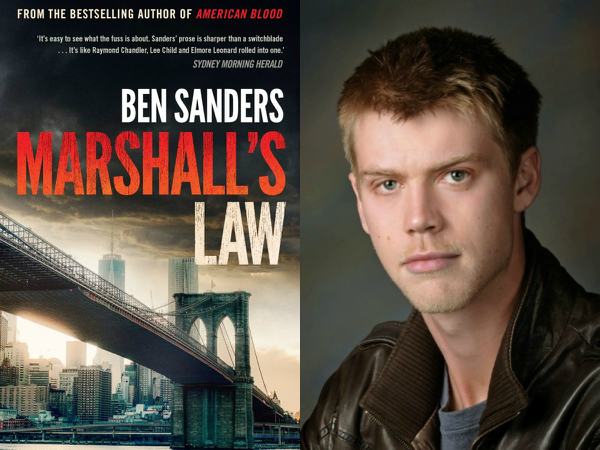
CTG INTERVIEWS: NGAIO MARSH AWARDS FINALIST BEN SANDERS ABOUT MARSHALL’S LAW

Ben Sanders


Today I’m delighted to be hosting a stop on the Ngaio Marsh Awards Finalists Blog Tour and featuring one of the finalists – Ben Sanders.

Ben Sanders scored a multi-book deal and published his first crime novels while he was studying engineering at university. Now juggling engineering work and writing, Sanders’ most recent tales are action-packed thrillers starring former New York City undercover cop Marshall Grade, living in witness protection in the American southwest. His fifth novel, Marshall’s Law, is a finalist for the 2017 Ngaio Marsh Award for Best Crime Novel.

CWA Gold Dagger winner Michael Robotham has described Marshall Grade as a ‘noble loner’ who’s a great read for fans of Jack Reacher and Jason Bourne. Let’s find out more…

Marshall Grade is a pretty hands-on, action man kind of lead – what inspired you to create him as a character? 

I like a good mix of noir in my crime, so I knew my hero (or anti-hero, as he turned out) would be the kind of self-sufficient gentleman who could get to the bottom of things, and be happy to throw the odd punch along the way. My previous three New Zealand-set novels had focused on an Auckland police detective, but when it came to my US books, I wanted to write about a character who was ‘outside the system.’ So Marshall (being a former undercover policeman) has the experience to move in criminal circles, but he doesn’t have the heft of a government institution to back him up. In plain terms he’s a vigilante. That of course puts him in competitive territory among fictional male heroes, but Marshall being a self-taught bruiser with a guilt complex means he has his quirks and points of difference.

You’re from New Zealand, but you set your most recent two novels (the Marshall Grade series) in the United States; New Mexico and New York. How did you go about researching where you set those stories, and making it as authentic as possible? 

I’d been reading American crime novels since I was thirteen, and Western culture is fairly US-centric anyway, so I felt like I’d had good ambient exposure to Americana. But of course the best research is first-hand experience, so I visited all of the locations I wrote about. A big element of authenticity—or at least the impression of authenticity—is being confident in what you write. All fiction relies on speculation to some extent, but confidence helps camouflage the guesswork, and makes writing persuasive. For me, detailed knowledge of settings gave me confidence in other elements of my work. My process is very visual—I see everything in my head as I write—so once I could picture my backdrop, it didn’t feel like a great leap of imagination to then superimpose characters and plot. And travel obviously has benefits beyond the purely visual. The details are valuable too: what the seasons are like, how people speak, the price of coffee in a diner. Such things bring an extra layer of credibility to a story and add to the illusion that This Actually Happened.

Your books are fast-paced, and full of action. What are your top tips on creating tension and pace when writing a thriller? 

‘Pace’ in mysteries or thrillers is all do to with how the author reveals information to the reader. A scene in a book should have a function: is it (for example) giving character backstory? Introducing someone? Is it purely for humour? Does it contain some crucial revelation to drive the story? (The most adroit scenes can do all of the above and more, simultaneously.) So for me, controlling pace amounts to being aware of what I’m revealing about character and story. Basically I want to ensure that all the interesting bits are parcelled out appropriately across the course of 350-odd pages. ‘Appropriately’ is an elastic term—pace can increase and decrease through the course of a novel, and it’s not until something is on paper that I can see whether it ‘works.’ Tension in my work often derives from a sense of looming catastrophe or conflict. Particularly in my American novels, I have competing characters who are in stark moral contrast to one another. By switching perspectives between various players and hinting at a common trajectory, I try to create an impression that something very bad could happen. But depending on the type of novel, the same emotional effect can be achieved by other means-I watched an interview with Lee Child in which he explains that the trick to suspense (or tension) is to simply pose a question and then refuse to answer it for three hundred pages.

Which books or writers in the crime genre do you enjoy reading, and why? 

I love Michael Connelly and Lee Child, because I can’t get enough of their characters. I love Elmore Leonard because his dialogue reads like a wire-tap. I love James Ellroy for his style, and his ability to bend history to the shape of his vision. I could go on and on, but those guys are my top four.

Your first Marshall Grade novel, AMERICAN BLOOD, was optioned for a film before you even finished the manuscript. When you picture Marshall in your own head, which actor does he remind you of?  

While the film plans were all-go, the Marshall in my head looked like Bradley Cooper. Now the movie’s been scrapped, Marshall just looks like me (tall and blond, but with bigger muscles). That way, I get to live an exciting thug-busting life by proxy, from the comfort of my desk.

You published your first crime novel while you were at university, and already have five under your belt. How has your writing style evolved over the years, and what are the biggest lessons you learned going from budding author to published to established? 

My first novel The Fallen was accepted for publication in December 2009, but it wasn’t until I began reading Blood’s a Rover by James Ellroy on Christmas Day of that year that I appreciated the importance of style and voice. Ellroy is famous for his clipped rat-a-tat syntax, but the lesson I learned from Rover wasn’t so much that a book should be written in a bold and obvious manner; more that whatever the style, it needs to be consistent. Most of the crime writers I’d read before Ellroy used a very smooth and understated authorial voice, and so the need for consistency didn’t really occur to me. So that was the first way my writing changed: improving from a stylistic mishmash in my first book, to something more controlled in my later work. My American novels have all been narrated in third-person, but I adopt one character’s perspective for each scene. It’s made my style more colloquial, and I tend to use a lot of dialogue to move the story forward. My biggest lesson has been the importance of editing. Some people can write a book and nail it on the first try, but once I’ve finished a draft, I need to leave it alone for a week or two, and then hit it hard with the backspace key: invariably, something needs re-doing.

What other advice do you have for budding crime writers out there, who are trying to get their first book published? 

Writing is a difficult trade to break into if you’re wanting to be published, so it’s obviously important to maximise your chance of being noticed. Research which agents and/or publishers are interested in crime, and when you’re sending them material, treat their submission rules as gospel—agents may have dozens or hundreds of submissions a year, so providing material in a format they don’t want will ensure a quick rejection. Most importantly, never submit anything that isn’t totally pristine. Write your novel or your sample, leave it in a drawer for a month, and then edit mercilessly.

A big thank you to Ben Sanders for popping onto the CTG blog today. For more information about Ben and his books hop over to https://ben-sanders.com

 And to buy Marshall’s Law click this link: https://www.amazon.com/Marshalls-Law-Novel-Marshall-Grade/dp/1250058805

Be sure to check out all the other fantastic stops along the blog tour too.

Blog Tour book covers

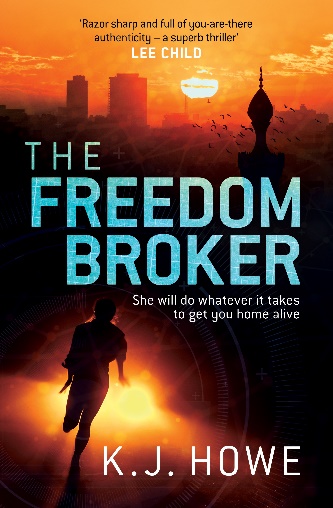
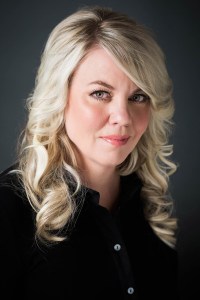
CTG Interviews KJ Howe about The Freedom Broker

image003

While I was at the Theakston Old Peculier Crime Writing Festival at Harrogate I met up with fellow debut novelist KJ Howe to chat about her fabulous thriller THE FREEDOM BROKER. Over coffee, we talked research, writing process, and how she created the kick-ass action heroine Thea Paris…

Thea Paris is such an authentic all-action female lead – what inspired you to create her as a character?

I always wanted to write a strong female protagonist. As part of my research I went out to the Phoenix desert and trained in hand-to-hand combat, knife fighting and more. I’m a big believer of if you’re going to write about it you should have experienced it. I’ve got this rolodex of Special Forces guys I can call on – they read the book – and wanted to bring an authenticity to the page. I would have loved to have been a spy! I’ve been zip lining, cage diving with sharks, but I’m also feminine and enjoy dressing up – I wanted to show a woman can be a real woman but also really strong too, but not in a comic book way. Thea Paris has very human baggage and with her diabetes there’s a ticking clock – she has to have her insulin [which can be tricky given some of the situations she gets into during the course of The Freedom Broker]. I wanted to show that if you have a chronic illness it shouldn’t stop you, and if you’re a woman it shouldn’t stop you doing your dream job.

Thea’s job as a Response Consultant [kidnap negotiator/rescuer] is an unusual one – what research did you do?

I’ve spent the last four years immersed in that world and found out first-hand about what it’s like. As well as speaking with people who’ve been in real life hostage situations – like Peter Moore who was the longest held hostage in Iraq – I’ve found out about the world of kidnap and ransom. I attended the Kidnap and Ransom Conference – I didn’t know anyone, and it’s a dark, closed world – but I needed to learn about it so I could write authentically. Now I’ve got contacts all over the world – including special ops people, response consultants, a psychologist who specialises in hostage mentality, and security guys who protect journalists in war zones.

I wanted to do something fresh and unique, and I didn’t want to do FBI or Police as I’m not a rule follower – I wanted the freedom to go wild! Private industry doesn’t have the same restrictions, and it’s interesting how the whole system works – from big companies, to kidnap insurance, through to response consultants [interestingly, Lloyds of London are the people who first started selling kidnap and ransom insurance]. People can be insured for as much as fifty million dollars, and negotiators will often haggle down from the ransom demand – usually 10% or so. In the US and the UK the penalty for kidnap is high, and there’s also a 95% chance of getting caught. But in Mexico there are no laws on kidnap and a 95% chance of not getting caught – so it’s more worth the risk to kidnappers. Plus there’s no lack of potential victims – everyone has loved ones – it’s scary. With every book in the series I’m hoping to explore a different aspect of kidnap.

THE FREEDOM BROKER is super twisty-turny – what was your writing process?

I’m an organic writer. I do plan ahead, but mostly the story is held in my head. I do go back and plant things later though. You can’t fight who you are – if you need to plot to feel in control then do that. I find there’s a freshness from organically writing – the characters come alive. So listen to your heart and write how you want to – my style is ‘pants on fire’ writing. You can sometimes get into trouble writing organically, but for me it’s well worth the risk. If I get into a corner I think ‘what’s the theme of the book?’ – it’s often family – and can work out what next from there.

What got you into writing thrillers?

When you look at the book you’re reading and the books you chose to read there’s always an emotion attached to them. With thrillers it’s energy and adrenaline, with mysteries it’s puzzle solving, with romance it’s hope, and with sci-fi it’s wonder. I’m into adrenaline and energy – I’m a very action orientated person. I read David Morrell’s Brotherhood of the Rose – a spy thriller – and thought I’d love to be an author and be able to do what he did to me to another reader, to take them to another place – like Athens – and fascinate them. The Eye of the Needle and Day of the Jackal are great books. I grew up in different places around the world and wanted a character that can go anywhere – each book will go to different countries.

KJ HOWE

What words of advice do you have for those aspiring to be published?

Embrace criticism from credible sources. I worked on my book for two years and had to go on the journey – it’s 10% about talent and 90% about perspiration – and you have to be in it for the long haul. Everyone I know has been at it for a while. Write every day or as often as you can – get out the junk words and keep going! David Morrell is my mentor and he has a saying ‘Be a first rate version of yourself, not a second rate version of someone else’ – only you can write your book. It’s like with me having had a very international life – I’ve lived in lots of places where the shadow of threat is always there – I can bring to the page what I’ve learnt. Be fresh. Unless there’s great writing and a unique voice don’t do something that’s already been done. Stay the course and get help – never bring your ego to the table. Although I’m published I feel like I’m at the beginning of the journey. I want to stay at it, keep getting better, and then getting word out about my books and reaching readers. Learn everything you can about this business. Do your own social media, and get involved and be part of the writing community (events like the Theakston’s Crime Writing Festival held at Harrogate every July are a great place to start). I try to help as many writers as I can – playing it forward as I’ve had a lot of help from authors. You can contact me through my website and the ThrillerFest website [she’s the Executive Director of the fantastic crime writing festival] – I’m always happy to hear from people.

And with that the coffee was drunk and the interview was over. KJ Howe was a brilliantly fun interviewee and it was great to meet her and talk about all the fascinating research she’s done – she really is an action woman herself!

To find out more about KJ Howe visit her website HERE and be sure to follow her on Twitter @KJHoweAuthor

You can read my review of THE FREEDOM BROKER HERE and then hop over to Amazon to buy it by clicking the link HERE

And check out the ThrillerFest website HERE for all the details on this amazing crime writing festival held in New York every summer.

#NIGHTMARKET BLOG TOUR: CTG + @DPemb TALK GIN, BOOK SHOPS AND HA-HAs!


Today I’m thrilled to be hosting a stop on Daniel Pembrey’s – aka ‘DPemb’ – blog tour for his latest thriller NIGHT MARKET. To mark the occasion, Daniel stopped by CTG HQ for couple of gins and a chat about what he’s getting up to this week…

Good to see you DPemb, what’s going on? It seems you have another book out, already!

Well ….

Well? *taps fingers against glass* Tell me all about it.

Strictly speaking it’s the second half of the same story, which started with The Harbour Master. Part two of two, if you will.

But this is a different story – it’s not The Harbour Master, it’s Night Market?

That’s true. And my Amsterdam detective Henk van der Pol is really put through the wringer this time!

Well, he went through quite a lot in the first book so sounds like gin is required.

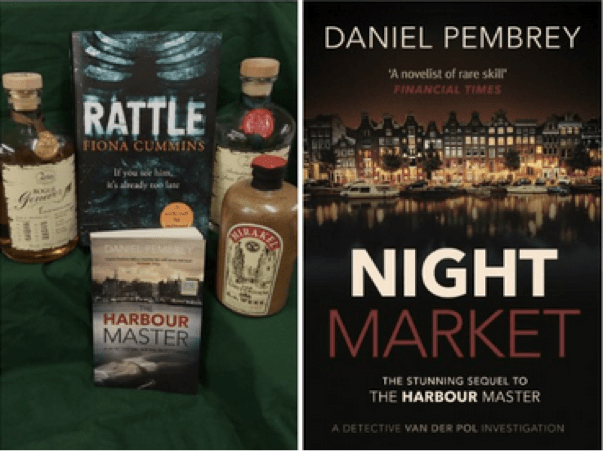
That’s exactly right, CTG. This Wednesday 26th April, I’m doing an event at South Kensington Books in London – http://www.kensingtonbooks.co.uk/ – with the wonderful Fiona Cummins, and gin will most certainly feature.

nightmarket-rattle pic

Excellent! That sounds like a very fun event – I loved both NIGHT MARKET and Fiona Cummins’s RATTLE. And then what, I hear you’re out and about all week?

And then … publication day is the next day, April 27th, which happens to be King’s Day in Holland, so I’m trotting along to the Dutch Embassy to celebrate that. Koningsdag, as they call it. (Not that this has anything to do with my book, still!)

The Embassy, very fancy! *CTG resists the urge to ask DPemb about the likelihood of Ferrero Rocher* And then later in the week?

Ah yes, I’m going to up to Newcastle Noir to chair a spectacular thriller panel on the Sunday evening, 30th April featuring Paul Hardisty, Luca Veste and…

Me!

Yes, you! How cool will that be?

I think it’ll be very cool and a lot of fun!

We shall be talking about Deep Down Dead. And Deep Blue Trouble

Excellent – I’m looking forward to it! Now is there anything else I need to know?

Actually there is. The following Thursday 4th May, I’m doing an event at Nomad Books in Fulham with the brilliant David Young (STASI CHILD/STASI WOLF). Find out more at www.nomadbooks.co.uk/whats-on

Is he bringing his Stasi police car?

I believe that’s kaput, but perhaps he’ll bring some jet fuel-strength ex-GDR schnapps, or similar. Let’s see!

You’re going to have a busy couple of weeks! Now what’s this about ha-has, I hear you’ve been doing some rather unusual research?

*DPemb gulps down the rest of his gin* What’s what about what?

You know … *gives knowing look* Ha-has!

Ohhh … *notes down reminder to contact Jilly* yes, fingers crossed for that!

ha ha pic

A ha-ha. (Huh?)

*CTG laughs*

I guess D Pemb is keeping his ha-ha story under his hat for now!

Well best of luck with the launch of NIGHT MARKET, Daniel, and see you in Newcastle at the weekend!

Likewise CTG, and thank you for having me.

NIGHT MARKET by Daniel Pembrey is out this week. You can buy it here

Here’s what the blurb says: “When Henk van der Pol is asked by the Justice Minister to infiltrate a team investigating an online child exploitation network, he can hardly say no – he’s at the mercy of prominent government figures in The Hague. But he soon realises the case is far more complex than he was led to believe… Picking up from where The Harbour Master ended, this new investigation sees Detective Van der Pol once again put his life on the line as he wades through the murky waters between right and wrong in his search for justice.

Sometimes, to catch the bad guys, you have to think like one. . .”

To find out more about Daniel Pembrey and his books hop over to his website at www.danielpembrey.co.uk and follow him on Twitter @DPemb

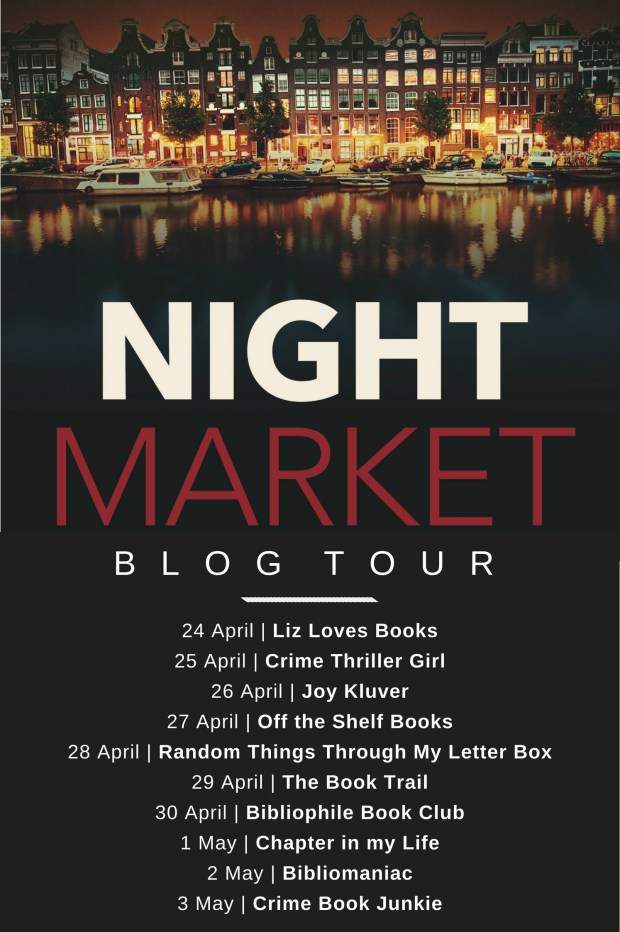
And be sure to visit all the other stops on the fab NIGHT MARKET blog tour…

night market blog tour poster

Bloody Scotland Preview: EVA DOLAN, MARI HANNAH & BEN MCPHERSON

One of the events I’m really looking forward to at Bloody Scotland is the Saturday 10.30am panel with Eva Dolan, Mari Hannah and Ben McPherson. Having seen each of these dynamic writers in action before, I’m sure this is going to be a lively and entertaining debate. So, in advance of the festival, I thought I’d pop them a few questions, you know, to get them warmed up …

Firstly, for those new to your work, can you tell us a little bit about your latest novel?

EVA: After You Die is the third in the Zigic and Ferreira series and follows the investigation into the suspicious death of a young right-to-die activist and the murder of her mother, in an idyllic commuter village a long way away from the team’s usual stamping ground. It was quite an emotional book to write as it covers the complicated and contentious issue of right to die, the demands of being a carer and the way a family copes in the aftermath of a terrible accident.

BEN: A Line of Blood is my first novel. It’s about a father and his eleven-year-old son who discover a corpse in the house next door. The father fails to stop his son from seeing the dead man, and at first he thinks that’s his biggest problem, but then his marriage begins to unravel, and he realises his wife knew the dead man. The murder exposes fault lines in the marriage and confronts the family with a past that none of them can escape. I’m deep into my second novel at the moment. Again it’s about a family, and again something terrible happens to that family, but this time they’ve done nothing to deserve it. They have to choose between justice and revenge… 

MARI: I’m best known for my Kate Daniels series but my latest book is a standalone. THE SILENT ROOM is conspiracy thriller introducing Special Branch DS Matthew Ryan who I am a little bit in love with. The opener sees his disgraced boss, DI Jack Fenwick, sprung from a prison van. Professional Standards officer, Eloise O’Neil investigates. Under suspicion of aiding the audacious escape, Ryan is suspended, warned not to interfere. Convinced of Jack’s innocence, he works off-book with Grace Ellis (ex-DCI) & Frank Newman (ex-MI5) to find him. I had such a lot of fun writing this book. Fear not if you are a Kate Daniels groupie. She’s back in GALLOWS DROP in November.

You’re on stage at 10.30 – 11.30am on Saturday 10th at Bloody Scotland – what can the audience expect?

EVA: At half past ten in the morning? Three bright-eyed and bushy-tailed crime writers who definitely didn’t stay up all night in the hotel bar and then quickly freshened up to go straight on stage. I think it will be a pretty lively panel, Mari Hannah is a marvellous writer and lovely lady and Ben McPherson’s book starts with a dead guy with an erection, so he’s obviously not shy!

BEN: I’m on with Mari Hannah an Eva Dolan, so I think the audience can expect to be entertained! I also hope we’ll have something to say about the big questions that crime books raise: What makes a murderer? How should people react when terrible things happen? And for me the two most important questions: Why do good people do bad things? And what does it take for a bad person to do the right thing? But the pleasure in being on a panel is that you never know exactly which way the conversation is going to go. The audience can lead you in unexpected directions…

MARI: There will be blood! Ben, Eva and I have written very different books. The discussion will no doubt reflect this. We’ve all met before and I’m looking forward to taking the stage in such brilliant company. From a personal point of view, I’m hoping to meet some passionate readers and have a few laughs.   

Bloody Scotland is one of my favourite crime fiction festivals. If you’ve been before, what makes it great for you? And, if you haven’t, what are you most looking forward to?

EVA: I love Bloody Scotland and am delighted to be back again this year as it really is the highlight of the crime calendar. The programme is always a good blend of big names and newcomers and the organisers have a knack of putting the right people together on stage so the panels are generally much sparkier and funnier than at some more, um…staid festivals. I’m marking up Chris Brookmyre and Stuart Neville in conversation, Into the Dark with Malcolm Mackay, James Oswald and Craig Robertson looks very good too and (Not) Born in the USA on Sunday afternoon is bound to be fascinating and fiery. Away from the purely bookish things I’m looking forward to catching My Darling Clementine and Mark Billingham’s The Other Half show, which I’ve heard is brilliant. Then the late night cabaret at Crime at the Coo straight after. And, of course, the Scotland v England football match, where the fittest authors available – and some who probably aren’t – show off their silky skills.

BEN: I was born in Glasgow and grew up in Edinburgh, so it’s great to becoming home to Scotland. I’ve heard such good things about Bloody Scotland. I’m most looking forward to seeing friends and colleagues, and just talking! Writing is lonely, especially if you live away from your home country, so festivals give you the chance to see people you would otherwise only know from Facebook. And the crime fiction community — writers, readers and bloggers — is very supportive. It makes you feel part of something bigger.

MARI: Living in rural Northumberland – no that far from Scottish border – I was delighted to learn that Scotland was planning its very own International Crime Festival back in 2012. So, like a true Border Reiver, my clan and I hopped over Hadrian’s Wall to see what all the fuss was about. Any excuse for a trip to Stirling. Right from the off, I knew that Bloody Scotland was a wee bit special. Over and above the quality crime writers on the programme – everyone knows that Scotland has produced some of the finest in the genre – what I like most about the festival is the relaxed atmosphere and how much fun the fringe events are. Crime in the Coo is a sell-out, must see event. Please someone drop out so I can get a ticket! And then there’s the grudge footy match. C’mon England!

And, lastly, do you have any pre-panel routines, green room riders, or quirky foibles, that you’ll have to do before you go on stage?

EVA: I’m quite relaxed about events generally and the crowd at Bloody Scotland tends to be very welcoming, which is a big help. So it’s a quick nervous wee and check my dress isn’t tucked into my knickers and I’m good to go!

BEN: Coffee. Far too much coffee.

MARI: Other than checking that I haven’t split the waistband of my pants before I’m called for a sound check – yes, that really did happen – I don’t think so. I suppose it very much depends on my fellow panelists. If Eva’s up for a rum beforehand, it would be churlish to expect her to drink alone. I’m sure Ben and I could manage a wee dram of something to take the edge off the nerves. J

Brilliant! And if you want someone to join you for a quick dram let me know!

Huge thanks to the terrific EVA DOLAN, BEN MCPHERSON, and MARI HANNAH for chatting with me in the run up to the fabulous BLOODY SCOTLAND CRIME WRITING FESTIVAL.

As you can tell, their panel is going to be a cracker. It’s not too late to get yourself a ticket. Hop over to the BLOODY SCOTLAND website and grab one quick at www.bloodyscotland.com

To find out more about EVA DOLAN follow her on Twitter @eva_dolan and AFTER YOU DIE is out now, you can buy it here

To find out more about BEN MCPHERSON follow him on Twitter @TheBenMcPherson and A LINE OF BLOOD is out now, you can buy it here

To find out more about MARI HANNAH follow her on Twitter @mariwriter and THE SILENT ROOM is out now, you can buy it here

THE BLOODY SCOTLAND CRIME WRITING FESTIVAL is held in Stirling from the 9th – 11th September 2016. It’s a fantastic programme. Find out more at their website here and be sure to follow them on Twitter @BloodyScotland to stay up-to-date with all their news

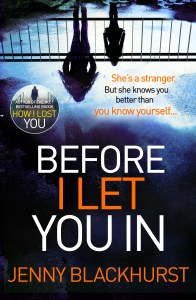
CTG Interviews: Jenny Blackhurst about BEFORE I LET YOU IN

Before I Let You In

Today I’m delighted to be joined by brilliant crime writer and all round fabulous person, Jenny Blackhurst. Jenny’s debut novel – HOW I LOST YOU – was a runaway bestseller, and with her second novel – BEFORE I LET YOU IN – just out as an eBook and coming out in paperback on 3rd November she’s kindly agreed to come into CTG HQ to let me grill her.

Welcome Jenny!

Your fabulous second novel BEFORE I LET YOU IN was published in eBook on the 28th August, can you tell us a little bit about it?

It’s the story of Dr Karen Browning, a psychiatrist who finds that her new patient knows a little more about her and her close knit group of friends than she should. Who is Jessica Hamilton? And what does she want from Karen and her friends? It explores the friendships women have and how they can sometimes be, let’s say less than healthy…

The relationship between Karen and Jessica is a rather complicated one (!) what inspired you to write about these great characters?

A walk to Tesco! I can’t drive so I do a lot of walking with my son who is two now and while he naps in the pushchair I create characters in my head. I loved the idea of a relationship where the normal roles you would expect to see are reversed – Karen is usually very in control – as you see from her relationships with her friends – and so I enjoyed having Jessica take her out of her comfort zone. I guess I saw Jessica as a psychopath and Karen as a control freak and I wanted to put them up against each other to see who came out on top.

Your debut novel, HOW I LOST YOU, was a Number 1 Kindle bestseller, can you tell us how you found the experience of being a debut author?

I’d had nothing to do with the writing world before I got the contract for How I Lost You, I wrote it in kind of a bubble, didn’t know any other authors and didn’t expect anyone to ever read it so going from that kind of isolation to suddenly everyone having an opinion on something you created out of your head is a big thing to take on board. There was a point where I thought ‘I never want to do this again’. Then I got more involved with other authors and my experience completely changed. Crime writers are amazing – it’s like having a huge support network and helped me to enjoy what I was doing and remember what I loved about writing.

And, coming back to BEFORE I LET YOU IN, how did you find the writing process the second time around and can you tell us a bit about how you like to write?

The actual writing process was so much harder – it’s a different ball game when you’re writing for a contract rather than for yourself. With How I Lost You I never had any worries or insecurities – I thought it would stay as a Word document on an old laptop so it didn’t occur to me to worry about what others might think. A second book comes with so much more pressure – more so when people enjoy your debut and say they can’t wait for the next! Saying that I feel like I’ve learnt so much since How I Lost You was published that I really enjoyed putting those things into practice for my second.

I use Scrivener to write now – it’s an amazing tool and now that it integrates with Scapple and Aeon it has everything I need. I plotted Before I Let You In out before I wrote it but it wasn’t until the end that I realised it wasn’t the story I’d set out to write – without giving too much away the real story behind the words shone through in the last few chapters. That was a real epiphany in Tesco café so despite my gruelling plotting I had to rewrite about 50% of the book!


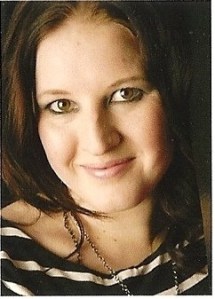
Jenny Blackhurst Author Photo

What’s your approach to research – do you research things up front or wait until the story is written and check facts then?

Up front usually – procrastination is my worst habit when I’m writing so if I think something needs checking I’m straight to Amazon to buy the books or Google to look for answers. With my third I’m trying to curb the habit – I’m making use of the notes tool in Scrivener so I can avoid pulling myself out of the writing, and I find myself typing @look this up@ in the manuscript fairly often now.

As a reader (and a writer) what do you love most about the crime fiction genre? 

I love the whydunnit. You can give me any character as your villain but I want to know what drove them to their actions. I think that’s why I lean towards psychological thrillers; procedurals are quite often about the who. Having said that I love a good procedural when the mood takes me.

And what books, aside from your own, would you recommend as must-reads?

There are SO many. This year has been brilliant for books – I’ve particularly loved Lie With Me by Sabine Durrant, The Darkest Secret by Alex Marwood, Willow Walk by Susi Holliday and He Said/She Said by Erin Kelly. Little Black Lies by Sharon Bolton was amazing, I See You by Clare Mackintosh, You Sent Me A Letter by Lucy Dawson and What Goes Around by Julie Corbin. Also I’ve just finished Local Girl Missing by Claire Douglas and that was great. Can I keep going? I could talk about books all day…

Finally, what does the rest of 2016 have in store for you?

I have a book to write! The mysteriously titled Book Three is underway… And more reading of course.


Big thanks to Jenny Blackhurst for coming round to CTG HQ and letting me grill her!

BEFORE I LET YOU IN is out in eBook now – buy it here from Amazon

And be sure to follow Jenny on Twitter @JennyBlackhurst to stay up to date with all her news!

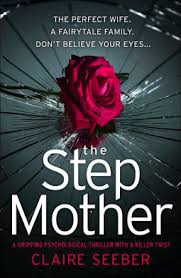
CTG Interviews: Claire Seeber author of psychological thriller THE STEPMOTHER

Unknown

Today I’m delighted to be joined by the fabulous Claire Seeber who has agreed to let me grill her about her latest thriller – THE STEPMOTHER.

Welcome, Claire!

Your latest book THE STEPMOTHER is out now, could you tell us a bit about it?

It’s a kind of spin on Snow White and a look at whether the age-old adage ‘the evil stepmother’ is justified, or a skewed take on a complicated relationship – and why the stepmother is always the outsider (and the father never gets blamed!). It’s also about mental health, I suppose, as in what drives us to the edge; and about familial relationships generally – it centres around two sisters, Jeanie & Marlena, who’ve had a raw deal growing up. That may or may not have pushed them to extreme behavior as adults…and it’s about jealousy, generally.

I found THE STEPMOTHER a real page turner. The relationship between the two sisters, and their unique voices, really hooked me in. What was your inspiration for creating them?

Thank you! I originally wanted to make Marlena the central character (the younger sister, who is a newshound, very career driven, has blotted her copy book in the phone hacking scandal) and I was more interested in her trying to find out what had happened to the girl who’d run off to join ISIS. But my editor was a bit worried Marlena was too ‘controversial’, I think – she’s quite spiky! So I came up with Plan B…tell the first part of the story from Jeanie’s point of view, because she’s (possibly) more sympathetic…and I made it more about families generally. But I managed to sneak the ISIS bit in too J

Within the narrative, you use a twist on a well loved fairy tale to great effect. Did you enjoy fairy tales as a child? And, if so, what are your top three?

Yes, I loved fairy tales, though I wasn’t a particularly girly girl, but I loved books generally. My dad worked in publishing when I was little (he had nothing to do with my writing career though, I ought to add!) and he brought us an amazing big hard-backed fairy-tale book, which I loved. Also all the old Ladybird books, I can still remember Cinderella’s dresses from those, and I also remember Rose Red and Snow White! My favourite…hmm. The ones I remember most are Little Red Riding Hood, The Little Mermaid and probably Cinderella – but having said that, I chose Snow White because I was so interested in the relationship between the child and the stepmother, & the obvious jealousy it causes in that tale.

Can you tell us a bit about your writing process – do you plot everything out first, or just dive in and we where the story takes you?

A bit of both. It depends on my deadline really. I had to be super discliplined on THE STEPMOTHER because I had very little time to write it in. I had to make myself a plot outline and stick to it, and having that as a reference point was handy. I’ve written books with no plot outline, and I think it makes me feel more panicked!

What’s your favourite part of the writing process and why?

Probably just making it up as I go along on the first draft, and feeling like ‘ooh I’m onto something here’ and being really lost in the process. That’s when I really love it and it feels a bit like flying.

“Grip Lit” is a label that’s started being put on a lot of thrillers these days. As a well established writer of psychological thrillers do you see Grip Lit as something new within the genre, or just an new label?

Just a new label and a slightly irritating one at that!! It’s something I’ve pondered a lot as my first novel was written in 2004, before this whole ‘domestic noir/ grip lit’ became such a ‘thing’. Now the media heralds it as new, ‘specially since Girl on A Train, and I think – what’s new about reading the voice of women like us, telling us how it really is?! Worrying about relationships and drinking too much and fancying the wrong people, with some crime / plot twists thrown in?! It’s a bit galling, to be honest, when I’ve been doing it for about twelve years now!

And, finally, what does the rest of 2016 hold for you?

Well, having written 6 psychological thrillers, much as I love them – and I do – I’d like to do something hopefully new…still in the thriller area, but quite different. It’s written, and it’s with my agent – but you’ll have to watch this space because I’m so superstitious, I don’t want to jinx it, not because I’m being precious J !! And I probably will write another pysch thriller but I’m not sure what yet!

Sounds very intriguing! I can’t wait to read it.

A massive thank you to Claire Seeber for popping over to the CTG blog and letting me grill her (I owe you a drink, Claire).

To find out more about Claire and her books visit her website here and be sure to follow her on Twitter @claireseeber

To buy THE STEPMOTHER from Amazon, click here


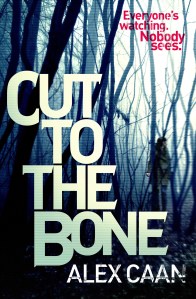
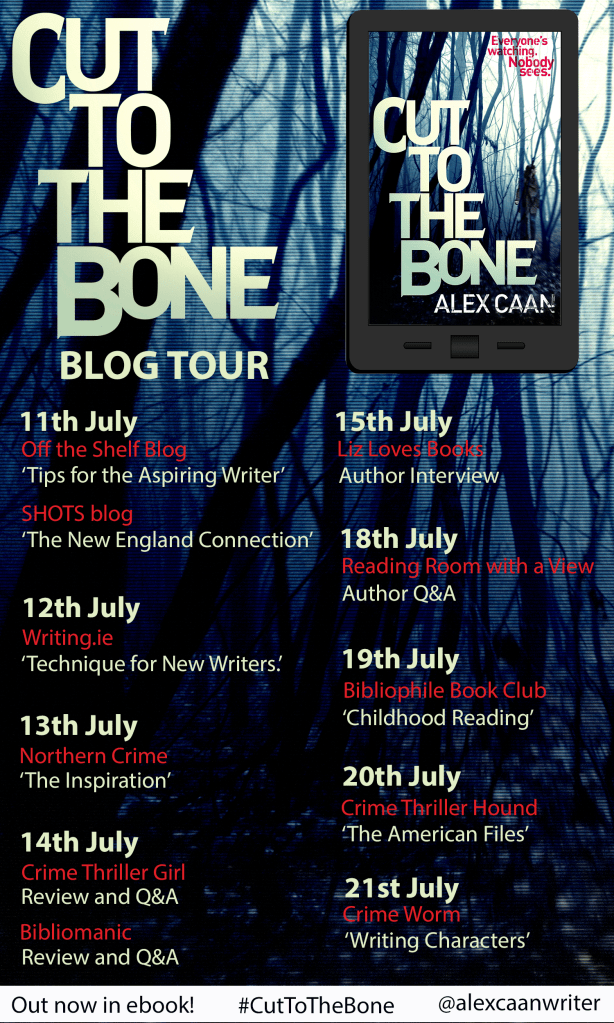
CTG in conversation with Alex Caan: author of CUT TO THE BONE

Cut to the Bone

Today I’m super excited to be hosting a stop on the CUT TO THE BONE Blog Tour. The lovely Alex Caan has joined me on the CTG blog to chat about all things writing, reading and to tell me what it’s really like being a debut author.

Welcome, Alex!

I always read about writers knowing from a young age they wanted write. What do you think? And when did you decide to do it professionally?

For me I think it was about 8 I remember starting to write stories and wanting to be a writer. I think I saw Roald Dahl in his shed on Blue Peter (I know the glamour of my youth!) sharpening his pencils and writing his stories, and that made me realise it could actually be a career. Like so many though I didn’t have the confidence to pursue it, until I hit thirty and decided if I wanted to pursue my dreams it was now or never. So I joined writing groups, did short courses and eventually an MA. But from trying to make this my profession to the publication of ‘Cut to the Bone’ I think it’s taken me a decade of hard graft.

CTG pauses a moment, adds up years: thirty plus a decade … then says [in shock] there is no way you’re fourty!!!!

But, seriously, I’ve talked to quite a lot of authors who’ve said it’s taken them about ten years of ‘apprenticeship’ before getting published. So, you did an MA (like me). How did you find it?

Ha, thank you I think! Mine was a general MA and I spent most of it trying to write the next great Booker winner style novel. Only towards the end, when I had to submit a novel for my dissertation did I have the confidence to write something I really wanted to. I think I learnt a lot about how to cope with criticism, and constructive criticism. And I knew nothing about the business of publishing, how to approach agents and how the process works. The MA helped greatly with that.

Yes, that’s a really great point – I found it gave me a much better understanding of the world of publishing too. And the ‘writing what you want’ thing you mention is key, I think, it’s easier to find your own voice that way perhaps.

America. Why?

My reality especially as a teenager was dire. I think it’s why I connected with the character of Ruby so much, that sense of alienation and being an outsider, which I think both Kate Riley and Zain Harris also share. And when you’re growing up in a deprived inner-city area, and having a tough time, the American Dream is just so big and brash and seductive. The TV, films and especially the novels. Everything just seemed so exciting, even the grittiest thrillers had a touch of glamour. Plus the country was always so different depending where you were, so New York was different from LA, and both different from Texas and Boston. However, I’ve never been and I thought my novel would read as a poor pastiche if I tried to fake it. Instead-I transported Kate Riley from her New England/Washington past to London. That will give me I hope the vehicle to tell stories about America as her past comes back more strongly in future novels. And once I’ve been!

Oh yes, you absolutely must go! I can’t wait to discover more about Kate Riley’s past. And I get what you mean about the gritty but glamorous US-set films and TV shows. I’ve spent a lot of time in the States, and have family out there, so I’m more confident writing about the locations and such, although I do spend a lot of time checking my facts are correct – and getting my Step Mom to say things ‘in Amercian’ for me to ensure I’m getting the phrasing right!

What’s the weirdest research you did?

I ended up wandering around the South Downs late at night while on a work trip to Winchester once. And I think I spent about four days watching YouTube vlogs non-stop. I was by the end of it an honorary teenager, and my world-view was all over the place. But none of this is as exciting as your stint as a bounty hunter!!

An ‘honorary teenager’ – brilliant! But from what you’ve said, you wanted to experience some of what your characters do in order to write about it, and I guess that’s the same with me and the bounty hunting!

Who would you use your taser on?

So far everyone’s been lovely…so far…but I might borrow it if I start meeting writers who act like erm not very nice people (am determined not to swear).

Ha ha! Yes, you’re very welcome to borrow it, so long as you promise to give it back! In return, what advice can you give me as someone approaching publication as a debut?

So advice for you as a debut. I think you’re already leagues ahead of so many writers, the most difficult part for me was breaking into the crime world. Everyone seems to know everyone, and I was terrified. Thank you for your advice by the way, it really helped. So I think you’ve done all of that, and people have so much respect for you already, and I really feel like your novel has a buzz around it. It will really hit the ground running. What I would say, and what I’m failing to do fully, is enjoy it. The nerves make it difficult, the idea that people you have no control over will review it, how much it sells, Tv deals etc etc. Try and ignore all that if you can. And practice your ‘I didn’t win the oscar face’ if you get a questionable review. I have to remember how subjective reading is, and not to take it personally. If someone’s bought the novel and spent the time to read it, they are entitled to feel any way they want to about it.

*blushes* *goes off to practice I didn’t win the oscar face* *returns* – thank you, that’s great advice. I do hope you get to enjoy the experience. Your debut, CUT TO THE BONE, is a fantastic novel.

Speaking of which, can you summarise your novel for readers in a paragraph?

Cut to the Bone is about Ruby Day, a vlogger with millions of fans who goes missing. An elite new unit of the Met are called in under questionable circumstances to investigate, led by Kate Riley, Zain Harris and the rest if her team. What starts of as a misisng person’s case soon escalates into a creepy hunt for a kidnapper, as videos are anonymously uploaded of Ruby pleading for her life. And the kinapper has issued a threat that she won’t be the only one.

It’s a great read, folks. Be sure to watch out for my review next week.

And finally, I don’t believe I swear more than you. Are you sure you counted all bad words? Anyway, my next novel I am determined to swear less. What’s your resolution?

Ha! I think you swear more on the page and less in real life perhaps. I’m the other way around – I edit my sweariness on the page, but in real life I am a pottymouth. Perhaps my resolution should be to even the two out a little more!

And, sadly, that’s all we have time for.

A huge thank you to the wonderfully talented Alex Caan. To keep up with all his news, follow him on Twitter @alexcaanwriter

A bigger thank you to you though for letting me part of the iconic CTG blog, and I can’t wait to read Deep Down Dead (not that this is a MASSIVE hint to get me a proof copy or anything…)

CUT TO THE BONE is out now. You can buy it from Amazon here

And be sure to check out the rest of the fabulous CUT TO THE BONE Blog Tour stops …

Cut to the Bone Banner

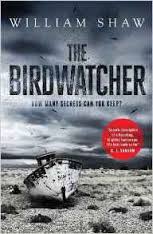
CTG Interviews: crime writer William Shaw about #TheBirdwatcher

Unknown

Today I’m delighted to welcome crime writer William Shaw to the CTG blog. William’s latest book, THE BIRDWATCHER, is out on the 19th May and he’s agreed to let me quiz him all about it …

Your latest crime novel – THE BIRDWATCHER – is out this week. Can you tell us a bit about it?

Having done three in my Breen & Tozer series I thought I’d take a breather. I had this beginning of a book that I wrote ten years ago and a successful author friend kept saying I should go back to it, because he liked it. It was about a child growing up in Northern Ireland, where some of my family are from. I resisted for a while, but then one day I thought, what if that boy grows up into a policeman? And I was off. I’ve never had something where the story just appeared to me in such a satisfying way. When I got to the denouement it was like being a reader, not actually wanting to finish. I was really on the point of tears at the end. Pathetically.

In THE BIRDWATCHER your protagonist, Police Sergeant William South, is a murderer as well as a policeman. What drew you to writing a character who is both killer and justice seeker?

That was the big attraction for this book. How do you write a sympathetic character who has done something very bad? We like complex heroes, don’t we? And everything in recent history tells us that good people are capable of doing bad things in the right circumstances. In fact what William South did turns out not to be that bad at all… but I don’t want to give away why!

How has the way you set out to write THE BIRDWATCHER – a standalone novel – differed from how you approach writing one of your Breen & Tozer series books?

Interesting question. Writing a series taught me that you can – in fact you HAVE TO – create characters without giving that much away about them, because you want them to develop over the arc of the later books. And actually, I really like working out how little I can tell the reader because I think the readers are a part of the creative process. You give them enough stuff for them to be inspired to make up the rest in their imagination. But maybe in a standalone you can’t go QUITE that far. You have to give people a sense of completeness. But it’s only a matter of degree. And in a standalone I think the shape of the book is more important. Everything has to be in it for a reason. A series has to have incompleteness to throw you into the next book.

THE BIRDWATCHER is set on the Kent coast. What was it about this area that attracted you as a writer?

I’m a sucker for Nordic Noir; there’s something about feeling cosy in a hostile natural environment, isn’t there? Much of South Kent has that. It’s not just the landscape that’s hostile. The Kent coast has taken a lot of knocks in the last twenty or thirty years and it’s not an easy place in many ways. I think that makes it interesting. I had a good friend who had their ashes scattered off that beach. With that, the nuclear power station, the derelict boats and the light houses and the cottages, it seems like a really meaningful landscape; it’s a place with a real sense of darkness but also a sense of a escape. And my main character is definitely an escapee.

Can you tell us a bit about your writing process – do you plot the story out first, or dive right in and see where it takes you (or a bit of both)?

I have learned that a one to two page precis is useful so I know where I’m heading, but the best bits of everything I’ve written were always the scenes I didn’t know I was going to write at the beginning. I love the feeling when you write some scene and you’re not sure why it’s there at all, and then 100 pages later you realise that there’s a great reason for it.

Do you have any writing quirks or rituals that you perform when starting a new book?

No rituals, just emotions. I’m really against writing being a superstitious process. I think the job is just to write every day, come hell or high water. After the excitement of opening a fresh document on the computer, it’s terror, mostly. A book seems such a large thing. And the fear continues until about three-quarters of the way through. At the start, I do end up buying a lot of books around the subject and – in the case of the Birdwatcher – finding excuses to visit the place. Books about birdwatching, I’ve discovered, are really delightful. It’s a great excuse to consume a lot of non fiction that you wouldn’t normally read.

What advice would you give to writers who are aspiring to publication in crime fiction?

Approach with humility. There are a lot of really great people in the crime writing community who will offer you amazing help and advice as long as you don’t blunder in there thinking you’re God’s gift. You may be God’s gift, of course. Just keep it to yourself. And accept it’s a crowded genre and the only way you’re going to succeed in it is by writing the kind of book you want to read, not the one you think the market wants, because there are plenty of people doing that already. Oh, and develop an iron liver for events like Crimefest and Harrogate Crime Festival.

And, lastly, what does the rest of 2016 have in store for you?

I’m just finishing the fourth Breen and Tozer book, which opens with the death of the Rolling Stone Brian Jones. I’ll be starting a new book over the summer but I don’t know yet what it’s going to be… Which is fairly scary. But my head is deeply into the current book I’m in so it’s hard to know what it’s going to be about.

Big thanks to William for dropping by the CTG blog and letting me quiz him.

THE BIRDWATCHER is out on the 19th May. Here’s the blurb: “Police Sergeant William South has a reason for not wanting to be on the murder investigation. He is a murderer himself. But the victim was his only friend; like him, a passionate birdwatcher. South is warily partnered with the strong-willed Detective Sergeant Alexandra Cupidi, newly recruited to the Kent coast from London. Together they find the body, violently beaten, forced inside a wooden chest. Only rage could kill a man like this. South knows it. But soon – too soon – they find a suspect: Donnie Fraser, a drifter from Northern Ireland. His presence in Kent disturbs William – because he knew him as a boy. If the past is catching up with him, South wants to meet it head on. For even as he desperately investigates the connections, he knows there is no crime, however duplicitous or cruel, that can compare to the great lie of his childhood. Moving from the storm-lashed, bird-wheeling skies of the Kent Coast to the wordless war of the Troubles, The Birdwatcher is a crime novel of suspense, intelligence and powerful humanity about fathers and sons, grief and guilt, and facing the darkness within.”

You can buy THE BIRDWATCHER from Waterstones here or Amazon here

Find out more about William Shaw on his website http://williamshaw.com and follow him on Twitter @william1shaw

When CTG met … Andy Martin writer of REACHER SAID NOTHING (and Lee Child!!)

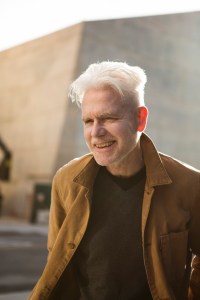
Andy Martin is the Cambridge academic who sat behind Lee Child as he wrote the 20th Jack Reacher book – MAKE ME. Andy observed Lee’s process, his routine, and (amongst other things) the amount of cigarettes he smoked and coffees he drank. For a huge Reacher fan like me, it sounded like the perfect way to spend seven months. I wanted to know more; what was it like to be there as the story was created? How did it feel to be writing a book about the making of MAKE ME? I guess I wanted to know more about the making of the making of book – REACHER SAID NOTHING. Sure, Andy said, let’s talk. So I drove to Cambridge, and we did …

April 14th. Andy’s house. Cambridge. Afternoon.

I’m sitting at Andy’s kitchen table. Andy is making coffee – proper coffee, ground especially and everything. I have made a new friend – Waffle the dog. Waffle is super cute. The only thing is, he wants to sit on my lap, and he’s a bit large for that. Andy tells Waffle to behave. He hands me a coffee, black. It’s delicious.

In REACHER SAID NOTHING you tally up how many cups of coffee Lee Child had in a single day (19 on that occasion). What was the ratio of coffee drinking between you and Lee?

[Andy thinks a moment] About 10:1. I’d have two cups a day, Lee would have twenty. His maximum is about thirty cups though, but he doesn’t drink that many very often. In fact, the chapter with the tally [of words, coffees and cigarettes] was written by Lee – it’s Chapter 57. It was one of the rare days that he started writing early in the day, so he did the tally himself.

Very cool that he wrote a chapter in the book. Did you plan for that to happen?

No, I didn’t plan. I copied Lee’s ‘it might work out’ approach to writing REACHER SAID NOTHING – like he does with his novels. Neither of us had an idea whether the books would work out. In a way I was being Lee, but with longer sentences. It was completely aleatory – we developed the rules as we went along. Just went with it. Like Lee, I didn’t go back and ‘fix’ it – I mimicked Lee’s ‘it’s the only draft’ approach.

So how was it, getting to sit behind Lee as he wrote MAKE ME?

Well, you can see from the emails at the start of REACHER SAID NOTHING [where Andy and Lee discuss the idea of Andy watching Lee write the book] that I’m all excited, and Lee’s replies are short and terse. At that point it was all hypothetical then, when he said yes, it was like, ‘Oh blimey! I’d better do it.’

I didn’t have any idea about how it would be. It depended on him, on how much time he’d allow me to be there. As it was, it worked as I tended to drop in and drop out – there’s a line in the book where I quote Lee as saying that I managed to leave before he felt physically oppressed. [Later in the day, Lee himself says that Andy always let himself out before he felt the need to hit him!]. The amount of time that was varied; sometimes it was a few minutes, sometimes a few hours. Then we’d meet later for coffee or something.

andy1

credit (this and above photos): Jessica Lehrman

In REACHER SAID NOTHING you talk about being a ‘participant observer’ of the making of MAKE ME, tell me more about the participant part of that.

Me being there did influence Lee in a variety of obscure ways, like certain words, and a name – the name Wittgenstein. It’s spoken by Reacher and is a nod towards me [see REACHER SAID NOTHING Chapter 62 to find out how]. I reference Wittgenstein often. It’s Lee’s code word for me.

He’s also very open to external influences. On the one hand he remembers a lot of stuff – he’s got a Velcro mind – and he also uses the things around him and puts them into his writing; like ‘bucket’ appearing on the page in MAKE ME while the cleaner is in the apartment Lee’s writing in, and ‘nail’ appearing on the page when the sound of construction nearby is audible.

When you think, why are the books so popular? I think it’s because he manages to include the experience of everyone in them. He taps into the universal in some way. You know, Lee wouldn’t like this, but I think there’s something a bit mystical about it.

Oh yes?

Well, I went to interview the real Lydia Lair [Lydia Lair is the name of a key supporting character in MAKE ME. The real Lydia Lair had won a charity auction to get her name in a Reacher novel.] Lee didn’t know her. All he had was her name. But when she read MAKE ME she was amazed – in the book, the character Lydia Lair is married to Evan Lair, a doctor. The real Lydia Lair’s first love was called Evan and was training to be a doctor, but he died in a car accident. Even though Lee had been shut away in his apartment, he’d somehow tapped into the collective unconsciousness and unknowingly included these references [for ‘collective unconscious’ see Jung’s theory]. How did he do it? There’s a mystery at the core!

As a Cambridge academic, how did writing REACHER SAID NOTHING differ from writing academic research papers?

[Andy thinks a moment. He gets up to give Waffle the dog his dinner. As Waffle eats, a cat comes to the window and peers through. It looks first at the dog, then me. It looks angry.] It reminded me of writing about Napoleon. Or surfers. Or Brigitte Bardot. It’s true, there is some literary snobbery about ‘airport books’ but I think there’s something miracle-like about best sellers. Lee’s default setting is ‘rock star’ – his books might not be Beethoven, but they are The Beatles! I was fascinated by the mystery of what he does, and how he does it.

I had a really fun experience writing REACHER SAID NOTHING versus academic papers. It’s been a broadly collaborative experience. There’s a definite benefit of being associated with Lee, which I very much appreciate – I’m kind of borrowing his readers. Or some of them! I’m hoping the book is what Reacher would do if he wrote literary criticism. I think it’s the difference between Lee and me that makes it interesting – the dialogue going on, and us each getting a glimpse into the other’s world. Maybe pulling a bit of each other’s style into each other’s work.

REACHER SAID NOTHING is all about the writing side of it. I’m now tracing the reader responses to MAKE ME.

So, you’re writing another book?

Yes, it’s about Lee Child and the readers of Jack Reacher, and is a write up of different readers’ experiences of the book and character. He means different things to different readers. Each one comes to the book from very different places, but it satisfies their very different demands. [Cue some musing from me and Andy about what needs the Reacher books satisfy for us].

credit: Dan O'Hara

credit: Dan O’Hara

I know that you’re a big Reacher fan. Have you gone back and read any of the books since writing REACHER SAID NOTHING and, if so, has the experience of watching Lee writing MAKE ME changed the way you read Reacher books?

Yes, I do go back and re-read them. I was particularly interested in re-reading WORTH DYING FOR because that’s the book set in an isolated farming community in Nebraska; it seemed the closest to MAKE ME in location – the same kind of cut-off micro-environment. [At this point we went off topic a bit, talking about the swimming scene in PERSUADER, and I learnt that Lee had been a champion distance swimmer in his youth.]

I can read the books in different ways – either looking for some specific technique, or reading them like I’m diving into the pool and letting it wash over me. I’m a bit nerdy, like a rock band fan. I know the obscure facts but I can still enjoy it. I still have the pleasure of the text. And, like every other reader, I’m thinking when’s the next one out!

Me too!

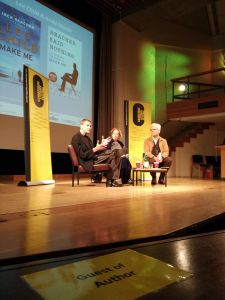
And with both of us looking forward to reading the next Jack Reacher book – NIGHT SCHOOL – out later this year, the interview was over. But the day was not. Andy and Lee were doing an event together that evening as part of Cambridge Literary Festival (Twitter @camlitfest) and before the event Andy introduced me to Lee. The three of us, along with the lovely Dan O’Hara, strolled through Cambridge (including taking a short cut through the gorgeous King’s College) to the venue, and then I got to chat with them for a bit in the green room. As you can imagine, for an uber Reacher fan like me, it was an amazing treat – in fact, I think I’m still on a high from the whole experience!

REACHER SAID NOTHING by Andy Martin is out now. It’s a fascinating book, and a real must-read for Reacher fans and aspiring thriller writers alike. Here’s the blurb: “On 1 September 1994, Lee Child went out to buy the paper to start writing his first novel, in pencil. The result was KILLING FLOOR, which introduced his hero Jack Reacher. Twenty years later, on 1 September 2014, he began writing MAKE ME, the twentieth novel in his number-one-bestselling Reacher series. Same day, same writer, same hero. The difference, this time, was that he had someone looking over his shoulder. Andy Martin, uber Reacher fan, Cambridge academic, expert on existentialism and dedicated surfer, sat behind Lee Child in his office and watched him as he wrote. While Lee was writing his Reacher book, Andy was writing about the making of MAKE ME. REACHER SAID NOTHING is a book about a guy writing a book. An instant meta-book. It crosses genres, by bringing a high-level critical approach to a popular text, and gives a fascinating insight into the art of writing a thriller, showing the process in real time. It may well be the first of its kind.”

You can buy REACHER SAID NOTHING from Waterstones here and from Amazon here

To find out more about Andy Martin, pop over to his website at http://www.andymartinink.com and follow him on Twitter @andymartinink

You can read more about Andy Martin’s experience of writing REACHER SAID NOTHING over on The Conversation here http://theconversation.com/the-man-with-no-plot-how-i-watched-lee-child-write-a-jack-reacher-novel-51220

And watch Andy and Lee Child in action last month at the Centre For Fiction Master Class here https://www.youtube.com/watch?v=5bF5wDt_D9g

On June 20th Andy will be talking in London at the Prospect Magazine Book Club. Find out more and get tickets here http://www.prospectmagazine.co.uk/events/bookclub-andymartin


CTG Interviews: Brooke Magnanti about writing #TheTurningTide

Unknown


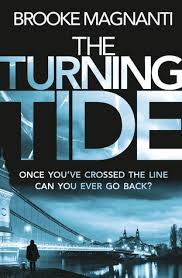
Today I’m delighted to welcome the fabulous Dr Brooke Magnanti to the CTG blog to talk about her crime novel THE TURNING TIDE.

Brooke is the writer behind the best selling Belle de Jour books, and has a PhD in Forensic Pathology which she uses to great effect in THE TURNING TIDE – her first crime novel. Having read the book (it’s awesome), I couldn’t wait to find out more about how the story and characters were developed and all about Brooke’s writing process.

So, to the interview …

Welcome, Brooke. The Turning Tide is your first thriller, can you tell us a bit about it?
The story starts in Molesey near London, where a woman named Erykah MacDonald finds out the husband she was about to walk out on has just won the lottery. What she doesn’t know yet is that the money comes with significant strings attached. The very careful, anonymous life she struggled to rebuild after a scandal in her teens is about to be blown apart. There’s also a dodgy new political party trying to establish its roots on Scotland, and a decomposing body that washed up on the beach there – Erykah has to quickly learn who she can and can’t trust before she ends up getting killed too.

Erykah is a great female anti-hero; resourceful, determined and dynamic. What was the catalyst for creating her as a character?
Initially, Erykah wasn’t the main character – the story was told more or less as it is now, but from the point of view of the radio station intern, Kerry. And much as I loved the plot and the characters something about that just wasn’t working out. I realised that I was still trying to write as a twenty-something, someone who was the age I was when I wrote the Belle books. That’s not where I’m at now and writing twenty something when you’re forty something doesn’t really ring true. And there was this already existing character, Erykah, who was someone closer to my age, with more experience of life than Kerry, and who had more at stake, more to lose when things went wrong. As soon as I rewrote the book to put her at the centre of the story it all made sense.

In the book you have some great mortuary scenes and forensic details. How did your PhD in Forensic Pathology and experience in a mortuary laboratory help influence your fiction?
It was a huge influence. The layout in the Cameron Bridge mortuary is patterned like a smaller version of the Sheffield Medico Legal Centre where I studied, though a little bit smaller and a lot older. The techniques and equipment being used, as well – all the things that were used day to day at the MLC. While none of the cases I saw during my time there were exactly like the bodies in this book, I did lean pretty heavily on the many decompositions I did see in my time there to try to put together something that would be both realistic and unusual.

The story also covers social media use (and abuse) and tracking people through technology. How did you go about researching these aspects of the plot?
Nearly all of the social media parts were either something I have done, or seen people do on the internet. For example, getting someone to click on a link to a domain you have control over, to find their true identity… that’s been a strategy to unmask anonymous abusers since long before Twitter. When I was anonymous, I had to be very aware of what technology people might be using to unmask me, and to avoid getting trapped. It helped that I had a background in computer science and web design. A lot of other people have tried to be anonymous and didn’t realise what clues they were unwittingly leaving behind, so were quickly unmasked. Even when fashions in social media change the basic investigating techniques really don’t.

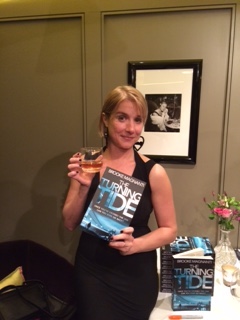
Brooke Magnanti with her book The Turning Tide

Brooke Magnanti with her book The Turning Tide

There’s a lot of ruthless political shenanigans in The Turning Tide. How did you go about setting up this element of the story?
I started writing the book before the Scotland referendum, and of course with no idea how that would turn out, had to follow the news very closely to keep up with all the incredible developments. Once you get your eye in with politics, though, it’s tough both to craft a story that isn’t too close to reality – you don’t want to libel anyone – and that won’t be overtaken by real events. This is almost universally the case in political trillers: the last season House of Cards is not remotely as gruesome as the current US election, and The Thick of It seems a lot like a documentary at times. It was a very strange thing to be writing about, but I loved it.

Can you tell us a bit about your writing process – do you plot the story out first, or do you start writing and see where it takes you?
A bit of both. I like to start with a big idea – in this case, it was how much the media controls what we think of other people, and how it feels to survive that – and then start putting characters in that world. From there, I try to keep to a chapter by chapter plotting plan. Though sometimes the characters speak up for themselves, and end up doing things I wouldn’t have expected. That was a fun experience with writing this. I really didn’t know, until the end, what would happen to Erykah.

For those people aspiring to publication as crime writers, what advice would you give?
Write every day. I can’t tell you the number of amazing elevator pitches I’ve heard from people over the years, but 99% of them never sit down and write the damned thing. Start writing, keep writing. You wouldn’t believe the number of unpublished manuscripts I have sitting on my hard drive. It’s all experience.
But also, you know, don’t forget to live life. You can tell the difference when someone is writing from what they know versus just going through the motions. Clare Macintosh’s I Let You go rang absolutely true because she had been in the police, it really stood out a mile. Books and expert sources can fill some gaps but you do the best research by living an interesting life.

And, finally, what does the rest of 2016 have in store for you?
I’m currently working on a follow up to The Turning Tide. It’s not a straight sequel, but it’s set in the same world. You’ll definitely see more of the mortuary staff, and there will probably be a few other cameos as well. After that? I’d love to stay in Scotland, and I’d love to stay with thrillers. So we’ll see!

Massive thanks to Brooke for letting us question her about her latest book – THE TURNING TIDE – and her writing process.

The Turning Tide is out now, published by Orion Books, and it’s great read. You can buy it here from Waterstones, or here from Amazon.

To find out more about Brooke, like her page on on FaceBook and follow her on Twitter @belledejour_uk

To read my review of The Turning Tide click here