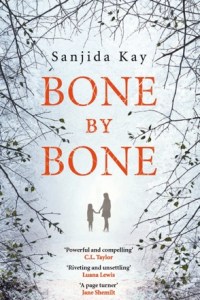
CTG Interviews: Sanjida Kay about BONE by BONE

Image 01-02-2016 at 12.17 (1)

Today I’m delighted to welcome writer and broadcaster Sanjida Kay to the CTG blog to talk about her book BONE BY BONE, her writing process and why she loves crime fiction.

Her debut psychological thriller BONE BY BONE is out now. Here’s the blurb: “How far would you go to protect your child? When her daughter is bullied, Laura makes a terrible mistake… Laura is making a fresh start. Recently divorced and relocated to Bristol, she’s carving a new life for herself and her nine-year-old daughter, Autumn. But things aren’t going as well as she’d hoped. Autumn’s sweet nature and artistic bent are making her a target for bullies. When Autumn fails to return home from school one day Laura goes looking for her and finds a crowd of older children taunting her little girl. In the heat of the moment, Laura is overcome with rage and makes one terrible mistake. A mistake that will have devastating consequences for her and her daughter…”

Now, to the interview …

What is your favourite genre to read?

Psychological thrillers! Although I do like the odd classic and work of literary fiction too!

Who is the biggest influence on your writing?

The writer that has most influenced me is Emily Brontë and, in particular, her novel, Wuthering Heights. I’m haunted by the relationship between Heathcliff, Cathy and Edgar Linton; the Gothic savage beauty of the moors and the undercurrents of class, racism and misogyny.

Margaret Atwood is another great influence because of the way she weaves science and politics into her work. I prefer her later books, Oryx and Crake and Year of the Flood, for their creativity, environmental themes and because her writing has a lightness of touch it lacked when she was younger. Cormac McCarthy is one of my favourite novelists; he writes about the landscape and nature in such an elemental way, as if human nature were allied to it. And Henry James, especially The Golden Bowl, for his understanding and subtle portrayal of how people think about what others are thinking about them.

What inspired you to write Bone by Bone?

Just after I had my own daughter, I used to take her out in the buggy to get her to go to sleep. I felt incredibly vulnerable – recovering from the birth, on my own and now responsible for a tiny, fragile newborn.

I started to imagine a character who has a much older daughter than mine, but feels vulnerable, isolated, lacking in confidence all the time. And I imagined what would happen if that person found out that her daughter was being bullied. She would want to protect her child with all her heart – like any parent – but she might not have the resources – particularly if there’s nothing the bully won’t do to her child.

What were some of the challenges you faced whilst writing this novel?

It’s incredibly upsetting to write about bullying, both from the point of view of a parent and a child. Every time I read through a draft of my novel, I would cry. From a technical perspective, it was challenging to put myself in the head of a nine-year-old, especially as it’s a long time since I was nine!

You’re Bristol-based – how does the city inspire your work?

I’ve always been inspired by landscape and the natural world and it features heavily in my fiction. When I came to write Bone by Bone, I thought I’d aim for a gritty urban landscape, graffiti-ridden and litter-strewn, in Bristol, where I live.

What actually happened was that I ended up placing most of the action in a tiny urban nature reserve!

The lines began to sing, a shrill, electric song, and then the cacophony of the train roared out of the darkness. The carriages were almost empty and painfully bright as they hurtled along the tracks to the heart of the city. In the fleeting light she saw the meadow, dotted with stunted hawthorns, their twisted limbs dense with red berries, and then a shape: achingly familiar, child-sized, shockingly still.

Bone by Bone is set in a mad mixture of two areas in Bristol: Montpelier and St Werburghs. For those who know Bristol intimately, it’ll be obvious that some of my descriptions are realistic but that I’ve shunted whole sections of the landscape around to make my plot work!

IMG_2315

Do you feel that multiculturalism is sufficiently represented in the current literary climate?

I think it’s lacking. I’m mixed race and I rarely see my experience portrayed in the books I’m reading. In psychological thrillers, which are very middle-class, the majority of authors and characters within them are white. I include racial diversity and prejudice in my novels as standard – rather than writing stories that are solely about race.

Bone by Bone places the parent’s perspective at the forefront of the narrative. Did you feel it was important to represent Laura’s point of view?

It’s hard for any parent to see their child being hurt, whether it’s because they’re picked on at school or they fall and hurt their knee. On the one hand, we want to protect our children, and on the other, we want them to grow in courage, independence and confidence so they can survive the bumps and bruises the world throws at them. It’s a difficult balancing act, for parents and children.

Do you feel that the public is suitably aware of the continual issue of bullying? Do you think that children are provided with adequate support?

I’m delighted to announce that I’m donating a percentage of the profits from my thriller, Bone by Bone, to the anti-bullying charity, Kidscape. The NSPCC says that almost half of all children are bullied. I don’t think parents are aware the figures are so high – nor do most people know what to do about cyber-bullying, which is increasing. Kidscape has some fantastic resources for schools, carers, parents, children and young people.

How would you describe a typical working day?

I start my writing day by exercising – writing is such a sedentary job, I need a bit of a buzz and some movement before I begin! Then I have a strong coffee and start! I aim to write at least 1,000 words a day during the writing period. I have set hours for writing – I love it but I treat it like a job. I spend at least three days a week working on my novels. Usually I write in my office, which is lovely. It’s all white with botanical prints and an oak desk. It looks out over the allotments that feature in Bone by Bone. I need peace and serenity to help me write. Sometimes I’ll go to a cafe and write too – if they do good coffee and cake! It’s a welcome contrast to the monastic stillness of my office. If I get stuck, I grit my teeth and force myself to sit in front of my computer screen. When I need to think big or wrangle with a knotty plot problem, I’ll go for a long walk.

What are some of your favourite contemporary thrillers?

Gone Girl has an incredible plot, the characters are chillingly Machiavellian and the prose is pitch-perfect for this kind of thriller. Flynn’s previous novel, Sharp Objects, doesn’t have such a rollercoaster plot, but it’s much edgier with a searing twist; perfect Southern gothic-noir. I loved Peter Swanson’s The Kind Worth Killing, Maggie Mitchell’s Pretty Is and The Black-Eyed Susans by Julia Heaberlin. The prose in Jane Shemilt’s, Daughter and The Drowning Lesson is beautiful. On my bedside table is Holly Seddon’s Try not to Breathe.

A big thank you to Sanjida Kay for talking to us all about BONE BY BONE and her own writing process.

To find out more about Sanjida check out her website at www.sanjida.co.uk and follow her on Twitter @SanjidaOConnell

BONE BY BONE is out now. You can order it from Waterstones here, or from Amazon here.
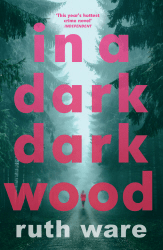
 

CTG Interviews: Ruth Ware about her psychological thriller IN A DARK, DARK WOOD

unnamed

The night I called Ruth Ware was suitably eerie. Torrential rain and high winds were causing the branches of a tree to bash the window I was sitting next to, and the security light outside kept going on and off ‘for no reason’. All in all it seemed a fitting context for the call to discuss Ruth’s brilliant psychological thriller IN A DARK, DARK WOOD.

If you’ve not read this fantastic thriller, here’s the blurb to give you a flavour: “Leonora hasn’t seen Clare for ten years. Not since Nora walked out of school one day and never went back. Until, out of the blue, an invitation to Clare’s hen do arrives. Is this a chance for Nora to finally put her past behind her? As the champagne corks pop, and the secrets begin to flow, and a hen do for an old school friend begins to take a sinister turn …”

So, to the interview …

I found Nora a hugely compelling character – likeable, genuine, and self-doubting, yet refusing to be beaten by everything thrown at her. What was your jumping off point for creating her?

I like to think of Nora as being vulnerable on the outside but with a core of steel on the inside. The idea for IN A DARK, DARK WOOD came about from a conversation with a friend. They said they’d never read a thriller set on a hen night, and I knew instantly that I wanted to write that book (and luckily they didn’t!).

In the beginning I knew that Nora would struggle with accepting the invitation, and wanted to create an atmosphere of claustrophobia and threat. I think most people, unless they’re real extroverts, find being in a group of relative strangers for a long period tiring. I wanted to bring this out.

Through working with my editors I explored the reclusive, introverted side of Nora’s character, but I also strongly wanted to keep an ‘everywoman’ feel to her. I felt this was important, and it lets the reader ‘tread the path’ with the character – which is something I enjoy to do in a thriller.

The book tells both the modern day action of the hen party, and the past events that led to Nora and Clare not speaking for ten years. Did one of these timelines come to you before the other, or did they develop alongside each other as you wrote?

I always had the sense that there was a lot of history between them, you know the weight of shared experience – good and bad – you have with people you’ve known a long time. And I knew there was a big reason in their past that made Nora reluctant to accept the invitation.

I knew the incident where things all kick off would happen a long way into the book, so the hospital timeline and hen night timeline were really important to get all the players in place first, and for the reader to get to know them. I always find it more interesting to start from a place where you know something dreadful has happened – it’s an easy way to show something bad is coming, without having to do a lot of tedious signposting.

What I especially loved about the book was the uneasy dynamic between the friends at the hen party, and that they felt so incredibly real. When you’re writing do you use actors (or real people) when you picture your characters and how they’ll react in a scene?

I tend to keep everything in my head. I do keep a few notes on basic stuff – eye colour, height if that’s relevant to the plot – but that’s it really. There are quite a few scenes where the guests at the hen are all together, but without any other characters, so that made it easier to flesh them out. Also, the set up [of them meeting on the hen] meant they could introduce themselves, and allowed them to talk about themselves.

I’ve been on a few hens, and I think you start to notice archetypes. In fact, I’ve probably been all of them at one time or other over the years – the organiser, the bride, the new mum – so you could say the characters are all different aspects of me. The alpha girl was also a lot of fun to explore!

The glass house in the forest is chillingly cut off from civilisation, yet the glass allows those outside to see in. It’s creepy and adds an added layer of tension to the story – what gave you the inspiration to create such a setting?

I’ve always been fascinated by forests. Pine forests are always so dark, because they’re evergreen and never lose their leaves. And I love the Scottish forests that go on and on for miles. So setting the story in a forest was a bit of wish fulfilment!

The glass house I pinched from all those American horror films – the ones where the people are going round the house checking all the doors are locked, but you know it’s too late! I thought about the time of day, as it gets dark, when windows stop being a way of looking out, and become a way for people to look in – that’s when I close the curtains! But when I see houses with huge walls of glass, like on Grand Designs, I’ve often wondered what it would be like to live in a house like that – where you can’t have curtains.

One of the themes of the book is exposure – exploring the face we choose to present to others and the face we choose to hide. In a way, the glass house is like a physical representation of this.

IN A DARK, DARK WOOD has been likened to the sort of locked room mystery Agatha Christie would write if she was writing crime novels today. Are you a Christie fan, and what other crime novels do you count among your favourites?

Yes, I’m a Christie fan, although I didn’t set out to write that type of novel – my agent was the first person to say the story was like a modern Agatha Christie. I read a lot of Christie’s books when I was a teen. She was a great plotter and I’ve always loved books which have intricate workings and red herrings. Gone Girl is a lot like that – the plot locks together in a really satisfying way.

I worked in the publishing industry for a long time so I got to read a wide variety of genres and authors, and I still have a magpie reading habit now! I’ve just read the non-fiction book that the movie Pitch Perfect was based on – which was great. I love psychological thrillers – books like Erin Kelly’s The Poison Tree, Clare Mackintosh’s I Let You Go, and Tammy Cohen’s When She Was Bad (which is incredibly scary!)

What would you say your favourite part of the writing process is?

I love the ideas stage, that point where you’re nudging at an idea and letting in take shape. It’s like an unscratched lottery ticket – it could be the most wonderful book ever written. It’s like being in the early stages of a love affair – full of possibility.

IN A DARK, DARK WOOD is your debut thriller, can you tell us a bit about your journey to publication?

I wrote YA books before, but this feels very different – the types of events you do, the amount of exposure you get. It’s very nerve racking, putting yourself out there, and it definitely felt like a risk, trying something out of my comfort zone, but I’m so glad I did. If I’d sat down to write a fantasy wish list, then I think the top three things would have been getting onto the New York Times Best Seller List, the Sunday Times Best Seller List, and achieving a film deal. I would have been over the moon to get any of those – I still can’t quite believe that IN A DARK, DARK WOOD has done all three.

You mentioned the film deal, can you tell us a bit about that?

Yes, it’s still at an early stage at the moment, but very exciting. It’s been bought by New Line (part of Warner Bros) and Reese Witherspoon, who produced Gone Girl, is attached to the project.

Will you be involved in the writing of the screenplay?

A part of me would love to be involved, but I know about books not film, so it’s best to leave the screenplay to those in the film industry I think.

And how have things been since IN A DARK, DARK WOOD was announced as one of the Richard & Judy Book Club Spring Reads?

Surreal! I knew when it was on the shortlist, and that was really nerve racking. Being chosen is a dream come true. The Richard & Judy Book Club persuades people to take a punt on an author they’ve not heard of, because it’s Richard and Judy saying ‘try this, you might like it’. It feels incredibly special to be part of it.

And, finally, what does the rest of the year have in store for you?

Well, I’ve just finished the structural edits on my next book. It’s called The Woman in Cabin 10, and I’ll be spending the next few months doing the copy edits and proof reading on it. Then I’ll start writing the third book. I’ve got a skeleton outline of the plot already, and a cast of characters – I’m in the love affair stage of writing!


A huge thank you to Ruth Ware for letting me interrogate her for the CTG blog.

The fabulous psychological thriller IN A DARK, DARK WOOD is out now. You can buy a copy from Waterstones here  and from Amazon here 

Be sure to check out Ruth’s website at www.ruthware.com and follow her on Twitter @RuthWareWriter

And you can read my review of IN A DARK, DARK WOOD here 


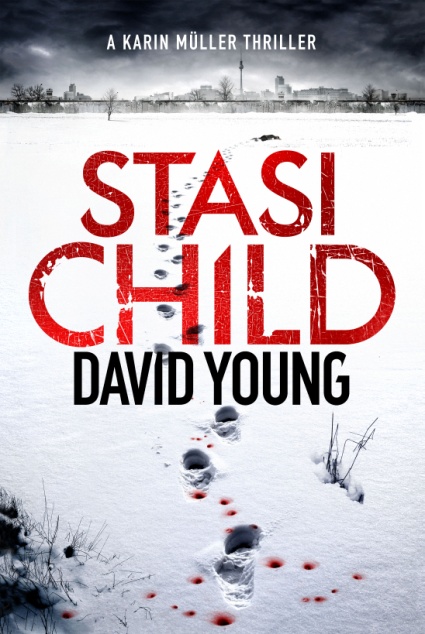
CTG Interviews: David Young debut author of Stasi Child

image001

In celebration of STASI CHILD being published in paperback by Twenty7 Books today, I’m re-running my interview with author David Young. STASI CHILD is David’s debut novel and the winner of the PFD 2014 Crime Prize. Here’s what he told us when he popped along to CTG Towers to chat about the book, his writing process, and his route to publication …

Your debut, STASI CHILD, is out this month. Can you tell us a bit about it?

It’s a crime thriller – part historical crime, part police procedural, part thriller, and I guess a dash of Cold War politics to boot. What it’s not is a traditional Cold War spy thriller – although it’s set in the era of the Cold War. It tells two parallel stories: one in third person past through the eyes of a female detective in the state police, Oberleutnant Karin Müller, who’s trying to solve a gruesome murder but has to battle obstacles put in her way by the secret police, the Stasi. The other, in first person present, follows the life of a 15-year-old female inmate of a communist Jugendwerkhof – which loosely translates into ‘youth workhouse’ or reform school. The two stories eventually collide in a climax on the snowy slopes of northern Germany’s highest mountain, the Brocken, near the border with the west. I think fans of Tom Rob Smith’s Child 44 would enjoy it, and also those who read Anna Funder’s non-fiction account of the Stasi’s methods, Stasiland.

STASI CHILD is set in East Germany in 1975. What drew you to writing about this moment in history?

No-one had yet written a crime series set in East Germany – at least not in English as the original language. So I thought it filled a gap in the market, was something a bit different and – given the success of books like Child 44 and AD Miller’s Snowdrops – could prove popular. The idea originally came from reading Stasiland while on a self-booked (and at times chaotic) mini-tour of eastern Germany with my indiepop band about seven years ago. I was fascinated that you could still feel the ghost of the communist east even though the Berlin Wall had been torn down, at that time, twenty years earlier. Müller’s office is underneath Hackescher Markt S-bahn station – where we played our Berlin gig. So I wanted to choose a time when East Germany was perhaps at its most confident, and yet with enough years to fit a series in, if the first book sold well.

Given the modern historical setting, how did you go about researching the book?

A mixture of things, really. Watching films like The Lives of Others and Barbara, episodes of the original East German detective show, Polizeiruf 110, and the current German TV series set in the period, Weissensee – which is a great watch but inexplicably, and annoyingly, only has English subtitles on the second of its three series so far. I also read a lot of memoirs of inmates of Jugendwerkhöfe, that sort of thing, and true crime books by former GDR detectives. I don’t speak German – so it was a case of tearing out pages, feeding them into an OCR programme via a scanner, and then putting it all through Google Translate! What came out was barely intelligible, but you could pick out the facts even if the actual storytelling was mangled beyond repair. I also had great fun visiting all my locations, and interviewing former East German detectives (with the help of translators). So I loved the research, and I’m itching to get back out to Germany again. I also keep telling myself I must learn German!

You recently completed the City University MA in Creative Writing (Crime Fiction), how do you think this helped you on your journey to publication?

I think it was the key to it, really. We had some great tutors who were all published crime writers: Claire MacGowan, Laura Wilson and Roger Morris were mine – although William Ryan, who writes in a similar genre to me, has now joined. Roger introduced me to Peter May’s Lewis trilogy, and the structure of Stasi Child – with its twin narrative – is quite similar to May’s The Lewis Man. Claire nurtured the original idea, Laura worked on the nuts and bolts as my main novel tutor, and then both of them read and fed back on the full draft. The result was that Stasi Child won the course prize sponsored by the literary agents, PFD, and by the shortlisting stage a young PFD agent, Adam Gauntlett, had already declared his hand in wanting to represent me.

image006

So, what’s it like having your debut novel published? What’s your best moment so far?

Because my publishers Twenty7 (part of the Bonnier group) are e-book first, the biggest thrill was getting a physical copy of the proof. It’s got a slightly different cover, very minimalist, which I love. I’ve only got one copy, though, and the publishers have run out now so I guard it with my life. And then in the last few days [after the eBook publication], Stasi Child became the fourth bestselling Kindle book in the UK, and the number one bestseller in Historical Fiction – for ebooks and paperbacks. It’s fallen back since, but that was a champagne moment, figuratively sitting on top of luminaries such as Robert Harris, Hilary Mantel …well, everyone who’s anyone in historical fiction. Ha! It’ll probably never happen to me again. We made sure we kept the screenshots of the charts!

STASI CHILD is the first in the Karin Müller crime series, can you tell us anything about the next book?

Yes Karin returns, but this time in the model East German new town of Halle-Neustadt, where underneath the ideal communist city gloss, dark things are happening a few months after the closure of the Stasi Child case. The Stasi are heavily involved again, and we also learn more about Karin’s past – with several surprises in store for her. It follows the same twin narrative format, but the second narration this time is darker, more disturbed, and unreliable. In fact the whole thing is darker and more disturbed, which is slightly worrying as most people seem to think Stasi Child’s about as dark as you can get.

And, finally, what does the rest of the year have in store for you?

Initially, I’ll be concentrating on promoting the Stasi Child. Then it will be a combination of reshaping book two with my editor at Bonnier, and researching book three with a trip to Germany. Oh, and I might finally get around to starting to learn German … but no promises!


You can find out more about David by checking out his website at www.stasichild.com and follow him on Twitter @djy_writer

Stasi Child is a great read, perfect for fans of historical crime fiction. Here’s the blurb: “East Berlin, 1975: Questions are dangerous. Answers can kill. When murder squad head Oberleutnant Karin Müller is called to investigate a teenage girl’s body found riddled with bullets at the foot of the Berlin Wall, she imagines she’s seen it all before. But when she arrives she realises this is a death like no other: it seems the girl was trying to escape – but from the West.

Müller is a member of the People’s Police, but in East Germany her power only stretches so far. The Stasi want her to discover the identity of the girl, but assure her the case is otherwise closed – and strongly discourage her asking questions. The evidence doesn’t add up, and it soon becomes clear that the crime scene has been staged, the girl’s features mutilated. But this is not a regime that tolerates a curious mind, and Müller doesn’t realise that the trail she’s following will lead her dangerously close to home.

The previous summer, on Rügen Island off the Baltic Coast, two desperate teenage girls conspire to escape the physical and sexual abuse of the youth workhouse they call home. Forced to assemble furniture packs for the West, the girls live out a monotonous, painful and hopeless life. Stowing away in the very furniture they are forced to make, the girls arrived in Hamburg. But their celebrations are short-lived as they discover there is a price on freedom in the DDR…”

STASI CHILD is out now. To buy a copy via Amazon click here

The FEVER CITY Blog Tour: CTG Interviews debut author Tim Baker about FEVER CITY

 41WWhrlTU7L._SX315_BO1,204,203,200_

Today I’m delighted to be hosting a tour stop on Tim Baker’s FEVER CITY Blog Tour. Tim’s dropped by the CTG blog to answer a few questions about this stunning noir thriller …

Welcome, Tim! Your debut novel FEVER CITY was published in January, can you tell us a bit about it?

FEVER CITY is a propulsive, seat-of-your-pants noir thriller set in the 1960s with an important contemporary component set in 2014.

There are three separate narratives, each with its own central mystery. As the novel progresses, these three stories begin to converge then intertwine, dovetailing at the end into a resolution of all three mysteries.

The first narrative features a private investigator, Nick Alston, who is brought in to assist the police in their search for the kidnapped child of America’s richest and most hated man.

The second concerns a professional contract killer, Hastings, who is recruited into an attempt to assassinate President Kennedy and who decides to risk his life to sabotage the hit.

And the third concerns Nick’s son, Lewis Alston, who is in Dallas in 2014 to interview JFK conspiracy nuts for a book he’s doing on the Kennedy Brothers and who stumbles across information that could connect his own father to the assassination of President Kennedy.

I’m a big fan of the noir thriller. Can you tell me about what attracted you to writing this kind of story?

I’m also a huge fan of the noir thriller. What I love most is the moral ambiguity and the elevated dramatic stakes, as well as the power of the genre’s central conceit – which is that we are all prisoners of the mistakes of our past. Noir is always character-based storytelling and so tends to occupy a richer, more emotionally complex terrain than ordinary thrillers; a landscape of nuance, despair and danger.

In FEVER CITY you blend historical facts – like the assassination of JFK – with the fictitious storyline. How did you go about researching the era and places featured?

It was very important for me to get all the background historical elements right – whether they were concerning JFK and the documented events leading up to his assassination, or portraying the real-life figures who appear as secondary characters, such as Howard Hughes, Marilyn Monroe or J Edgar Hoover.

Once I had that historical architecture in place, I set about shaping mood and nuance, often by withholding specifics and implying ambiance instead of trying to build it.

As far as place is concerned, I believe that tone is the best way to capture the kind of rich period atmosphere I was after, rather than merely layering factual details down one upon another.

How would you describe your approach to writing – do you dive right in, or plot everything out in detail first?

Normally I begin with a strong sense of place. I try to write a locale in as rich and as vivid a way as possible, so that I feel as though I have entered that terrain; as though I inhabit it.

Once I’ve accomplished that, a certain tone emerges, and with it a voice.

That’s the pivotal moment for me – when I discover that voice. Sometimes it never arrives, and I have to abandon the story, but when I do manage to find it, I get caught up in the voice and just start writing.

I never plot the story at the beginning. Instead I see myself as embarking on a voyage of discovery, knowing there will be surprises along the way and trying not to anticipate them.

After completing several drafts, I begin to step back and take a look at the plot from the point of view of story structure. This is when I try to sharpen details and ensure that the story is both coherent and structurally sound without being obvious. My editor at Faber, Angus Cargill, taught me an enormously important lesson about the power of keeping your writing implicit.

FEVER CITY is your debut novel. Can you tell us a bit about your route to publication?

It was in 2011 that I came up with the idea to combine a fictitious kidnapping with a momentous historical event, the assassination of JFK.

And I also wanted to layer in a contemporary domestic noir style narrative into the story that would give resonance to one of the themes of FEVER CITY, which was that the forces behind JFK’s assassination are the same forces that nearly destroyed the world economy in the 2008 Financial Crisis.

It was an ambitious and complex project, and the book took three years to write, after which I sent it out to agents on both sides of the Atlantic.

The first offer of representation came from a young agent, Tom Witcomb, at Blake Friedmann, and his offer put all the other agents on alert. Many came back requesting I give them additional time to consider the manuscript.

But in the meantime, Tom was already busy outlining his vision of the book and the kind of edits he would suggest, and I just found his enthusiasm contagious and knew he would be able to transfer that genuine passion to potential publishing houses.

Tom put the manuscript out to auction and less than three days, we were excited beyond words to accept Faber’s pre-empt. When I had seen the list of publishers Tom was sending the book to, the one I really wanted far more than any other was Faber and Angus Cargill. I was my dream choice and I was over the moon to find a home with them.

And, finally, what does the rest of 2016 have in store for you?

I’m just completing a thriller set in Mexico in 2000 about the battle for justice of two women aligned against the forces of corrupt political institutes, vicious sweatshop owners, and narco terrorism. I’m also working on a first contact novel set in 19th Century Australia, and the sequel to FEVER CITY. And if all goes well, one of my screenplays will be going into production in September in Brazil.


A big thank you to Tim Baker for dropping by the CTG blog today and talking about his debut novel FEVER CITY.

Here’s what the blurb says: “Nick Alston, a Los Angeles private investigator, is hired to find the kidnapped son of America’s richest and most hated man. Hastings, a mob hitman in search of redemption, is also on the trail. But both men soon become ensnared by a sinister cabal that spreads from the White House all the way to Dealey Plaza. Decades later in Dallas, Alston’s son stumbles across evidence from JFK conspiracy buffs that just might link his father to the shot heard around the world.”

FEVER CITY by Tim Baker is published by Faber & Faber and out now. You can buy it from Amazon here

Be sure to follow Tim on Twitter @TimBakerWrites

And check out all the other fabulous tour stops on the FEVER CITY Blog Tour …

BT Fever City_zpsjv7v2qsl

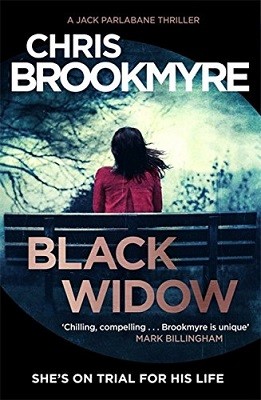
CTG Interviews: Chris Brookmyre about his latest novel BLACK WIDOW

9781408707159

Today I’m delighted to be joined on the CTG blog by crime writer Chris Brookmyre. Chris, a former journalist, is one of Britain’s leading crime novelists and more than one million copies of his Jack Parlabane series have been sold in the UK alone. He’s kindly agreed to answer some questions about his latest book in the Jack Parlabane series – BLACK WIDOW – and talk about his writing process.

So, to the interview …

Welcome, Chris! Your latest book BLACK WIDOW is published today, can you tell us a bit about it?

It’s about how the most dangerous lies are the ones we tell ourselves. It’s about a surgeon who has given the best years of her life to her career and is beginning to think that maybe the price was too high: she doesn’t have anyone with whom to share her life and is fearing that the time to have a husband and a family may have passed. Then out of the blue she has a whirlwind romance with a hospital IT tech: within six months they are married, and within six more he is dead. The question is: did she kill him, and if so, did she have a very good reason.

Surgeon Diana Jager is a fascinating character – strong, successful and willing to speak out for what she believes in, yet inwardly vulnerable – what was it that inspired you to create her and tell her story?

My wife is an anaesthetist who has worked in the NHS for twenty years. She saw a lot of her colleagues in the same situation as Diana in terms of giving so much of themselves to their careers. She observed a great deal of sexism in medicine, overt sexism in terms of how people are treated and spoken to, but also a more insidious, pervasive covert sexism in terms of how it is made a lot easier for male doctors to have both a career and a family. They are seldom forced to choose, or judged for their decisions. The other inspiration was the way I’ve seen women abused on social media for being even the slightest bit outspoken. I wanted to create a character who would be an acerbic and divisive blogger in order to show what the fall-out might be like for a woman who dared to stick her head above the parapet.

How does a story idea start for you – with a character, a theme, a plot, all three, or something different?

I honestly can’t remember. By the time I’ve finished writing a book, there has been so many processes gone through that the seeds are lost in this miasma of inter-tangled ideas. It’s different for every book. With Black Widow I wanted to write about how we are inclined to trust people early in a relationship because we are desperate for it to work out, and that can blind you to danger signs. I’ve touched upon this in previous books: how we tend to intellectually rationalise our fears in order to convince ourselves everything will be okay, when in fact we should listen when our instincts are telling us to run.

Can you tell us a bit about your writing process – do you plot your novels out in advance, or dive right in and see where the story takes you?

These days it’s more the former, but in the past it was the latter. I would come up with outlandish ideas that excited me, and before I knew it I was mired in them. I would end up drawing upon my wife to help work out a way of pulling all the threads together into a satisfying conclusion. A good example is All Fun and Games Until Somebody Loses an Eye, where I came up with the concept of this very law-abiding and dutiful grandmother who gets drawn into a world of espionage. The possibilities were so intoxicating that the book just got longer and longer, but in recent times I have been plotting my books very carefully. Not too much because you don’t want it to seem like your characters are on a rail, but with something like Black Widow, which is very twisty turny, if you want to misdirect the reader, you have to control the information and be very conscious of how much the reader knows at any given time. In order to do that, you need to know where it’s all going. As a character says in the Sacred Art of Stealing, you won’t know anything until you know everything.

Unknown

So, what’s next for Jack Parlabane? Do you have another series book planned and, if so, will things start to look up for him in his private life?

I’ve actually just finished the first draft of the next Jack Parlabane book, and having in recent novels been wrestling with the implosion of print journalism, at the start of the new one he is finally turning things around. He bags a job at a very forward-thinking news website, and one of the characters remarks to him that Jack is so used to things going wrong, he finds it hard to accept it when things are going right. Parlabane replies that this is because when everything is going right, that’s usually the sign that a meteor is about to strike, which of course it soon does.

As crime writers are also usually avid crime readers, can you tell us what’s your favourite crime novel and why?

Strangely enough, perhaps my favourite crime novel is Dirk Gently’s Holistic Detective Agency. I always loved Douglas Adams’ work, and when he decided to write a detective story, it was of course an entertainingly bizarre detective story. As soon as I finished it I went back to the beginning and read it again because it was a novel that read completely differently second time around, once you knew what was really going on. Since then it has been my ambition to write a novel that would have readers to that, and hopefully I have realised that ambition with Black Widow. The best twists aren’t merely a surprise: the best twists change the meaning of everything so that you can go back and read the same chapters again and it’s like seeing the same events through different eyes.

And, finally, what does the rest of 2016 have in store for you?

I will be polishing up the next novel, which is entitled Want You Gone, and I am also writing another science fiction novel. It won’t be outlandish far-future science fiction: I am hoping to take my crime readers with me because the plan is that it will be a crime novel that just happens to be set in space.

Huge thanks to Chris Brookmyre for stopping by the CTG blog today and letting me grill him.

BLACK WIDOW is out today.

To buy it from Amazon, click on the link here 

To buy it from Waterstones click on the link here

You can find out more about Chris and his novels by hopping on over to his website here and following him on Twitter @cbrookmyre


And, I’ll be reviewing his fabulous new book – BLACK WIDOW – here tomorrow so don’t forget to stop by then!


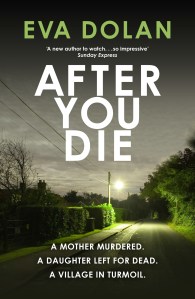
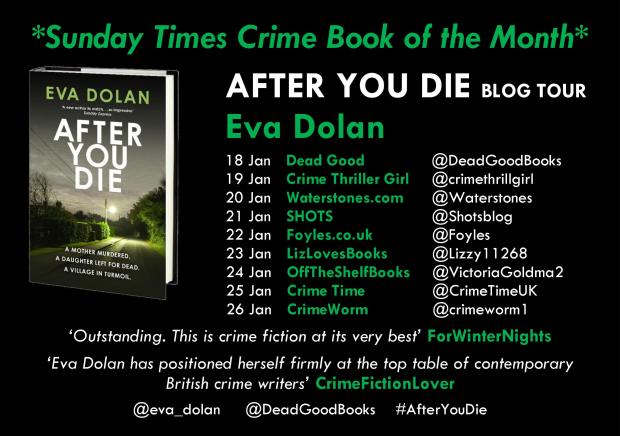
The AFTER YOU DIE Blog Tour: CTG interviews crime writer EVA DOLAN

After You Die - flat

Today I’m delighted to be hosting a stop on Eva Dolan’s AFTER YOU DIE Blog Tour and to have Eva joining me on the CTG blog to chat about writing the fabulous Zigic and Ferreira series and to tell us more about the latest brilliant book in the series – AFTER YOU DIE.

Welcome, Eva!

So, to the questions …

Your latest book AFTER YOU DIE is published this month, can you tell us a bit about it?

After You Die opens with a gas explosion at a pair of cottages in an affluent commuter village, which reveals the corpse of a young mother and, upstairs, the body of her paralysed daughter who has died as a result of neglect. Zigic and Ferreira are called in to investigate after it becomes clear that the family have been subjected to months of harassment linked to the daughter’s activities as a prominent right to die advocate.

It’s a book about the grinding torment of online harassment and the expectations put on carers, but more than that it’s about what happens to a family in the aftermath of a personal tragedy.

AFTER YOU DIE is the third book in the Zigic and Ferreira series and takes the detectives out of Peterborough centre and into a smaller, village location – what prompted you to change the setting for this story?

Partly it was a desire to show a different side to Peterborough. I’d shown the worst of it in the first two books and it’s easy to believe that ‘nicer’ areas don’t suffer crime to the same degree as the inner city, and that was something I wanted to challenge.

Also, the nature of this crime, being motivated by a personal form of hatred rather than an overtly political one, gave me an excuse to examine how a murder can unbalance a different kind of community, one which sees itself as comfortable, more genteel, the kind of place people move to in order to escape from city centre criminality. I liked the idea of having this quite insular village where all the players are in close proximity and their shared history remains inescapable.

All your books stand out for me in that you seem to effortlessly blend hard-hitting social issues with engaging and fast-paced crime fiction. What is it that interests you in a story idea and what’s your process for turning that initial spark into a book?

Thank you very much! Because the series is set in a Hate Crimes Unit I don’t actually have total free range over the subject matter of the books – they have to be based on crimes which are motivated by prejudice over race, religion, disability, homophobia or transphobia, otherwise Zigic and Ferreira wouldn’t be investigating them. So it does automatically rule out quite a lot of storylines. But it’s a welcome limitation because it means I have to find crimes which are outside the ordinary.

In After You Die the initial inspiration was the case of Fiona Pilkington and her family who had been harassed and abused for years as a result of her daughter’s disability. They were ignored by the police, left to fend for themselves, until Fiona couldn’t take anymore. She killed her daughter and herself. It was a heart-breaking case and spurred me on into researching the rise of disability related hate crimes, which made for incredibly depressing reading. Mencap believe 90% of people with a disability have been victims of some form of hate crime, which is a staggering statistic.

The image of a mother and daughter under siege, stuck with me, and as I started working on characters Holly – the daughter – came through as a very strong voice, defiant despite the terrible injuries she’d suffered, a strong, opinionated young woman determined to fight off the bullies with her intelligence and eloquence.

(c) Mark Vessey

(c) Mark Vessey

Over the first three books of the series you’ve thrown a lot at Zigic and Ferreira in their personal lives as well as professionally. Do you have the series mapped out, or does the action unfold organically as you write?

I map out each book in quite a lot of detail but I prefer to let Zigic and Ferreira’s personal lives unfold organically. It’s more interesting for me to keep finding out new things about them as the series continues, and hopefully for the reader too.

So far I think they’ve got off fairly light for fictional coppers! Zigic especially has a calm and happy family life; I’m increasingly tempted to throw him a major curveball to see if it shakes him out of being such a good man. He’s been perfectly morally upstanding so far but I feel there’s a darkness in him which I haven’t quite drilled down into yet.

Just to contradict myself, I do know what’s coming up for Ferreira in personal terms. It wasn’t planned but she’s stumbled into a bad situation in book four and, even though she doesn’t realise it yet, the blowback is going to be pretty major!

As a reader of crime fiction, what authors and/or books have influenced or inspired you?

I’ve been rereading some of the early Rebus books lately and even though I’ve always cited them as a major influence I didn’t realise just how deep that went until I revisited the ones I was reading as a began my writing career. Without them and John Harvey’s books – both the Resnick and Frank Elder series – I wouldn’t have become a crime writer. They created the template for socially engaged, politically cynical crime fiction for me.

And, finally, what does the rest of 2016 have in store for you?

I’m currently finishing off book four – would like to give a little teaser about it but I’m way too superstitious to discuss work in progress. After that… editing and more writing and then I’ll be out promoting After You Die, which let’s be honest, is the best part of being a writer. I’m hugely looking forward to Essex Literary Festival and ChipLitFest, and there are a couple more events I probably shouldn’t mention yet but judging by previous visits, they will be loads of fun.

A massive thank you to Eva Dolan for popping along to the CTG blog today and chatting to us about her new book AFTER YOU DIE and her writing process.

AFTER YOU DIE by Eva Dolan is out now. Click here to buy it from Amazon 

And you can see Eva Dolan in person, speaking at Essex Book Festival, on Monday 23rd March at 7.30pm http://essexbookfestival.org.uk/event/sceneofthecrime/

Also, be sure to check out all the other fabulous stops along the AFTER YOU DIE Blog Tour …

AYD blog tour poster JPEG

CTG Interviews: Tom Wood about his latest thriller THE DARKEST DAY

51D9tNGmcSL

Today crime writer Tom Wood – creator of the Victor the Assassin thriller series – has dropped by the CTG blog to tell us all about his latest book THE DARKEST DAY which is published today by Sphere.

So, let’s get straight to the questions …

Your latest thriller – THE DARKEST DAY – featuring Victor the Assassin is out today. Can you tell us a bit about it?

The latest book sees Victor targeted by a rival assassin named Raven, who comes perilously close to succeeding in an attempt on his life. He doesn’t know why she came after him or who she is working for, but as Victor is a pragmatic soul he deems the best way to deal with the threat she poses is to kill her. His hunt takes him to New York City, where he slowly realises there are powerful forces at work and he’s put himself in even more danger by going after Raven.

Victor is a fascinating character – ruthlessly brutal, yet also rather charming – what was your inspiration for creating him?

I grew up preferring the bad guys to the good guys, so Victor was the inevitable protagonist I would end up writing about. He’s probably a coming together of multiple antiheroes from cinema and literature, but when I first wrote about him I just wanted to write about an assassin who wasn’t going to have a crisis of conscience whenever he killed someone. He then grew out of this concept—an antihero who wasn’t conflicted or troubled.

Like you, Victor practises the martial art Krav Maga – are there other similarities between the two of you?

I haven’t trained for a while after breaking a bone in my right hand, so I think we can safely say that Victor is a lot tougher than I am. I would like to think we’re very different—considering he’s a professional murderer—but I suppose we do have similarities. We both pay a lot of attention to our surroundings; we both notice things that maybe other people don’t. But he does so because he’s in constant peril, whereas I tend to do so out of boredom. Also, we both agree that littering is unforgiveable.

Can you tell us a bit about your writing process – do you take a Victor-esq approach and plot everything out in advance, or do you dive right in and see where the story takes you?

About half and half on average. I think you have to have some planning for a plot to work. I think you can always spot a book that hasn’t had any planning because the ending is a big letdown—the writer writes themselves into a corner. I always start with some overall idea—Victor on the run; Victor undercover; Victor as a bodyguard etc—but the approach is different each time. When writing a series I think the key is for each book to be ‘the same, but different’, which is one of those classic Hollywood-esque oxymoron, but has a little merit. I want every story to be different from the last whilst retaining characteristic of the series and staying faithful to the character. No one wants to read about a week in Victor’s life where nothing happens, for example. One of the ways I attempt this is to vary how much I plot and plan from book to book, so if the writing process is different and interesting for me in each time out then hopefully that will translate into the reading experience.

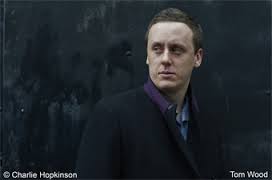
Tom Wood (c) Charlie Hopkinson

Tom Wood (c) Charlie Hopkinson

I know that I mustn’t give away the ending – OMG that ending!! (it’s a corker of a twist) – but had you always planned for that to happen or did it happen organically?

I wrote the final scene long before the book was finished, but I hadn’t planned it in advance—it just fell onto the page nicely because I understood the characters so well. Even though I didn’t know exactly the route the story would take to reach that finale, I knew it was the right ending. I can’t really say anything further about it without spoilers, so I’ll say that it almost didn’t make it into the book because weeks and weeks after writing it the file became corrupted on a cloud storage—thanks Microsoft!—and the scene was lost. I was suitably enraged, but also terrified of rewriting it from memory and the scene losing out as a result. Mercifully, I managed to rewrite it without too much trouble, but I argued a little with my editor about how it should play out. He would have preferred it to be more ambiguous, but I disagreed. Several of my books have story threads that are not fully wrapped up as it often seems too contrived otherwise, but also a cliffhanger ending feels disrespectful to the reader.

Can you tell us what’s next for Victor – is there another series book planned and, if so, what details can you reveal?

I’ve just delivered the sixth book, titled A Time to Die, which sees Victor hired by MI6 to kill a ruthless Serbian war criminal who has been in hiding after escaping justice years before. It’s probably darker in tone than the past books, whilst staying faithful to the series as a whole—classically the same, but different. Normally, after delivering a book, I hate it and think it’s terrible after spending months and months thinking about nothing else, but I’m very excited about this one as the story came together easier than it ever has before.

And, finally, looking forward to next year, what does 2016 have in store for you?

A Time to Die will be out in April, so the first couple of months of 2016 will be spent frantically editing and polishing. Then I’ll no doubt begin work on my seventh book, whatever that proves to be.


A big thank you to Tom Wood for dropping by and telling us all about his latest (brilliant) thriller – THE DARKEST DAY. To find out more about Tom hop on over to his website at www.tomwoodbooks.com and follow him on Twitter @TheTomWood

You can buy THE DARKEST DAY from Amazon by following this link

And be sure to pop back here next week to read my review!

STASI CHILD Blog Tour: CTG interviews debut author David Young

image001

I’m delighted to welcome David Young, author of STASI CHILD, to the CTG blog and to be hosting his blog tour stop today. STASI CHILD (published by Twenty7) is David’s debut novel and is the winner of the PFD 2014 Crime Prize. He’s popped along to see us today to chat about the book, his writing process, and his route to publication.

So to the questions!

Your debut, STASI CHILD, is out this month. Can you tell us a bit about it?

It’s a crime thriller – part historical crime, part police procedural, part thriller, and I guess a dash of Cold War politics to boot. What it’s not is a traditional Cold War spy thriller – although it’s set in the era of the Cold War. It tells two parallel stories: one in third person past through the eyes of a female detective in the state police, Oberleutnant Karin Müller, who’s trying to solve a gruesome murder but has to battle obstacles put in her way by the secret police, the Stasi. The other, in first person present, follows the life of a 15-year-old female inmate of a communist Jugendwerkhof – which loosely translates into ‘youth workhouse’ or reform school. The two stories eventually collide in a climax on the snowy slopes of northern Germany’s highest mountain, the Brocken, near the border with the west. I think fans of Tom Rob Smith’s Child 44 would enjoy it, and also those who read Anna Funder’s non-fiction account of the Stasi’s methods, Stasiland.

STASI CHILD is set in East Germany in 1975. What drew you to writing about this moment in history?

No-one had yet written a crime series set in East Germany – at least not in English as the original language. So I thought it filled a gap in the market, was something a bit different and – given the success of books like Child 44 and AD Miller’s Snowdrops – could prove popular. The idea originally came from reading Stasiland while on a self-booked (and at times chaotic) mini-tour of eastern Germany with my indiepop band about seven years ago. I was fascinated that you could still feel the ghost of the communist east even though the Berlin Wall had been torn down, at that time, twenty years earlier. Müller’s office is underneath Hackescher Markt S-bahn station – where we played our Berlin gig. So I wanted to choose a time when East Germany was perhaps at its most confident, and yet with enough years to fit a series in, if the first book sold well.

Given the modern historical setting, how did you go about researching the book?

A mixture of things, really. Watching films like The Lives of Others and Barbara, episodes of the original East German detective show, Polizeiruf 110, and the current German TV series set in the period, Weissensee – which is a great watch but inexplicably, and annoyingly, only has English subtitles on the second of its three series so far. I also read a lot of memoirs of inmates of Jugendwerkhöfe, that sort of thing, and true crime books by former GDR detectives. I don’t speak German – so it was a case of tearing out pages, feeding them into an OCR programme via a scanner, and then putting it all through Google Translate! What came out was barely intelligible, but you could pick out the facts even if the actual storytelling was mangled beyond repair. I also had great fun visiting all my locations, and interviewing former East German detectives (with the help of translators). So I loved the research, and I’m itching to get back out to Germany again. I also keep telling myself I must learn German!

image006

You recently completed the City University MA in Creative Writing (Crime Fiction), how do you think this helped you on your journey to publication?

I think it was the key to it, really. We had some great tutors who were all published crime writers: Claire MacGowan, Laura Wilson and Roger Morris were mine – although William Ryan, who writes in a similar genre to me, has now joined. Roger introduced me to Peter May’s Lewis trilogy, and the structure of Stasi Child – with its twin narrative – is quite similar to May’s The Lewis Man. Claire nurtured the original idea, Laura worked on the nuts and bolts as my main novel tutor, and then both of them read and fed back on the full draft. The result was that Stasi Child won the course prize sponsored by the literary agents, PFD, and by the shortlisting stage a young PFD agent, Adam Gauntlett, had already declared his hand in wanting to represent me.

So, what’s it like having your debut novel published? What’s your best moment so far?

Because my publishers Twenty7 (part of the Bonnier group) are e-book first, the biggest thrill was getting a physical copy of the proof. It’s got a slightly different cover, very minimalist, which I love. I’ve only got one copy, though, and the publishers have run out now so I guard it with my life. And then in the last few days, Stasi Child became the fourth bestselling Kindle book in the UK, and the number one bestseller in Historical Fiction – for ebooks and paperbacks. It’s fallen back since, but that was a champagne moment, figuratively sitting on top of luminaries such as Robert Harris, Hilary Mantel …well, everyone who’s anyone in historical fiction. Ha! It’ll probably never happen to me again. We made sure we kept the screenshots of the charts!

STASI CHILD is the first in the Karin Müller crime series, can you tell us anything about the next book?

Yes Karin returns, but this time in the model East German new town of Halle-Neustadt, where underneath the ideal communist city gloss, dark things are happening a few months after the closure of the Stasi Child case. The Stasi are heavily involved again, and we also learn more about Karin’s past – with several surprises in store for her. It follows the same twin narrative format, but the second narration this time is darker, more disturbed, and unreliable. In fact the whole thing is darker and more disturbed, which is slightly worrying as most people seem to think Stasi Child’s about as dark as you can get.

And, finally, what does the rest of 2015 have in store for you?

Initially, I’ll be concentrating on promoting the Stasi Child ebook, and I’ve my first appearance at a literary festival, as part of the past prizewinner’s event at Yeovil on Friday October 30th. Then it will be a combination of reshaping book two with my editor at Bonnier, and researching book three with a trip to Germany. Oh, and I might finally get around to starting to learn German … but no promises!

A huge thank you to David Young for coming along to the CTG blog to chat with us today. You can find out more about David by checking out his website at www.stasichild.com and follow him on Twitter @djy_writer

Stasi Child is a great read, perfect for fans of historical crime fiction. Here’s the blurb: “East Berlin, 1975: Questions are dangerous. Answers can kill. When murder squad head Oberleutnant Karin Müller is called to investigate a teenage girl’s body found riddled with bullets at the foot of the Berlin Wall, she imagines she’s seen it all before. But when she arrives she realises this is a death like no other: it seems the girl was trying to escape – but from the West. 

Müller is a member of the People’s Police, but in East Germany her power only stretches so far. The Stasi want her to discover the identity of the girl, but assure her the case is otherwise closed – and strongly discourage her asking questions.  The evidence doesn’t add up, and it soon becomes clear that the crime scene has been staged, the girl’s features mutilated. But this is not a regime that tolerates a curious mind, and Müller doesn’t realise that the trail she’s following will lead her dangerously close to home.

The previous summer, on Rügen Island off the Baltic Coast, two desperate teenage girls conspire to escape the physical and sexual abuse of the youth workhouse they call home.  Forced to assemble furniture packs for the West, the girls live out a monotonous, painful and hopeless life.  Stowing away in the very furniture they are forced to make, the girls arrived in Hamburg. But their celebrations are short-lived as they discover there is a price on freedom in the DDR…”

STASI CHILD is out now in eBook (and will be out in paperback in February 2016). To buy the eBook via Amazon click on the book cover below

 http://


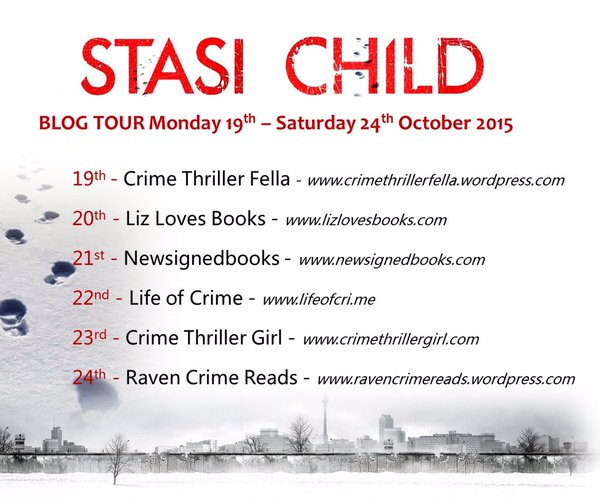
And don’t forget to check out all the other fabulous stops on the Stasi Child Blog Tour:

CR34iTvWoAAVo2j

What happened when CTG met … Martyn Waites aka Tania Carver

waites-website

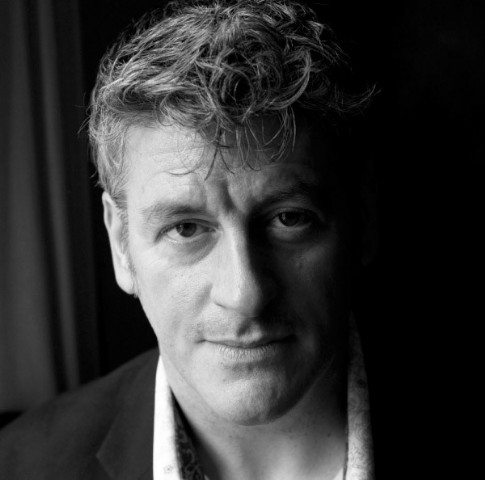
I met Martyn Waites (aka Tania Carver) at the Princess Louise pub in London. It’s an old Victorian place with wood panelled booths and a traditional bar. Over beer and pork scratchings, we chatted about crime fiction, country music, and what it’s like writing under multiple names …

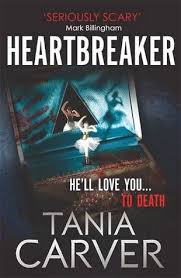
Your latest novel – HEARTBREAKER – is the 7th Tania Carver novel featuring DI Phil Brennan and Psychologist Marina Esposito. As you know, I’m a huge fan of the series, and I found the killer in this book especially chilling. What was it that led you to create that particular character?

I never set out to create a villain. The character might have done horrible things, but everyone is the hero of their own story, so I come at it from that angle. It’s about making monsters more human. I think you have to look at characters that way or you don’t get the depth of psychological involvement needed for the story.

Their side of the story was quite interesting to plot. At first I wanted to let the reader know the killer’s identity halfway through the book and have them see the character manipulating and manoeuvring the chess pieces during the second half. But in the end I went back and changed it, so that the story kept the reader guessing till close to the end.

The question in my mind was what would attract someone who’s a natural predator to do [what they do in the book]? I like the juxtaposition between their job and what they do privately, and at the same time I wanted to make them good at their job. I wanted to create someone who had a life – I like giving good characteristics and traits to bad characters. I hate looking at things as black and white – grey is so much more interesting.

During the course of the series, and especially in HEARTBREAKER, you’ve put Phil and Marina through a lot both professionally and as a couple. Was their relationship something you’d planned out from the start of the series or has it grown organically book by book?

I make it up as I go along! I know when I start a book they have to be in a different place emotionally at the end, and that the story has to have moved them on as characters – without that, everything stays on the surface. In a series it’s difficult to do, but worth doing. Every novel needs to be a good jumping on point for new readers, but also give readers of the series something more. I like surprising the reader!

You’ve written books under your own name – the Joe Donovan series, the Stephen Larkin series, the Woman in Black: Angel of Death, Great Lost Albums – as well as the Tania Carver novels. What is it that attracts you to a story idea, and how do you decide which of your names it’s right for?

I’m not sure! I had actually started working on a Tania book, but about fifty pages in I realised it was a Martyn Waites novel so I stopped. I’ve got another idea for a standalone, and an idea for a comic series which I’m putting together. I’ve got an idea for a supernatural horror crime novel too where the premise came to me fully formed – I was on the tube at the time and had to get off so I could write it down. With writing, I think it’s about opening up yourself to different ideas, and then finding someone to pay you for writing them!

When I write I don’t have a specific reader in mind, but I do want to give the reader a good experience. It comes from when I was acting. I was on tour in a Catherine Cookson play (as the villain) and my mother and her friends had all saved up so they could buy good tickets to come and watch it. That really reminded me that the audience have paid money to see a play and deserve to enjoy it. It’s the same with readers – I don’t write for a specific person but I want the reader to have the best experience they can. It means you can never feel complacent and do something half-arsed. It makes me my own worst critic – I always think I can do better.

What’s your writing process – do you plot everything out in advance or dive right in and see what happens?

Bit of both really. I start with a premise, maybe a couple of images, and some questions – what’s happened? Why did it happen? From there I’ll write a bit and see what happens and where it gets to. In the new one I’m writing [the 8th Tania Carver novel] a couple of new characters have popped up and I just love putting them in scenes – that’s the exciting bit. I tend to use the first part of the book as an audition for the characters, then do a bit of structuring and plan a list of things that will happen.

With this book I’ve changed to writing at night. I start work at 8pm and write through to midnight, or if it’s going well until 2am. I like working at night. It’s like you’re alone with your thoughts and the house is silent. It’s comforting. It makes it feel like a good time to write.

Unknown

Like me, you have a love of country music. What are you listening to at the moment? And do you listen to music as you’re writing?

I need silence when I’m writing. I’ve tried writing in coffee shops, but I can’t do proper work away from my desk or dining room table (which I sit at for a change of scenery). So I can’t listen to music as I write, although I wish that I could.

I do listen to music to get me into the right mood to write, and this is different depending on the book. For one book I would listen to Night Owl by Gerry Rafferty, and for another it was Verdi Cries by 10,000 Maniacs. I’m currently listening to Everything’s Fine by The Willard Grant Conspiracy (really miserable) and Mark Lanegan (kind of less miserable) – both put me in the right mood for writing. If I want something more upbeat, then I listen to some sixties southern soul like James Carr.

What was it that drew you into writing crime fiction and how did you get started?

I was a fan of crime fiction. I read a lot of the stuff, and am a huge comics fan, but couldn’t read sci-fi. I read a lot of pulp fiction and when I picked up a copy of Raymond Chandler’s Farewell My Lovely I knew I’d found my thing. I read everything by Chandler, Ross MacDonald, and Dashiell Hammett. Then discovered James Ellroy and James Lee Burke. I didn’t really like the UK stuff like Agatha Christie, but I loved the contemporary American stuff and the way it was reporting on a society I recognised. I wondered why no one was doing that it in the UK – so I decided to write a novel. At the same time others had the same thought and were taking the idea in their own direction – people like Ian Rankin. Crime fiction was the only type of books that really connected with me, I was left cold by UK literary fiction – it all seemed to be about the beauty of a sentence and showing off. I hated it. Whereas Ellroy and Lee Burke demonstrated that literary crime could be accessible and contemporary.

What advice would you give to those aspiring to publication?

Someone once said that the main difference between an amateur writer and a professional writer is that a professional writer doesn’t take no for an answer! It took me five years to be published and during that time I was turned down by everyone!

Keep writing. Keep getting better. Don’t take no for an answer.

I still turn up to crime fiction events feeling like I’m going to be told my time’s up. You just need to keep on writing, and re-writing and re-writing. And if you get knocked back ask why – you’re never going to get better unless you know why you’re getting rejected, so ask.

And finally, what does the rest of the year have in store for you?

Finishing the next Tania Carver novel, which will hopefully be finished sooner rather than later – it’ll be out in summer 2016 as an eBook, and autumn 2016 in paperback. Then my back catalogue is being published in France and I’ll be going there to attend some festivals.

And with that our drinks were finished, the pork scratchings eaten, and the interview over.

A huge thank you to Martyn Waites (aka Tania Carver) for letting me ply him with beer and interrogate him about his books and writing.

Be sure to check out HEARTBREAKER – the fabulously gritty, super-chilling latest book in the DI Phil Brennan and Psychologist Marina Esposito series by Tania Carver.

Here’s the blurb: “After years of abuse, Gemma Adderley has finally found the courage to leave her violent husband. She has taken one debilitating beating too many, endured one esteem-destroying insult too much. Taking her seven-year-old daughter Carly, she leaves the house, determined to salvage what she can of her life. She phones Safe Harbour, a women’s refuge, and they tell her which street corner to wait on and what the car that will pick her up will look like. They tell her the word the driver will use so she know it’s safe to get in.

And that’s the last they hear from her.

Gemma Adderley’s daughter Carly is found wandering the city streets on her own the next day. Her mother’s mutilated corpse turns up by the canal several weeks later. Her heart has been removed. Detective Inspector Phil Brennan takes on the case, and his wife, psychologist Marina Esposito, is brought in to try and help unlock Carly’s memories of what happened that day. The race is on to solve the case before the Heartbreaker strikes again …”

You can find out more about Martyn Waites (and Tania Carver) over on www.martynwaites.com and follow Martyn on Twitter @MartynWaites

And click on the book cover below to buy HEARTBREAKER from Amazon:

http://

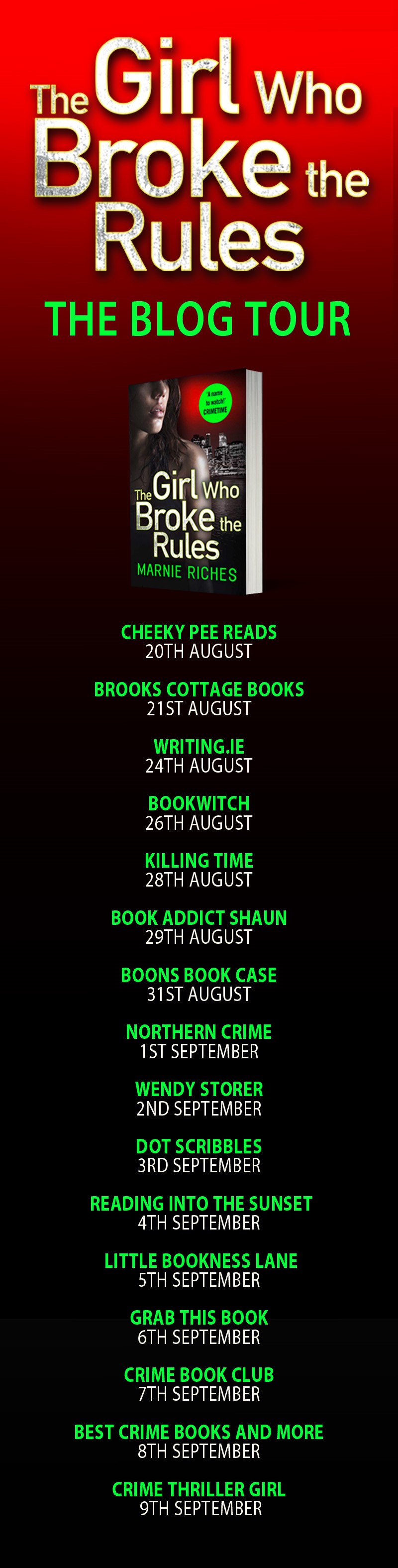
#TheGirlWhoBrokeThe Rules Blog Tour: an interview with Marnie Riches

unnamed

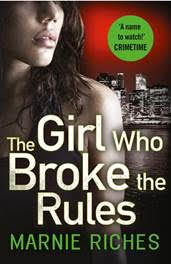
Today I’m delighted to be hosting the last stop on THE GIRL WHO BROKE THE RULES Blog Tour and to welcome the fabulous Marnie Riches to the CTG blog for a chat about her wonderful Georgina McKenzie thriller series.

So, to the questions …

Your second book in the Georgina “George” McKenzie thriller series – THE GIRL WHO BROKE THE RULES – came out in August, can you tell us a bit about it?

The Girl Who Broke the Rules sees George studying in the UK for her PhD in criminology. Interviewing violent sexual offenders on their use of pornography during the day, she is working as a cleaner in a Soho strip club by night to fund her studies. But when the mutilated bodies of two working girls are found in Amsterdam’s red light district – seemingly sexually motivated murders – and Chief Inspector Paul van den Bergen calls on her criminology expertise, George is only too happy to work as a consultant for her old friend. The hunt for The Butcher takes George and van den Bergen through the seedy underworlds of Amsterdam and London’s Soho, where they rub shoulders with human traffickers, a backstreet surgeon and a leading pornographer. Hitting dead end after dead end, eventually George seeks the guidance of one of Broadmoor Hospital’s most infamous patients – the dangerously charming and warped serial killer, Dr. Silas Holm.

The series is set primarily in Holland, what was it that attracted you to setting a thriller there?

As a student of Dutch, I lived in the Netherlands for a year in the early nineties. Particularly after seeing the popularity of Stockholm and Oslo in Scandi-Noir crime fiction, when it came to write my own crime thriller, Amsterdam seemed like a perfect location. It’s stunningly beautiful, with architecture and a rich cultural history to die for. But pay a visit to the coffee shops and take a stroll past the prostitutes’ booths and sex shops of the red-light-district and you can imagine so many stories springing from those red-lit alleyways and canalside brothels…

How did you get into writing thrillers – what was it about the genre that attracted you?

I have always loved thrillers. As a child, I read Peter Benchley’s Jaws and adored the adrenalin rush of turning those pages. Then, when The Silence of the Lambs came out, I was hooked for life – utterly seduced by the evil genius of Hannibal Lecter and the inventive sadism of Jame Gumb. It was terrible perfection! With crime thrillers, I love the sense, as a reader, of having a jigsaw puzzle to piece together. It’s always a challenge to see if I can solve the mystery before the narrator gives me the answers. I love a killer twist. There’s a certain escapism in the violence for a big softy like me, and principally, crime thrillers are stimulating political and anthropological portraits of our world. All of these elements also appeal to me as a writer, except I’m in the driving seat, deciding what form the action, the twists and the violent intrigue should take!

Do you have a favourite crime/thriller novel or a crime writing hero/heroine?

Favourite thriller is The Silence of the Lambs. Favourite heroine is Lisbeth Salander because she’s unusual, insanely bright and a kickass rebel. Easy! Favourite anti-hero is Hannibal Lecter because he’s such an elegant, evil charmer. I’m not sure about a true hero. I often find heroes in the thrillers I’ve read a little Alpha Male for me. Even Harry Hole has a bit too much testosterone going on. So, I’ll be cheeky and say van den Bergen, because he’s exactly the sort of man I wanted in a hero.

What about your own writing process – do you plot everything out first or dive right in?

Working with a structured two to six page synopsis as a guide, I write the first draft in one go. A novel usually takes me about a month to research and three months to do the actual writing. When the first draft is finished, I give myself a month to edit. I tweak and refine, chop out the rubbish and then replot the whole thing to ensure the high points are in the correct places. Then, I polish again and send my manuscript out to my agent and my editor.

When you write do you picture actors in the roles – if so (or even if not!) who would you be your dream cast for George McKenzie and Chief Inspector van den Bergen?

I never picture actors in the roles when I’m writing. My characters exist as real people in my head. But I have recently been asked the question several times – who would I like to see playing George and van den Bergen on the big screen? George is an outspoken London girl, so the actress would have to have real screen presence. Marsha Thomason, maybe or Naomie Harris. Perhaps Nathalie Emmanuel. As for van den Bergen, I was thinking the other day that if you gave George Clooney grey contact lenses, he might do! He has that silver fox thing, going on, although he’s a bit beefy. It would have to be an attractive, ageing man who could play a miserable bastard beautifully.

What advice would you give a writer aspiring to publication?

Principally, write a lot. Write as much shit as you can until you get really good. Then, brace yourself, because you’ll get rejection after rejection. Grow a thick skin. Believe in your story. Try to attain the same standards as your literary heroes. Mainly, never give up. You’ve got to really want to get published because it’s very, very hard. Only a lucky few have their first attempts picked up. Most toil on for decades. I’d been writing seriously for just shy of ten years and had penned thirteen novels before my “debut” came out! Six were published children’s books but the rest…just practice!

And, finally, what does the rest of 2015 have in store for you?

The Girl Who Walked in the Shadows should be out in November 2015 – I’m writing the final scenes now. When that manuscript is handed in, I’m going to take some time off and kick around some new ideas. I have a contemporary women’s novel on submission to editors. It’s a funny story about mid-life crisis, so fingers crossed, we’ll see that on shelves by late 2016. And, of course, I’m going to be talking to readers and bloggers on social media about my thrillers, because the whole point of writing them was to see them read and enjoyed!

A massive thank you to the wonderful Marnie Riches for dropping by the CTG blog and letting me ask her so many questions.

You can check out my review of the first book in the Georgina “George” McKenzie thriller series – THE GIRL WHO WOULDN’T DIE – here.

Here’s what the blurb says about THE GIRL WHO BROKE THE RULES: When the mutilated bodies of two sex-workers are found in Amsterdam, Chief Inspector van den Bergen must find a brutal murderer before the red-light-district erupts into panic. Georgina McKenzie is conducting research into pornography among the UK’s most violent sex-offenders but once van den Bergen calls on her criminology expertise, she is only too happy to come running. The rising death toll forces George and van den Bergen to navigate the labyrinthine worlds of Soho strip-club sleaze and trans-national human trafficking. And with the case growing ever more complicated, George must walk the halls of Broadmoor psychiatric hospital, seeking advice from the brilliant serial murderer, Dr. Silas Holm…”

To find out more about Marnie Riches hop over t0 her website www.marnieriches.com and follow her on Twitter @Marnie_Riches

If you’d like to see THE GIRL WHO BROKE THE RULES on Amazon click on the book cover below:

http://

And be sure to visit all the other fabulous tour stops on THE GIRL WHO BROKE THE RULES Blog Tour …

Blog tour