The Corpse Role Blog Tour: an interview with author Keith Nixon

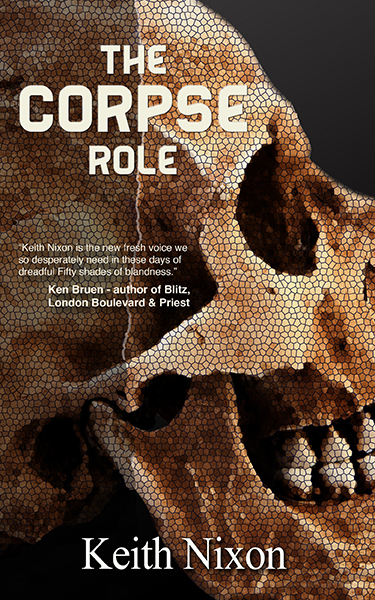
The Corpse Role cover image

The Corpse Role cover image

Today I’m delighted to welcome Keith Nixon, author of The Corpse Role, to the CTG blog as part of his blog tour.

The Corpse Role is out now, can you tell us a bit about it?

It’s a police procedural with a major twist at the end. This is the blurb:

When the body of a security guard implicated in a major robbery two years ago turns up in a shallow grave DI Charlotte Granger is called in. £1.2 million went missing in the heist – the money has never been found and the culprits remain at large. At the time the robbery had been major news and becomes so again, with investigative journalists, her own superiors and career criminals crawling all over the case. However, Granger’s own past threatens to catch up with her…

How did you get the idea for the story?

These things usually start with the kernel of an idea and then I add the layers and Corpse was no different. The trouble is, if I tell you the original idea, I’ll give the twist away!

What’s your writing process – do you plan first or dive straight in?

A mix of both to be honest. I put a degree of planning in up front, have a central theme, characters, some chapters mapped and an ending but the stuff in between is a mystery until I get down to the nuts and bolts of writing! It’s also fairly normal for me to hit a wall about a third of the way in and then have to take a step back and have a good look at how the narrative is working out.

If you had to pick one, what’s your best writing moment so far?

Dream Land for sure. It’s an 8k word novella that’s now the first part of Russian Roulette – Konstantin the Russian tramp from my first debut novel and his first 24 hours in Margate. 8 days of hectic writing and editing around my day job. The Russian found his place in the world as a result of that work.

What’s the best piece of advice you’ve been given on writing?

Never, ever give up.

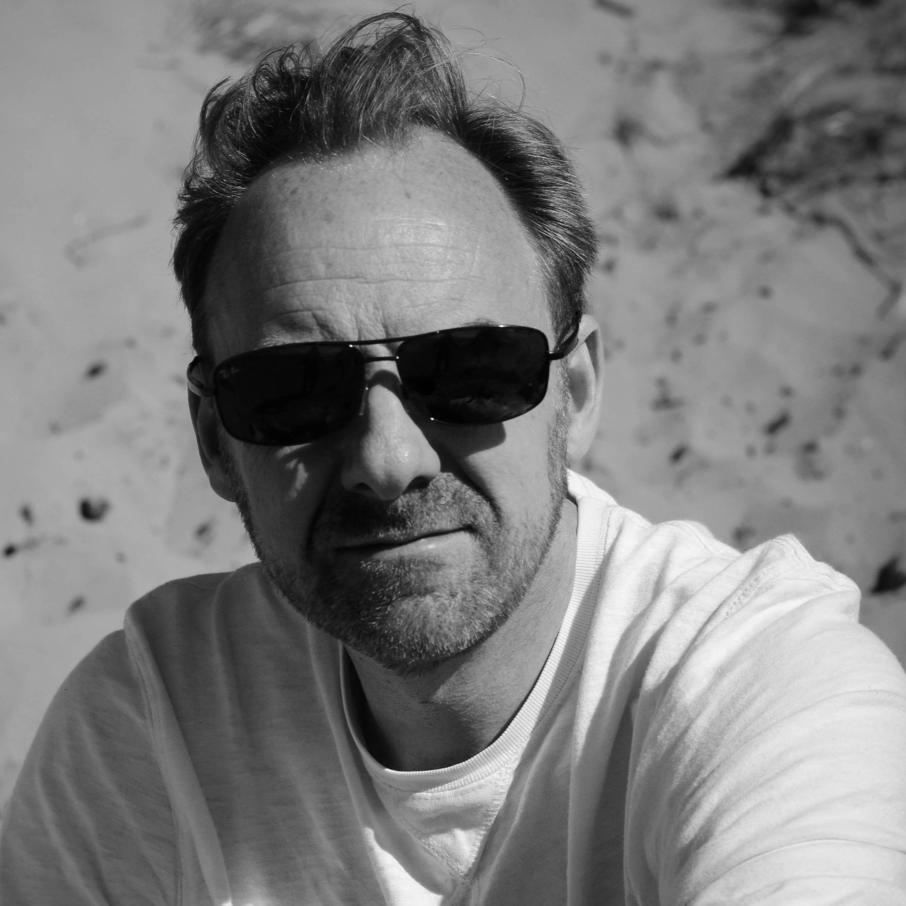
Author Keith Nixon

Author Keith Nixon

And, lastly, what does the rest of the year have in store for you?

Lots! May 11th I have I’m Dead Again being published, the third Konstantin novel after The Fix and Russian Roulette. I’m also working on the fourth in this series, a further stand alone police procedural and finally I’ll start the 3rd in Roman historical fiction series about Caradoc, Britain’s first great General, but later in the year.

Wow, that sounds like a very busy year!

Huge thanks to Keith for coming and talking to us at the CTG blog today.

The Corpse Role is out now. Recommended for fans of police procedurals, this twisty-turny tale follows DI Charlotte Granger as she investigates a chain of murders where the targets are both criminals and cops. With evidence tampered with, and no one telling the full truth, can she find those responsible before the next person dies? Told across two time-lines, this is an intricately woven tale, with one hell of a twist towards the end.

To find out more about Keith Nixon and his books hop on over to his FaceBook page here https://www.facebook.com/keithnixonauthor and follow him on Twitter @knntom


Get in Character – get your name in Mel Sherratt’s next book WRITTEN IN THE SCARS

Written in the Scars cover image

Written in the Scars cover image

Clic Sargent’s 10-day Get in Character eBay auction ends this weekend and is expected to raise thousands of pounds for children and young people with cancer

Over 70 popular authors are offering fans the opportunity to have their name appear in their forthcoming novels. In addition, super-fans also have the chance to bid on having lunch with Lee Child or afternoon tea with thriller writer Amanda Jennings. And aspiring writers can bid on the opportunity to have their work critiqued by other top authors. 

The 10-day auction started on Thursday 26 February and ends on 8pm Sunday 8 March 2015. The highest bidders for each author buy the opportunity to have a character named after them in their next book, and immortality in print. People can also bid to have a character named after a loved one.

One of the fabulous crime writers taking part is Mel Sherratt and I’m delighted to welcome her to the CTG blog to answer a few questions about her writing and how she came to get involved with the Get in Character campaign. We’re also super excited that she’s given us an exclusive reveal of the fantastic cover of the book that the winner will have a character named after them in – WRITTEN IN THE SCARS (above).

So, to the interview …

CLIC Sargent is a great charity. How did you first get involved in the “Get in Character” campaign?

Last year, as part of a local charity event, I was asked to auction off a character name in my next book, ONLY THE BRAVE. One fabulous gentleman, Steve Burgess, bid £1000. I was so proud of this so when I was asked by CLIC Sargent to be involved with this auction too, I thought why not? It’s for a brilliant cause – I don’t expect to raise anywhere near the last bid but I would love to top the £100 mark.

Your latest book FOLLOW THE LEADER is just out, can you tell us a bit about it?

FOLLOW THE LEADER is about a serial killer who is one step ahead of the police while he seeks payback for his past. From the get-go, you have his point of view. There are a series of flashbacks before every murder that try to help you understand why that particular victim was chosen. But he’s playing a game too, leaving clues in the form of magnetic letters. It’s up to the police to work out either who he is or who the next victim is before it’s too late.

The novel’s underlying theme is bullying and how as impressionable teenagers, we either change or don’t change once we leave the school gates, and peer pressure, behind.

As part of the “Get in Character” auction you’ll be letting the highest bidder be named as a character in your next book. Can you tell us what that book will be about?

WRITTEN IN THE SCARS is about a family living on the notorious Mitchell Estate. It’s the fourth book in THE ESTATE SERIES. Each character has their own problems, pressures, hidden scars that define their past. Sometimes they are visible; sometimes they are burdens that they carry around with them.

So, you can’t see Donna’s scars left over from her broken marriage. You can’t see Lewis’s scars from his time in the army. You can see Megan’s scars but she won’t let you. And Mary can’t remember how she got hers.

If making a better future could erase the past, we’d all be for it, wouldn’t we? But as ever, there are consequences…

What was it that got you started writing crime fiction?

For me personally, police procedurals are about solving a crime, and getting justice, so I enjoy plotting the stories. But I want to show how crime affects individuals too. As well, the aftermath of a crime must be devastating for some and we all deal with things differently. By choosing dark and gritty characters, it allows me to dive into the unknown and twist everyday situations into ‘what if’ story lines.

I also enjoy writing about fear and emotion, and taking readers along on that journey with characters. Some characters they will like: some they will dislike, pretty much like in life itself.

I’m also a firm believer that there is good and bad in us all. It’s how we choose to use it, I suppose. As a writer, I like to take the ordinary and make it a bit extra-ordinary but still believable. I like writing domestic situations that have gone wrong too. Using different points of view can make stories far more emotional.

Which authors inspire you?

I am a massive fan of Ian Rankin, Peter James and Mark Billingham. I read their books for pleasure but also to study them – not only the police procedural elements, but how to hook, set scenes, work in red herrings and give out subtle clues.

As well, I enjoy books by Martina Cole, Elizabeth Haynes, Mandasue Heller and Lynda la Plante. I found amongst their pages women of courage – strong women who were often knocked down but would rally to get back up again. More recently writers such as Colette McBeth, Clare Mackintosh and C.L. Talyor have given me hours of pleasure.

What does the rest of the year have in store for you?

I have two books out with my publisher, Thomas & Mercer, during the first half of the year – FOLLOW THE LEADER and ONLY THE BRAVE. As well as that, I have one or two of my own books coming out – one of those will be WRITTEN IN THE SCARS.


Thanks so much to Mel Sherratt for dropping by and answering our questions.

The Clic Sargent’s 10-day Get in Character eBay auction ends at 8pm Sunday 8 March 2015.

To bid for the opportunity to have a character in Mel’s book named after you or a loved one, and help the campaign raise thousands of pounds for children and young people with cancer, hop on over to http://www.ebay.co.uk/itm/Get-Character-Named-Character-WRITTEN-SCARS-Mel-Sherratt-/201289396764?pt=LH_DefaultDomain_3&hash=item2eddc8721c


CTG Interviews: Alison Gaylin, author of AND SHE WAS

Author Alison Gaylin

Author Alison Gaylin

I’m delighted to welcome today’s guest – best selling author Alison Gaylin – to the CTG blog. Alison’s kindly agreed to answer a few questions for us.

So, to the interview …

Your fantastic new novel AND SHE WAS came out earlier this month, can you tell us a bit about it?

Sure! It’s the first book in my series that features Brenna Spector – a missing persons investigator with hyperthymestic syndrome (perfect autobiographical memory). In it, Brenna investigates the case of a missing suburban woman — and soon finds ties between her disappearance and a missing child case of ten years ago. The mystery that drives Brenna throughout the first three books in this series is the disappearance of her own sister, which happened when she was just 11. It’s the event that brought on her hyperthymesia (which is a real thing!) and haunts her constantly. And so of course, it plays a strong role in AND SHE WAS.

Your investigator, Brenna Spector, is really compelling protagonist – smart and dedicated to her work as a missing persons investigator, and very human in her struggle to balance the demands of her job while trying to make quality time for her daughter. She also has a rare neurological disorder that lets her recall every detail of every day since it developed. What was your inspiration to create her?

Back in 2007, I read an article about hyperthymestic syndrome. It had just been named a year earlier. And it fascinated and frightened me. I’ve said this before, but it struck me not so much as an ability to remember, but an inability to forget. My own ability to forget unpleasant experiences has been a lifesaver — and to be robbed of that ability would be horrifying. So that was my inspiration. I thought about how a perfect, relentless memory would affect someone like me, how it would affect my relationships. I gave Brenna a daughter because I have a daughter. I thought about what a struggle that would be, trying to be present for your child with the near-constant intrusion of the past in the form of visceral memories. I’m married, but I gave Brenna an ex-husband that she can’t even be in the same room with — not because of the bad memories, but because of the good ones. At the same time, the world is a lot smaller than we think it is, and I figured being someone that literally “never forgets a face” would be an incredible asset for a private investigator.

Much of the book focuses on the residents of Tarry Ridge and the secrets they’ve kept. Is Tarry Ridge a real place or somewhere you created for the story?

Tarry Ridge is a fictional town, but the county that it’s in is real. For people who know Westchester County, New York, Tarry Ridge is White Plains meets Scarsdale on steroids. If you don’t know those places, it’s a very wealthy New York bedroom community with some dark secrets. (The dark secrets wholly fictional!)

AND SHE WAS cover image

AND SHE WAS cover image

How do you set out to write your novels – do you jump right in and see where an idea goes, or do you plot the story out in advance?

A combination of the two. I always have to know where a novel ends up – the key to the mystery. But how I get there is more flexible. So I figure out the basic story ahead of time and then I start writing. After I hit around 100 pages, I start outlining two-three chapters in advance. When I finish, I do a very extensive revision, streamlining and rearranging. I used to make very detailed outlines, but I always wound up diverging from them. This way seems to work better.

When’s your favourite time to write – are you a lark or an owl?

Both! Late night is usually when I write scenes for the first time. I find morning is the best time to edit them, when my head is clear.

What advice would you give to crime writers aspiring to publication?

Be persistent, but don’t be inflexible. If you are getting the same criticism from everyone who rejects your manuscript, and it’s about character or plot (as opposed to “this will never sell.” Or the dreaded, “this isn’t for us”) it’s probably worth listening to. Constructive criticism can be a wonderful thing. Use it to write the best book you can.

And finally, what does 2015 have in store for you?

In the UK, the next book in the Brenna series, INTO THE DARK, will be released. As for me, I am currently working on a standalone novel called WHAT REMAINS OF ME. The main character is a convicted murderer — so she’s very different from Brenna. It will be coming out on HarperCollins in the US.

A huge thank you to Alison Gaylin for letting us quiz her!

You can find out more about Alison and her books over at www.alisongaylin.com and follow her on Twitter @alisongaylin


CTG Interviews: best selling author Peter James

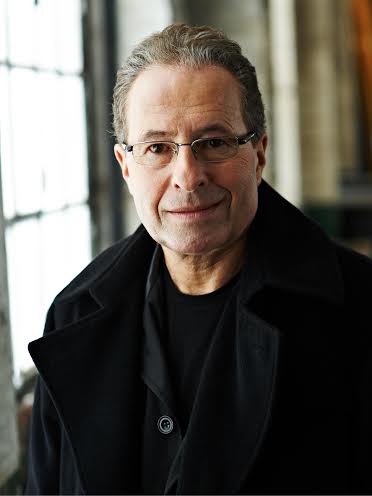
Peter James

Peter James

Today I’m excited to welcome best selling novelist Peter James to the CTG blog.

His latest novel  – WANT YOU DEAD – is out now (watch out for our review next week) and he kindly agreed to answer a few questions about his many writing projects for us …

Welcome Peter!

Dead Simple, the first novel in the Roy Grace series, is also rumored to venture its way onto the London big stage in January of 2015. Can you share some of the difficulties or advantages of adapting a thriller novel into a production play?

The two biggest difficulties are firstly containing the action within the very limited confines of a stage and the maximum number of set changes is it possible to have, and secondly reducing the number of characters in a book into the relatively small amount it is possible to have, both for economic and logistic reasons, in a play. The biggest challeng we have in bringing Dead Simple to the stage is that one of the central characters spends around two thirds of the entire play buried alive in a coffin. In the novel, much of the suspense comes from things that are happening to him – water rising within the coffin, his air supply being cut off, the excruciating claustrophobic fear of the enclosed dark space. So we’ve had to explore all kinds of different ways to portray this, from projecting the image of the actor in the coffin onto a screen, to simulating the feeling of being in a coffin by plunging the entire auditorium into darkness.

You recently contributed to the New York Times best selling novel, FaceOff. What were the highlights from the collaboration with Ian Rankin? Any challenges?

The whole concept of FaceOff, asking crime and thriller writers to have their central detective characters collaborate with another fictitious detective was both brilliant and highly daunting. Also although Ian Rankin and I are both British, the laws and police procedures in Scotland, where his character John Rebus operates are different to those in England where my character, Detective Superintendent Roy Grace operates. But right from the getgo, this collaboration was a really joyful experience. I’ve known him for some years and always found him to be a delightful, friendly, generous spirited guy, and all of this came through in spades during our time working together on this. Ian has a huge amount of knowledge about music, and it was his idea to hang the story around a cold case, and a rock and roll era, connecting our two cities of Brighton and Edinburgh. We met over a pint – or three – of beer in Scotland to kick it around, Ian started the ball rolling by writing a couple of pages which he sent to me, then I continued while he went off on tour to the US. We wrote the story in quite a short time period, with no arguments whatsoever. It was a strange feeling writing some of the scenes in which I had his central characters act and speak – I felt as if I was treading on sacred ground! I think the only real challenge was the amount of alcohol consumption the whole collaboration required 🙂

Want You Dead cover image

Want You Dead cover image

With 25 novels translated into 36 languages, publishing the world’s first electronic novel, Roy Grace’s 10th novel, a children’s novel, a novella, your involvement in Hollywood, your endless devotion and support to your hometown of Brighton, and charitable work under your belt we are all left wondering what is next for the man who seems to have done it all, and more importantly, how do you celebrate your successes?

Thank you! The big goal I now have in front of me is to see my books really break through in the USA. I’ve spent so much of my working life to date in the US, I feel as at home in North America as I do in England. I’m completely certain, from both the wonderful reviews I consistently get in the US press and from the enthusiasm of my fans, that it is possible. As to how I celebrate my success – it may sound strange, but I celebrate very cautiously. I know I’m incredibly lucky to have such a huge and global readership, to be able to make a living doing what I love, and to be able to travel so much, but equally I know, from my own experiences as a reader, just how many of my favourite authors seemed to decline as they became increasingly famous – almost as if they felt they didn’t have to make the effort any more. I’m determined not to let that happen, and I try my hardest to raise the bar with each book I write. My extravagances, when I am in full celebratory mood, are fine wines and fast cars – but not together!!!


A huge thank you to Peter James for taking time out of his busy schedule to visit with the CTG blog.

You can find out more about Peter by hopping on over to his website: http://www.peterjames.com

Visit him on Facebook: https://www.facebook.com/peterjames.roygrace

And follow him on Twitter @peterjamesuk

The Falling Blog Tour: an interview with author Emma Kavanagh


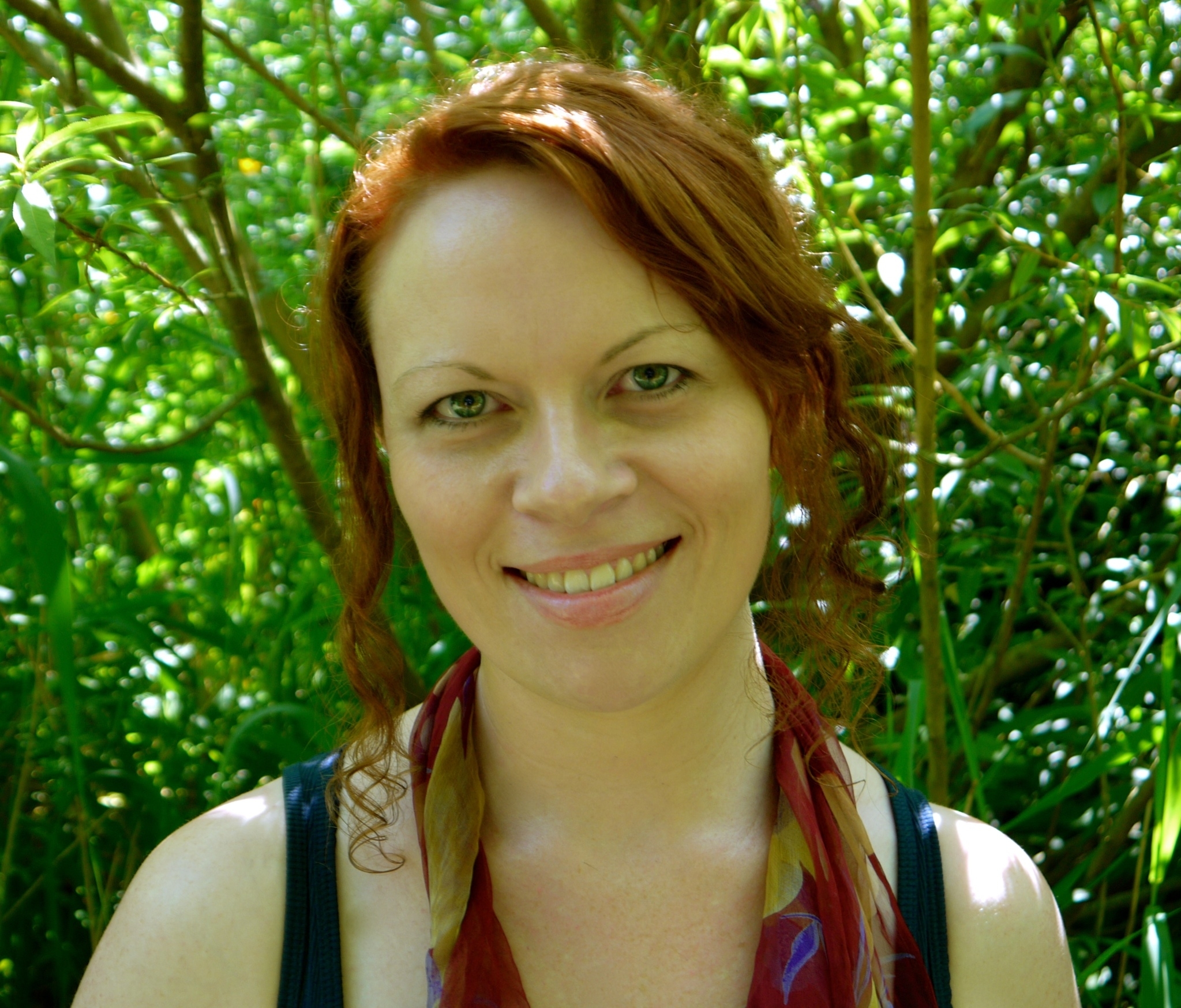
Author Emma Kavanagh

Author Emma Kavanagh

Today I’m delighted to welcome Emma Kavanagh to the CTG blog as a stop on the blog tour for her fabulous debut novel FALLING. 

Welcome Emma. Your debut novel – Falling is out this month. Can you tell us a bit about it?

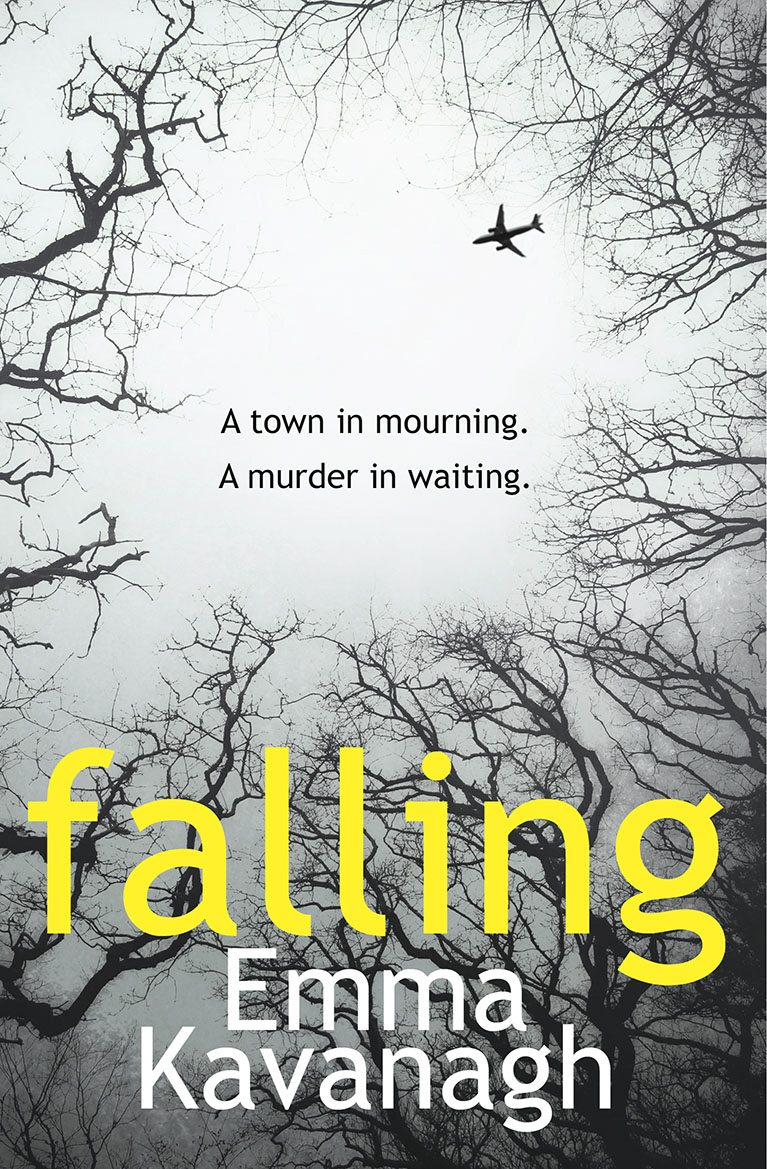
Falling is the story of a plane crash and a murder – two events that bring together the lives of four characters as they try to deal with the aftermath.

Have you always wanted to be a writer, and what was it that attracted you to crime fiction?

I announced to my parents that I wanted to be a writer when I was 5! So yes! I have very eclectic reading tastes and there are so many genres that I love, but crime fiction seemed to come naturally to me. I think mainly because of my background in police psychology. I like exploring the way in which people can be pushed into terrible deeds.

Could you tell us a little about your route to publication?

It wasn’t a simple process, but then I’m not sure that it ever is. I managed to complete a full novel length story, congratulated myself on that, then realised it was pretty dreadful. My second attempt was good enough to land me my agent, but still didn’t get me that coveted publishing deal. So, I rolled up my sleeves and started again, hoping desperately that this next one would allow me to begin my career. That book was Falling.

How would you describe your writing process, do you dive right in, or plan the story out first?

I’m a planner. In fact, I’m such a planner that I think I have a bit of a problem. I even use spreadsheets. Things do tend to move about as the story progresses, but at least using the spreadsheets allows me to keep track of everything.

Who are your favourite crime writers which books and authors have inspired you?

I love Agatha Christie with a passion. Her plotting is so clever and complex. My absolute favourite is And Then There Were None – such a chilling story. My other huge inspiration is Kate Atkinson. She crosses many genres in her writing, and is so hugely talented

Falling cover image

Falling cover image

What advice would you give to new writers aspiring to publication?

Never give up. Getting published is not easy. It takes an incredible amount of perseverance. But it is a myth that you have to know someone to get an agent or get a publishing deal. I knew absolutely no-one. If you need to write, then write. And keep writing until you reach your goal.

And lastly, what does the rest of 2014 have in store for you?

2014 has been an incredibly busy year for me, with the release of Falling and the birth of my second son 8 weeks ago. I finished book 2 – Hidden – a couple of months ago, so my goal for the rest of this year is to enjoy spending time with my baby and his older brother before getting started on book 3 in the new year.

Fantastic. Thanks so much for stopping by the CTG blog. We loved FALLING (you can read our review next week) and really look forward to HIDDEN coming out next year.

You can follow Emma on Twitter @EmmaLK

And you can read an extract from FALLING via this link http://bit.ly/FallingExtract

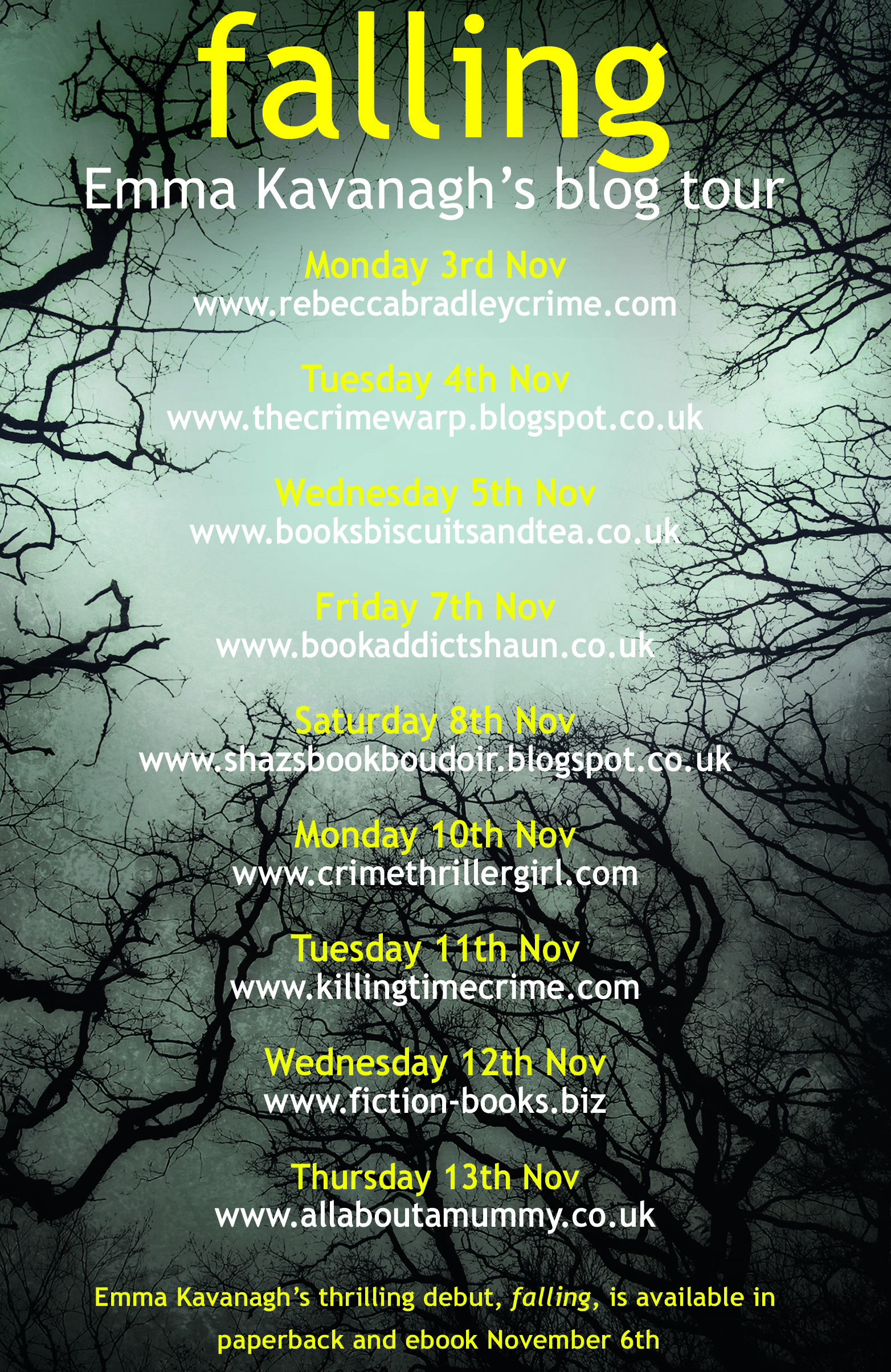
Also, don’t forget to hop over to these other great blogs to check out the other stops along the tour …

Falling_blog_tour_graphic_final_2909

CTG Interviews: Daniel Pembrey author of Harbour Master II: The Maze

Portrait70a601

Author Daniel Pembrey

Today I’m delighted to welcome author Daniel Pembrey to the CTG blog. Hot on the release of his latest novella, Daniel kindly agreed to allow us to grill him about his writerly habits …

So, Daniel, your latest novella/Kindle Single – Harbour Master II: The Maze – is out now. Can you tell us a bit about it?

It’s the second novella in a Dutch detective series (you don’t need to have read the first). Protagonist Henk van der Pol, a maverick Amsterdam cop, confronts a maze-like set of cases involving diamonds, fine art, drugs and high-class prostitution. As his investigations gather pace, he has to fend off powerful, vested interests while unravelling the connections between the crimes.

The Maze is one of the first crime books I’ve read set in Holland, what was it that inspired you to write a series about a Dutch detective?

I have a close sister living in Amsterdam so I’d visit often and struggle to find good crime fiction set there, which surprised me. I felt that Amsterdam lent itself as well to the genre as the neighbouring Scandinavian capitals, where of course crime fiction is huge! So finally I decided to write some …

Your novellas have a really strong sense of place, how do you go about researching them?

Thank you! I lived in the docklands area of Amsterdam for three months to capture the voice of the main character and his physical world. I spent a lot of time in bars and cafes listening to locals and watching how they interacted. It wasn’t all bad, but getting up at dawn on wintery mornings to peruse the harbour (as my central character does) took some getting used to!

What attracted you to writing crime fiction?

I read social history at university and I find that crime fiction is a fascinating way to explore themes in society. All crime results from some failure in relationships. Plus, it has a pace and a structure that makes for a very satisfying read, when done well.

How would you describe your writing process, do you dive right in, or plan the story out first?

I try to have a hypothetical ending in mind and then let the characters come alive. Novellas do need to be well-structured because there’s so little space, so I carefully keep track of things going on at the sub-plot level, and it’s important of course to try to provide that satisfying yet inevitable ending!

The Maze cover image

The Maze cover image

What advice would you give to new writers aspiring to publication?

I think it’s important to write on a regular basis, if only for a small amount of time each day. Writing ability is like a muscle, I feel; they more you use it, the more it can do. With fiction especially, it’s important to write about what inspires you and what you like to read. I also feel that a certain fearless honestly is a hallmark of much great writing, so it can help to write while imagining that no one will ever read it!

And lastly, what does the rest of 2014 have in store for you?

I’m working hard on the third book in the Harbour Master series, which comes out on December 5th. It’s about a high-profile kidnapping that has parallels with the 1983 kidnapping of Freddy Heineken. We’re all potentially hostage to certain things, psychologically. Then I hope to bring out a collected edition of the first three books in print and e-book formats.

For updates on those releases and my other books (including an exciting film adaption project), please sign up at http://www.danielpembrey.com to receive my monthly author newsletter.

Also, I’ll be speaking on a panel at Bouchercon in Long Beach on November 15th; if anyone happens to be in the Los Angeles area, it would be great to see you!

Thank you so much for having me.

Our pleasure!

Make sure to hop on over to Daniel’s website to get all the info on his books and, if you’re in Long Beach next month, be sure to go and say hi at Bouchercon.

CTG Interviews: Helen Giltrow author of The Distance

The Distance cover image

The Distance cover image

A few weeks ago I caught up with Helen Giltrow, author of the fabulous crime thriller The Distance. Over a long lunch, sitting in the sun-drenched garden of a beautiful Oxfordshire pub, we tried to out-booknerd each other and talked all things books and writing.

First, a quick reminder about the book. Here’s what the blurb says:

“Charlotte Alton has put her old life behind her. The life where she bought and sold information, unearthing secrets buried too deep for anyone else to find, or fabricating new identities for people who need their histories erased.

But now she has been offered one more job. To get a hit-man into an experimental new prison and take out someone who according to the records isn’t there at all.

It’s impossible. A suicide mission. And quite possibly a set-up. So why can’t she say no?”

And so, to the questions …

Karla/Charlotte is a fabulous, strong female lead. What was your inspiration for creating her?

Well, originally the main character was supposed to be the hit-man, Simon Johanssen, and Karla was the character he went to for information. In the earliest draft she didn’t appear until the third chapter. Around that time I went on an Arvon writing course with Val McDermid as one of the tutors. When Val read the opening, she said that the first couple of chapters were okay, but the story got really interesting when Karla appeared.

Shortly afterwards, I had to take an eighteen month break from writing and by the time I went back to the story I knew it needed to be Karla’s book. I found Karla easy to write, in fact I probably share a few of her characteristics – like her need for control, and her obsessiveness!

The Distance – which I loved – is set in the near future. What made you decide that as your setting rather than the present day?

The setting came out of the plot and the characters. Johanssen has to break into a prison to carry out a hit on another prisoner, but as that prisoner is a woman – and we don’t have mixed prisons here in the UK – I needed a near-future setting to make it work. So, really, it wasn’t something I chose, it came from the needs of the story.

But it’s not a futuristic novel – the setting’s only a couple of years ahead of where we are now.

You use the present tense throughout The Distance which works really well. What was it that prompted you to go for present tense?

I didn’t plan it consciously. It was just that when I started writing, Johanssen’s viewpoint came out in the present tense. I was surprised as I’d always written in the past tense before, but I found I liked it. Then, when I switched to Karla’s viewpoint, present tense seemed to work for her too.

Karla’s scenes are all told in first person – she’s the ‘I’ of the story. Again, it’s just how it came out when I started writing in her viewpoint, whereas Johanssen’s automatically came out in third person – ‘he’. I wondered if maybe I shouldn’t be mixing the two, so I experimented early on, trying Karla’s viewpoint in third, but I didn’t like it – it lost so much of her intensity – so I carried on going with first.

Curiously I’ve had readers tell me that Johanssen’s story is told in first person too – which is wrong, but great! I don’t want readers to think I’m telling them a story. I want them to see it through the characters’ eyes. Of course, present tense helps with that sense of immediacy too. And it really ups the pace.

Helen Giltrow (c) Paul Stuart

Helen Giltrow (c) Paul Stuart

For you, does the creative process start with the character/s, the plot or a combination of the two (or something else)?

For me it’s character. I think even if you have an idea for something, the only way to get to it is through character – you bring out the story from the actions of the characters and what happens to them.

Are you a plotter or a pantser?

Bit of both! From my childhood up to my early thirties, I wrote a lot without too much planning, but increasingly I felt it wasn’t working for me – the narratives were too loose. I’d have loads of ideas, then fail to tie them together. My job involved a lot of planning, so I thought I ought to be able to plot. I mean, how hard could it be? So when I started work on The Distance, I decided to do a plan. Of course, as soon as I began writing in earnest, I started coming up with ideas I liked better, and dumped the plan completely!

The lure of advance plotting is still strong, and occasionally I fall into the trap of trying to write a detailed plan. I do it because I think it’ll give me the perfect book – which would spare me so much revising and redrafting. But every time the same thing happens. I never find plotting a happy experience: it’s always an outside-in process, whereas writing’s inside-out.

Having said that, it’s hard writing into a void! I think making a plan’s really useful if it’s the thing that gets you writing, or if it helps you get unstuck. Now I tend to write a bit, and then see where I am and retrospectively plan.

What’s your favourite drink?

Oh, definitely my cup of coffee in the morning, before I sit down to work.

Where’s your best place to write?

I’m not one of those people who can write anywhere, on buses or on park benches. I’m best sitting at my desk at home. I write on my battered old laptop; I ought to buy a new one, but I’m slightly scared of changing it now, in case that jinxes me … Does that sound weird?

What advice would you give to writers aspiring to publication?

There’s all the obvious advice like ‘Don’t give up,’ ‘Write every day,’ and ‘Don’t try to second guess the market.’ And that’s all valid. I also think it’s best to write what you want to write because ultimately if you don’t like it it’ll show in your writing. It takes a long time to write a book, so you’re better off writing one you want to read – that way you’re more likely to take the reader with you on the journey.

And lastly, what’s next for you?

I’m back at my laptop, writing the next book!

A huge thank you to Helen Giltrow for letting us grill her.

You can find out more about Helen and her fabulous debut novel – The Distance – over at https://www.orionbooks.co.uk/books/detail.page?isbn=9781409126621 and follow her on Twitter @HelenGiltrow

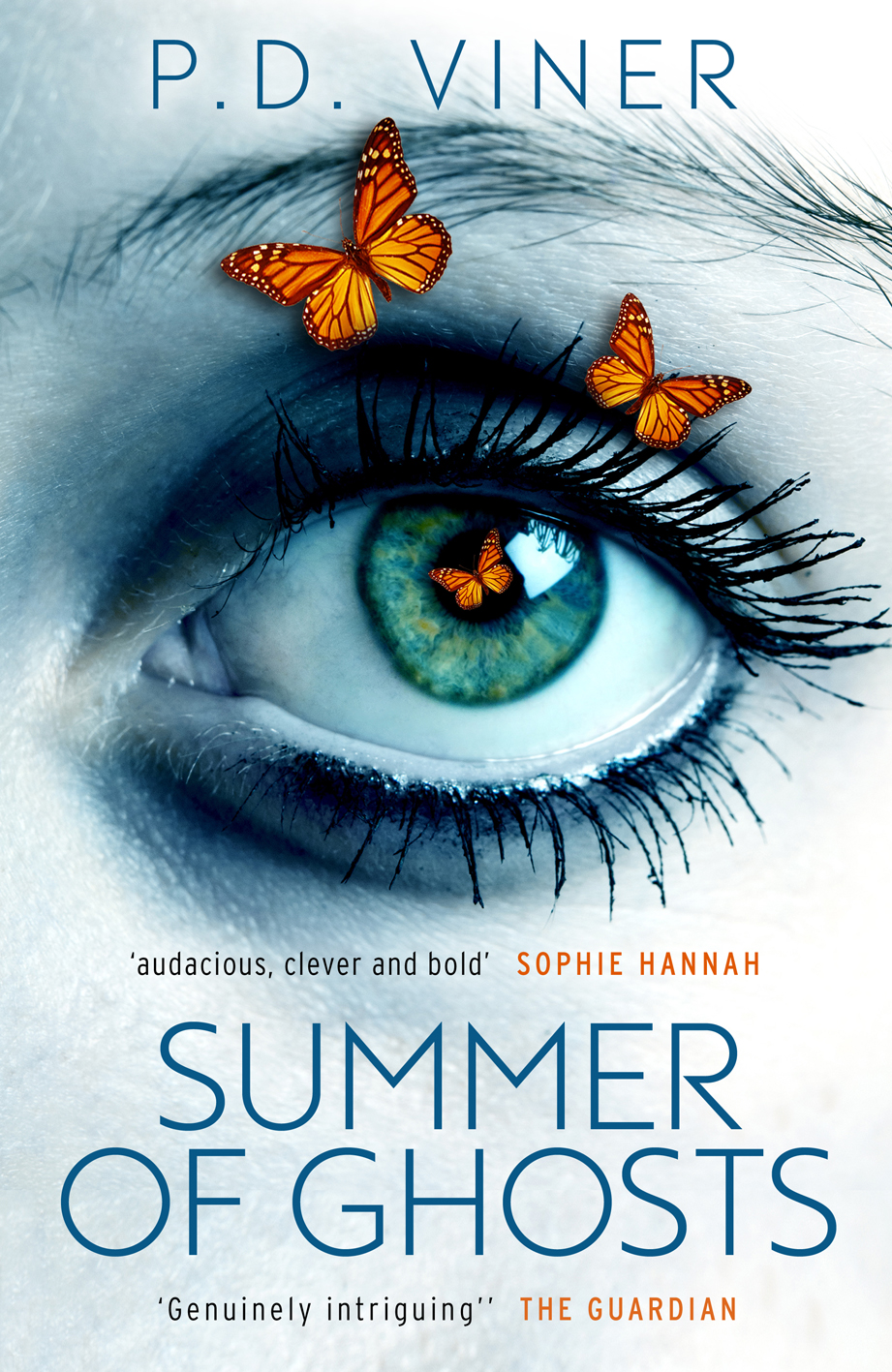
CTG Interviews: P D Viner, author of Summer of Ghosts

Summer of Ghosts cover image

Summer of Ghosts cover image


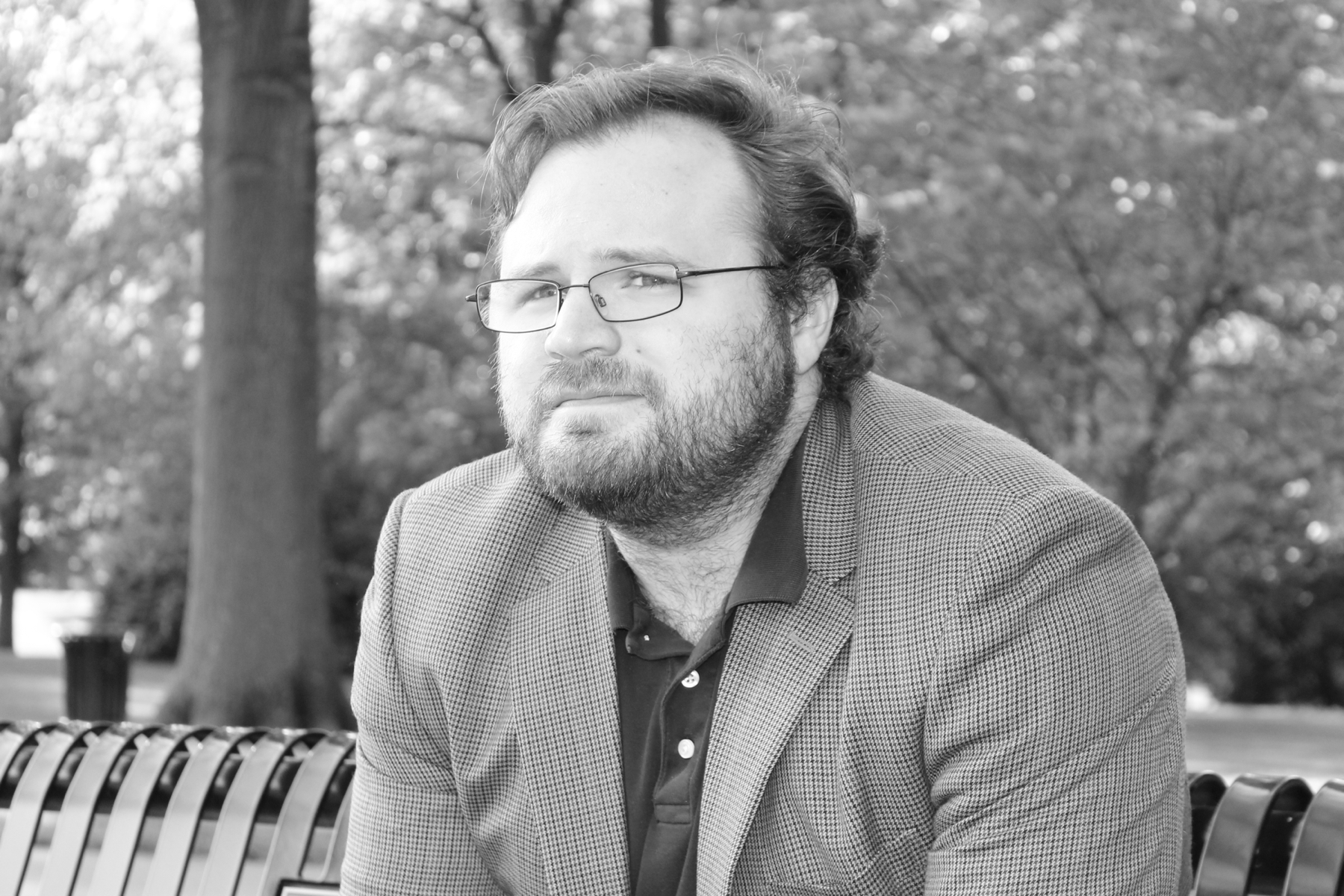
Today I’m delighted to welcome author P D Viner – author of the recently published Summer of Ghosts – to the CTG blog. 

So, to the questions …

Your latest book – Summer of Ghosts – came out a few weeks ago. Can you tell us a bit about it?

August was an incredibly busy month as on August 1st my second novella, The Ugly Man was released as a free download and on August 14th the paperback of my first novel, The Last winter of Dani Lancing, came out as well as the hardback of Summer of Ghosts.

So, I want to start by telling you that The Last Winter of Dani Lancing is the story of three people who have been traumatised by violence and left damaged and untethered from life as something happened to the girl they loved. In 1989 Dani Lancing went missing and for 22 years her parents, and the man who loves her, are frozen in their pain and loss. Her mother, Patty, was a crime journalist and she gave up her work to devote all her time to investigating the crime. Jim Lancing, Dani’s father, is left alone except for the spirit (if that is what it is) of his daughter who lives with him – and Dani’s boyfriend, Tom Bevans becomes a policeman as he needs to make up for the fact that he could not protect her. Tom Bevans, who rises to the rank of Detective Superintendent, but who is known to all his colleagues as The Sad Man due to the incredible loss he bears with him, heads up a serious crimes unit that deals with sexually motivated murders of young women. These three characters, the trinity of the pained, are all haunted by what happened to Dani in some way, they are all paralysed by their grief for 22 years. Then, out of the blue, a clue is revealed – something that could reveal what happened to her all those years ago. But it leads all three of them back down into the hell of Dani’s death… they will discover the truth of her death but it is at a great cost.

Summer of Ghosts (Hardback out Aug 14 2014) continues the story six months after the first novel. Jim and Patty are dealing with the truth of Dani’s final days (spoilers) but Tom has had a kind of breakdown. For six months he has wallowed in his self-pity and sense of loss – but he has to get back to work as the beautiful skin murderer has returned. Four years before, Tom swore to three mothers he would solve the murders of their daughters… but he failed. Now there may be a fourth victim – the daughter of the man who helped Tom try to find Dani all those years ago. A man called Franco, who also heads London’s biggest drugs gang – a man who is ruthless and cruel, a killer. Together he and Tom must track down the most dangerous man in Europe. Oh and Tom needs the best investigator he knows to help him: Patty Lancing.

Together they follow a train of events that take them from Greenwich to death inside a royal palace in Brighton, to the heart of darkness inside a war in Africa and finally to a showdown with a corrupt policeman and a man who has killed hundreds if not thousands. And, heartbreakingly, there is more about the death of Dani Lancing for her parents to uncover. For them the nightmare will not end.

So, Summer of Ghosts carries the story begun in The Last Winter of Dani Lancing, on a step further but it can be read as a stand-alone thriller without the sense that you are missing something. The plot twists and it is a real page turner, but the intention is also to drag you into the emotional lives of Tom, Patty and Jim. Reviewer and crime writer Stav Sherez said: Summer of Ghosts is strong, assured and with a plot that will poke your heart. I always love fiction that draws you into the lives of the characters – and that is always my intention.


And does Summer of Ghosts end the story for Tom Bevans and Patty and Jim lancing?

No, I have always planned the mystery of Dani Lancing to emerge over three books and there are also four novellas that deepen the understanding of the characters. Two of those novellas are already available as FREE downloads from all good ebook stockists. They are The Sad Man, which is a 110 page book that details the case in 1999 that made Tom Bevans’ career and allowed him to set-up operation Ares – his serious crimes unit that investigates sexually motivated, multiple murders. The second is The Ugly Man (120 pages) and is set in the heatwave of 1976 and has Patty dispatched by her newspaper to a sleepy Derbyshire village to investigate a brutal murder – and it leads to her uncovering thirty years of secrets and lies.

Next year the cycle of stories will be concluded by a third novel and two more novellas. It will not be the end of the line for Patty or Tom but will conclude this story. I have always loved linked books and while each one can be read alone, if you do read them as a set, then the tension does build and build. I hope when they are all done that my publisher will release a box set or a single volume collection with the novellas fitted in between the novels as I intend them to be read… that will be very exciting.

The Last Winter of Dani Lancing cover image

The Last Winter of Dani Lancing cover image


Summer of Ghosts examines some strong themes including loss and grief. What was it that sparked the inception of the story – the characters or the plot (or something else)? 

When I began writing The Last Winter of Dani Lancing (then titled Three Drops of Blood), I had not thought about going beyond that story. TLWODL is dark and full of rage and pain – all the resentment I felt about my business being destroyed (I had a small audiobook company with my sister and we produced audio books of Shakespeare and the classics for GCSE and A level students) in the financial meltdown and the fear I had surrounding being the father to a two-year old when I was unemployed and in my forties… well, all of that was channeled into the book. Grief and just what we will do for love and to revenge ourselves on those who hurt our family – that was the touchstone that set the tone for the first book. As I wrote that story there was a tipping point, and I became so engrossed in the character’s lives that I began to imagine further – where they could go after the big reveal in Durham cathedral – the point where they finally know the truth of Dani’s disappearance and what happened to her. Then I thought: okay, what would happen to Jim and Patty after the truth was finally revealed. Could they stay together now? How did you cope with knowing the truth after twenty-two years of being in the darkness? How would they cope… that was the question, and the same was true for Tom; for him the finale of TLWODL is like a bomb exploding. I had to know more!

And that is one of the things that I often find series of books (and especially crime) gets wrong. The character just resets for the next book and is fine again… and I didn’t want that. I wanted the weight of the truth to sit heavily on my characters (especially as book three is going to beat them down to the essentials of their humanity) because that is life, human beings dwell in bad news, they get depressed and resentful and petty and angry and let stuff fester for months and years.

Summer of Ghosts keeps the sense of loss from the first books, though it becomes skewed as the world view shifts. Firstly we have three girls who have been murdered. We meet them in TLWODL as a background case – in fact we see Tom visiting the murder scene of the third victim – but in this book Tom is haunted by the fact that he failed these girls. We also have a major new character: Franco. Well I say new – actually we did meet him in the first book but he was a minor (though interesting) character then. Now he is the head of a large drugs ring and he wants out. He is a man who has killed many, created destruction everywhere he has gone… but… can he have a good heart? Could he, in some way, have a sense of morality, even if it is skewed and hard for us to see? That was what fascinated me about his life and the world he operated in – a world where violence is everywhere and life is cheap. It is the opposite of the world of the first book where one life is everything and one act of violence has destroyed the lives of Dani, Tom, Patty and Jim.


As a highly successful audio and film-maker, what was it that attracted you about writing fiction?

Success? Ha. As a film-maker I had some early success but after three years trying to make two projects I had written, I gave up and ran away to join the circus. The world of film is so tough and I just folded. I wrote two novels then and they lie under my bed like two deformed children. I feed them raw meat once in a while – but nobody was interested in them. Setting up my audio business was a way of being creative and making a living and working with actors and musicians with achievable budgets. I could direct hamlet with 21 actors and afford to make it and then sell it. They also won awards and got great reviews… but the business relied on library sales and after the financial crisis all libraries slashed their budgets and I was out of a job. I turned back to fiction writing as a way to salve my soul. Also I had a two year old and she needed me to pick her up from pre-school and have her two days a week (my remarkable wife has a real job) and so writing fitted the lifestyle I had. It was crazy to think that this time could get published – and so I didn’t think like that, I just wrote for me and I loved the puzzle of solving this mystery in my head. As it became more complex I had to get cleverer – writing crime is quite addictive you know. So that was that – I fell into an old love due to circumstance and (fingers crossed) this time it worked… as long as I keep killing.


Could you tell us a little about your writing process, do you dive right in, or plan the story out first?

It is somewhere between the two. Of course when I began TLWODL it was all fragmented as I learned how to craft a story over 100,000 words. With Summer of Ghosts, I had an idea of where I was going and I knew the ending – but it was the research process that filled out the bare bones. I spent a few days with the Sussex police – including a night out in a first response unit and with the 999 team – and that propelled areas of the story forward. The truth about being a professional writer as opposed to a part-time hopeful, is that you have deadlines to meet. I had less than 6 months to write Summer of Ghosts and so you have to be better prepared and plan more. That being said, every time I sat down to write the story would take me be surprise in so many ways. With the third book (in my head I am calling it The Fall of Hope) I have spent a day in a Victorian prison and spoken to a charity for victims. I know the broad outline of the book and have two notebooks full of ideas, but over the next 4 months I will write the first draft and it will take on life of its own.


What advice would you give to new writers aspiring to publication?

Write. I did a two-year creative writing course that was excellent and it didn’t teach me to write but it challenged me to flex my writing muscle and try different styles and think about who I was and what I wanted to say. During the course I began the book and at the end of the course I had 67,000 words and I had shared almost all of it with ten people who had helped me grow my characters. Having people you trust to take the journey with you is great – but we all have different circumstances. If you want to get published you have to write a book. Judge your own efforts with a critical eye and don’t be afraid to throw out large swathes. Write and re-write and discover what makes you tick as a writer. Don’t be afraid.


And lastly, what does the rest of 2014 have in store for you? 

Well there are only 4 months left and mostly I will use that to write the first draft of my third novel. As I said earlier the Dani Lancing mystery is 3 novels and 4 novellas, so I also have a novella to edit and a novella to write.

The other creative project, pinging about in my head, is a TV show I have written an extended outline for. This year I sold TV rights for TLWODL to Warner TV. It will almost certainly come to nothing but has been exciting (I do like a conference call with Hollywood) – but during the process I was thinking a lot about crime TV and was approached by a UK production team who also wanted to option Dani. I turned them down, but pitched them a new idea, written specifically for TV. They liked it, so I have written the 5 episode break-down and will make that into a script (in my spare time). It will probably never get made (I find it much easier to be pessimistic about TV and movies) – but I have really enjoyed writing it and I think it is bloody good. Anyway I shouldn’t get bored over the next six months.


A huge thank you to P D Viner for popping over to see us at the CTG blog and letting us grill him. It sounds like he’s going to be busy for good while yet!

To find out more about P D Viner and his books, hop on over to his website at: http://pdviner.com/

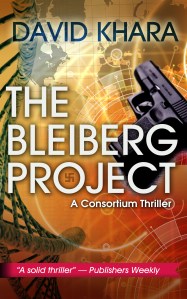
Re-blog: David Khara stops by to talk about The Bleiberg Project

cover image

cover image

Last year David Khara, author of The Bleiberg Project, dropped by the CTG blog to talk about the launch of his new conspiracy theory action thriller eBook. As The Bleiberg Project – the first in the Consortium Thriller series – has now come out in paperback we thought we’d re-blog the interview and excerpt. 

But, before we get started with the interview, here’s a little taster of the book (please note contains strong language):

Excerpt:

“Besides work and getting high, what do you do all day?”

No answer. You’re out of luck, pal. I’m pig-headed. “The journey will seem shorter if we talk, don’t you think?”

He sighs. “When I’m not on an assignment, I paint.” I can’t help laughing. “You think that’s funny?”

“I’m picturing you on a stool with your palette and brush, gazing at a green valley or a snowy mountaintop. Sorry, but with your look and build, it’s funny!”

“If you’re just going to make fun of me, the trip is going to seem very, very long.” He clams up.

“There’s no harm in a little fun. OK, I’ll stop,” I snort, laughing even louder. Why do giggling fits always hit at inappropriate times?

“What about you? Besides driving home from clubs dead drunk, what do you do?”

Bastard. That’s below the belt. On second thought, I guess I deserved it. “I try to survive. I thought about blowing my brains out, but I’m too much of a coward. So I drink. I smoke like a chimney. Every day, I destroy myself a little bit more.”

“Suicide isn’t a sign of bravery, but of giving up. We all make mistakes. You don’t judge somebody by the number of blows they can give.”

“What do you judge somebody by, Mr Freud?”

“The number of blows they can take.”

His words hit home. “You’ve taken a lot, right?” I ask. A long, long beat.

“More than you can ever imagine.”

Why am I not surprised? This guy’s been around the block. I’d bet my life on it. “How do you do it?”

“Pardon me?”

“Blowing guys away like that. How do you do it?”

“Who said it was easy?” He sighs heavily. A long awkward silence.

(Excerpted from The Bleiberg Project by David Khara. First published in French as Le Projet Bleiberg, ©2010 Editions Critic. English translation ©2013 Simon John. First published in English in 2013 by Le French Book, a digital-first publisher specializing in best-selling mysteries and thrillers from France.).

And now, for the interview …

So David, your new book, The Bleiberg Project, is a thriller with links to World War II. What was it that inspired you to write a novel along that theme?

The whole idea for The Bleiberg Project idea came while I was driving to my office, listening to the news. A pharmaceutical company was doing research on an orphan disease that touched fewer than 100 kids in Europe. A man said that the study was being ended because the budget was 50,000 euros short. I was stunned. These companies make tons of money, amazing profits, and 50,000 euros is a drop in the ocean. When I got to my office, I started looking into the subject and found articles establishing links between Nazi and Japanese scientists during WWII and pharmaceutical companies. I also found information about how Allied governments were interested in the results of immoral and incredibly cruel human experiments. Through my research, I realized the world we live in rose up from the ashes of war, and was built on the corpses of 60 million victims. I wanted to write about it, through entertainment to make it more bearable.

What research do you do to ensure the atmosphere, locations and characters feel authentic?

The answer is pretty easy: 1000 hours listening to survivors, watching documentaries over and over again, and reading biographies. The point was not for me to merely tell the stories. I needed to get in the minds of both victims and criminals. I wanted to be there with them. This inspired many of the characters of the series, even those set in the present day. And everything that happens in the past is, at one point or another, is based on the truth.

Tell us a little about your writing process, do you plot out the story events before sitting down to write, or do you drive right in and see where the story takes you?

It is a very delicate mix of both. I’ve got a few dots I need to link together to get the whole picture. I do not use notes, nor do I write an outline. I know what I’m going to write, and since the novels are built as puzzles with chapters taking us back in time, I have everything in mind before starting. That means I constantly think about it. There is just no day off when I start working. Still, the absence of a written script gives the characters some space to explore unplanned directions. My job is then to make sure they don’t stray too far from the plot and my goals.

How do you organise your writing day: do you have a favourite time and place to write?

My writing day is a well-established ritual. I write in my garden, a cup of coffee on the left side of my computer, and my cigarettes (bad, I know) on the right side. I put sunglasses on, then headphones because I need music to keep me in the mood of each chapter. With that, I’m ready for 6 to 8 hours of intensive writing. I usually work from 10 in the morning to 6 in the evening, with a break for lunch. When I’m not in the mood for writing, I go back to my research.

And what’s next for you, are you planning your next novel, or already well into the writing of it?

The Morgenstern Project, the third book in the Consortium thriller series, was just released in France, so I’m traveling a lot for book signings and interviews. My next novel is planned, and I’ll start writing it pretty soon and it is about time because I’ve had it in mind for three years now and lots of readers ask for it. The Bleiberg Project movie production should move to a new phase soon, which will have a direct impact on my schedule. 2014 will be a very busy year, believe me.

A big thank you to David Khara for dropping by to talk to us. To find out more about David and The Bleiberg Project, you can check out the link below:

Web page: http://www.thebleibergproject.com
CTG Interviews: Chris Culver, author of the Ash Rashid series

Today, I’m delighted to welcome author Chris Culver, New York Times Bestselling author of the Ash Rashid series of mysteries, to the CTG blog.

Welcome, Chris. Let’s jump straight into the questions …

Your latest book NINE YEARS GONE is out this month. Can you tell us a bit about it?

NINE YEARS GONE is a standalone, which is a little unusual for me. It’s the story of an average guy from the Midwest who, to save her life, helps his girlfriend disappear and then frames her evil and quite powerful stepfather for her murder. Then, nine years later on the evening after the wicked stepfather is executed and when my hero is married and has everything he’s ever wanted in life, his former lover returns to upend his entire world.

It’s a story about revenge and the fine line between love and obsession. I’m probably biased, but I think it’s fun.

NINE YEARS GONE cover image

NINE YEARS GONE cover image

NINE YEARS GONE is your second standalone book. What was it that prompted the idea for the story?

NINE YEARS GONE was a departure for me, both from my Ash Rashid series and my typical genre, thrillers. It’s psychological suspense, and I wrote it because I needed a break. I love my reoccurring series character, and I don’t plan to abandon him anytime soon, but it’s easy to get stuck in a rut writing in the same universe over and over again. I don’t know where this analogy originally came from, but I think it’s fitting: writing in a series is a bit like a painter buying a canvass only to discover half the painting is done. The painter still has a lot of room to work with, but his new work has to fit the old work. Sometimes, it’s just nice to try something new.

The actual idea for the book came from a footnote in a legal textbook. It involved a 17th or 18th century case in which a man was hanged for murdering his neighbor and then disposing of the body. Unfortunately, that neighbor was on a trip abroad and returned just in time to see a familiar man swinging from the gallows in the town square. When I read that, I couldn’t help but wonder if it could happen in the contemporary United States. From there, I just started asking myself “What if. . .?”


Could you tell us a little about your writing process, do you dive right in, or plan the story out first?

I do a little bit of both. My outline for NINE YEARS GONE ran 40 single-spaced pages and contained almost 20k words. It had snippets of dialogue, outlines of the various plot twists, the backstory—everything I needed to write the plot of the novel. In addition to that, I have character worksheets that I keep for every character in the book.

As soon as I sit down and start typing, I throw it all out the window. My characters take on a life of their own and do things that surprise even me. At that point, they sort of take over.


What advice would you give to new writers aspiring to publication?

Practice. Your first book is the hardest to write and, hopefully, the worst book you’ll ever write. My first book was an absolute affront to literature, but it taught me a lot. My second book was significantly better, and my third book was even better than that. Most writers go through that sort of progression. So don’t give up. If you want to be a writer, keep writing, keep practicing, and never stop trying to improve your craft.

Author Chris Culver

Author Chris Culver

And lastly, what does the rest of 2014 have in store for you?

I’m going to be busy. I’m about 65% complete with my fourth Ash Rashid title. I think it’ll be a great book when it’s done. After that, I’m thinking of starting a new series. It’s a big undertaking but one I’ve wanted to do for quite a while.


Sounds exciting. I can’t wait to read them.

Thanks so much for dropping by the CTG blog to answer our questions.

Chris Culver’s latest book, NINE YEARS GONE, is out this week.

Here’s what the blurb says: “Nine years ago, Steve Hale saved the love of his life from her abusive and very powerful stepfather by helping her disappear and framing him for her murder. Today, that stepfather is dead, executed by the state of Missouri for a crime he didn’t commit, and Steve has a loving wife, a little girl who depends on him, a home, a career – everything he ever wanted and believed he could never have. He also has a new voice mail from a woman the rest of the world believes is dead.

A reunion with his former girlfriend quickly sours when Steve realizes that her stories don’t match up – the one she told nine years ago and the one she told today.

As he unravels her twisted knot of lies, he discovers that events are already in motion and plans are being carried out. Unwittingly, he’s hurtling toward a dark secret – one some very dangerous people are willing to protect at any cost.”

And, you can connect with Chris at: 

Twitter: https://twitter.com/@Culver_C
Facebook: https://www.facebook.com/ChrisCulverBooks
Goodreads: https://www.goodreads.com/author/show/4697453.Chris_Culver?from_search=true