CTG Interviews: Ed Chatterton author of DOWN AMONG THE DEAD MEN

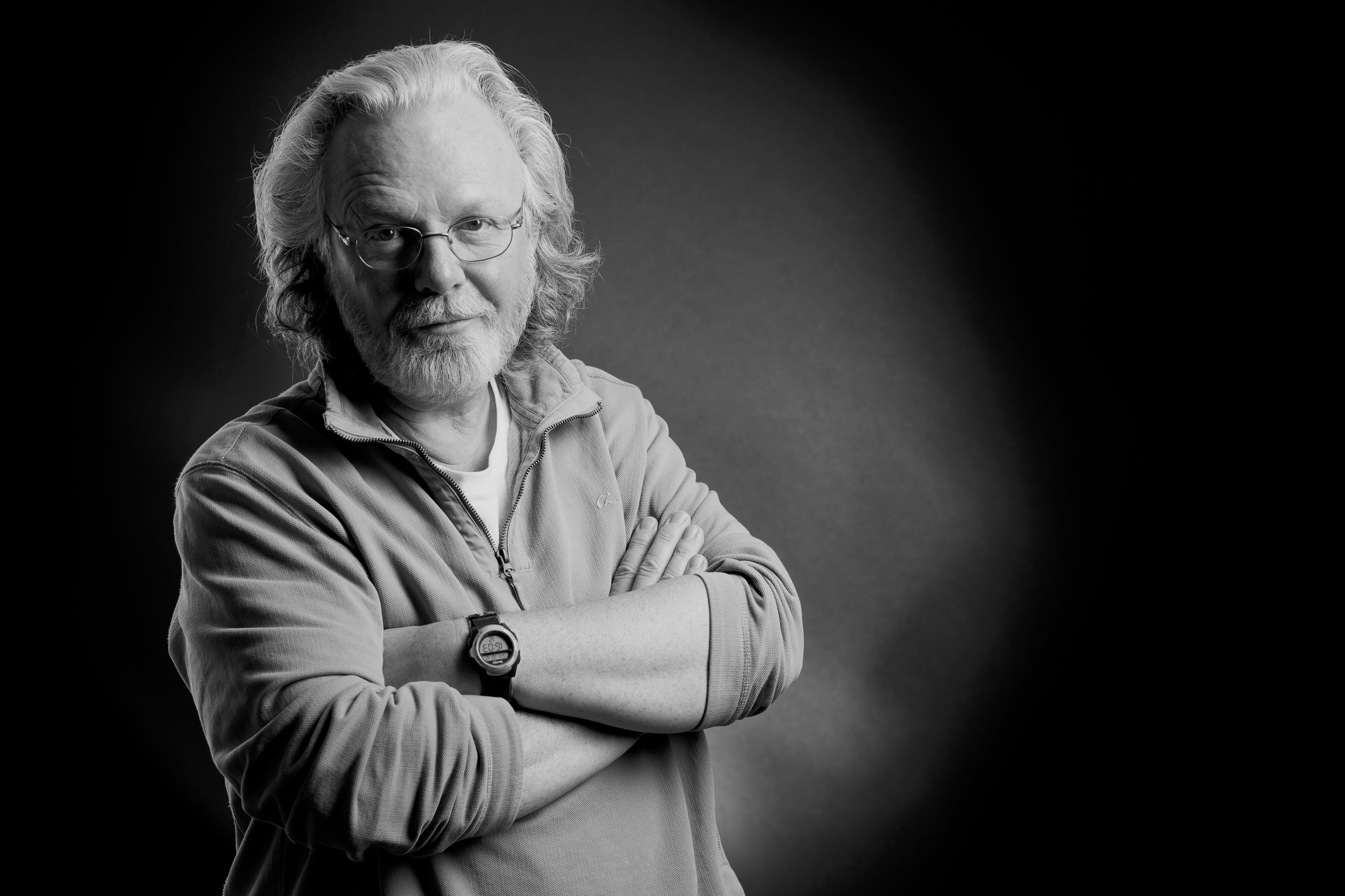
Author Ed Chatterton

Author Ed Chatterton

Today I’m excited to welcome Ed Chatterton to the CTG blog. As well as having writing over twenty children’s novels (published under the name Martin Chatterton), Ed is the author of the recently published crime novel, Down Among the Dead Men, the second book in the DCI Frank Keane series, published by Arrow.

And so, to the questions …

Before you starting writing crime fiction you’d already written over twenty highly successful children’s books. What fresh challenge did writing fiction for an adult crime reader audience bring?

‘Highly successful’ might be overstating it: I’d been doing pretty well with some books and less so with others, just like most writers. The books I write for children are largely comedies – surreal farces, often with big themes like ‘death’ or ‘the physical universe’ or ‘nose-picking’. There were, particularly in some of the more recent children’s books, crime elements in there too. Two books – ‘The Brain Finds A Leg’ and ‘The Brain Full of Holes’ – were full blown detective fiction, albeit with a comic twist. So the transition into adult crime fiction was less challenging than it might have been for a debut author. The main change I found was that my characters can swear (and some of them do, a lot), can have sex, and can be more violent. From a technical point of view, adult crime writing requires more precision in terms of plot and, given that my books are complex, requires me to use my rapidly shrinking brain more often. In my children’s books if I got to a difficult plot point I would usually insert a T-rex or a time machine. That’s less easy with gritty adult fiction, as most crime readers tend to notice things like that.

Your recent crime novel, Down Among the Dead Men, is set in Liverpool, Los Angeles and Australia. What was it about these particular settings that inspired to you to pick them?

Liverpool featured because the story is a continuation (in terms of some of the characters) of the first book, A Dark Place To Die. In that first book Frank Keane is one of a number of characters. In Down Among the Dead Men I wanted to focus on Frank and see how far I could push him. Frank’s a Liverpool cop who gets pulled into a case that starts relatively small (an apparent  domestic murder-suicide) but quickly gets darker and widens out into something much larger in scale. I picked Los Angeles for two reasons: the first is that I’ve been there a number of times and there were locations I wanted to use. The high desert near Palm Springs and Twentynine Palms is a very evocative landscape (the working title for Down Among the Dead Men was Twentynine Palms). The second is so that I could continue to open out the stories from a single location. I’m not a huge fan of every case in a series being located in exactly the same place. I’d make an exception for George Pelecanos with his Washington-based novels, but single location books too often end up becoming sterile or repetitive. I used to live in the US so I am fond of the place and enjoy writing American characters. The Aussie connection dates back to A Dark Place To Die. Two of the characters from that book, Menno Koopman and Warren Eckhardt, make a re-appearance. Koopman, I think, will become a character who I might develop more as a stand alone. If he lives through Down Among the Dead Men that is . . .

Could you tell us a little about your writing process, do you dive right in, or plan the story out first?

Raymond Chandler said that a good story isn’t devised, it is distilled and I think that’s a pretty good description of my approach. I start with a basic idea, or set of ideas and then I let them go wherever they take me. I often have a rough ‘destination’ in mind with a skeleton narrative and a very strong sense of the kind of story I want to tell, but the fine details are worked out in writing. This usually means that I am constantly redrafting and editing – which is fortunately something I love doing – and I find this approach prevents the books being formulaic. My thinking is that if I don’t know exactly where the story is going then that makes it doubly interesting for the reader. I think you can overplan, just the same way that you can over-write. In my stories, I honestly don’t think the reader can guess what way the story is going.
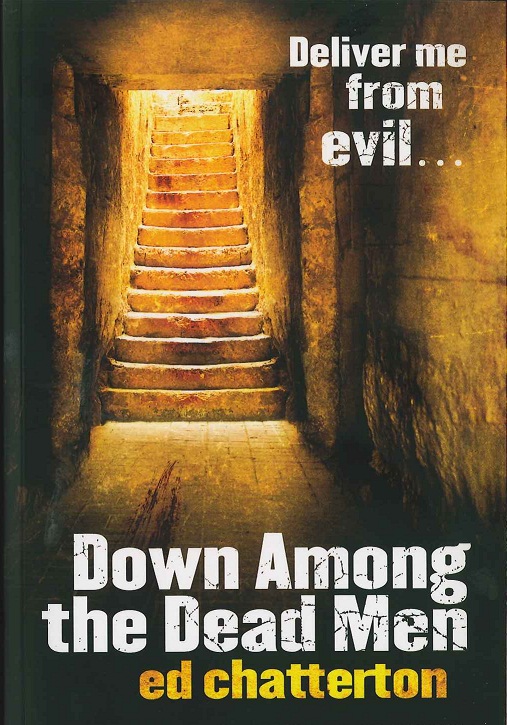
Down Among the Dead Men cover image

Down Among the Dead Men cover image

Your books have been likened to those of Peter James and Ian Rankin. Which crime writers’ novels do you most like to read?

I try to avoid British crime books as I get very jealous and envious and bitter and twisted if they are any good. I’m flattered to be compared to either Peter James and Ian Rankin and, weirdly enough, I met both of them recently although, since I was several continents off being described as sober, they may not look back on the meeting quite as fondly as I do. From what I can remember, they are both lovely blokes but far too successful for my liking. In truth, American crime writers are more my taste and, since they are further away, don’t seem as threatening. I already mentioned Pelecanos who I think is just a little bit special, but I also love Elmore Leonard, Richard Price, Joe Lansdale, Carl Hiassen. One of my favourite books is the one-off, Blackburn by Bradley Denton. I do have a real soft spot for Patricia Highsmith’s stuff too. Some of the Scandi crime is good but I’m a bit sick of the adulation doled out to anyone vaguely Nordic who so much as writes a shopping list at the moment. Of the Scandinavians I like Asa Larsson best. At one point, when I knew my crime series was coming out, I seriously considered adopting a Nordic-sounding pseudonym. In my bleaker 3am moments, I regret not doing so. I reckon I’d have scooped at least three awards by now.

What advice would you give to new writers aspiring to publication?

All the usual gubbins: make sure you have something to say, make sure you keep reading, make sure you keep writing. Don’t think that publication is the ‘win’: publication is just the ticket into the gladiator ring. Maybe this too: don’t listen to too much prescriptive crap about the mechanics of story-telling, plot points, ‘arcs’, use of semi-colons, use of italics, whatever it is. If Stephen King tells stories a certain way that doesn’t mean that you need to do that. Elmore Leonard’s famous ‘ten rules’ of writing, including that ‘don’t start with the weather’ nonsense applies only if you are Elmore Leonard. Despite my healthy man-crush on Leonard, I always thought that was too restrictive. I actually began a kids book with ‘It was a dark and stormy night’ once just to prove a point. And never, ever, do anything Neil Gaiman tells you to unless it relates to hair.

And lastly, what does the rest of 2014 have in store for you?

I’m just about to complete the third in this series which takes place in Liverpool, Berlin and Western Scotland and has the rise of neo-Nazism as a backdrop. I’m continuing to write The Last Slave Ship which is a dual narrative novel about the final slave trading voyage from Liverpool and a contemporary race-hate crime which erupts into riots. This book is part of my PhD which just goes to show one of two things. Either (a) crime writers aren’t as dumb as we look or (b) they’ll let just about anyone do a PhD these days. I’m continuing to illustrate children’s books and will be drawing pictures for a book by Jonathan Emmett. I’ll be keeping my fingers crossed that my‘Mort’ kids series, which has just been bought for development as an animated series by Southern Star, makes it past the pilot stage and into production. Lastly, I’ll be working with a UK TV/film company on bringing Frank Keane to the screen in one way or another. Should keep me busy.

Sounds like it’ll be a hectic year!

A massive thanks to Ed Chatterton for dropping by the blog and allowing us to question him. Watch out for our review of Down Among the Dead Men next week …
CTG Interviews: Koethi Zan author of THE NEVER LIST

Koethi Zan (c) Pieter M van Hattem

Koethi Zan (c) Pieter M van Hattem

Today I’m delighted to welcome Koethi Zan, author of the fabulous psychological thriller, THE NEVER LIST, to the CTG blog.

I found THE NEVER LIST both spellbinding and chilling. Through Sarah (Caroline) the reader experiences the horror, and impact, of her ordeal in a way that feels very authentic. How did you go about researching the book?

I researched the book by reading essentially everything available about the experiences of women who have been abducted: their memoirs, trial transcripts, psychology textbooks, third party accounts and newspaper articles. I was quite submerged in it, which was a very dark and scary place to be for so long a time.  Of course, I can never know what that experience is truly like, but I feel I have developed a particular empathy for those victims, and I hope what I’ve learned comes across in the book.

For the BDSM parts of the book, I read books on the topic, but also spent a lot of time going down the internet rabbit hole of that culture.  I found myself on many shocking chat boards, websites, and blogs. At a certain point, I’d read so many disturbing accounts that I started to believe I could never be surprised by anything.  But there was always that one more site, one more story, one more image.

The idea of Sarah and Jennifer, after experiencing loss and trauma while still at school, creating their never list is fascinating. How did you get the idea for the never list, and would you call yourself a list person?

The relationship between Sarah and Jennifer is loosely based on my own relationship with my best friend.  She and I never had a formal, written list of ‘don’ts,’ but we did have a set of rules we’d follow because we were both slightly paranoid.  Perhaps not as much as my characters, but there are many shared themes in their lives and ours.

I am definitely a list person, and always have been.  I keep multiple to do lists at all times, each with different time horizons.  Otherwise the world would be too overwhelming.

What books and authors have inspired you as a reader and writer? 

Two crime fiction writers who influenced my book are quite different from one another: Patricia Highsmith, whose pacing is slow and menacing, her technique literary and psychological, and Steig Larsson, who is all action, action, action, with complex and dramatic storylines.

I started reading Highsmith years ago, and though I would not dare compare myself to her, she sparked my interest in crime fiction.  I love how she follows the progression of the criminal mind, usually making the reader complicit with the perpetrator, living out the story from his or her point of view.  For my book, I wanted to flip her formula on its head and give the victim’s perspective, so the reader would be intimately involved with the crime and its impact on the psyche, not just trying to solve the who, where and what of it.

Only in retrospect did I realize that Stieg Larsson’s Millennium trilogy had such a huge impact on my book.  On the one hand, I love his fast action and over-the-top plotting.  Anything can happen in his books as long as it propels the story along, and that’s liberating for a writer.  On the other hand, I think my approach to violence is in stark contrast to his.  I read (and love) a lot of Scandinavian fiction, and as with Larsson’s, the violence is often explicit and raw.  I believe in uncovering this dark side of humanity—I think that’s a healthy way to cope with it—but I prefer to use suggestion rather than elaborate, graphic detail.  I think that technique can be quite effective because the reader personalizes the terror, drawing on his or her own worst nightmares to fill in the blanks.

Can you tell us a little about your writing process, do you dive right in, or plan out the story first?

I knew from early on how the book would begin, how it would end, and generally how the characters would develop.  Those elements formed the outline of the book for me, and the rest fell into place as I wrote it. I never wrote an outline.

My actual writing process was driven by necessity. When I was writing The Never List, I had one hour a day to write, from 5 am to 6 am.  After that, I had to get the kids to school and go to work.  I set myself a minimum word count of 500 a day, five days a week.  And I had an incentive plan:  if I hit 10,000 words in any calendar month, I could take the rest of the month off.  I kept finishing earlier an earlier each month.

Now that I’m writing full-time, I still stick to my early morning writing routine and the word count requirements.  I’m conditioned to write in the early mornings now, and I love starting my day with my word count done.

THE NEVER LIST cover image

THE NEVER LIST cover image

THE NEVER LIST was an outstanding debut, and one of my favourite reads of 2013. What was your route to publication?

I was quite lucky. My husband is a writer and so when I’d finished a draft of the book, he mentioned it to his agent. I wasn’t quite ready to show it to anyone—no one had read a word of it yet, but his agent wanted to see it and I didn’t want to lose the opportunity.  It turned out that they liked it at the agency, so I was pretty over the moon about that.  They gave me some notes and we worked on it a bit, and then we took it to publishers. The day we sold it was certainly one of the happiest of my life. There were plenty of tears and celebrations in my house for at least a week.  I’m still pinching myself.

And lastly, what does the rest of 2014 have in store for you?

I am writing a second book now–not a sequel, but a different stand-alone book.  I continue to be interested in the same themes:  power, psychological disturbances, dealing with a dark past.  My goal is to write a book that builds suspense but also deals with complex issues.  I hope to finish it up this spring.


That’s definitely a book I’m  looking forward to reading.

A huge thank you to Koethi Zan for popping by the CTG blog.

THE NEVER LIST is out on 30th January in paperback. You can read our review of it here: http://crimethrillergirl.com/2014/01/27/ctg-reviews-the-never-list-by-koethi-zan/

CTG Interviews: Peter May author of the Lewis Trilogy and new standalone Entry Island

Peter May

Peter May

I’m delighted to be joined on the CTG blog today by Peter May, author of the fabulous Lewis Trilogy,  whose new book ENTRY ISLAND is out this month.

So, first question, as well as writing the award winning Lewis Trilogy, you’ve had successful careers as a journalist and a television and screenwriter. What was it that attracted you to becoming a novelist?

I always wanted to be a novelist – since I wrote my first book at the age of four!  My parents taught me to read and write before I went to school and the first thing I did was write a story, and with my mum’s help sewed the pages together to make a book.  (You can see the result on YouTube:  http://www.youtube.com/watch?v=XTxOEfwclh0 )  Journalism was my way of trying to make a living as a writer, since jobs as novelists were not exactly thick on the ground.  Journalism led me into television, and a lucrative career as a scriptwriter, editor and then producer.  But I quit all that (including the income) in the mid-nineties to try, finally, to make my living writing books.  And, well…  I’m still here.

Your new book, Entry Island, is just out. Can you tell us a bit about it?

Entry Island is a story that takes place in two time frames – contemporary and historical.  The contemporary element is set in Quebec, Canada, and more specifically the Magdalen Islands in the Gulf of St. Lawrence.  A detective, Sime Mackenzie, from Montreal is sent with an investigation team to the tiny Entry Island – the only English-speaking island in the Magdalen archipelago – following the murder of its wealthiest resident.  But on arrival he finds that the victim’s wife, and prime suspect in his murder, is unaccountably familiar to him, even although they have never met.  The historical story is told through dreams and recollections of diary entries read to the detective by his grandmother when he was a child.  It tells the tale of a young man (whose name Sime shares) growing up in the Outer Hebrides of Scotland in the 19th century at the time of the Highland Clearances, when tens of thousands of people were driven out of their homes and forced on to boats for the New World.  When the young man and his family are brutally evicted, he finds himself on a boat bound for Quebec.  At a certain point both stories converge and the link between them, along with a resolution to the Entry Island murder, is revealed.

Your books always have a fabulous sense of place about them, what’s your secret to creating this?

Many of my early writing experiences, from the start of my teens on, were screenplays of movies I wanted to make.  I always had a very visual sense of storytelling, and when I began to realise that I didn’t need a multi-million pound budget and a film crew to tell those stories, I took that visual sense with me into the writing of my books.  Basically, I described the pictures in my head.  I went to all those places in my mind and wanted to take the reader there with me, to experience them as real.  Not just visually, but sensually as well.

Could you tell us a little about your writing process: do you dive right in, or plan the story out first?

I spend four to five months developing and researching an idea.  Then I brainstorm for a week and write a very detailed storyline that runs anything up to 20,000 words.  From there I set myself a very disciplined schedule, rising at 6am and writing 3000 words a day.  The book is finished within six to eight weeks.

What advice would you give to those aspiring to publication as crime writers?

Write about what you know.  And remember that no matter how clever your story, readers won’t get involved unless they care about the characters.  Don’t be put off by rejection.  It happens to all of us.  After all, “The Blackhouse” was rejected by every major publisher in the UK, and the Lewis Trilogy has now sold more than a million copies.

And lastly, what does the rest of 2014 have in store for you?

A crazy year lies ahead.  I am in the research and development phase of a new book, which I hope to write in the late spring.  I have books tours in the UK and France, and the USA at the end of the year.  I will be at festivals in Harrowgate, Edinburgh and Bloody Scotland, and in this Scottish Homecoming year, VisitScotland are keen to use my books as a magnet for foreign visitors to Scotland.  A visit to Canada might also be in the offing.

Sounds like 2014 is going to be hectic! A huge thank you to Peter for dropping by the CTG blog. 

[Stop by on Friday to read my review of the fabulous ENTRY ISLAND]

CTG Interviews: SJ Bolton author of Like This, For Ever

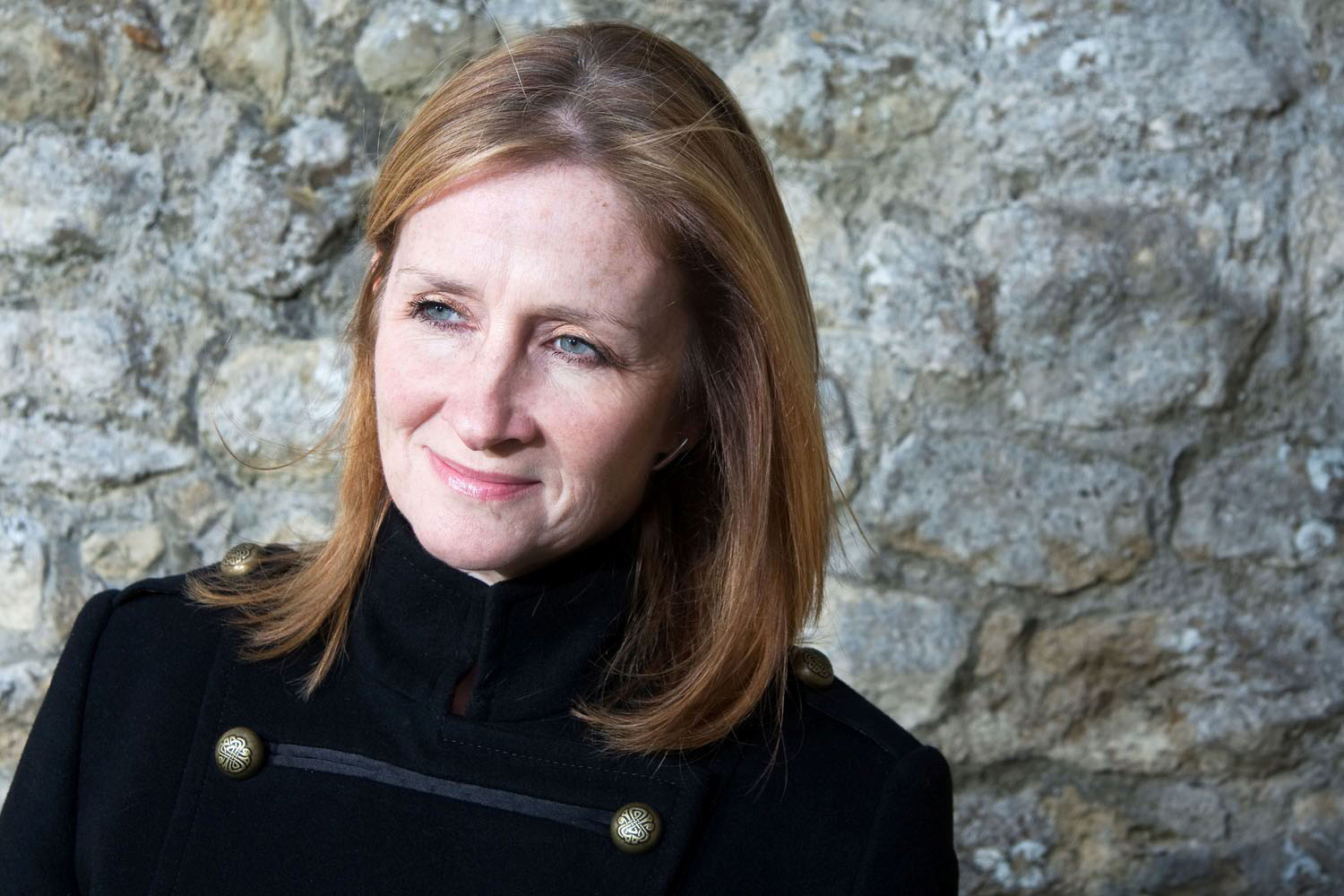
SJ Bolton (c) Mark Basse

SJ Bolton (c) Mark Basse

Today I’m delighted to be joined on the CTG blog by crime writer SJ Bolton, author of the Lacey Flint series, whose fabulous novel LIKE THIS, FOR EVER is now out in paperback. 

So, first question, like all of your novels, Like This, For Ever tells a dark, gritty and powerful story. What is it that prompted you to write a crime series?

I believe the most successful authors are those writing books that they would love to read themselves. I’ve never been a great fan of traditional crime fiction, veering instead towards stories of the supernatural. I love the dark, creepy atmosphere, the sense that normal rules don’t apply and that anything can happen (and usually does.) At the same time, such stories can be frustrating and I often have a sense of the writer feeling he needn’t bother tying up the loose ends because – hey – it’s the supernatural, and the ghost did it! Such a story might be enjoyable in the telling but will ultimately fail to satisfy. What I try to do is marry the two. A sort of crime/horror mash up, if you like, where the story is as dark and scary as those of the supernatural but in which the narrative is logical, explained and complete.


When you get the idea for a novel what usually sparks it for you – plot or character?

Quite often it’s location. I’ve long loved and feared the River Thames in equal measure, and find the lesser known stretches around Greenwich, Deptford and Rotherhithe completely fascinating, so it’s no surprise that they feature so much in Now You See Me, Like This, For Ever, and my current work in progress. After that, it’s plot. I’m very much a story-driven writer, and put a lot of time into planning the twists and turns of my narrative. Characters, I find, can usually look after themselves.


Tell us a little about your writing process, do you plot the story out in advance or dive right in and see where it takes you?

Were I to try the latter, it would take me straight to the gin bottle! My books have very complex plots. (Not by design, I hasten to add, I try every year to write a simple book but the blind alleys and red herrings just sneak their way in there.)  Knowing how complex they’re likely to turn out, I need at least the outline of a plan. Generally speaking, the more I can plan in advance, the easier the writing process. Sadly, my brain just isn’t big enough to hold an entire plot, so I have to plan as much as I can and hope to fill in the gaps as I go along.


What tips and tricks have you learnt that you’d like to pass on to any aspiring crime writers?

Get to the end of the first draft as quickly as you can. Don’t listen to that small, snide voice telling you that it’s rubbish, that the idea will never work, that you need to bin it and start something else. Finish the draft. There is no problem that can’t be fixed. There is no piece of writing that can’t be improved. And the task always looks so much more manageable when you are working with a complete, if imperfect, manuscript. The biggest hurdle facing aspiring writers isn’t getting a publisher, it’s getting finished.


And after Like This, For Ever what’s next for Lacey Flint. Do you have another novel in progress, and if so when will we be able to read it?

Lacey Flint No 4 has just gone into production. I’m not allowed to announce the title yet, but in it we see that Lacey, having been through the mill in previous books, has turned away from her promising detective career and gone back into uniform. She’s joined the marine unit of the Metropolitan Police and bought a houseboat moored at Deptford Creek. One day, out swimming, she meets a mermaid.  It will be published in May 2014.


Sounds fantastic. A huge thank you to SJ Bolton for dropping by and answering our questions.

LIKE THIS, FOR EVER cover image

LIKE THIS, FOR EVER cover image

I reviewed LIKE THIS, FOR EVER back in April when the hardback come out and highly recommend it. Here’s what I said …

What the blurb says: “Bright red. Like petals. Or rubies. Little red droplets. Barney knows the killer will strike again soon. The victim will be another boy, just like him. He will drain the body of blood, and leave it on a Thames beach. There will be no clues for detectives Dana Tulloch and Mark Joesbury to find. There will be no warning about who will be next. There will be no good reason for Lacey Flint to become involved … And no chance that she can stay away.”

It’s hard to write a review of this novel without included spoilers and I don’t want to spoil the story for you. So all I’m saying is that Barney, an eleven-year-old boy with a gift for spotting patterns, is looking for the connections to help him solve the child murders while he’s home alone while his Dad works late. He’s also Lacey Flint’s neighbour.

The story is shown primarily from three perspectives – Barney’s, Lacey’s and Dana’s. This lets you, as the reader, in on a lot more of the facts than any one of the main characters have – a sure-fire recipe for heart-banging moments!

The story is artfully plotted, with many possibilities for who is behind the killings. This, and the multiple twists and turns, create an unputdownable puzzle that kept me reading well into the night.

But it wasn’t just the puzzle that kept me reading. SJ Bolton creates such deeply drawn characters, like the smart, often strong and yet also emotionally fragile heroine, Lacey Flint, that I felt compelled to read on just to stay with them on their journey within the story.

As well as motivation to murder, the story touches on a number of themes including modern-day vampire culture, online stalking and how social media influences, aids and inhibits investigations.

Utterly gripping, tense and suspenseful: this is a real page-turner of a crime novel.


Guest Post: Spooks and Things by Bernard Besson

Author Bernard Besson

Author Bernard Besson

The Greenland Breach cover image

The Greenland Breach cover image

Today’s guest poster, Bernard Besson, has had a long career in French intelligence and law enforcement. He is a former chief of staff of the French FBI, was involved in dismantling Soviet spy rings in France and Western Europe at the fall of the Soviet Union, and is one of the country’s top specialists in economic intelligence. He is also a prize-winning thriller writer—eight of his novels have been published in French. His latest, The Greenland Breach, is a spy novel set on a backdrop of global warming and was just published by Le French Book. Here he talks to use about what this book means to him and how he writes.

Why did you start writing thrillers?

I got inspired to write my first thriller when I was at the DST, which is French counter-espionage, or the equivalent of the FBI. I was very lucky to be working during the fall of communism and the Soviet Union and learned how networks of Russian, Bulgarian, Polish, Czech and Romanian spies worked with their allies in France.

Where did the idea for The Greenland Breach come from?

The Greenland Breach is my first eco-thriller. It was the debate among scientists in France that led me to write this novel. They do not all agree on the causes of global warming.

The most prosperous nations are those that are able to understand and anticipate economic changes and well as natural changes. In The Greenland Breach we have both. It was very tempting to tell a story that recounted this reality. Fiction makes it possible to tell more truth than an academic work filled with numbers and statistics.

And I like to write about things that question or concern me. This book is about climate change and its political and economic consequences.  Greenland and the North Pole hold immense mining, maritime and agricultural opportunities. These will belong to those who will know how to discover them, as long as they have a strategy. The battle for the Arctic has already begun. It opposes Canada, Europe, the United States and Russia. The intelligence services of those countries are mobilized. And European and American businesses that have complicated relationships with the intelligence services—which can be both entertaining and dramatic.

What does this book mean for you?

For me, this book was an opportunity to pay homage to the men and women who work in intelligence, with whom I worked for a long time. It is not enough to collect information by satellite and intercept emails and telephone communications around the planet. You need to know what to do with it. It is not the information that counts, but asking the right questions. Intelligence, courage and an ability to adapt to the unforeseen are qualities that are just as important as the technology you use. I also show in The Greenland Breach that spying is only interesting if the political and economic leaders know what they want, and want it for a long time.

James Bond and Jason Bourne always seem to have firearms at hand. What’s the real story?

Ninety-five per cent of an intelligence officer’s assignments consist of gathering information and verifying it. Computers and software, along with general knowledge and conversational skills are more useful in this area than guns. Fortunately, I have never in my career used a weapon or killed anyone. I am happy about that. My characters don’t do it much either, or at least not with the usual kind of weapons. In The Greenland Breach, John Spencer Larivière handles the bad guy with a screwdriver, and Victoire Augagneur downs an adversary with a broken windowpane.

How would you characterize espionage today?

Today, keeping things top secret is less important than being quick to think and to gather information. One of the key battlegrounds is business, and both countries and multinational corporations are fighting for key strategic knowledge they hope to be the first to use. In my novel The Greenland Breach, my heroes are little-known actors in this economic war for the future. Those with the best information will win the battle. The blood splattered on Greenland’s ice cap belongs to shadow fighters, mercenaries fighting battles we don’t learn about on the evening news.

The Greenland Breach is published on 30th October 2013.

To find out more hop on over to http://www.thegreenlandbreach.com

An interview with author Josie Brown creator of The Housewife Assassin series

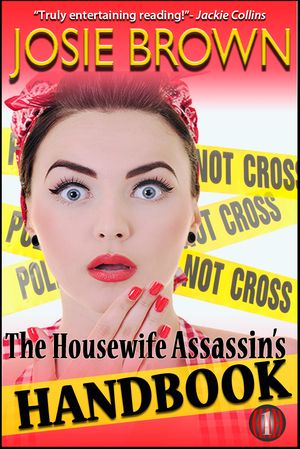
The Housewife Assassin's Handbook cover image

The Housewife Assassin’s Handbook cover image

A few months back I read and reviewed the fabulous Housewife Assassin’s Handbook by Josie Brown. Today I’m thrilled to be welcoming Josie to the CTG blog to talk about the Housewife Assassin Series …

So tell me, how did you get the idea for the Housewife Assassin’s Handbook?

Wow, great question! And believe it or not, no one has ever asked me that before. Go figure. 

It was several years after 911. Still, as a mother, that event had such an impact on me–really, on everyone, parent, child or whomever–

So much so, that I felt…well, helpless.

When that happens, I figure a way in which to turn it around. In this case, I asked myself:  What could a parent–a mother–do to not only protect herself AND her children, but life she thought she’d secured?

That’s how Donna Stone* was born.

And what readers discover is that Donna doesn’t know how close the threat is to her.

Seriously, the day I came up with her and the plot for Book 1 — The Housewife Assassin’s Handbook  — I got chills. It was a hot day in August, and yet I got CHILLS. 

I called an author friend of mine, Karin Tabke, and I said, “Here’s a story I want to write…”

After I told her the plot, she said, “Oh my God. It’s the ultimate woman’s mission: to protect her loved ones–and the ultimate response. Now, write it.”

So I did.

But when I presented it to my first literary agent, he said, “I don’t get it.”

Immediately I got another agent. 


Your main character, Donna Stone, is fabulously dynamic and gutsy. When you created her, did you model her on any actors or people you know?

Ha ha! Personally, I feel there are several actresses who could play her. EMBRACE her gutsiness. I’m happy to say  a television producer feels the same way, and is currently shopping it around. She’s as excited about it as me. So fingers crossed, others will buy into Donna’s world. 

Tell us a little about your writing process, do you plot out the story events before sitting down to write, or do you dive right in and see where the story takes you?

I come up with an overall premise. And then I do the heavy lifting and actually do a full chapter-by-chapter outline. In doing so, I throw “plot spaghetti” at the proverbial wall. In other words, I do a lot of what ifs: 

How will Donna get out of this tight spot, or another?

How will her relationship change–and grow–with Jack?

What threat will the Quorum through their way?

How will Donna’s children survive a world that is more dangerous than anyone realizes?

I endeavor to move her journey forward in each book. I truly am honored when readers appreciate her story.

How do you organise your writing day: do you have a favourite time and place to write?

I write on a netbook, which allows me to roam all over my home and garden (I live in San Francisco, so I’m drawn to the sun, like a moth to a flame), or to a coffee shop, with one of my writer pals (COUGH! — Kate Perry — COUGH!)

What tips and tricks have you learnt that you’d like to pass on to aspiring crime and thriller writers?

I’m so happy to do so. Here’s the one that counts the most:

Don’t be afraid to write the book YOU’D want to read. You are the best judge of what you should be writing: not an editor, not an agent, not a trend, not your mother. Not even your best friend. YOU. 

During NaNoWriMo, I put up thirty-one tips, one for each day, for other authors, both aspiring and published. We all need to remember why we put in the hard hours–and our hearts on ours sleeves-as we scribble away. I wanted to share my thoughts on the industry, now some seven years and twelve books later.

And what’s next for you, have you got a novel in progress at the moment and, if so, when will we be able to read it?

Vacation to Die For cover image

Vacation to Die For cover image

This month in fact, I’ll be releasing a one-off The Candidate, a political thriller. Or as I put it: SCANDAL meets HOMELAND when a political campaign manager discovers that Washington’s power elite have embroiled his presidential candidate in a plot involving an imminent act of terrorism on US soil.

And of course, Donna is back in August, in The Housewife Assassin’s Vacation to Die For

Also I invite your readers to enter my contest (which is running only through August 2nd) for a $100 gift card from the bookstore of their choice. It’s my way of thanking readers for appreciating the fourth book of the series, The Housewife Assassin’s Relationship Survival Guide.

Thanks, Crime Thriller Girl, for sharing me with your friends and readers! — Josie

A huge thank you to Josie Brown for dropping by the blog, and do make sure you follow the links above to pop on over to her website and enter the fantastic contest that’s running to 2nd August. 

Review & Interview with Henriette Gyland author of The Elephant Girl

cover image

cover image

Today we’re delighted to welcome Henriette Gyland to the CTG blog. Henriette’s book The Elephant Girl is out now, published by Choc Lit. But before we quiz Henriette, let’s see what guest reader Sally Fallon thought of The Elephant Girl …

What the blurb says: “When five-year-old Helen Stephens witnesses her mother’s murder, her whole world comes crumbling down. Rejected by her extended family, Helen is handed over to child services and learns to trust no-one but herself. Twenty years later, her mother’s killer is let out of jail, and Helen swears vengeance.

Jason Moody runs a halfway house, desperate to distance himself from his father’s gangster dealings. But when Helen shows up on his doorstep, he decides to dig into her past, and risks upsetting some very dangerous people.

As Helen begins to question what really happened to her mother, Jason is determined to protect her. But Helen is getting too close to someone who’ll stop at nothing to keep the truth hidden …”

This is a clever mix of light thriller and romance.  You are immediately drawn into Helen’s world, and the cataclysmic event that shapes her past. Clearly haunted by the fatal events of that day, she forges a new life for herself until a stranger turns up unexpectedly.  Returning to England she ends up re-connecting with her long lost family and discovering some unpleasant and shocking revelations about their business.

The story is told from different points of view and you find yourself eagerly turning the pages to follow Helen’s story, hoping she will emerge safely from the unfolding dramas that surround her.

Thoroughly recommended.

Henriette Gyland

Henriette Gyland

Sounds fabulous. So now it’s our chance to ask Henriette some questions about The Elephant Girl and her writing process. 
First off, can you tell us where you got your inspiration for writing The Elephant Girl?The book was inspired partly by a real-life horrific murder which involved a child witness, but it’s also a personal journey for me. A good friend of mine suffers from epilepsy and has been very candid about her condition, about how it affects her life and her relationships with other people, as well as occasionally her memory. In the novel the heroine is a young child when the crime takes place, and also suffers an epileptic seizure at the time. This gave me an opportunity to explore the theme of the unreliable witness. How much did she actually see, and can her interpretation be trusted? Can she even trust herself?

We’re big fans of romantic suspense here at crimethrillergirl.com, but tell me, what was it that attracted you to the genre?

I’ve always been a huge fan of Nora Roberts. I love the way her heroines are basically ordinary women who find themselves in extraordinary circumstances, having to overcome inner conflicts while they simultaneously have to deal with dangerous outside conflicts. Although they have to solve their own problems, learning to trust the hero and finding love help them do this. It’s the same story with my own characters – I keep them in the crucible and make them work hard before they can be rewarded with their upbeat ending. You might say I’m cruel to my characters, but you have to be cruel to be kind, as the saying goes!

If The Elephant Girl were made into a movie, which actors would you like to see playing your main characters?

Now we’re definitely entering the territory of big dreams! But dreaming is allowed, I suppose. I would love for Emma Watson (of Harry Potter fame) to play Helen. She has just the right degree of mettle and vulnerability to fit the character in the novel. Cillian Murphy would be great as Jason, and I’d like Imelda Staunton to play the grandmother.

Tell us a little about your writing process, do you plot out the story events before sitting down to write, or do you drive right in and see where the story takes you?

I’m very much a plotter. I like to include a few twists and turns in my work, and if I don’t plot carefully, there’s a real danger that the book will end up in a right old mess. When plotting, I tend to write detailed chapter-by-chapter summaries, colour-coding the settings for the various scenes, who’s in it, a few specific words of dialogue, and what will be revealed.

How do you organise your writing day: do you have a favourite time and place to write?

I write best in the mornings between 10am and 1pm, preferably using pencil and paper because there’s less friction with pencils (better for my wrist). I then type up what I’ve written as soon as I can, usually after I’ve finished a scene, effectively doing my first edit along the way. I like to work in the garden when the weather allows it, but if I can’t, I’ll sit on the sofa, or at the local library, or even in a café. Away from the computer it feels less like “proper work”.

And what’s next for you, are you planning your next novel, or already well into the writing of it?

My next novel, which is already scheduled for publication in 2014, is a complete departure from anything I’ve written so far. It’s a swash-buckling historical tale set in the Georgian period, with highwaymen, a spirited heroine, and a mystery at its core.  But right now, as we speak, I’m working on another romantic thriller.


Thank you so much to Henriette Gyland for joining us today. You can follow her on Twitter @henrigyland  

The Elephant Girl is out now in paperback and Kindle versions.


[A big thank you to Choc Lit for our copy of The Elephant Girl]

Interview with author Chris Allen, creator of the INTREPID series

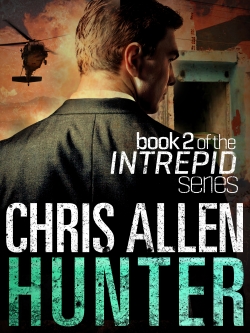
cover image

cover image

Today I’m excited to welcome Chris Allen, creator and author of the Alex Morgan spy thriller INTREPID series, to the CTG blog.

Chris’ latest novel, the second in the INTREPID series, entitled Hunter is out now. What the blurb says: Alex Morgan – policeman, solider and spy for INTREPID, the black ops division of Interpol – is on the hunt for Serbian war criminals. But these guys were never going to let it be that simple. An assassination attempt is made on the presiding judge of the international tribunal. Days later, the judge’s daughter, the famous and beautiful classical pianist Charlotte Rose, vanishes.

Charlotte isn’t just the daughter of a judge, she’s also the god-daughter of INTREPID’s veteran commander, General Davenport. It’s up to Morgan and the team to track the kidnappers and the missing woman before the very fabric of international justice is picked apart. Alex Morgan must walk the line between doing the right thing and getting the job done.

I found Hunter a rapid-paced, action packed rollercoaster of a story that I think will appeal to those readers that love action thrillers with plenty of real-world details. Knowing that Chris is a writer with first hand experience of action situations, I jumped at the chance to quiz him about creating the series and his writing process.

So, without further ado, I’d like to welcome Chris Allen and kick-off with my first question …

Alex Morgan, the lead character in your INTREPID series, is a no-nonsense, get-things-done kind of guy, what was your inspiration for creating him?

Over the years, since I was a kid, I’ve been influenced by many classic action heroes – all the obvious fictional ones from my early years like James Bond, Simon Templar, John Steed, Napoleon Solo, but my greatest influence by far has always been real-world heroes. I’ve been fortunate enough to know a few personally as well as taking an active interest in the exploits of the acknowledged, decorated variety. As a result, Alex Morgan is a mixture of my favourite fictional and real-world inspirations.

As a serviceman-turned-writer, how have you found the transition from being in the action to writing the action?

My military career came to an end due to injuries I sustained in service; basically, wear & tear brought on my use-by date prematurely. As a result my exit from a very active career as a Paratrooper was imposed on me. So, I had no choice but to change direction.

It was a natural process to then rediscover what my ultimate dream was all along. I’d wanted to write action stories ever since I was old enough to understand them. It took me a couple of years of being out of the Army followed by a deployment to East Timor with an aid agency before I felt ready to start writing. But once I’d started there was no stopping me!

Can you tell us a little about your writing process, do you plot out the story events out in advance, or just start writing and see where the story takes you?

Book one in the series, Defender, took me a decade to write and book two, Hunter, was roughly six months, so my writing process has vastly changed. Having a deadline to stick to as well as increased confidence has been a game-changer.

These days I plan a lot in my head and scribble ideas and plot lines in my little brown book.  It’s like putting a puzzle together or solving a complex problem. Then, I map the main ideas out on a whiteboard – using sticky notes or just a marker – and then connect the dots, bringing the plots and sub-plots together. I always have my brown book on hand for any other inspirations, as I’m constantly mulling the story over in my mind, examining it from all angles.

Once I have a good picture of where it’s all going, I bash out each chapter as fast as I can to get them on the page! Obviously once the first full draft is out, that’s where the real work begins, but the planning and researching is a huge part of the process for me.

Your books have been likened to those of Ian Fleming and Robert Ludlum, but who writes the books that you have on your ‘to read’ pile?

I was really thrilled when I realised people were putting me in their class, it’s a huge accolade and one I will always strive to be more worthy of.  Ian Fleming is my literary hero and I love Ludlum’s writing.

There is so much on my TBR pile at the moment, because when I’m writing I try not to indulge my action thriller habit by reading other work. Most of the books on my Kindle at the moment are the new writers I’ve been getting to know through global outreach and online activities as well as my mates on the local Australian authors’ scene. Those that I’ve been looking at before putting the pedal to the metal with Avenger include Aussie writers Greg Barron, Luke Preston, Nathan Farrugia, Nina D’Aleo, Tony Park’s latest and my new Minnesotan pal Doug Dorow. Once the first draft of Avenger is done I’ll also be reading Irish Crime writer Declan Burke and John Le Carre’s latest A Delicate Truth.

And what’s next for you, are you working on the next novel in the INTREPID series and, if so, when will we be able to read it?

Avenger is well and truly underway, and my aim is for it to be even more hard-hitting than the first two. I hope to have Avenger available by the end of 2013, and crack straight into the fourth in the Intrepid series. So, Alex Morgan has his dance card pretty full at the moment.

In addition, I’m working with a Hollywood producer – who just happens to be a very cool guy – on film and TV adaptations of the Alex Morgan/Intrepid series. But that’s about all I can divulge right now!

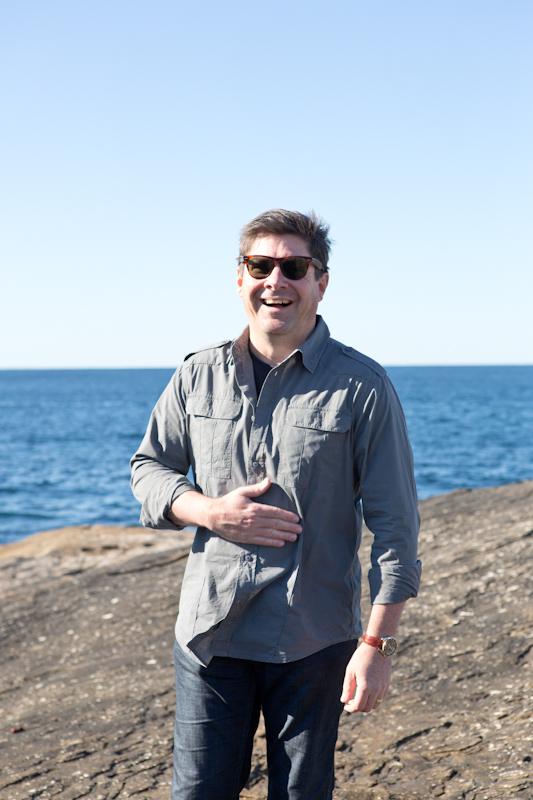
Author Chris Allen

Author Chris Allen

About the author:

Before penning his Alex Morgan espionage series, featuring the ultra-secret agency Intrepid from Interpol, Chris saw the world from under a parachute; made a difference in East Timor; protected Sydney’s iconic sails post 9/11; and most recently, held one of the most historic law enforcement appointments in Australia. Since self-publishing and then being signed by Pan Macmillan Australia’s digital imprint Momentum for a two-book deal, Defender and Hunter have wowed readers worldwide, with Avenger due out end-2013. Chris dreams of one day spending extended periods at an English country cottage in Surrey, preferably one that is walking distance from the local pub.

A huge thank you to Chris Allen for dropping by the CTG blog and letting me quiz him.

To find out more about his books and the man behind them, hop on over to Chris’ blog where he chats about all things thriller as well as a love of cult TV shows and movies from his youth at www.intrepidallen.com/blog.

[With thanks to Chris Allen and Pan Macmillan Australia, Momentum for my copy of Hunted]

Interview: Author David Khara talks to us about The Bleiberg Project

cover image

cover image

Today, I’m pleased to welcome David Khara, author of The Bleiberg Project, a new conspiracy theory action thriller from France.

The Bleiberg Project is an adrenaline-pumping conspiracy thriller and the first in the Consortium Thriller series by the French writer David Khara. Are Hitler’s atrocities really over? This thriller full of humour and humanity was an immediate sensation in France, catapulting the author to the ranks of the country’s top thriller writers. It is now available in English.

Before we get started with the interview, here’s a little taster of the book (please note contains strong language):

Excerpt

“Besides work and getting high, what do you do all day?”

No answer. You’re out of luck, pal. I’m pig-headed. “The journey will seem shorter if we talk, don’t you think?”

He sighs. “When I’m not on an assignment, I paint.” I can’t help laughing. “You think that’s funny?”

“I’m picturing you on a stool with your palette and brush, gazing at a green valley or a snowy mountaintop. Sorry, but with your look and build, it’s funny!”

“If you’re just going to make fun of me, the trip is going to seem very, very long.” He clams up.

“There’s no harm in a little fun. OK, I’ll stop,” I snort, laughing even louder. Why do giggling fits always hit at inappropriate times?

“What about you? Besides driving home from clubs dead drunk, what do you do?”

Bastard. That’s below the belt. On second thought, I guess I deserved it. “I try to survive. I thought about blowing my brains out, but I’m too much of a coward. So I drink. I smoke like a chimney. Every day, I destroy myself a little bit more.”

“Suicide isn’t a sign of bravery, but of giving up. We all make mistakes. You don’t judge somebody by the number of blows they can give.”

“What do you judge somebody by, Mr Freud?”

“The number of blows they can take.”

His words hit home. “You’ve taken a lot, right?” I ask. A long, long beat.

“More than you can ever imagine.”

Why am I not surprised? This guy’s been around the block. I’d bet my life on it. “How do you do it?”

“Pardon me?”

“Blowing guys away like that. How do you do it?”

“Who said it was easy?” He sighs heavily. A long awkward silence.

(Excerpted from The Bleiberg Project by David Khara. First published in French as Le Projet Bleiberg, ©2010 Editions Critic. English translation ©2013 Simon John. First published in English in 2013 by Le French Book, a digital-first publisher specializing in best-selling mysteries and thrillers from France.).

And now, for the interview

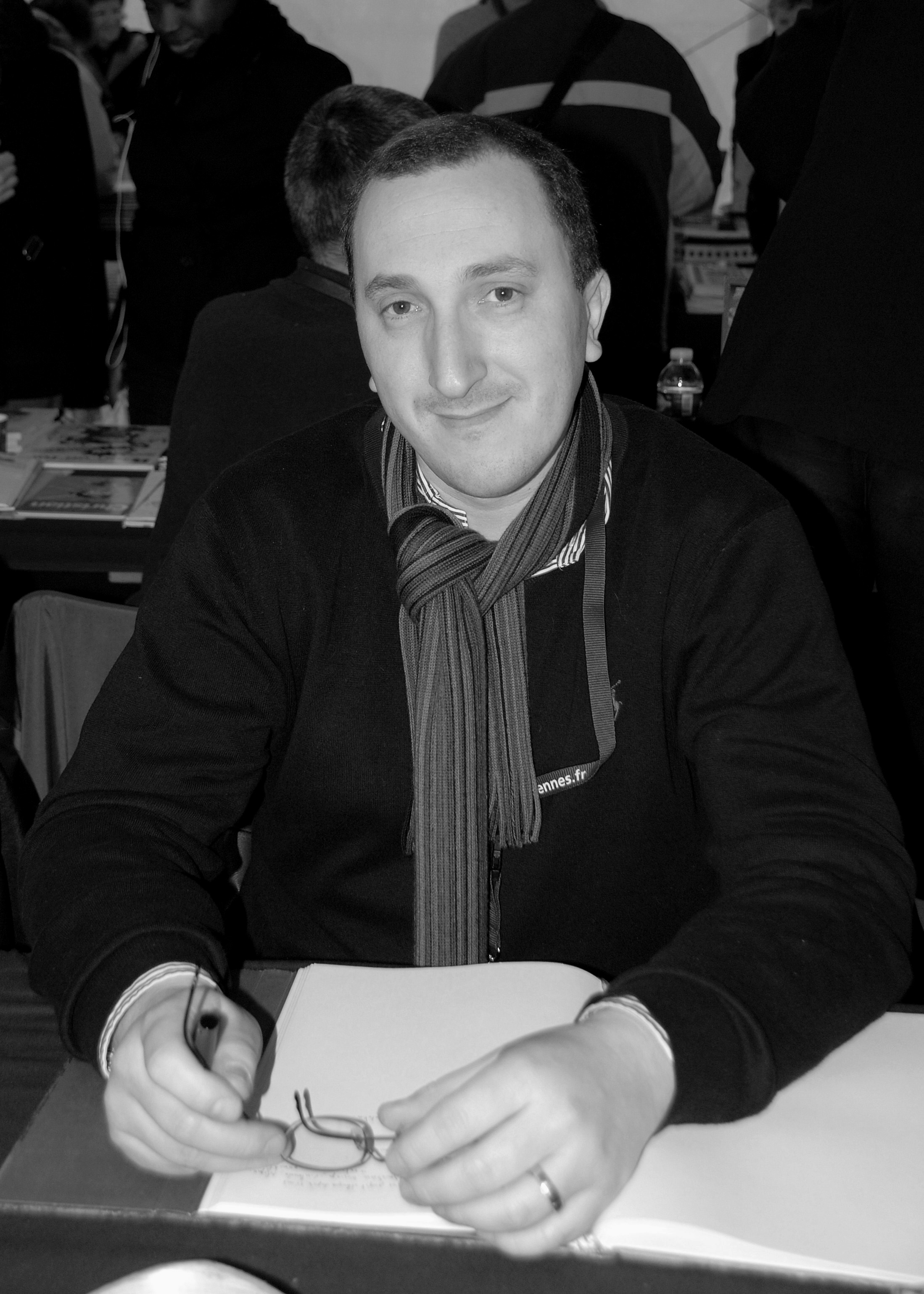
Author David Khara

Author David Khara

So David, your new book, The Bleiberg Project, is a thriller with links to World War II. What was it that inspired you to write a novel along that theme?

The whole idea for The Bleiberg Project idea came while I was driving to my office, listening to the news. A pharmaceutical company was doing research on an orphan disease that touched fewer than 100 kids in Europe. A man said that the study was being ended because the budget was 50,000 euros short. I was stunned. These companies make tons of money, amazing profits, and 50,000 euros is a drop in the ocean. When I got to my office, I started looking into the subject and found articles establishing links between Nazi and Japanese scientists during WWII and pharmaceutical companies. I also found information about how Allied governments were interested in the results of immoral and incredibly cruel human experiments. Through my research, I realized the world we live in rose up from the ashes of war, and was built on the corpses of 60 million victims. I wanted to write about it, through entertainment to make it more bearable.

What research do you do to ensure the atmosphere, locations and characters feel authentic?

The answer is pretty easy: 1000 hours listening to survivors, watching documentaries over and over again, and reading biographies. The point was not for me to merely tell the stories. I needed to get in the minds of both victims and criminals. I wanted to be there with them. This inspired many of the characters of the series, even those set in the present day. And everything that happens in the past is, at one point or another, is based on the truth.

Tell us a little about your writing process, do you plot out the story events before sitting down to write, or do you drive right in and see where the story takes you?

It is a very delicate mix of both. I’ve got a few dots I need to link together to get the whole picture. I do not use notes, nor do I write an outline. I know what I’m going to write, and since the novels are built as puzzles with chapters taking us back in time, I have everything in mind before starting. That means I constantly think about it. There is just no day off when I start working. Still, the absence of a written script gives the characters some space to explore unplanned directions. My job is then to make sure they don’t stray too far from the plot and my goals.

How do you organise your writing day: do you have a favourite time and place to write?

My writing day is a well-established ritual. I write in my garden, a cup of coffee on the left side of my computer, and my cigarettes (bad, I know) on the right side.  I put sunglasses on, then headphones because I need music to keep me in the mood of each chapter. With that, I’m ready for 6 to 8 hours of intensive writing. I usually work from 10 in the morning to 6 in the evening, with a break for lunch. When I’m not in the mood for writing, I go back to my research.

And what’s next for you, are you planning your next novel, or already well into the writing of it?

The Morgenstern Project, the third book in the Consortium thriller series, was just released in France, so I’m traveling a lot for book signings and interviews. My next novel is planned, and I’ll start writing it pretty soon and it is about time because I’ve had it in mind for three years now and lots of readers ask for it. The Bleiberg Project movie production should move to a new phase soon, which will have a direct impact on my schedule. 2014 will be a very busy year, believe me.

A big thank you to David Khara for dropping by to talk to us. To find out more about David and The Bleiberg Project, you can check out the link below:

Web page: http://www.thebleibergproject.com

The Bleiberg Project is out now and available via Amazon Kindle, Barnes and Noble, and Kobo.

Author Interview with Chris Nickson

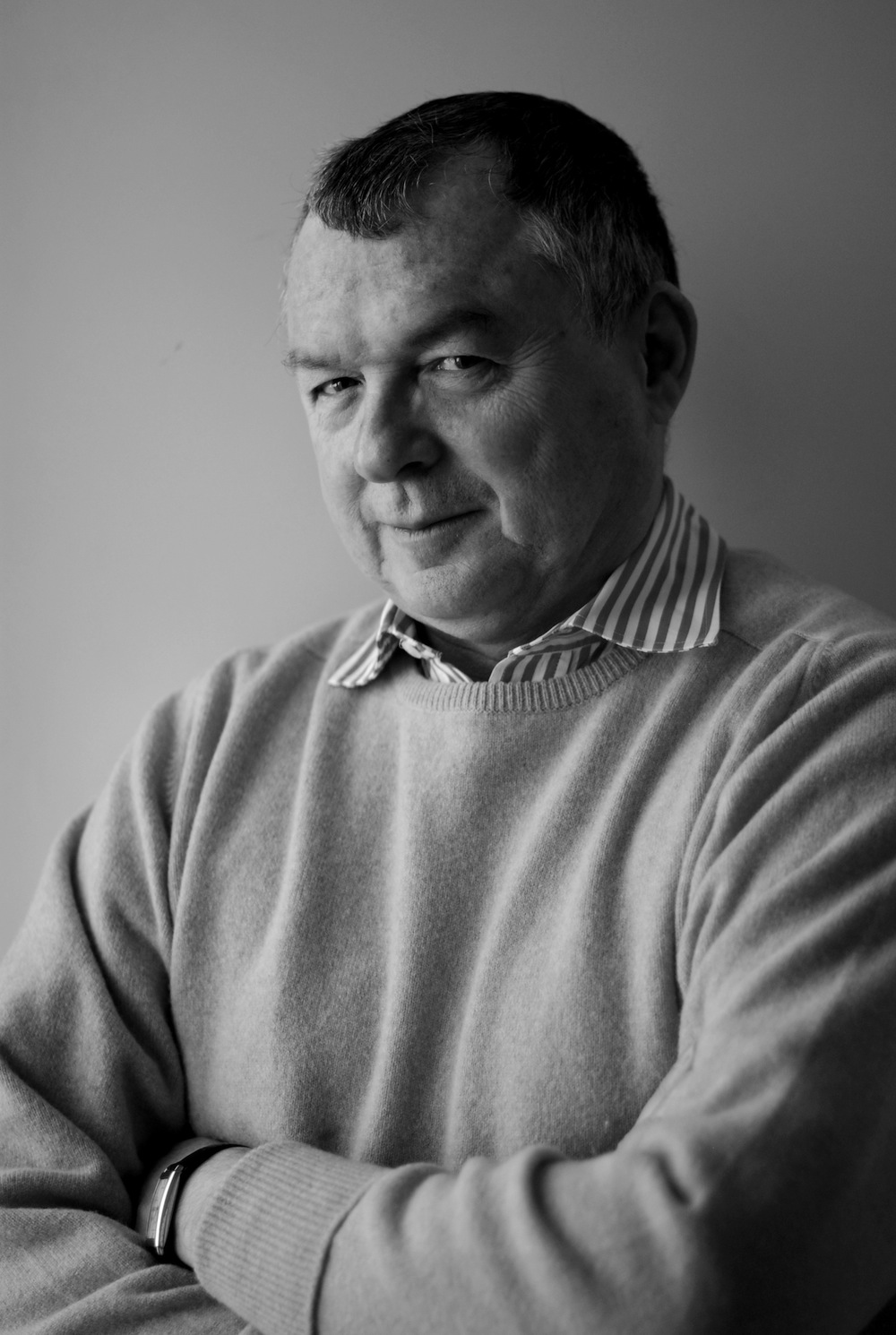
Chris Nickson

Chris Nickson

Today, I’m delighted to welcome Chris Nickson, author of the historical crime series featuring Constable of Leeds, Richard Nottingham, to the CTG blog.

Chris, your new book, At the Dying of the Year, is your fifth novel in the Richard Nottingham series. What was your inspiration for creating a historical crime series?

When I began it was simply a book, not series. It took me a long time to find a publisher for The Broken Token, until I found Lynne Patrick at Crème da la Crime, who liked the book and wanted to put it out. I’d published plenty of non-fiction books before, but a novel, that was something altogether different. When she said, ‘What’s next?’ I had to think seriously. Continuing the series seemed the natural option. These characters had more to tell me, I wanted to know more about their lives. Then Lynne sold Crème to Severn House and they wanted the next one, Cold Cruel Winter. From there it just continued. Richard Nottingham, John Sedgwick, Rob Lister, their families have become friends now. There really was a Richard Nottingham who was Constable of Leeds from 1717-1737, although the role would have been more ceremonial than my character.

The series is set in 1730s Leeds, England, what research do you do to ensure the historical setting feels so real?

I’ve always been a history buff, but Leeds history – the history of my hometown – wasn’t something I really began to discover until I was living in Seattle! I’d go back to Leeds every year and buy the history books on the city that appeared. Then, when eBay began I could find some rarer, older books on there at low prices. The big problem was the postage costs, of course…Leeds also has a good historical society, which has their own publications and I’ve acquired some of them and been in their library. Essentially I just keep reading and learning more and more. I find it fascinating. I focus on the ordinary people, rather than the rich, and their lives, of course, aren’t documented. But what I try to do is make it an immersive experience, so people feel they’ve walked those streets. Things like, dirt, noise and smell, the things we don’t tend to think about, are important.

At the Dying of the Year centres around a spate of child murders and is your grittiest novel to date, what prompted you to tackle that subject matter? 

A couple of the books have dealt with the vulnerable, and Richard Nottingham – my Richard Nottingham, anyway – was a homeless child, living on the streets for part of his youth. This is an extension of that, in many ways. These are the children with no families, for one reason or another, the ones who’ve always been so easily exploited and used. The theme of abuse and murder of these children was meant to shock and to make people think, as is the idea of the rich protecting their own, this cloud of silence. I completed the book around July or August last year. A month of two later the Jimmy Savile scandal broke, and again, there’s been this conspiracy of silence around abuse by the rich and powerful. I believe that kind of thing has always existed. The book wasn’t written to take advantage of that situation, but more to force readers to think.

It was emotionally draining to write, incredibly so. Not just because of the children and the frustrated attempts to bring the murderers to justice, but also what Nottingham suffers along the way – in many respects that was the hardest thing of all, although I’ll say no more, as it’ll be a spoiler.

As to it being gritty, that’s a word that brings out mixed emotions in me. I prefer to think of it as dark, probably the darkest yet. But fiction is about conflict, and often conflict can take you to very dark places, inside and outside yourself. I hope the characters and the situation seem real. I’ve always tried to show that the essence of human nature doesn’t change over time. The setting might be historical but I try to make it some that readers can understand these characters and their situations. There are more shades of grey in this book than in previous ones – the lines between good and bad have become more blurred.

 Tell us a little about your writing process, do you plot out the story events before sitting down to write, or do you drive right in and see where the story takes you?

I know where the tale begins and I have a rough idea where it ends, but that’s it. From there I’m simply writing down the movie in my head, what the characters say or do. Sometimes I can see ahead a ways, sometime it’s like moving through a heavy thicket. At times they surprise me – I didn’t expect that! – but this process of discovery is one of the joys of writing to me. The family lives of my main characters are as important as the mystery. My father, who was a writer, told me, ‘Create a good character and people will follow them anywhere.’ That’s what I try to do, create good characters that people care about. Even Leeds is a character in these books.

How the story gets from A to Z is a journey it can be difficult to undertake, but it’s one I wouldn’t miss.

What have you learnt through writing your series that you’d like to pass on to aspiring crime thriller writers?

I’m not one for giving much advice, but I would say a writer has to be disciplined. That means writing every single day. The concept of holiday doesn’t exist. It can be 500 words or 1000, over time it mounts up. Care about what you’re writing. If it’s not tearing you apart, you’re not going deep enough. When you’ve finished a draft, put it aside for a month before going back to it so you can look at it objectively. That said, everyone has their own way or working, and who am I to say that someone else’s method isn’t better for them than mine.

Keep faith with your work. If you really believe you have something special, keeping trying it with agents and publishers. And as you are, keep writing the next book. This is a craft just as much as it’s an art.

And what’s next for you, are you planning your next novel, or already well into the writing of it?

2013 is a very busy year for me. At the Dying of the Year came out at the end of February, and March saw the release of a very different book, Emerald City, as an ebook and audiobook (narrated by Lorelei King, who’s won awards for her work and narrates the Janet Evanovich series). It’s still a mystery, but set in Seattle in 1988, in the music scene there – I also work as a music journalist, and have for years. Then, in September, the sixth Richard Nottingham book will be published; that one’s called Fair and Tender Ladies. To round things off, The Crooked Spire, set in Chesterfield in 1361 around the building of the spire on the church there, will be out in November.

I know that seems an awful lot (and yes, it is an awful lot) but it’s the culmination of work over a couple of years that’s just all come together. Writing is what I do. I’m lost without it…

And I’m currently writing another book set in Leeds, this time in the Victorian era, against the backdrop of the Gas Strike of 1890, a famous victory for the workers. A mystery, of course, as I like the moral framework it offers, but with a mix or murder and radical politics, how can I say no? The main female character, Annabelle Atkinson, first appeared in a short story I write before Christmas and won’t go away. She’s based on a female relative from a century ago, who started out as a maid in a pub in Leeds, married the owner, took over the business when he died. She also opened some bakeries around town and lent money at no interest to local poor people. An interesting, strong woman who’s set to marry my main character, Inspector Tom Harper of Leeds Police. When it’s done all I have to do is hope someone wants to publish it!

Wow, it certainly sounds like you’re busy! A huge thank you for dropping by the CTG blog and allowing us to grill you.

To find out more about At the Dying of the Year, and Chris’ other books, pop on over to his website at http://chrisnickson.co.uk/