The Big Coffin Road Blog Read: Part Seven – The Body [read and RT for a chance to #WIN a copy of COFFIN ROAD by Peter May]

Coffin Road book jacket

Today I’m delighted to be hosting part seven of Peter May’s Big Coffin Road Blog Read. Today’s extract is ‘The Body’. If you’ve not had a chance to read the first six extracts from Coffin Road, skip down to the bottom of this post for details of the fabulous blogs you can find the extracts posted on. Then, it’s onto ‘The Body’ …

The Big Coffin Road Blog Read Part Seven: The Body

It is with a great sense of dissatisfaction that I leave the lighthouse, finally, locking it up behind me and replacing the keys below the stone. I have learned nothing, least of all about myself. The first spots of rain whip into my face on the edge of a sudden squall, and as I hurry from the gate I see rain sweeping in from the south-west, a long trailing arm of it, darker even than the cloud from which it falls. I start down the steep concrete path, but realise I will never reach the boat before the rain hits. And it is too late to go back. Instead, I make a dash for the ruined chapel, which is just a short sprint away across the grass. Its roof of stone and turf has collapsed in places, but still affords a degree of shelter. I stoop beneath the lintel of the open doorway, and turn to look out and see the island vanish in the rain that sweeps across it like mist.

I move back, then, into the chapel and stumble on something beneath my feet, having to steady myself with outstretched hand on the cold, damp wall. There is very little light, and it takes some moments for my eyes to adjust.

At first I find it hard to believe what I am seeing. A man is lying spreadeagled on the floor, legs outstretched and twisted at an impossible angle. His head is half turned, and I can see where it has been split open, pale grey brain matter congealed in the dried blood that has pooled around it.

I feel acid rising in my throat, from shock and revulsion. I swallow it back, and find myself gasping for breath. My legs have turned to jelly beneath me and will hardly support my weight. After several long seconds, I crouch down, fingertips on the floor to steady me, and force myself to look at his face. He is an older man, grey hair thinning. Mid, perhaps late, fifties. Corpulent. He wears an anorak and jeans, and what look like relatively new hiking boots. If he is known to me, I have no memory of him. But it is clear that he has not been freshly killed. Certainly not today, and probably not yesterday. And since there is no decay that I can see, or smell, he cannot surely have been dead for more than a few days.

A crack in my mind’s defences opens up to allow in the unthinkable. Three days ago I was here. On this island. The next day I was washed ashore on the beach at Luskentyre, all memory lost in a cloud of black dread, knowing that something terrible had occurred.

I look at this man lying on the floor in front of me, his head smashed in, and I ask myself the question that has been clotting in my stream of consciousness. Was it me who killed him?

I close my eyes, fists clenching, sick to my stomach at the thought of it. But it is a thought that won’t go away, growing inside me like a cancer. Is this why I have blocked all memory of the past? I stand up too quickly, blood rushing to my head, and stagger to the door, supporting myself on the stone as I lean out into the wind and rain to throw up acid and coffee.

I am shaking, tears springing to my eyes with the burning of the acid. It feels as if the earth has opened up beneath my feet and I am falling helplessly into eternity, or hell, or both. A short way off, to the east, I hear the growl of the sea as it rushes into a deep cleft in the cliffs nearly 200 feet below. And I am startled to see a group of people in brightly coloured waterproofs, fighting their way up the concrete path towards the lighthouse, leaning into the wind and the rain. Tourists, I realise. A group almost certainly brought out on Seatrek’s inflatable RIB from Uig, and landed below just before the squall struck.

Now shock at the thought that I might have killed this man combines with fear of being caught. Blinded by panic, and robbed of all reason, I dash out on to the slope just as the rain passes and a momentary break in the cloud sprinkles sunshine across the island like fairy dust. The tourists have almost reached the lighthouse above me, and I don’t look back to register if I have been seen. Locked instead in my cocoon of denial, I slither down the wet concrete and run down the steps with an almost reckless disregard for my own safety.

Peter May pendant le salon Polars du Sud à Toulouse en 2013

Peter May pendant le salon Polars du Sud à Toulouse en 2013

Below me, Seatrek’s red and black Delta Super X RIB rises and falls on the swell, anchored a few feet away from the jetty. I see a man waiting aboard her for the tourists to return. He calls to me as I reach the foot of the steps as if he knows me, voice raised above the wind and the sea. But I ignore him, dragging my tender back down the steps and leaping recklessly into her, almost capsizing her in the process. I don’t even look in his direction as he calls again, pulling instead on the starter cord, almost frantic in my desire to be gone from this place. It coughs into life on the third pull, and I gun the throttle, banking away against the incoming waves to race out across the bay to where Coinneach’s Sundancer awaits me.

I nearly fall overboard as I transfer from one to the other, but scramble safely on to the stern, before hauling the inflatable aboard and tethering her. I fire up the motor and accelerate hard away to the south-east. I look back only once as I round the eastern tip of Eilean Tighe, and see the distant figure of the man who called to me still standing in his boat, watching me go.

Coffin Road by Peter May is out now in hardback (Quercus). Here’s the blurb: “A MAN is washed up on a deserted beach on the Hebridean Isle of Harris, barely alive and borderline hypothermic. He has no idea who he is or how he got there. The only clue to his identity is a map tracing a track called the Coffin Road. He does not know where it will lead him, but filled with dread, fear and uncertainty he knows he must follow it. A DETECTIVE crosses rough Atlantic seas to a remote rock twenty miles west of the Outer Hebrides of Scotland. With a sense of foreboding he steps ashore where three lighthouse keepers disappeared more than a century before – a mystery that remains unsolved. But now there is a new mystery – a man found bludgeoned to death on that same rock, and DS George Gunn must find out who did it and why. A TEENAGE GIRL lies in her Edinburgh bedroom, desperate to learn the truth about her father’s death. Two years after the discovery of the pioneering scientist’s suicide note, Karen Fleming still cannot accept that he would wilfully abandon her. And the more she discovers about the nature of his research, the more she suspects that others were behind his disappearance.”

You can buy your copy here 

FOR A CHANCE TO WIN a hardback copy of COFFIN ROAD here’s what you need to do:

Tweet the link to this post (using the Twitter button below) OR retweet one of the CTG tweets about the giveaway. [You’ll also need to follow me on Twitter, so that I can send you a direct message should you win]. Rules
(1) One entry per reader (2) UK residents only – due to postage costs – sorry! (3) I will draw the winner at random (4) No cash alternative (5) The competition closes for entries at 9pm GMT on Friday 22nd January 2016 (6) The judge’s decision is final and no correspondence will be entered into.

*** THIS COMPETITION HAS NOW CLOSED AND THE WINNER NOTIFIED ***


And, don’t forget to check out all the other fabulous extracts on The Coffin Road Blog Read here …

The Big Coffin Road Blog Read Banner

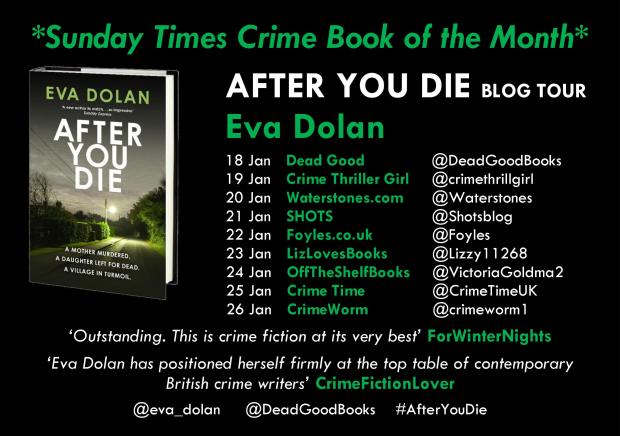
The AFTER YOU DIE Blog Tour: CTG interviews crime writer EVA DOLAN

After You Die - flat

Today I’m delighted to be hosting a stop on Eva Dolan’s AFTER YOU DIE Blog Tour and to have Eva joining me on the CTG blog to chat about writing the fabulous Zigic and Ferreira series and to tell us more about the latest brilliant book in the series – AFTER YOU DIE.

Welcome, Eva!

So, to the questions …

Your latest book AFTER YOU DIE is published this month, can you tell us a bit about it?

After You Die opens with a gas explosion at a pair of cottages in an affluent commuter village, which reveals the corpse of a young mother and, upstairs, the body of her paralysed daughter who has died as a result of neglect. Zigic and Ferreira are called in to investigate after it becomes clear that the family have been subjected to months of harassment linked to the daughter’s activities as a prominent right to die advocate.

It’s a book about the grinding torment of online harassment and the expectations put on carers, but more than that it’s about what happens to a family in the aftermath of a personal tragedy.

AFTER YOU DIE is the third book in the Zigic and Ferreira series and takes the detectives out of Peterborough centre and into a smaller, village location – what prompted you to change the setting for this story?

Partly it was a desire to show a different side to Peterborough. I’d shown the worst of it in the first two books and it’s easy to believe that ‘nicer’ areas don’t suffer crime to the same degree as the inner city, and that was something I wanted to challenge.

Also, the nature of this crime, being motivated by a personal form of hatred rather than an overtly political one, gave me an excuse to examine how a murder can unbalance a different kind of community, one which sees itself as comfortable, more genteel, the kind of place people move to in order to escape from city centre criminality. I liked the idea of having this quite insular village where all the players are in close proximity and their shared history remains inescapable.

All your books stand out for me in that you seem to effortlessly blend hard-hitting social issues with engaging and fast-paced crime fiction. What is it that interests you in a story idea and what’s your process for turning that initial spark into a book?

Thank you very much! Because the series is set in a Hate Crimes Unit I don’t actually have total free range over the subject matter of the books – they have to be based on crimes which are motivated by prejudice over race, religion, disability, homophobia or transphobia, otherwise Zigic and Ferreira wouldn’t be investigating them. So it does automatically rule out quite a lot of storylines. But it’s a welcome limitation because it means I have to find crimes which are outside the ordinary.

In After You Die the initial inspiration was the case of Fiona Pilkington and her family who had been harassed and abused for years as a result of her daughter’s disability. They were ignored by the police, left to fend for themselves, until Fiona couldn’t take anymore. She killed her daughter and herself. It was a heart-breaking case and spurred me on into researching the rise of disability related hate crimes, which made for incredibly depressing reading. Mencap believe 90% of people with a disability have been victims of some form of hate crime, which is a staggering statistic.

The image of a mother and daughter under siege, stuck with me, and as I started working on characters Holly – the daughter – came through as a very strong voice, defiant despite the terrible injuries she’d suffered, a strong, opinionated young woman determined to fight off the bullies with her intelligence and eloquence.

(c) Mark Vessey

(c) Mark Vessey

Over the first three books of the series you’ve thrown a lot at Zigic and Ferreira in their personal lives as well as professionally. Do you have the series mapped out, or does the action unfold organically as you write?

I map out each book in quite a lot of detail but I prefer to let Zigic and Ferreira’s personal lives unfold organically. It’s more interesting for me to keep finding out new things about them as the series continues, and hopefully for the reader too.

So far I think they’ve got off fairly light for fictional coppers! Zigic especially has a calm and happy family life; I’m increasingly tempted to throw him a major curveball to see if it shakes him out of being such a good man. He’s been perfectly morally upstanding so far but I feel there’s a darkness in him which I haven’t quite drilled down into yet.

Just to contradict myself, I do know what’s coming up for Ferreira in personal terms. It wasn’t planned but she’s stumbled into a bad situation in book four and, even though she doesn’t realise it yet, the blowback is going to be pretty major!

As a reader of crime fiction, what authors and/or books have influenced or inspired you?

I’ve been rereading some of the early Rebus books lately and even though I’ve always cited them as a major influence I didn’t realise just how deep that went until I revisited the ones I was reading as a began my writing career. Without them and John Harvey’s books – both the Resnick and Frank Elder series – I wouldn’t have become a crime writer. They created the template for socially engaged, politically cynical crime fiction for me.

And, finally, what does the rest of 2016 have in store for you?

I’m currently finishing off book four – would like to give a little teaser about it but I’m way too superstitious to discuss work in progress. After that… editing and more writing and then I’ll be out promoting After You Die, which let’s be honest, is the best part of being a writer. I’m hugely looking forward to Essex Literary Festival and ChipLitFest, and there are a couple more events I probably shouldn’t mention yet but judging by previous visits, they will be loads of fun.

A massive thank you to Eva Dolan for popping along to the CTG blog today and chatting to us about her new book AFTER YOU DIE and her writing process.

AFTER YOU DIE by Eva Dolan is out now. Click here to buy it from Amazon 

And you can see Eva Dolan in person, speaking at Essex Book Festival, on Monday 23rd March at 7.30pm http://essexbookfestival.org.uk/event/sceneofthecrime/

Also, be sure to check out all the other fabulous stops along the AFTER YOU DIE Blog Tour …

AYD blog tour poster JPEG

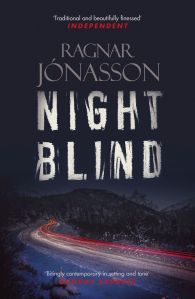
#NIGHTBLIND Blog Tour: CTG’s Review plus WIN a signed copy of NIGHTBLIND by Ragnar Jónasson

TSQ3DKNAABSTlEm-GfmTIkRUhRMA5gEf5-qZZXGmZYQ-2

For my stop on Ragnar Jónasson’s Blog Tour today I’m reviewing NIGHTBLIND and giving one lucky reader the chance to win a limited edition hardback of NIGHTBLIND signed by both the author, Ragnar Jónasson, and the translator, Quentin Bates.

Firstly, for the review:

What the blurb says: “Siglufjördur – an idyllically quiet fishing village on the northernmost tip of Iceland, accessible only via a small mountain tunnel. Ari Thór Arason – a local policeman, whose tumultuous past and uneasy relationships with the villagers continue to haunt him. The peace of this close-knit community is shattered by the murder of a policeman – shot at point-blank range in the dead of night in a deserted house. With a killer on the loose and the dark arctic winter closing in, it falls to Ari Thór to piece together a puzzle that involves tangled local politics, a compromised new mayor, and a psychiatric ward in Reykjavik, where someone is being held against their will. Then a mysterious young woman moves to the area, on the run from something she dare not reveal, and it becomes all too clear that tragic events from the past are weaving a sinister spell that may threaten them all.”

Ragnar Jónasson conjures up another deeply atmospheric mystery with NIGHTBLIND, the second book in the Dark Iceland series.

Set five years after the events that took place in the first book – SNOWBLIND – we find Ari Thór reunited with his girlfriend, Kristin, and now father to a son. The shooting of a police officer – the first such shooting in the area – puts him firmly into the community’s spotlight, and sees him reunited with his previous boss and mentor – Tómas – who had left Siglufjördur to take a promotion in the city. With the complexities of the investigation increasing as local politics and deep buried family secrets are exposed, Ari Thór struggles to keep the tensions in his personal life at bay as he battles to crack the case.

Using the setting to maximum effect, Jónasson’s NIGHTBLIND plays out against the dramatic backdrop of the approaching Icelandic winter. The small-town community is more open to Ari Thór’s presence, although he is still considered an outsider even after five years of living there, and the history of its residents and the long held secrets kept within the families there are difficult for him to uncover. This adds to the claustrophobic feeling evoked by this isolated village location, and raises the stakes for Ari Thór as he perseveres with lines of enquiry in the face of opposition.

Beautifully written, NIGHTBLIND is Icelandic Noir at its finest – a modern take on a golden age style mystery, with an extra touch of darkness and an Icelandic twist.

FOR A CHANCE TO WIN a beautiful limited edition hardback copy of NIGHTBLIND that’s signed by the author, Ragnar Jónasson, and the translator, Quentin Bates, here what you need to do:

Tweet the link to this post (using the Twitter button below) OR retweet one of the CTG tweets about the giveaway. [You’ll also need to follow me on Twitter, so that I can send you a direct message should you win]. Rules
(1) One entry per reader (2) UK residents only – due to postage costs – sorry! (3) I will draw the winner at random (4) No cash alternative (5) The competition closes for entries at 9pm GMT on Thursday 7th January 2016 (6) The judge’s decision is final and no correspondence will be entered into.

Good luck! *** THIS COMPETITION HAS CLOSED AND THE WINNER HAS BEEN NOTIFIED ***

Find out more about Ragnar Jónasson and the Dark Iceland series by hopping over to the fabulous Orenda Books website. And be sure to follow Ragnar on Twitter @ragnarjo

You can also click this link to head over to Amazon to buy NIGHTBLIND

And don’t forget to check out all the other great stops along the route of the NIGHTBLIND Blog Tour …

_KIvzXRyd1rroSsZC2IO1KUVQfwKwaKBTr4YnluKGZ4

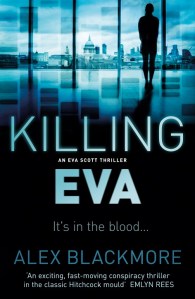
The KILLING EVA Blog Tour: Read an extract from Alex Blackmore’s Killing Eva

Killing Eva cover

Today I’m hosting a stop on Alex Blackmore’s KILLING EVA blog tour and have a real treat in store for you … an extract from the first chapter of KILLING EVA. 

First, here’s the blurb: “Witnessing a dramatic death at London’s Waterloo Station triggers a series of events that shatter Eva Scott’s world. Dying words uttered on the station concourse awaken a history she had thought long buried. But the past is about to be resurrected, in all its brutal reality.

Soon, Eva’s life is out of her hands. A genetic key is keeping her alive; but foreshadowing her death. People she loved and lost materialise and then disappear, testing the limits of her sanity. Inextricably linked to her survival is the potential takedown of an economic power, on which hang the lives of many others.

The only way out is through. But Eva’s life is no longer her own. And it’s killing her.”

And now, here’s the extract …

ONE

Eva drew back from the dying man. His breath was hot on her face, the grip he had on her wrist was tight, but she knew that he had just moments left.

Her heart was beating fast – too fast – and the adrenaline pumping through her body made her muscles burn.

There was now a large crowd of onlookers – it was Waterloo Station at rush hour – but no one else had stepped forward. People just stood and watched, texting or tweeting what was unfolding before their eyes, one eye on the departure boards. Don’t miss that train.

The man had collapsed only moments before. Almost in front of Eva as she ran from a tube train to a bus that would take her to the pub after an unforgiving day. For a split second she had almost swerved round him but the look in the man’s eyes – the terror – stopped her in her tracks.

‘Are you ok?’ she had said, breathlessly, as she tried not to stumble under the man’s weight. His eyes had rolled up towards the ceiling before settling on her once again as he tried to speak. His breath smelled of stale alcohol and he had the unmistakable odour of someone who had not been under a shower for weeks. But he was still alive. Just.

‘Are you ok?’ she had said, again, lowering the man to the cold, hard floor, requiring all her strength to prop up at least 180 pounds of bodyweight. Her muscles shook from the effort. No one helped. It was easy to see why the flock of commuters around her kept their distance. The man had string tied around his waist where the belt to his stained raincoat should be. His hat, now on the floor, was full of holes, and frayed at the brim.

Eva could see a sock through the toe of one of his shoes. Finally, she managed to gently lay him on the floor, took off her scarf and folded it, trying to make him a pillow. She heard mutterings in the crowd – ‘should we call the police?’ ‘tramps, I’m so sick of them’ ‘this problem is getting worse’ – and she saw a flicker of what looked like shame cross the man’s face. He looked at her, eyes suddenly lucid and clear.

‘Kolychak,’ he whispered firmly.

What was that – Russian? Czech?

‘I’m sorry I don’t understand.’

‘Kolychak,’ he said again. And then louder, but still whispered, ‘KOLYCHAK.’

He made a sudden grab for the front of Eva’s coat and pulled her face next to his.

‘Ko-ly-chak,’ he said fervently and tears started to fall from his eyes.

Somewhere in Eva’s mind, recognition flared. But she couldn’t reach it.

‘I don’t understand. Can you tell me who you are, what’s happened to you? We need to get you some help.’

Suddenly, the man let out an ear-piercing shriek that echoed around the station hall. Every person in the enormous space stopped; most turned to face the direction from which the unearthly sound had come.

Eva pulled herself away, stumbled, fell and then sat and stared at him in horror. The noise made her blood run completely cold. Then the man began to buck and writhe, as if someone was extracting his insides with a toasting fork. No one else moved. Liquid began to bubble and froth at his mouth. It had a bluish tinge. Abruptly, he stopped choking. His body became completely rigid, his eyes wide. Finally, he was still.

Eva heard her heartbeat thumping in her ears. She stared at the man on the floor. Reaching out a shaking hand, she felt his wrist for a pulse. Nothing.

‘Shit, is he ok?’ asked one of her fellow commuters. She looked at him for several seconds.

‘He’s dead.’

When she reached the pub – a ‘historic’ site just off High Holborn – she walked up to the ground floor bar and ordered a straight shot of brandy. She had barely reacted to the dying man at the time – the desire for flight had been too strong – but now she felt shaky and unsettled. Her friends, she knew, were in the bar upstairs in an area reserved for some birthday or other but she needed five minutes alone. Not that she would have it here. Even though it was only a Tuesday night, seething crowds had descended on the City and the man to her left appeared to be planning an imminent introduction. She turned away from him, looked out at the room around her and finished her drink. ‘Do you have a cigarette machine?’ she asked the barman.

‘No, love. There’s a supermarket round the corner though.’

By the time Eva returned to the pub, she was 20 minutes late for the party but still she didn’t go upstairs. She bought herself another brandy from the bar and leaned against the wall outside the building. She smoked three cigarettes in a row. After that, she felt pretty awful.

‘There you are! We thought you weren’t coming!’

Three of Eva’s friends tumbled out of the pub door, rosy cheeked from booze and laughing. Behind them came Sam, the man who had most recently shared Eva’s bed. She looked at him and he smiled. She smiled back but there was no stomach flip.

She made her excuses for being late but when she tried to tell the story of the man on the floor at Waterloo words failed her. She tried again when Sam went to the bar but she couldn’t. Ok, she reasoned eventually, why ruin their night with something she wanted to forget anyway. Sam returned with the drinks and then was at her side. He took her hand. She freed it to light a cigarette.

‘You’re smoking?’ He raised his light eyebrows towards a shock of blond hair.

She nodded and smiled. ‘Bad day.’

He gave her a hug. ‘Go on, give me one too then,’ he whispered in her ear.

She pulled back and then handed over the slim white cigarette and watched him try not to smoke it like a non-smoker.

Conversations in the group continued as one, and then two, more cigarettes were smoked to avoid a return to the cold for an hour at least. Then, the others drifted back inside. Sam pulled at her hand but she remained planted against the wall.

‘Are you ok?’

He came and stood opposite her, put his arms around her waist and stepped forward so that their faces were close.

‘I’m fine.’ She could feel that she was rigid in his arms. You’re still adjusting to being in a relationship, she told herself. It’s not him, it’s you.

He kissed her. ‘See you upstairs,’ he said and walked back into the pub smiling at her over his shoulder, attracting admiring glances as he went.

Eva turned the other way and leaned sideways against the wall. Her head hurt.

The word the man at the station had uttered was circling round and round her mind: kolychak-kolychak-kolychak. It was maddening.

She didn’t understand, she had never even seen him before. But she couldn’t forget what he had said – the incident had shaken her more deeply than it should.

She felt her phone vibrate in her bag and, grateful for the distraction from her thoughts, dug it out.

The display showed two words, starkly white against the blood red background she had chosen as a screensaver:

‘Jackson Calling.’

When she arrived at her flat that night, Eva double locked her front door and drew the chain across – something she never really did, despite living in one of the more ‘up and coming’ neighbourhoods of London.

Once inside, she stood with her back to the door and took several deep breaths.

As soon as she had seen that name on the display of her phone, Eva had started to run. She wasn’t sure where the instinct came from but she hadn’t even picked up the call. In fact, she had dropped her phone and had to rush after it as it skittered towards the edge of the kurb. A bus pulling up at a stop she hadn’t noticed was forced to skid to a halt, the driver sounding the horn angrily. She had been shocked, unaware of the peril so close, and had snatched her phone from the gutter and continued to run.

After that, a bus opposite Holborn station transported her to Camden, where she decided to walk home. On the way, a supermarket stop: a bottle of wine, another packet of cigarettes – a tin of tomato soup as an afterthought.

She’d made the journey home on autopilot. In her head the words ‘kolychak’ and ‘Jackson’ revolved mercilessly.

Jackson was her brother – her dead brother.

***

Alex Blackmore’s KILLING EVA is out now from No Exit Press.

You can find out more about Alex Blackmore by hopping over to her website at  www.alexblackmore.comand following her on Twitter @AlexPBlackmore

To buy the book from Amazon follow this link

And don’t forget to check out all the other fantastic stops on the KILLING EVA blog tour …

Alex Blackmore blog tour banner-2

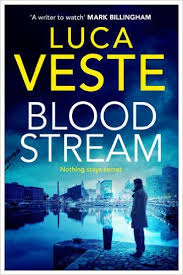
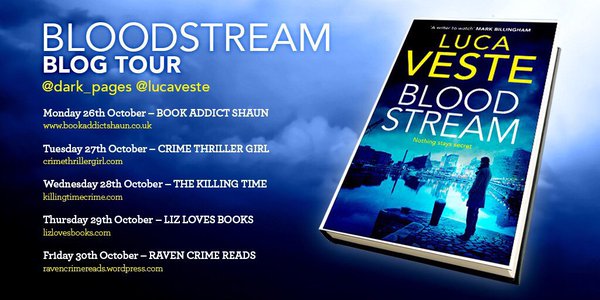
#BLOODSTREAM Blog Tour: CTG reviews BLOODSTREAM by Luca Veste

Unknown

Today I’m excited to be hosting a stop on Luca Veste’s BLOODSTREAM Blog Tour. Published on 22nd October by Simon & Schuster, BLOODSTREAM is the third novel in the Murphy and Rossi crime fiction series.

Here’s what the blurb says: “Social media stars Chloe Morrison and Joe Hooper seem to have it all – until their bodies are found following an anonymous phone call to their high-profile agent. Tied and bound to chairs facing each other, their violent deaths cause a media scrum to descend on Liverpool, with DI David Murphy and DS Laura Rossi assigned to the case.

Murphy is dismissive, but the media pressure intensified when another couple is found in the same manner as the first. Only this time the killer has left a message. A link to a private video on the internet, and the words ‘Nothing stays secret’. It quickly becomes clear that more people will die; that the killer believes secrets and lies within relationships should have deadly consequences …”

DI David Murphy and DS Laura Rossi of the Major Crimes Unit, Liverpool North have had a quieter time of things since the events of The Dying Place, but that all changes when married social media stars “ChloJoe” are found dead in an derelict house miles from their home. As the media whip up a frenzy around the case, Murphy and Rossi hand the missing persons case of teenager Amy Maguire that they’re working on back to Liverpool South and immerse themselves in the investigation. But what at first looks like a one-off celebrity targeted killing soon becomes apparent as just the start of the killer’s plan.

As more couples are targeted, and the secrets and lies hidden in their relationships are revealed, the killer takes to using social media to spread their ‘message’. Despite the body count rising, Murphy and Rossi struggle to find evidence to lead them to this highly prepared killer.

Meanwhile, Murphy is harbouring a secret of his own – missing teenager Amy Maguire may be connected to him in a way he’s only recently discovered. He hasn’t told his wife, Sarah, yet. And he doesn’t know anything of the secret she’s keeping from him.

With this particular killer on the loose anyone in Liverpool hiding secrets and lies could be a target.

This third book in the Murphy and Rossi series is a real page-turner of a read. The strong sense of place and vivid descriptions bring Liverpool to life, and Murphy and Rossi make for a great crime-solving duo. In this book their personal lives are explored further as Rossi embarks on the beginnings of a more serious relationship, and Murphy struggles to rebuild his friendship with Jess whose son he was unable to save in The Dying Place.

The story also brings into sharp focus how the media, and social media, feed into and off violent crime, and how the amount of media coverage, and the way individuals are portrayed, is dependant on the perceived value of that person and their death to ratings and circulation figures. Veste sensitively handles the impact of this on the grieving families, and the aftermath of the media’s ‘halo and horns’ approach to the murder victims on those left behind.

A dark, gritty and disturbingly sinister police procedural – BLOODSTREAM is a real must-read for crime fiction fans.

You can find out more about Luca Veste and his books at www.lucaveste.com and follow him on Twitter @lucaveste

To buy the BLOODSTREAM from Amazon, follow this link

Also, be sure to check out all the other fabulous stops on the BLOODSTREAM Blog Tour …

CSOwbBzWIAAwUrv


STASI CHILD Blog Tour: CTG interviews debut author David Young

image001

I’m delighted to welcome David Young, author of STASI CHILD, to the CTG blog and to be hosting his blog tour stop today. STASI CHILD (published by Twenty7) is David’s debut novel and is the winner of the PFD 2014 Crime Prize. He’s popped along to see us today to chat about the book, his writing process, and his route to publication.

So to the questions!

Your debut, STASI CHILD, is out this month. Can you tell us a bit about it?

It’s a crime thriller – part historical crime, part police procedural, part thriller, and I guess a dash of Cold War politics to boot. What it’s not is a traditional Cold War spy thriller – although it’s set in the era of the Cold War. It tells two parallel stories: one in third person past through the eyes of a female detective in the state police, Oberleutnant Karin Müller, who’s trying to solve a gruesome murder but has to battle obstacles put in her way by the secret police, the Stasi. The other, in first person present, follows the life of a 15-year-old female inmate of a communist Jugendwerkhof – which loosely translates into ‘youth workhouse’ or reform school. The two stories eventually collide in a climax on the snowy slopes of northern Germany’s highest mountain, the Brocken, near the border with the west. I think fans of Tom Rob Smith’s Child 44 would enjoy it, and also those who read Anna Funder’s non-fiction account of the Stasi’s methods, Stasiland.

STASI CHILD is set in East Germany in 1975. What drew you to writing about this moment in history?

No-one had yet written a crime series set in East Germany – at least not in English as the original language. So I thought it filled a gap in the market, was something a bit different and – given the success of books like Child 44 and AD Miller’s Snowdrops – could prove popular. The idea originally came from reading Stasiland while on a self-booked (and at times chaotic) mini-tour of eastern Germany with my indiepop band about seven years ago. I was fascinated that you could still feel the ghost of the communist east even though the Berlin Wall had been torn down, at that time, twenty years earlier. Müller’s office is underneath Hackescher Markt S-bahn station – where we played our Berlin gig. So I wanted to choose a time when East Germany was perhaps at its most confident, and yet with enough years to fit a series in, if the first book sold well.

Given the modern historical setting, how did you go about researching the book?

A mixture of things, really. Watching films like The Lives of Others and Barbara, episodes of the original East German detective show, Polizeiruf 110, and the current German TV series set in the period, Weissensee – which is a great watch but inexplicably, and annoyingly, only has English subtitles on the second of its three series so far. I also read a lot of memoirs of inmates of Jugendwerkhöfe, that sort of thing, and true crime books by former GDR detectives. I don’t speak German – so it was a case of tearing out pages, feeding them into an OCR programme via a scanner, and then putting it all through Google Translate! What came out was barely intelligible, but you could pick out the facts even if the actual storytelling was mangled beyond repair. I also had great fun visiting all my locations, and interviewing former East German detectives (with the help of translators). So I loved the research, and I’m itching to get back out to Germany again. I also keep telling myself I must learn German!

image006

You recently completed the City University MA in Creative Writing (Crime Fiction), how do you think this helped you on your journey to publication?

I think it was the key to it, really. We had some great tutors who were all published crime writers: Claire MacGowan, Laura Wilson and Roger Morris were mine – although William Ryan, who writes in a similar genre to me, has now joined. Roger introduced me to Peter May’s Lewis trilogy, and the structure of Stasi Child – with its twin narrative – is quite similar to May’s The Lewis Man. Claire nurtured the original idea, Laura worked on the nuts and bolts as my main novel tutor, and then both of them read and fed back on the full draft. The result was that Stasi Child won the course prize sponsored by the literary agents, PFD, and by the shortlisting stage a young PFD agent, Adam Gauntlett, had already declared his hand in wanting to represent me.

So, what’s it like having your debut novel published? What’s your best moment so far?

Because my publishers Twenty7 (part of the Bonnier group) are e-book first, the biggest thrill was getting a physical copy of the proof. It’s got a slightly different cover, very minimalist, which I love. I’ve only got one copy, though, and the publishers have run out now so I guard it with my life. And then in the last few days, Stasi Child became the fourth bestselling Kindle book in the UK, and the number one bestseller in Historical Fiction – for ebooks and paperbacks. It’s fallen back since, but that was a champagne moment, figuratively sitting on top of luminaries such as Robert Harris, Hilary Mantel …well, everyone who’s anyone in historical fiction. Ha! It’ll probably never happen to me again. We made sure we kept the screenshots of the charts!

STASI CHILD is the first in the Karin Müller crime series, can you tell us anything about the next book?

Yes Karin returns, but this time in the model East German new town of Halle-Neustadt, where underneath the ideal communist city gloss, dark things are happening a few months after the closure of the Stasi Child case. The Stasi are heavily involved again, and we also learn more about Karin’s past – with several surprises in store for her. It follows the same twin narrative format, but the second narration this time is darker, more disturbed, and unreliable. In fact the whole thing is darker and more disturbed, which is slightly worrying as most people seem to think Stasi Child’s about as dark as you can get.

And, finally, what does the rest of 2015 have in store for you?

Initially, I’ll be concentrating on promoting the Stasi Child ebook, and I’ve my first appearance at a literary festival, as part of the past prizewinner’s event at Yeovil on Friday October 30th. Then it will be a combination of reshaping book two with my editor at Bonnier, and researching book three with a trip to Germany. Oh, and I might finally get around to starting to learn German … but no promises!

A huge thank you to David Young for coming along to the CTG blog to chat with us today. You can find out more about David by checking out his website at www.stasichild.com and follow him on Twitter @djy_writer

Stasi Child is a great read, perfect for fans of historical crime fiction. Here’s the blurb: “East Berlin, 1975: Questions are dangerous. Answers can kill. When murder squad head Oberleutnant Karin Müller is called to investigate a teenage girl’s body found riddled with bullets at the foot of the Berlin Wall, she imagines she’s seen it all before. But when she arrives she realises this is a death like no other: it seems the girl was trying to escape – but from the West. 

Müller is a member of the People’s Police, but in East Germany her power only stretches so far. The Stasi want her to discover the identity of the girl, but assure her the case is otherwise closed – and strongly discourage her asking questions.  The evidence doesn’t add up, and it soon becomes clear that the crime scene has been staged, the girl’s features mutilated. But this is not a regime that tolerates a curious mind, and Müller doesn’t realise that the trail she’s following will lead her dangerously close to home.

The previous summer, on Rügen Island off the Baltic Coast, two desperate teenage girls conspire to escape the physical and sexual abuse of the youth workhouse they call home.  Forced to assemble furniture packs for the West, the girls live out a monotonous, painful and hopeless life.  Stowing away in the very furniture they are forced to make, the girls arrived in Hamburg. But their celebrations are short-lived as they discover there is a price on freedom in the DDR…”

STASI CHILD is out now in eBook (and will be out in paperback in February 2016). To buy the eBook via Amazon click on the book cover below

 http://


And don’t forget to check out all the other fabulous stops on the Stasi Child Blog Tour:

CR34iTvWoAAVo2j

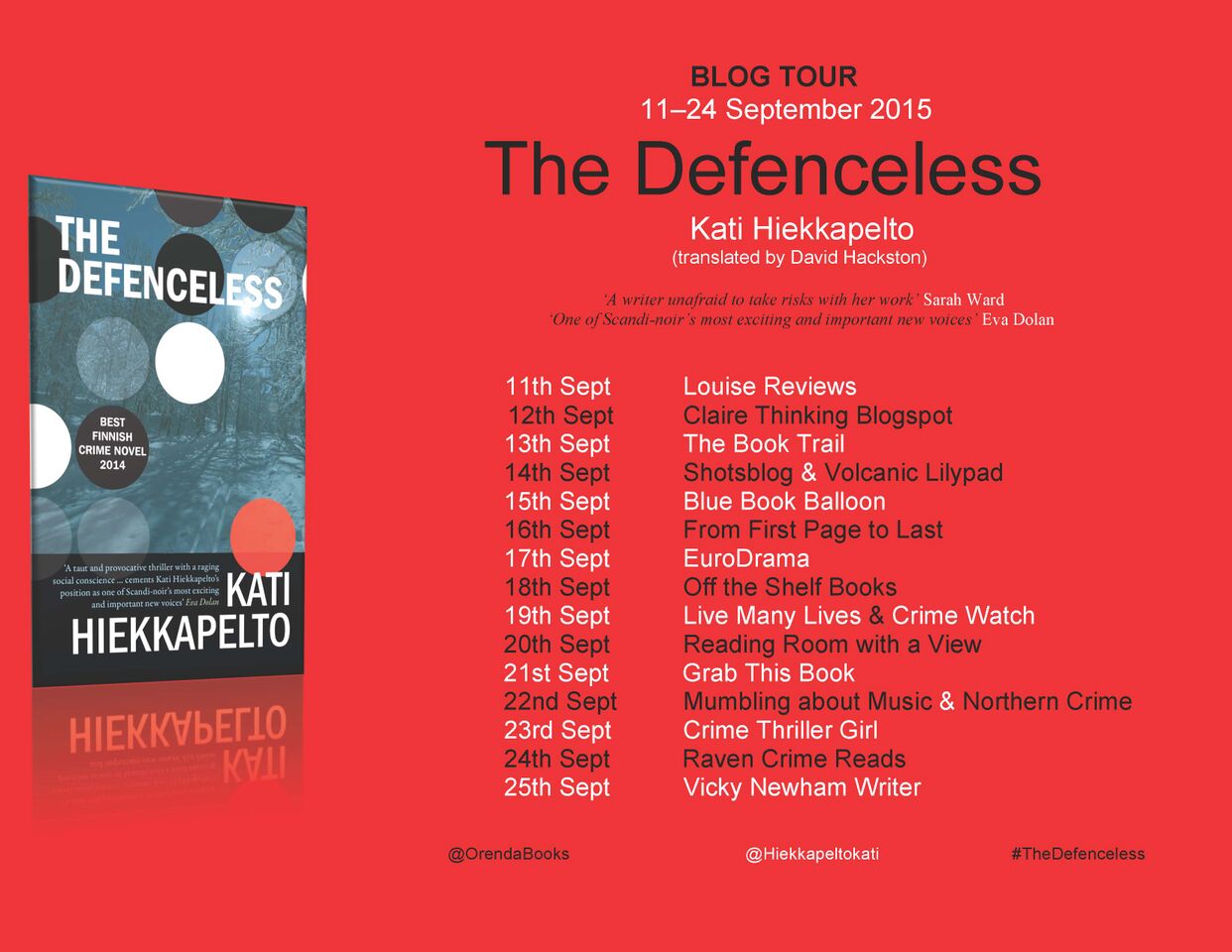
#TheDefenceless Blog Tour: Writing The Defenceless by Finnish crime writer Kati Hiekkapelto

cyscq21YEm-k8g9wsjB0dtQ8v1fqoRhPwxXpEmUUsv4

I’m delighted to welcome best-selling Finnish crime writer, Kati Hiekkapelto, to the CTG blog for today’s stop on her blog tour. For her guest post, Kati kindly agreed to talk about what it was like writing her latest book THE DEFENCELESS …

When I was writing The Defenceless, I read an article about Pakistani author Aslam Nadeem, who was locked in one room when he was writing the novel Wasted Vigil. Someone gave him food through the hatch in the door, and he requested that no one let him out until the book was finished. He stayed in that room for seven months without seeing anyone, doing nothing but writing and sleeping. My first thought after reading about his isolation, was Wow! That’s exactly what I need. To be an effective and productive writer I really do need total solitude, without Internet access – some sort of all-inclusive accommodation, somewhere far away and a secretary! Or even better, a wife.

I’ve often been asked if it is difficult to ‘return to normal life’ after an intensive writing session. The answer is yes. However, in my experience it is even more difficult to ‘return to writing life’ after an intensive period in real life. The trouble is that reality lurks everywhere, all the time, and it is often very invasive. It has the shape of family, friends, lawnmower, snow shovel, washing machine, grocery list, shopping centre, bills, and millions of other things you can not escape.

I usually work in the mornings. I like the purity of thought that occurs after a sleep and therefore I don’t allow myself to use the Internet or talk to anyone before I have written my daily words. I often disobey my own rules and check Facebook or emails. Sometimes I have to ring or text, or sit down for a chat with my children. Yes, I get disturbed, but I try to get over it. I have to. I write for between three and five hours a day and after that I answer my emails, surf the internet and take part in the usual round of social media that seems to be part of being a writer these days.

Then I have to stop. I have to cook, do the laundry, be with my children, clean the house, meet my friends and do all that stuff that everyone else has to do too. At first my thoughts and soul are absent from these activities – they want to remain in my fiction world and I want to keep them there, too. After a while reality and its never-ending responsibilities drag my mind into my body again and the text begins to fade away. Finally I’m present in my normal life.

And then the next morning it’s time to start writing again – forget about everything else, get into the right mood, find the right words, sentences, rhythm and try to ensure that the text continues to flow, that it takes on shape as a cohesive whole. And there it is again! That temptation winking at me from the real world, which suddenly seems fascinating. Even washing dishes and Hoovering suddenly looks like a good idea, as does time spent with my family. The longer the ‘real-life’ period lasts, the harder it is to get back to writing. But back I go, because I have to. Not just because it is my job, but because I am compelled.

uKQtKP_Vy5TXdyozXZTXEzymbPCmXSInpTi76jxb634

When I wrote my first novel, The Hummingbird, I did not have a designated room nor a good desk or even a decent chair. I sometimes wrote on the bathroom floor! (No wonder I had to go for physiotherapy several months after finishing the book.)

Nowadays my writing conditions have improved. I have a writing room and an electric desk – I like to write standing. I think my room absorbs all the feelings I want to have in the text and therefore it helps me to find the right mood every morning. Sometimes I need (or rather the text needs) a writing period longer than four hours per day and I have to pack my computer and notes and go away for couple days. When I wrote The Defenceless, I used my aunt´s cabin in Lapland. It was amazing to write murder mystery in the wilderness, surrounded by November darkness…

I envy my colleagues who can write in cafés surrounded by people and voices. I need absolute silence. Some authors also manage to write when they are travelling. Because of many foreign translations of The Hummingbird and The Defenceless, I have to spend a lot of time promoting my books abroad. It is fascinating and inspiring, of course, but it also means putting my writing aside to talk about previous books, which sometimes feels like schizophrenia. In that state of mind, I find it impossible to concentrate on writing!

The Defenceless was partly inspired by Nadeem’s Wasted Vigil. Conception of time is often circular in Eastern cultures, not horizontal as it is here in West, and Nadeem´s novel is a beautiful example of this. Because one of the main characters in The Defenceless is a young Pakistani man called Sammy, I wanted to get similar feeling of roundness in my book, as a reflection from his culture. Crime fiction is a very plot-orientated, horizontally proceeding genre and therefore I had to do my circles with a light hand. I was so happy when one Finnish literature journalist noticed my efforts! But I cannot escape reality around me, like Nadeem did, and, perhaps I wouldn’t want it after all. Maybe constant balancing between sinking down to the text and floating up to real-life duties is exactly what I need to be a productive writer. To have all the time and silence in the world and meals from a hatch would most likely make me so lonely, lazy and bored that I wouldn’t write anything worth reading. I have learned to work under in the ‘unsatisfactory circumstances’ otherwise known as ‘normal life’, and it is probably this that makes me the writer I am today.

A wife, however, would still be useful!

A huge thank you to Kati Hiekkapelto for taking over the reins of the CTG blog today and telling us about her writing process and how it felt when she was writing THE DEFENCELESS.

THE DEFENCELESS is out now from the fabulous Orenda Books. Here’s what the blurb says: “When an old man is found dead on the road – seemingly run over by a Hungarian au pair – police investigator Anna Fekete is certain that there is more to the incident than meets the eye. As she begins to unravel an increasingly complex case, she’s led on a deadly trail where illegal immigration, drugs and, ultimately, murder threaten not only her beliefs, but her life. Anna’s partner Esko is entrenched in a separate but equally dangerous investigation into the activities of an immigrant gang, where deportation orders and raids cause increasing tension and result in desperate measures by gang members – and the police themselves. Then a bloody knife is found in the snow, and the two cases come together in ways that no one could have predicted. As pressure mounts, it becomes clear that having the law on their side may not be enough for Anna and Esko. Chilling, disturbing and terrifyingly believable, The Defenceless is an extraordinary, vivid and gripping thriller by one of the most exciting new voices in crime fiction.”

You can find out more about Kati Hiekkapelto on the Orenda Books website and make sure you follow her on Twitter @HiekkapeltoKati

To get the book from Amazon, click on the book cover below:

http://

And be sure to check out all the other excellent stops on THE DEFENCELESS blog tour …

dByuxAcCrqmU8y70EfwFRPmMRUenBbLggq4C13iCVj4


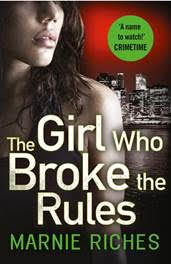
#TheGirlWhoBrokeThe Rules Blog Tour: an interview with Marnie Riches

unnamed

Today I’m delighted to be hosting the last stop on THE GIRL WHO BROKE THE RULES Blog Tour and to welcome the fabulous Marnie Riches to the CTG blog for a chat about her wonderful Georgina McKenzie thriller series.

So, to the questions …

Your second book in the Georgina “George” McKenzie thriller series – THE GIRL WHO BROKE THE RULES – came out in August, can you tell us a bit about it?

The Girl Who Broke the Rules sees George studying in the UK for her PhD in criminology. Interviewing violent sexual offenders on their use of pornography during the day, she is working as a cleaner in a Soho strip club by night to fund her studies. But when the mutilated bodies of two working girls are found in Amsterdam’s red light district – seemingly sexually motivated murders – and Chief Inspector Paul van den Bergen calls on her criminology expertise, George is only too happy to work as a consultant for her old friend. The hunt for The Butcher takes George and van den Bergen through the seedy underworlds of Amsterdam and London’s Soho, where they rub shoulders with human traffickers, a backstreet surgeon and a leading pornographer. Hitting dead end after dead end, eventually George seeks the guidance of one of Broadmoor Hospital’s most infamous patients – the dangerously charming and warped serial killer, Dr. Silas Holm.

The series is set primarily in Holland, what was it that attracted you to setting a thriller there?

As a student of Dutch, I lived in the Netherlands for a year in the early nineties. Particularly after seeing the popularity of Stockholm and Oslo in Scandi-Noir crime fiction, when it came to write my own crime thriller, Amsterdam seemed like a perfect location. It’s stunningly beautiful, with architecture and a rich cultural history to die for. But pay a visit to the coffee shops and take a stroll past the prostitutes’ booths and sex shops of the red-light-district and you can imagine so many stories springing from those red-lit alleyways and canalside brothels…

How did you get into writing thrillers – what was it about the genre that attracted you?

I have always loved thrillers. As a child, I read Peter Benchley’s Jaws and adored the adrenalin rush of turning those pages. Then, when The Silence of the Lambs came out, I was hooked for life – utterly seduced by the evil genius of Hannibal Lecter and the inventive sadism of Jame Gumb. It was terrible perfection! With crime thrillers, I love the sense, as a reader, of having a jigsaw puzzle to piece together. It’s always a challenge to see if I can solve the mystery before the narrator gives me the answers. I love a killer twist. There’s a certain escapism in the violence for a big softy like me, and principally, crime thrillers are stimulating political and anthropological portraits of our world. All of these elements also appeal to me as a writer, except I’m in the driving seat, deciding what form the action, the twists and the violent intrigue should take!

Do you have a favourite crime/thriller novel or a crime writing hero/heroine?

Favourite thriller is The Silence of the Lambs. Favourite heroine is Lisbeth Salander because she’s unusual, insanely bright and a kickass rebel. Easy! Favourite anti-hero is Hannibal Lecter because he’s such an elegant, evil charmer. I’m not sure about a true hero. I often find heroes in the thrillers I’ve read a little Alpha Male for me. Even Harry Hole has a bit too much testosterone going on. So, I’ll be cheeky and say van den Bergen, because he’s exactly the sort of man I wanted in a hero.

What about your own writing process – do you plot everything out first or dive right in?

Working with a structured two to six page synopsis as a guide, I write the first draft in one go. A novel usually takes me about a month to research and three months to do the actual writing. When the first draft is finished, I give myself a month to edit. I tweak and refine, chop out the rubbish and then replot the whole thing to ensure the high points are in the correct places. Then, I polish again and send my manuscript out to my agent and my editor.

When you write do you picture actors in the roles – if so (or even if not!) who would you be your dream cast for George McKenzie and Chief Inspector van den Bergen?

I never picture actors in the roles when I’m writing. My characters exist as real people in my head. But I have recently been asked the question several times – who would I like to see playing George and van den Bergen on the big screen? George is an outspoken London girl, so the actress would have to have real screen presence. Marsha Thomason, maybe or Naomie Harris. Perhaps Nathalie Emmanuel. As for van den Bergen, I was thinking the other day that if you gave George Clooney grey contact lenses, he might do! He has that silver fox thing, going on, although he’s a bit beefy. It would have to be an attractive, ageing man who could play a miserable bastard beautifully.

What advice would you give a writer aspiring to publication?

Principally, write a lot. Write as much shit as you can until you get really good. Then, brace yourself, because you’ll get rejection after rejection. Grow a thick skin. Believe in your story. Try to attain the same standards as your literary heroes. Mainly, never give up. You’ve got to really want to get published because it’s very, very hard. Only a lucky few have their first attempts picked up. Most toil on for decades. I’d been writing seriously for just shy of ten years and had penned thirteen novels before my “debut” came out! Six were published children’s books but the rest…just practice!

And, finally, what does the rest of 2015 have in store for you?

The Girl Who Walked in the Shadows should be out in November 2015 – I’m writing the final scenes now. When that manuscript is handed in, I’m going to take some time off and kick around some new ideas. I have a contemporary women’s novel on submission to editors. It’s a funny story about mid-life crisis, so fingers crossed, we’ll see that on shelves by late 2016. And, of course, I’m going to be talking to readers and bloggers on social media about my thrillers, because the whole point of writing them was to see them read and enjoyed!

A massive thank you to the wonderful Marnie Riches for dropping by the CTG blog and letting me ask her so many questions.

You can check out my review of the first book in the Georgina “George” McKenzie thriller series – THE GIRL WHO WOULDN’T DIE – here.

Here’s what the blurb says about THE GIRL WHO BROKE THE RULES: When the mutilated bodies of two sex-workers are found in Amsterdam, Chief Inspector van den Bergen must find a brutal murderer before the red-light-district erupts into panic. Georgina McKenzie is conducting research into pornography among the UK’s most violent sex-offenders but once van den Bergen calls on her criminology expertise, she is only too happy to come running. The rising death toll forces George and van den Bergen to navigate the labyrinthine worlds of Soho strip-club sleaze and trans-national human trafficking. And with the case growing ever more complicated, George must walk the halls of Broadmoor psychiatric hospital, seeking advice from the brilliant serial murderer, Dr. Silas Holm…”

To find out more about Marnie Riches hop over t0 her website www.marnieriches.com and follow her on Twitter @Marnie_Riches

If you’d like to see THE GIRL WHO BROKE THE RULES on Amazon click on the book cover below:

http://

And be sure to visit all the other fabulous tour stops on THE GIRL WHO BROKE THE RULES Blog Tour …

Blog tour

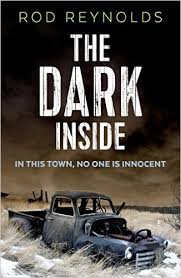
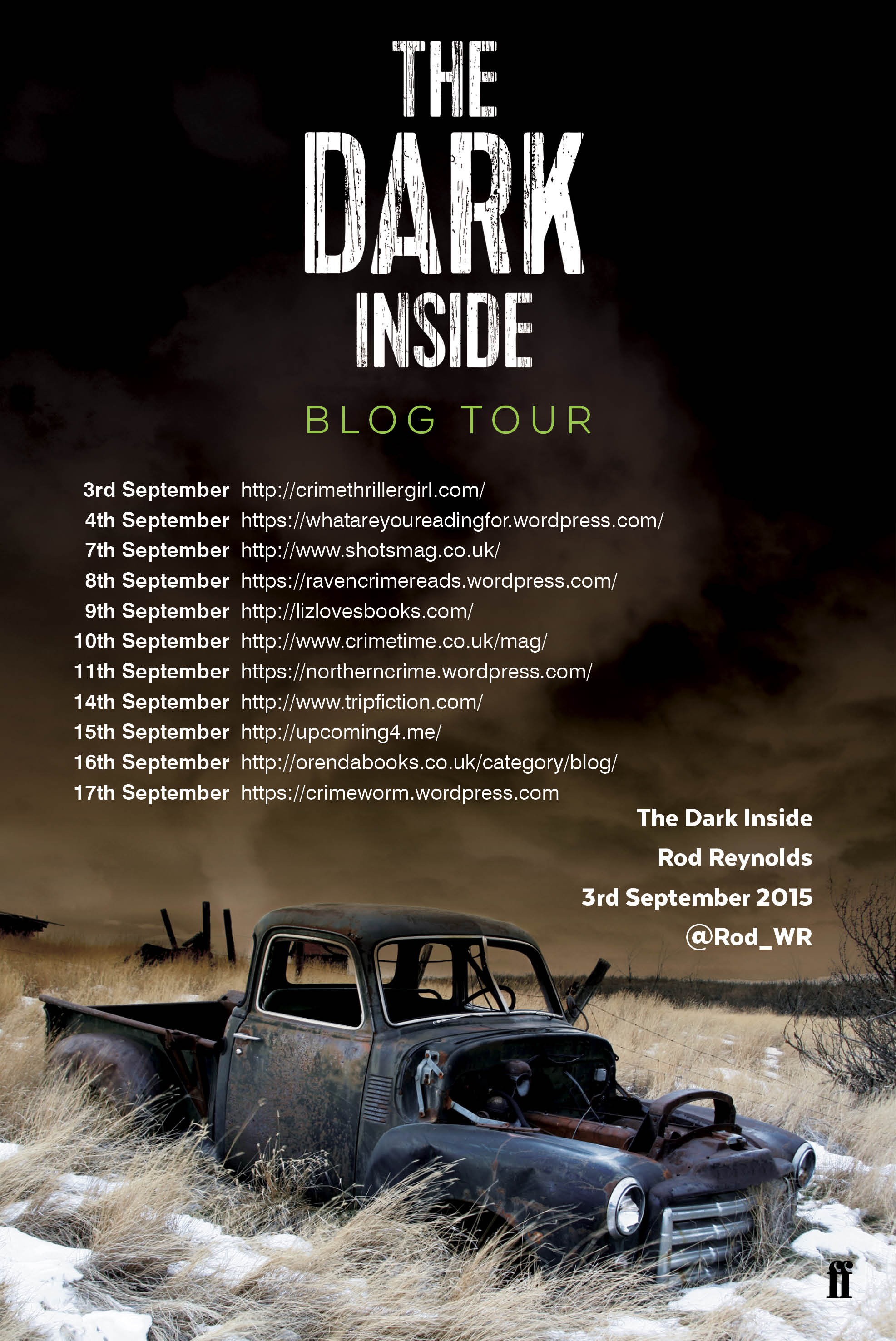
#TheDarkInside Blog Tour: CTG reviews The Dark Inside by Rod Reynolds

Unknown

Today I’m thrilled to be kicking off the #TheDarkInside Blog Tour with my review of The Dark Inside.

What the blurb says: “In this town, no one is innocent. 1946, Texarkana: a town on the border of Texas and Arkansas. Disgraced New York reporter Charlie Yates has been sent to cover the story of a spate of brutal murders – young couples who’ve been slaughtered at a local date spot. Charlie finds himself drawn into the case by the beautiful and fiery Lizzie, sister to one of the victims, Alice – the only person to have survived the attacks and seen the killer up close.

But Charlie has his own demons to fight, and as he starts to dig into the murders he discovers that the people of Texarkana have secrets that they want kept hidden at all costs. Before long, Charlie discovers that powerful forces might be protecting the killer, and as he investigates further his pursuit of the truth could cost him more than his job …”

This debut novel from the uber-talented Rod Reynolds serves up a perfect slice of American noir.

New York reporter Charlie Yates is a damaged man. Haunted by career problems and a failing marriage, he’s alienated many of the people close to him. With his employers desperate to be free of him for a while, he’s sent to cover a spate of double murders in Texarkana. He’s angry and isolated in an unfamiliar and unwelcoming place, but as he starts to make acquaintances with the locals and gets up to speed with the facts of the murders, he realises that the town, and the people in it, are hiding many more secrets than they’re willing to share.

Charlie digs deeper, but as he gets closer to the truth, he’s also getting closer to Lizzie – the charismatic sister of one of the victims – making them both a target. As the story hurtles towards its high-stakes, adrenalin-fuelled climax, Charlie will have to risk everything he holds dear if he is to succeed in bringing the murderer to justice.

Like a lovechild of Raymond Chandler and John D. MacDonald, with a smidgeon of Jim Thompson on the side, this is a relentless, dark and gritty tale about a man who cannot let go until he’s uncovered the truth of what is really going on inside the close knit community of Texarkana.

Inspired by the true story of the unsolved Texarkana Moonlight Murders, with deeply drawn characters and a vividly claustrophobic atmosphere, THE DARK INSIDE is an utterly engrossing debut and one of my top reads of 2015 – an absolute must-read for all thriller fans.

Do yourself a favour and go buy this book – believe me, you’re not going to want to miss it!


You can find out more about Rod Reynolds by following him on Twitter @Rod_WR

The Dark Inside is published today! To see it on Amazon click on the book cover below:

http://

And be sure to check out all the other fabulous #TheDarkInside tour stops …

Dark Inside_blog (8)

The #PrettyBaby Blog Tour: CTG reviews Pretty Baby by Mary Kubica

images

What the blurb says: “A chance encounter. An act of kindness. A tangled web of lies. How far would you go to help a stranger? When Heidi Wood catches a fleeting glimpse of a teenage girl on a Chicago train platform, clutching a baby in her arms, she can’t get the image out of her head. Heidi is a charitable woman – but her husband and daughter are horrified when she returns home one day with the young woman, Willow and her four-month-old baby in tow. Dishevelled and apparently homeless, the girl could be a criminal – or worse. But despite her family’s objections, Heidi offers them refuge. As Willow starts to get back on her feet, disturbing clues to her past begin to surface and Heidi must decide how far she’s willing to go to help a stranger. What starts as an act of kindness quickly spirals into something far more twisted than anyone could have anticipated.”

This is a stunningly good second novel by Mary Kubica whose debut – THE GOOD GIRL – was one of my top reads of 2014.

Heidi is a caring, generous woman in a time-poor marriage complete with the challenges of a fast-growing up daughter and all the angst that can bring. She wants to do the right thing, driven by the need to help others, and so when she encounters Willow and baby Ruby she is unable to turn a blind eye like all the other commuters on the train. But bringing Willow and the baby home with her drives a wedge into the stress fractures in her family relationships, turning them from cracks to chasms. Becoming increasingly distant from her husband and her daughter, Heidi focuses on Willow and baby Ruby, even though she has no idea of the secrets they are hiding.

Both chilling psychological thriller and an emotion-filled study of a modern family’s life and the secrets they keep from each other – the doubts, the temptations, and the silent grief of a never spoken about sadness that never goes away – Pretty Baby has an ever building sense of unease that puts you on edge and compels you to turn the pages ever-faster to discover what has (and will) happen.

Perfect for psychological thriller fans.


Be sure to check out Mary Kubica’s website at www.marykubica.com and follow her on Twitter @MaryKubica

You can buy Pretty Baby from Amazon by following the link on the book cover below:

http://

Have a read of my review of Mary Kubica’s debut novel THE GOOD GIRL here

And be sure to check out all the other great #PrettyBaby Blog Tour stops …

PrettyBaby_BlogTourBanner-2