Murder in Malmö Blog Tour: Guest post by Torquil MacLeod

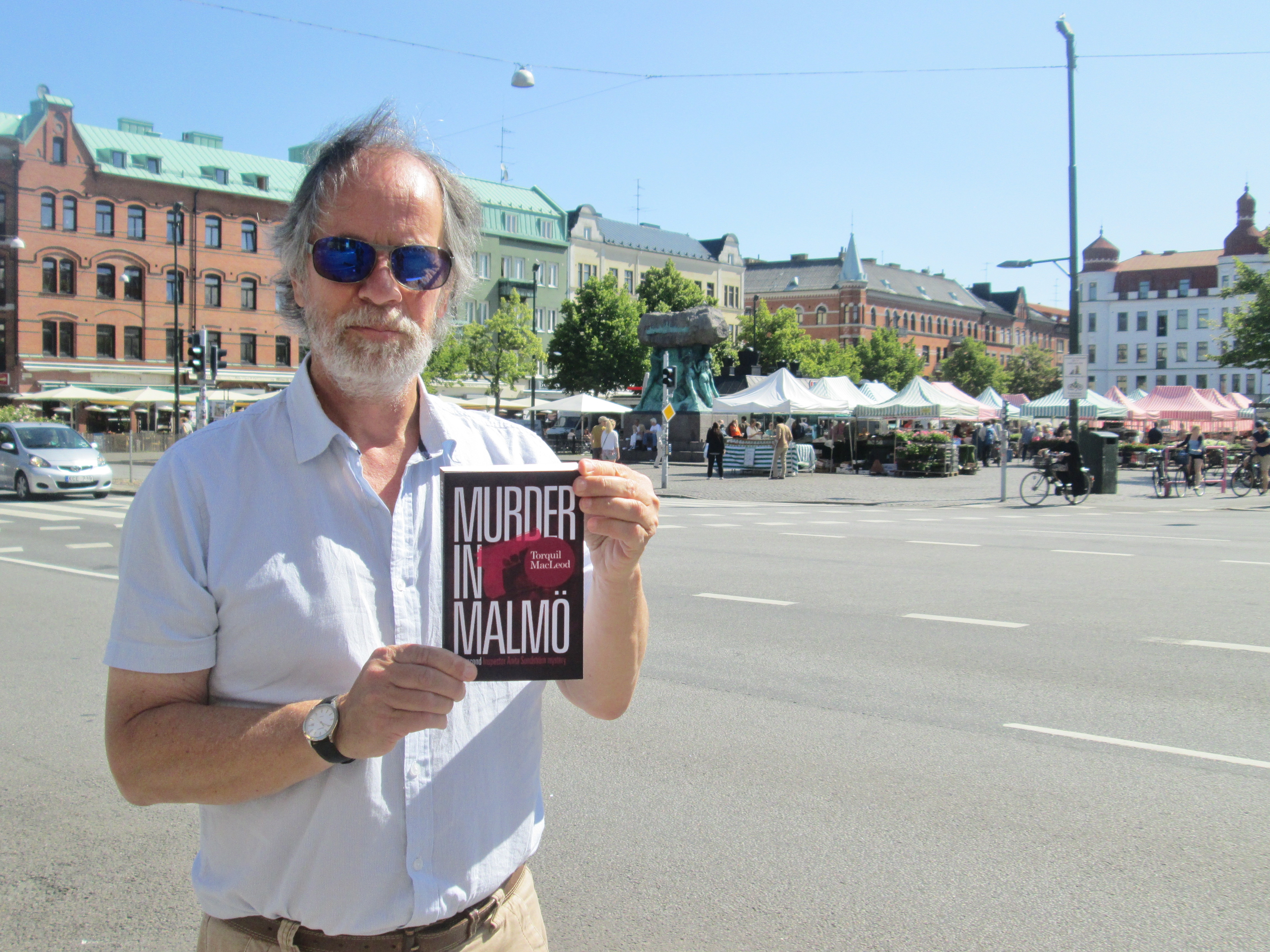
Author at market in Möllevången

Today author Torquil MacLeod is taking over the reins of the CTG blog as part of his Murder in Malmö Blog Tour.

Over to Torquil …

It was on a storm-tossed ferry from Newcastle in the middle of December that we made our visit to Sweden. On arrival in Gothenburg, we took a very slow train down the coast and ended up at a desolate Malmö Central Station at midnight. We were virtually the only people left on the train when we were met by our elder son, who had recently moved to Skåne. We drove through deserted streets and the only bright spots were the electric Christmas lights in nearly every window. It wasn’t the most promising of starts, yet it turned out to be the start of a great adventure.

During that first wintry visit, I was captivated by the landscape of Skåne, the southernmost region of Sweden. Part of the time we stayed in Ystad with a police detective based in the town. She has become a firm friend (and police adviser), as has her ex-partner, who still serves as a detective in Ystad. At that time, I was interested in writing film scripts and worked on a number of projects with a producer friend. Among the scripts I came up with, two were crime-based ideas. Both were set in southern Sweden, and one specifically in Malmö.

It was then that I discovered Henning Mankell, quite by chance, in a bookshop in Newcastle – he only had a couple of translated novels out over here at that time. I was amazed to discover that they were centred in Ystad and the surrounding countryside that we were becoming so familiar with. Soon the trickle of Scandinavian crime novels became a steady stream. With my “screenwriting” career going nowhere fast – particularly once I realised how virtually impossible it is to get scripts as far as filming – I decided to dust off an old script idea and turn it into a novel. That was Meet me in Malmö.

Though the central figure, Anita Sundström, was to be a Swedish police inspector, I wanted to give British readers an outsider’s view of the country – my view. The novel was a basic introduction to Sweden, as home-grown Swedish writing – just as crime writing from any other country – assumes a certain degree of local knowledge and cultural understanding in its readers. In all four of my Malmö Mysteries, I have attempted to fill in some of the gaps.

I also wanted Anita to be different from many other fictional detectives. Unlike Kurt Wallander, Harry Hole, Morse, Rebus and even Jane Tennyson, she’s only one of a team. She’s not running the investigations. She’s only a cog in the machine and has to work within those restrictions. She can’t be the maverick figure. It’s her role within the team that leads to tensions.

The other main character in the story is Malmö itself. My son called it home for several years. It’s a pleasant city – particularly in the summer with all its beautiful parks. It’s also a cultural melting pot with a large immigrant population. Thanks to the opening of the Öresund Bridge in 2000 linking it to Copenhagen, it has transformed itself from backwater town into cosmopolitan city. This is Anita Sundström’s beat.

The journey of Meet me in Malmö was a tortuous one. After I’d written it I did the usual rounds of literary agents. Not one was remotely interested and the only feedback I got was a suggestion I change my name to a Scandinavian one (Torquil is actually Norwegian in origin), as nobody would buy a Swedish crime novel written by a Brit. The other gem was to avoid using the name Malmö in any subsequent novels in the series. I ignored both pieces of advice and I’ve been quite happy with the results.

Eventually, I found a hardback publisher. But after its short run sold out, they showed no desire to republish. They did put it out as an ebook and it probably sold about ten copies in a year. So, when I got my rights back, I decided to repackage it with a new cover. As it has spent nearly two and a half years in Amazon UK’s top 2000 ebooks, the decision has been justified. And then last year, I was approached by small independent publisher, McNidder & Grace. They are bringing out all four books this year. Murder in Malmö, the second in the series, is coming out now, with Missing in Malmö in September and Midnight in Malmö in October/November.

Though a fifth book is planned for later next year, I am currently writing an Anita Sundström novella set round a murder at Christmas. And as I write this, we are about to set off on yet another trip to Skåne to visit our Swedish grandson, whose parents have just moved to Ystad. My Swedish journey has come round full circle.

You can find out more about Torquil MacLeod over at his website http://www.torquilmacleodbooks.com

To check out Murder in Malmö over on Amazon, click the book cover below:

 http://

And be sure to look out the other stops on the Murder in Malmö blog tour …
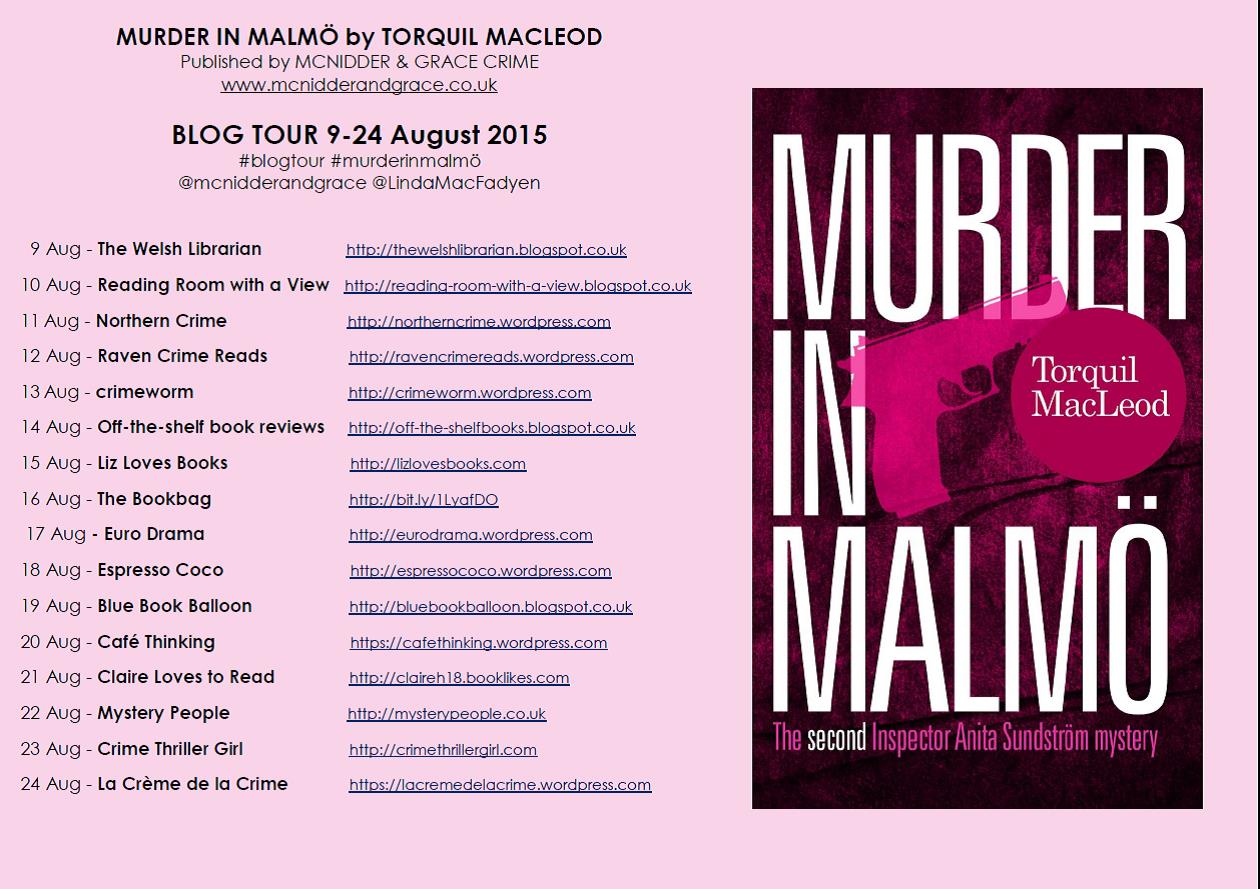
MinM blog tour pic-2

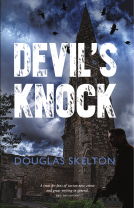
Guest Blog: Douglas Skelton, author of DEVIL’S KNOCK, talks about why he writes Crime Fiction


unnamed-3

Today I’m handing over the controls of the CTG blog to crime writer Douglas Skelton. To mark the publication of DEVIL’S KNOCK – the third book in his Glasgow-based crime series – I asked Douglas to tell us about what attracted him to writing crime fiction …

The memories come in fragments…

I’m maybe 7 or 8, sitting on the floor of our flat in Springburn in Glasgow, writing. It’s a story called ‘Who Killed Cock Robin?’ – hey, I was a kid, cut me some slack – and it dealt with the murder of a TV personality. And no, I can’t remember whodunit…

I’m about 10 or 11, living in what was then the new town of Cumbernauld, when I pick up ‘On Her Majesty’s Secret Service’ and read it. I don’t understood it all – it was a simpler age – but I finish it…

Two or three years later, I’m in another former new town, East Kilbride, and being sent to the library by my mother with the instruction, “Get me a murder story.” Naturally, I read a few…

Is that why I write crime?

unnamed-2

Or, given my age when writing ‘Cock Robin, which I thought at the time was a book but was really a short story, was there something buried in the genes?

As a whippersnapper I also read westerns and a smattering of science fiction but soon I was sucked into the world of horror and the supernatural.

Now, though, apart from the occasional John Connolly or James Oswald, it’s straight-up crime all the way.

Although it was fiction I had my eye on, my introduction to publication was true crime. It seemed a natural progression from newspaper reporting although my approach was always as a storyteller rather than a journalist. That had its limits, of course, and I was always very much aware that I was dealing with real people with real feelings.

That was why, about halfway through my true crime period – which stretched to 11 books – I became more interested in historical cases.

Around this time I was also involved in investigation work for a couple of Glasgow solicitors. They were very thorough in their approach so this saw me not just taking statements from prosecution witnesses – what we call in Scotland a precognition – but also finding fresh witnesses and evidence.

I was, to all intents and purposes, a private eye, a gumshoe, a shamus. I even had a trench coat.

This introduced me to real crime and criminals in a way that my limited journalistic experience never had.

unnamed

So when it came time to make the leap from crime fact to crime fiction, I suppose it was only natural that I’d put what I’d learned into my writing – and approach the genre from the point of view of the criminals.

My anti-hero, Davie McCall, is a tough guy. He’s a crook and he’s hard and he can look after himself. But he has a code – he doesn’t hurt women, children or animals. He tries to keep civilians – straight arrows – out of it.

In short, he’s an idealised version of the classic Glasgow hard man.

I gave him a tragic past and a vulnerability that only the reader can see because it was important to me that he be sympathetic.

And I surround him with a cast of characters who are good and bad and downright evil. Hopefully, though, even the worst of them has a touch of humanity.

I’m going for believability rather than absolute realism for these are thrillers. I’m telling tales not exposing the reality of Glasgow’s underworld. I want the reader to be thrilled, to laugh now and then, even cry, for I have a melancholy turn to my own nature and that comes out in the writing.

There are three in the series so far. The final one is due out next year.

Davie’s already been through hell.

I hope you’ll join his journey, see how it turns out.

Douglas Skelton is the author of BLOOD CITY, CROW BAIT, and DEVIL’S KNOCK, all published by Luath Press.

DEVIL’S KNOCK is out now. Here’s the blurb: “The brutal Jarvis clan clawed their way out of their council house by way of the veins and noses of the city’s drug users’ and gained notoriety throughout Glasgow for their violence and fierce family loyalty. Their power is uncontested but when “Scrapper” Jarvis stabs Dickie Himes to death outside a nightclub, all hell breaks loose and Davie is pulled back into the fray.”

To find out more about Douglas Skelton and his books hop on over to his website at www.douglasskelton.com and be sure to follow him on Twitter @DouglasSkelton1

To check out DEVIL’S KNOCK on Amazon click on the book cover below:

http://


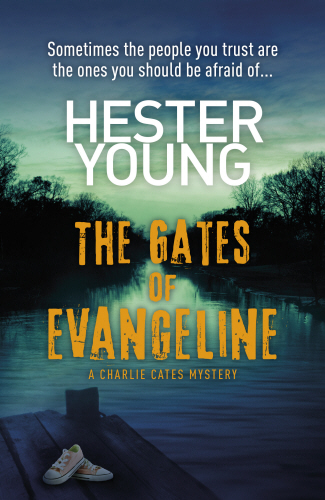
Guest Post: Hester Young on the inspiration behind THE GATES OF EVANGELINE

image003

Today I’m handing over the reins of the CTG blog to Hester Young, author of THE GATES OF EVANGELINE – the first book in a fantastic new crime series featuring journalist Charlie Cates, and set in Louisiana.

Over to Hester …

Louisiana is the kind of place that almost writes a mystery for you.

From the moment you first turn down an old, unpaved driveway and see that curtain of Spanish moss hanging from the trees, you’ll feel secrets. Stroll past the mossy crypts of a New Orleans cemetery, and you’ll wonder what walks there at night. When you take a swamp ride and suddenly find yourself facing the green-gold gaze of an alligator, it’s almost impossible not to imagine what else those dark waters might be hiding.

This is the world of my novel, and I often feel that I did not really choose it as my setting at all. It chose me.

Louisiana came to me the same way that it appears to my protagonist: in a dream.

I was sitting in a rowboat across from a young boy, surrounded by forbidding swampland. The child told me his name and age. Let me tell you how I died, he said, and when I awoke, I could not shake his horrible story from my mind.

I didn’t know then that I had stumbled upon the opening of a novel. In the thin, early morning light when all is quiet and everything seems possible, I began to wonder if perhaps this boy might be real, if he might be waiting for me somewhere in the Louisiana swamps.

The dream stayed with me for days, weeks, months. When the boy in the boat’s tale began to blend seamlessly with a tragic premonition my grandmother once had—then I knew I had the elements of a story. A boy, long missing. A grieving mother with premonitory dreams. A beautiful and sprawling Southern estate. A swamp that holds a terrible secret.

The only way to exorcise a story is to tell it.

I made three research trips in total. Husband in tow, I toured a trio of Louisiana plantation homes, cruised through the murky swamps, explored a handful of towns in Cajun country, and even experienced the joyful celebration that is Mardi Gras in New Orleans. Mostly, I ate an appalling amount of food. Though each trip gave me new material, it was my first that most shaped the book.

image005

That April, I was newly pregnant. As the trip began, I was practically dancing at the thought of my impending motherhood—in stark contrast with the main character of my book, Charlotte, whose frightening dreams begin after the death of her young son.

Sometimes the stories we create echo faintly in our own lives.

Days later, I found myself in a New Orleans hospital, weeping as a gentle nurse informed me that I had miscarried. In the rawness of that moment, grieving what was really only the idea of motherhood, I came to understand my protagonist in a new way.

For me, Louisiana will always be a place of ghosts, of lost children. But it is also a hopeful reminder of the good that lies ahead. I haven’t forgotten that hospital and the baby that never was, but now I have another image of Louisiana to carry with me: my one-year-old son perched high upon his father’s shoulders, wide-eyed and joyful as he clutches a string of Mardi Gras beads.

That, I hope, is the Louisiana that I have captured in The Gates of Evangeline, a place of light and darkness and all the strange shadows in between.

A massive thank you to Hester for dropping by to talk about Louisiana and the inspiration behind her novel THE GATES OF EVANGELINE.

THE GATES OF EVANGELINE is published today (13th August). Here’s the blurb: “When grieving mother and New York journalist Charlie Cates begins to experience vivid dreams about children after her only son passes away, she’s sure that she’s lost her mind. Yet she soon realizes these are not the hallucinations of a bereaved mother. They are messages and warnings that will help Charlie and the children she sees – if she can make sense of them.

The disturbing images lead her from her home in suburban New York City to small-town Louisiana, where she takes a commission to write a true-crime book based on the case of Gabriel Deveau, the young heir to a wealthy and infamous Southern family, whose kidnapping thirty years ago has never been solved. There she meets the Deveau family, none of whom are telling the full truth about the night Gabriel disappeared. And as she uncovers long-buried secrets of love, money, betrayal, and murder, the facts begin to implicate those she most wants to trust – and her visions reveal an evil closer than she could have imagined.”

To find out more about Hester Young pop on over to her website at www.hesteryoung.com/books/ and follow her on Twitter @HesterAuthor

And to check out THE GATES OF EVANGELINE on Amazon click here.


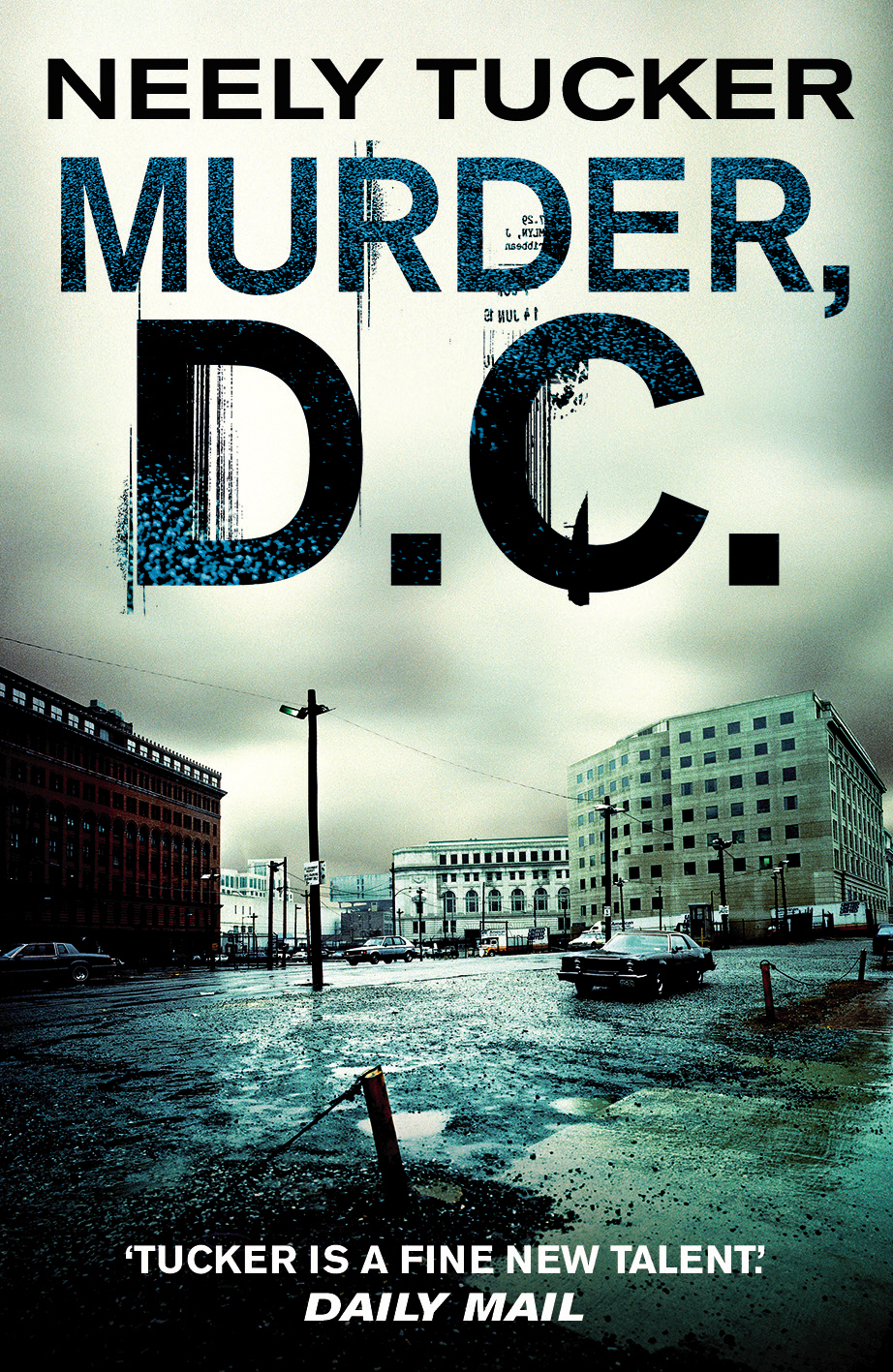
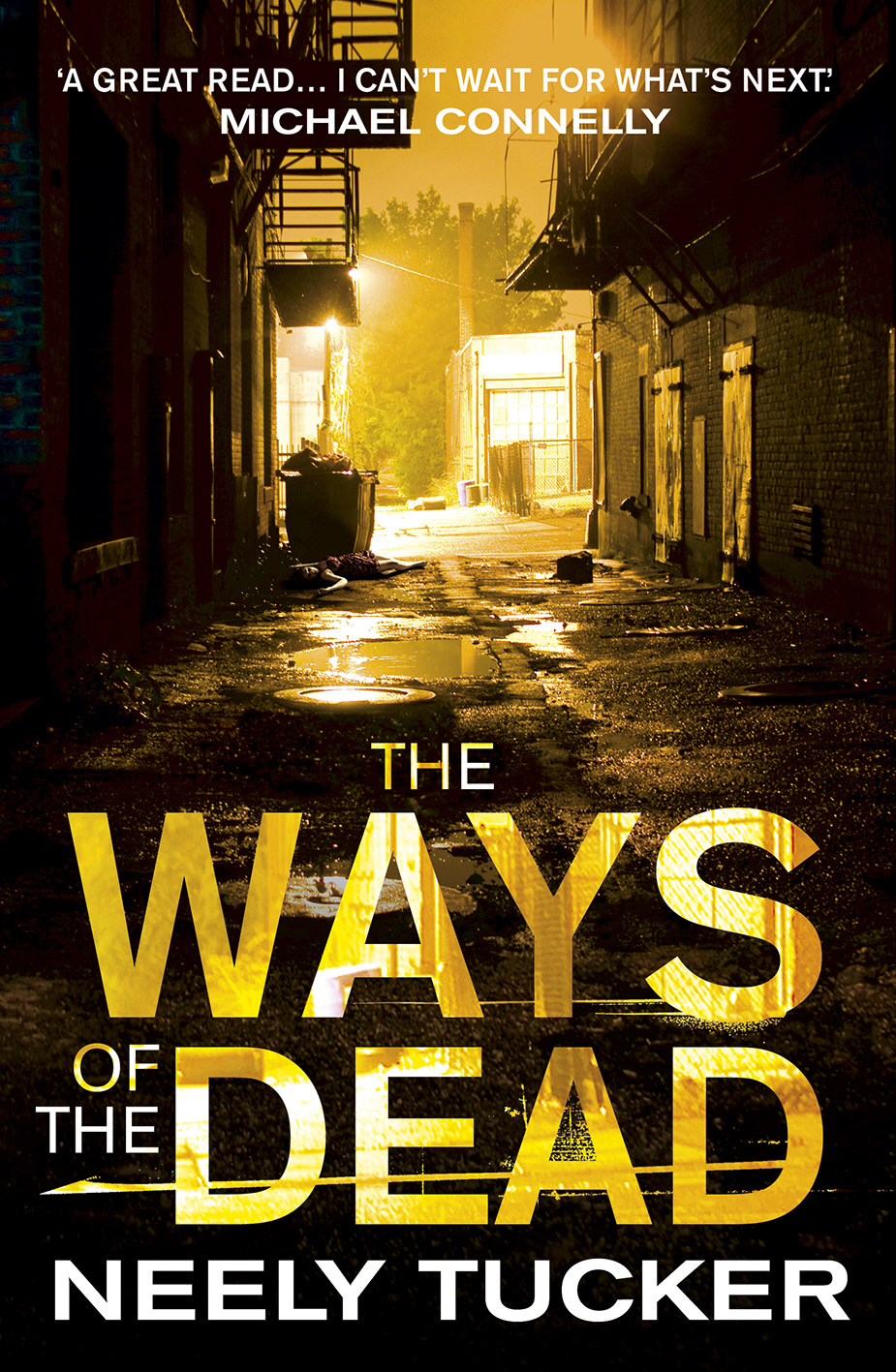
Guest Post: Talking about Locations – author Neely Tucker on the places featured in MURDER, D.C. and THE WAYS OF THE DEAD


WASHINGTON, DC - MARCH 27: Author Nelly Tucker on March, 27, 2013 in Washington, DC. (Photo by Bill O'Leary/The Washington Post)

Author Neely Tucker (Photo by Bill O’Leary/The Washington Post)

Today crime writer Neely Tucker is taking the reins of the CTG blog to talk about the real life places, and events, that have inspired his two recent books THE WAYS OF THE DEAD and MURDER, D.C. 

So, over to Neely …

“The Ways of the Dead” and “Murder, D.C.” are based on very real Washington neighborhoods with very real histories, and both novels are based on very real events.

“Ways” takes as its inspiration a real-life serial killer named Darryl Turner, who police say killed as many as nine women, most of whom were in the low-end drug trade. He killed all of them on or near a two-block long street called Princeton Place. It’s about two miles north of the U.S. Capitol. In the late 1990s, when the novel is set, this was a predominantly black neighborhood, in which older residents were middle class and took very good care of their homes, but were surrounded by drug dealers and crack houses (abandoned buildings where addicts get high).

The recent film, “The Butler,” about the long-time butler to several U.S. presidents, is about a man who lived in this neighborhood.

In 2000, as the court reporter for The Washington Post, I covered the initial proceedings against Turner. The contrasts of the neighborhood struck me, and that was the beginning of “Ways.”

“Murder” moves about four miles south, to a little-visited part of D.C. known as “Southwest.” Here’s your handy travel tip: D.C. is divided into four quadrants, with the U.S. Capitol acting as the dividing point. “Northwest D.C.” is the land north and west of the Capitol, and so on.

Southwest DC is a tiny quadrant, just south of the Capitol and quickly cut off by the Washington Channel or the Potomac River. Before the Civil War, there were at least two “slave pens,” or jails where enslaved African Americans were kept and sold, in the area.

If you go along the National Mall today, by the Air and Space Museum, you are less than two hundred meters from an antebellum slave pen. There was also a very large slave auction house just across the river, in Virginia. Again, if you saw the film “12 Years a Slave,” that’s where the man was actually first held.

So I created a fictional knob of land,  Frenchman’s Bend, imbued it with the combined histories of these nearby slave pens, and set it along the waterfront. It’s a cursed, gothic sort of place that no one wanted to touch after the Civil War, due to horrors that had gone on there. Think of it as an open-air haunted house.  By the late 20th Century, it’s a very unpleasant drug park, the most violent place in the most violent city in America — which D.C. really was at the time.

Murder, D.C. cover image

Murder, D.C. cover image

Welcome to the real estate upon which turns “Murder, D.C.,” and the fate of Sully Carter.

Huge thanks to Neely Tucker for stopping by to talk Locations.

MURDER, D.C. will be published in hardback on Thursday 30th July. Here’s the blurb: “When Billy Ellison, the son of Washington, D.C.’s most influential African-American family, is found dead in the Potomac near a violent drug haven, veteran metro reporter Sully Carter knows it’s time to start asking some serious questions – no matter what the consequences.

With the police unable to find a lead and pressure mounting for Sully to abandon the investigation, he has a hunch that there is more to the case than a drug deal gone bad or a tale of family misfortune. Digging deeper, Sully finds that the real story stretches far beyond Billy and into D.C.’s most prominent social circles.

An alcoholic still haunted from his years as a war correspondent in Bosnia, Sully now must strike a dangerous balance between D.C.’s two extremes – the city’s violent, desperate back streets and its highest corridors of power – while threatened by those who will stop at nothing to keep him from discovering the shocking truth.”

The Ways of the Dead cover image

The Ways of the Dead cover image

THE WAYS OF THE DEAD will be published in paperback on Thursday 30th July. Here’s the blurb: “The body of the teenage daughter of a powerful Federal judge is discovered in a dumpster in a bad neighbourhood of Washington, D.C. It is murder, and the local police immediately arrest the three nearest black kids, bad boys from a notorious gang.

Sully Carter, a veteran war correspondent with emotional scars far worse than the ones on his body, suspects that there’s more to the case than the police would have the public know. With the nation clamouring for a conviction, and the bereaved judge due for a court nomination, Sully pursues his own line of enquiry, in spite of some very dangerous people telling him to shut it down.”

To find out more about Neely Tucker and his books hop on over to his website at www.neelytucker.com and follow him on Twitter @NeelyTucker

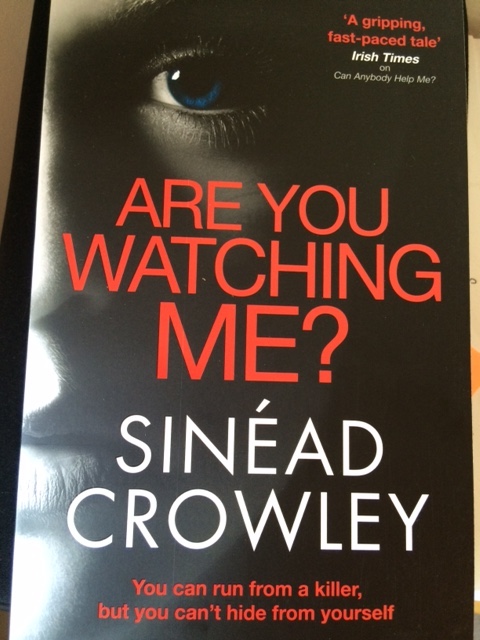
Guest Post: Author Sinéad Crowley talks about writing a Cop Duo #AreYouWatchingMe


cover image

cover image

Today I’m delighted to hand over the reins of the CTG blog to Sinéad Crowley. Sinéad’s debut thriller – CAN ANYBODY HELP ME? – was a bestseller in Ireland and shortlisted for Crime Book of the Year at the Irish Book Awards 2014. Her second novel – ARE YOU WATCHING ME? – is published this week and is another gripping read. So, over to Sinéad …

Good cop – better cop?

I didn’t set out to write a classic ‘cop duo’ story. Mind you – I didn’t set out to write a police procedural either – whoops! My first book, ‘Can Anybody Help Me?’ looked at the relationships between women on an internet parenting forum, and my original idea was to have the central character, a young woman called Yvonne, solve the mystery herself. But Yvonne was a new mother and quite a shy person, living in a new country and feeling, at times, totally overwhelmed. It wouldn’t have made sense to have her leap away from the computer, Nancy Drew style and start solving crimes. So, I needed a copper. And to keep things simple for myself – write what you know, eh? – I made her a woman. A pregnant woman, at that, who ended up falling into the internet parenting world herself.  Even at that stage, however, Claire was a background character, a means to an end, until my lovely and very astute agent read an early draft of the book and asked if she could she brought more centre stage. My agent, of course had her eye on a sequel – see what I mean by astute? – but she also saw something in Claire that I hadn’t fully recognised. A spark, something different. That indefinable thing that editors and agents look for and writers often don’t realise they have created at all.

So, I wrote more about Claire, and found myself warming to her. She’s a fascinating character to work with, not always likeable, but that’s part of the fun! Meanwhile, as I was writing her opening chapter, Philip Flynn walked into the room, completely unannounced. There was no need for him to be there at all. Claire was sitting in her office, moaning about feeling fat and hungry and all that needed to happen was that somebody had to give her a piece of information. It could have come via phone call or email, the method of passing it on was no big deal. But as I scribbled away in my usual ‘first draft’ style – throwing ideas down on the page in the hope that they would make sense later – in walked Philip Flynn to deliver the information in person. Philip, never Phil, a young ambitious guard with a neat haircut and an overly formal manner. When I looked up I realised I had written two paragraphs about this man who didn’t really have a part in my story at all. But I liked him, and he stayed.

So there I was, with a police procedural on my hands and two police characters who seemed, on the surface, to be like a thousand other police duos. One male, one female. One junior, one senior. One determined to play everything by the book, the other fully prepared to ‘go rogue’ to get what she wanted. But that’s where it got interesting, for me anyway. What SHE wanted. It was Claire who was the older, more experienced cop, and it was she who was prepared to do whatever it took to solve the crime. Even if that meant going against medical advice. Flynn meanwhile stuck to the rules, and concentrated on what he thought of as ‘real policing’. The questions and the answers, the door to door stuff. None of that internet malarkey. As a duo, they made sense.

Returning to them while writing ‘Are You Watching Me?’ was lovely. I won’t pretend writing a second book was easy, everything you’ve heard about ‘Second Book Syndrome’ is true. But revisiting Claire and Flynn was a joy. I really wanted to catch up with them, to find out how life had been in the six months or so since we’d last met. Claire of course is a mother now and finding out just how interesting life can be when your newest family member has a habit of yelling at you at three am. And Flynn has grown in confidence, both in his work and his personal life. One major murder investigation later, they have grown to trust each other and can bounce ideas off each other, and there’s a really useful professional relationship there now. They have each other’s backs. They’re not friends, not yet. But they are getting there. That might just be a job for Book Three…

Huge thanks to Sinéad Crowley for taking over the reins of the CTG blog today and telling us all about writing a duo. Her fabulous second novel – ARE YOU WATCHING ME? – is out this week.

To give you a taste of it, here’s the blurb: “Liz Cafferky is on the up. Rescued from her dark past by the owner of a drop-in centre for older men, Liz soon finds herself as the charity’s face – and the unwilling darling of the Dublin media. Amidst her claustophobic fame, Liz barely notices a letter from a new fan. But then one of the centre’s clients is brutally murdered, and Elizabeth receives another, more sinister note. Running from her ghosts, Liz is too scared to go to the police. And with no leads, there is little Sergeant Claire Boyle can do to protect her …”

To find out more about Sinéad and her books, hop on over to her Facebook page at https://www.facebook.com/cananybodyhelpme and be sure to follow her on Twitter @SCrowleyAuthor


Guest Post: Quentin Bates on Stepping into the Translation Zone #Snowblind

Quentin Bates

Quentin Bates

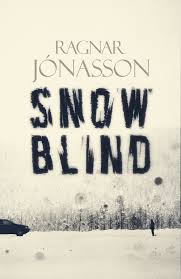
Today, crime writer Quentin Bates takes the reins here at CTG HQ to tell us about his recent experiences in translation – working on the fabulous novel Snowblind from Icelandic crime writer Ragnar Jónasson (published in English by Orenda Books) …

It has been something of a step into the unknown. All right, I’ve done plenty of translation before from my adopted second language, Icelandic, a language that 320,000 Icelanders and a couple of dozen non-Icelanders speak. It’s a long story, but I lived there for a long time, boy meets girl and all that stuff, and found myself staying a lot longer than originally intended.

But to get back on track, I’ve done bits and pieces of translation before, almost all of it fairly grim technical and news material, although there was a novel I translated years ago for the fun of it and eventually wound up publishing myself as an e-book. It’s here if you fancy a look, but I warn you, it’s not a crime story and there are no murders in there.

It was a surprise that there are so few Icelandic crime writers translated into English. For a long time there were only two, the two everyone knows about, Arnaldur Indriðason and Yrsa Sigurðardóttir. Then they were joined by Viktor Arnar Ingólfsson with a handful of books and Árni Thórarinsson with only one and it’s a shame as Árni’s books are excellent, refreshingly different with a journalist as a protagonist rather than a detective or a lawyer. It has long been a mystery to me why so many Swedish and Norwegian crime authors seem to make it seamlessly into English, while their Danish, Finnish and Icelandic counterparts have been left behind, even though they frequently seem to be published in every other language; but not English.

But now there’s one more. A bunch of us conspired to get Ragnar Jónasson published in English, pulling strings and passing the word to kick-start the process.

The excellent Karen Sullivan was in the process of setting up her new imprint, Orenda Books, and was able to publish six books in her first year. She managed to secure Ragnar’s Snowblind, his debut novel (published on 20th April on Kindle and 15th June in paperback) as well as his latest novel, Nightblind.

So this is where the step into the unknown began. I was sure I could produce a translation, and hoped it would be up to Karen’s exacting standards, very much aware that for a new publisher with a limited number books in its first year, each book has to count.

Translation is different from writing your own stuff. There are similar technical aspects, but it calls for a different set of skills. There’s no plotting to worry about as the author has already done all the heavy lifting there, but while technical translation calls for precision and accuracy, literary translation also calls for accuracy, but in a different way.

Snowblind cover image

Snowblind cover image

A technical handbook needs to be as close to the original as possible, while still making sense, as anyone who has bought a Chinese-made DVD player with a badly translated handbook will understand. With a novel it’s more about being faithful to the spirit of the author’s words than to those words themselves.

Sentences might need to be rolled together, as Icelandic uses short, sharp sentences. Like this one. That don’t work in English. Punctuation is also a headache and it has taken me years to figure out that a full stop in Icelandic isn’t necessarily the same as a full stop in English. The nature of an Icelandic full stop can depend on the context and it can be the equivalent of a semi-colon, or even a comma, just a pause in a narrative rather than a break, but the context is all-important.

Then there are the idioms that need to be rendered into English, and often enough there isn’t any direct translation that does the original justice or captures the right feel. So some suitable parallel phrase has to be found. Worst of all are jokes, especially a joke or a phrase that relies on an untranslatable play on words. This is where the translator has to go out on a limb and trust instinct that the replacement joke, which may be nowhere even close to the original wording, is strong enough to capture the elusive feel that the author was looking for.

All this has to be achieved without crossing the often very elastic line from being a translator into the other world of being an editor. There should never be a temptation to improve on an author’s work, only to interpret it in the best way possible, and it’s well known that a poor translation can ruin a good book. On the other hand, an inspired translation can lift a good book and make it into something outstanding.

These days I find myself looking for the translator’s name as well as the author’s. I know that if a book translated from French has Frank Wynne’s or Ros Schwartz’s name on it, I’ll be in good hands. The same goes for Anthea Bell, that queen among translators who produced those inspired English-language versions of Asterix the Gaul that were part of my childhood, plus so much else… then there’s Don Bartlett for anything from Norwegian, and this list goes on.

So it has been a challenge. Translation has also been better that the most fiendish crossword for keeping the grey cells active, almost as fiendish as the plotting of Ragnar’s book. There has been much silent muttering and poring over dictionaries, and my vocabulary of obscure Icelandic words has certainly grown.

Would I do it again? I already am… Look out for Nightblind next year, and hopefully a few more of Iceland’s stable of crime writers appearing in English in the next few years.

A huge thank you to Quentin Bates for dropping by today to talk about stepping into the translation zone, and for giving us a peep behind the scenes at Snowblind.

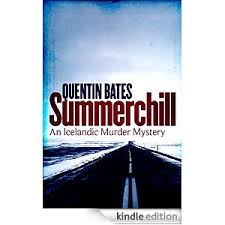
Summerchill cover image

Summerchill cover image

Snowblind by Ragnar Jónasson is released as an ebook today and in paperback on 15th June. Here’s the blurb: Siglufjörður: an idyllically quiet fishing village in Northern Iceland, where no one locks their doors – accessible only via a small mountain tunnel. Ari Thór Arason: a rookie policeman on his first posting, far from his girlfriend in Reykjavik – with a past that he’s unable to leave behind. When a young woman is found lying half-naked in the snow, bleeding and unconscious, and a highly esteemed, elderly writer falls to his death in the local theatre, Ari is dragged straight into the heart of a community where he can trust no one, and secrets and lies are a way of life. An avalanche and unremitting snowstorms close the mountain pass, and the 24-hour darkness threatens to push Ari over the edge, as curtains begin to twitch, and his investigation becomes increasingly complex, chilling and personal. Past plays tag with the present and the claustrophobic tension mounts, while Ari is thrust ever deeper into his own darkness – blinded by snow, and with a killer on the loose.”

Quentin Bates’ latest book Summerchill (the next in his popular Gunnhildur Gísladóttir series) is out on 7th May and available now for pre-order. Here’s the blurb: It’s the tail end of a hot summer when half of Reykjavík is on holiday and the other half wishes it was. Things are quiet when a man is reported missing from his home in the suburbs. As Gunna and Helgi investigate, it becomes clear that the missing man had secrets of his own that lead to a sinister set of friends, and to someone with little to lose who is a fugitive from both justice and the underworld. It becomes a challenge for Gunna to tail both the victim and his would-be executioner, racing to catch up with at least one of them before they finally meet.”

Guest Blog: Michael Sears talks about storytelling, family and the importance of reading

Michael Sears

Michael Sears

Today, Michael Sears, Edgar-nominated and Shamus-winning author of Black Fridays, drops by the CTG blog to talk about storytelling, family and the importance of reading …

I come from a family of storytellers. There were five children and to get any attention in that crowd, you had better have a good tale to tell. My father left me both his sense of humor and his heart, but it was my mother who fed my love of reading and language.

She was a powerful story teller and still is; it is her voice that is most heard at a family gathering. My cousins tell about a time when she was visiting and in the middle of telling a good yarn, a paper napkin, too close to the dinner candle, burst into flame. Without pausing for as much as a deep breath, or missing a beat in her story, my mother poured her water glass over the conflagration, doused the fire, and wrapped up the whole mess in another napkin. They were all in awe of her.

The various adventures of Freddy the Pig, in a series of two dozen or so books by Walter R. Brooks, introduced to me the idea of character, despite the fact that the few humans in the stories barely spoke. Freddy, Jinx the cat, and the cow, Mrs. Wiggins were all sharply drawn, complex characters with points of view, strengths, and weaknesses that made them distinct. They were talking animals, but they were more human to me than the Hardy Boys, who I could never keep straight. Frank was the older one, right?

One of the many benefits of being an avid reader, is that when your nose is deep in a book, parents think you are working and leave you alone. I was not excused from chores or having to do homework, but they couldn’t insist that I play with my little brother while I was reading.

I remember sometime in high school telling my father that I was reading War and Peace and he asked me, “Why?” “Because it is a challenge,” I answered. “It is the longest book I have ever read.” I don’t remember much of the story, but I do remember that it was very long. It was a challenge.

But a few years later, I was a lifeguard for the summer at a private club on a deserted stretch of Fire Island. The only access was by boat, or a mile hike along the beach from the next club, which was much fancier and had a ferry that ran to it (that was my daily commute). The club would get very busy on the weekends, but there were many days during the week when I was the only person there – all day. I couldn’t shut the beach down unless the weather or surf conditions warranted, so I sat there and read. I read all of Shakespeare that summer. Imagine the thrill it was for me to read aloud Henry V, or Lear, or Prospero, seated on a tall lifeguard’s chair, with the constant roar of breaking waves as background. It was a glorious summer.

I don’t understand writers who claim not to read. Not every reader has a book in them, but every writer must know what has gone before, if only to avoid the most common mistakes. Being a writer, now with two books published and a third due out next year, places me on a great timeline that stretches back for millennia. Like Homer, and the various writers of the tales of Gilgamesh or Beowulf, I am also a bard. A storyteller.

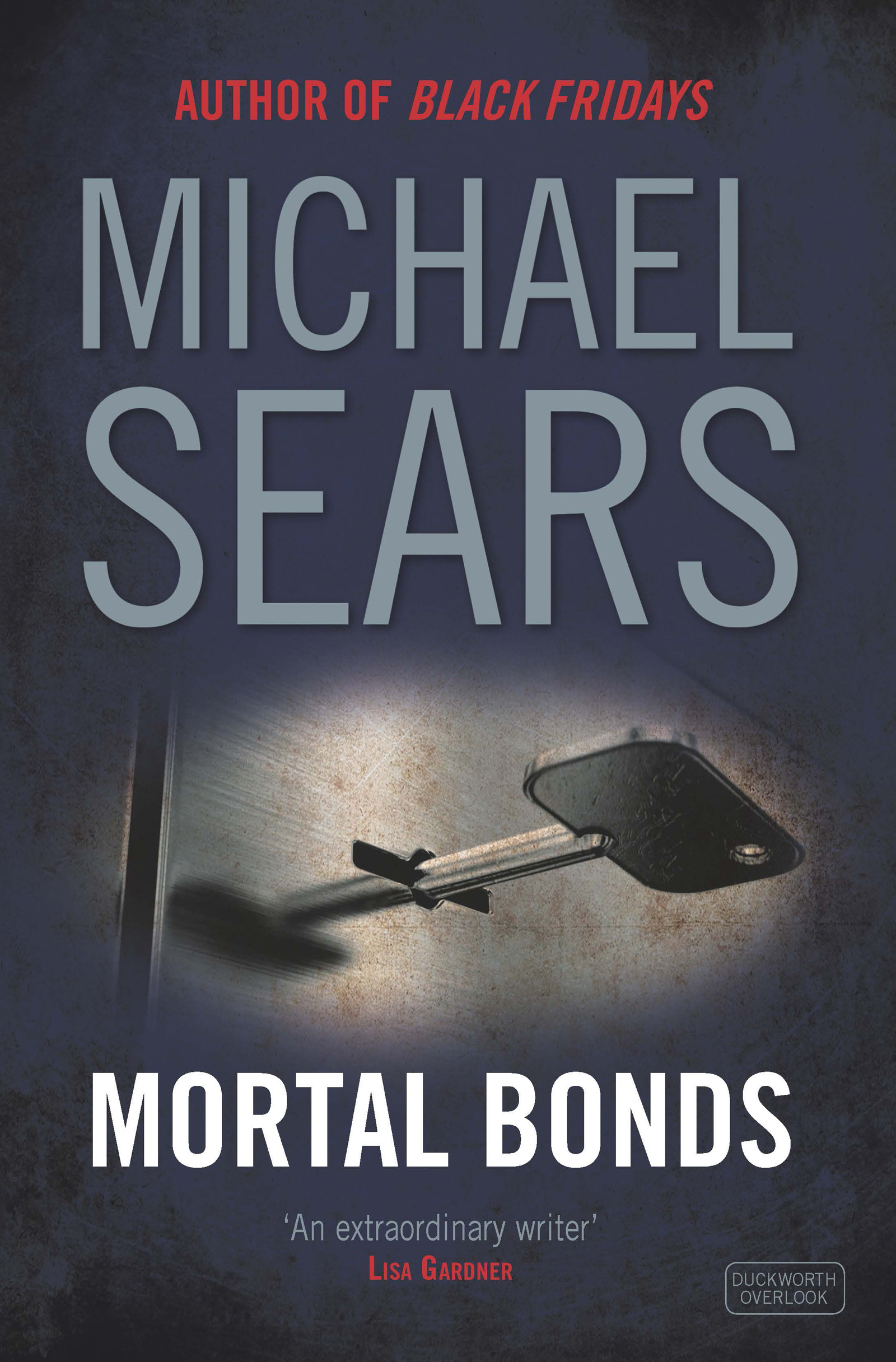
Mortal Bonds cover image

Mortal Bonds cover image

A big thank you to Michael for dropping into the CTG blog today. 

Michael Sears’s Mortal Bonds, the follow-up to Black Fridays, marking the return of financial investigator Jason Stafford in a sensational story of fraud, murder and redemption is out now, published  by Duckworth Publishers.