CTG Interviews: Koethi Zan author of THE NEVER LIST

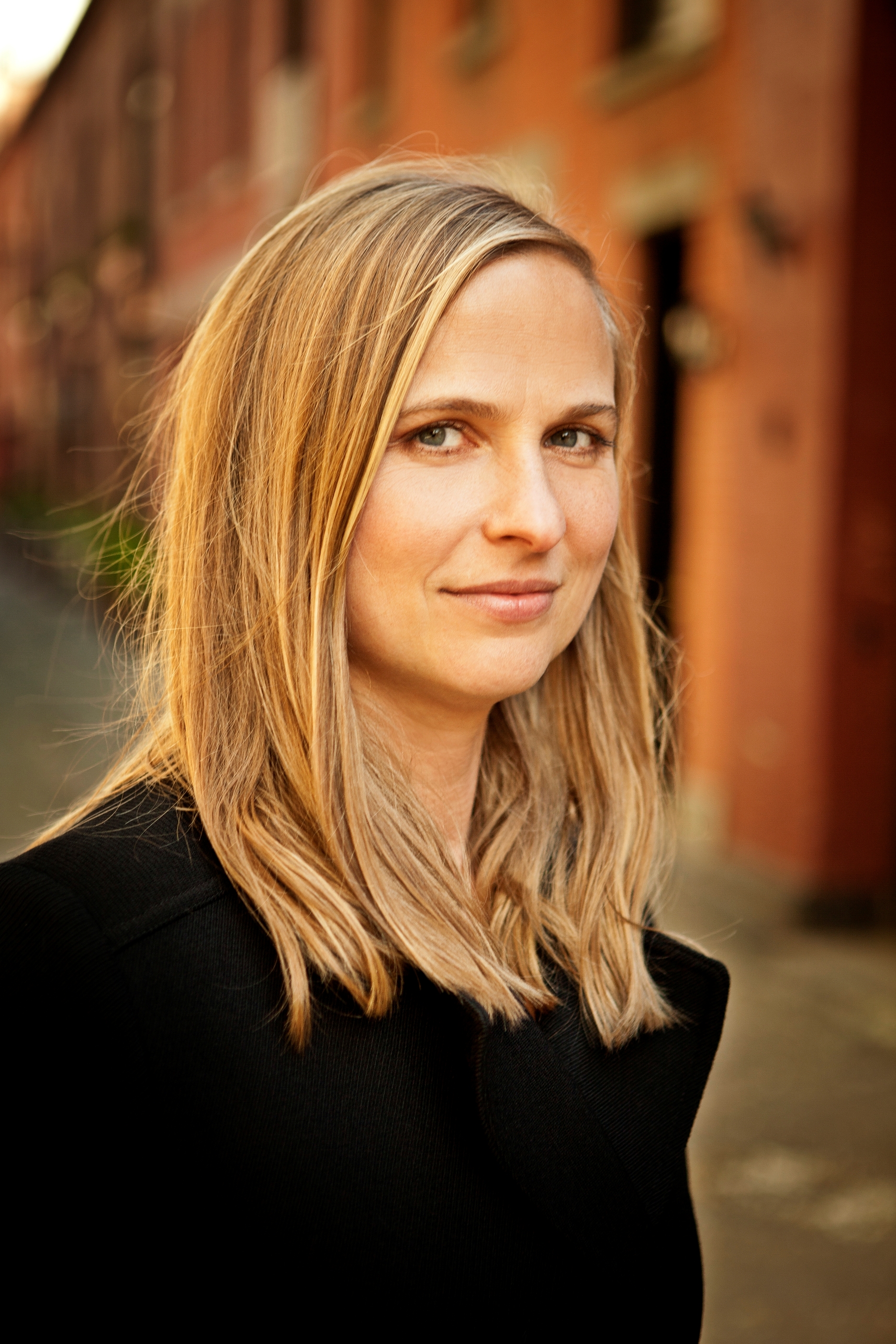
Koethi Zan (c) Pieter M van Hattem

Koethi Zan (c) Pieter M van Hattem

Today I’m delighted to welcome Koethi Zan, author of the fabulous psychological thriller, THE NEVER LIST, to the CTG blog.

I found THE NEVER LIST both spellbinding and chilling. Through Sarah (Caroline) the reader experiences the horror, and impact, of her ordeal in a way that feels very authentic. How did you go about researching the book?

I researched the book by reading essentially everything available about the experiences of women who have been abducted: their memoirs, trial transcripts, psychology textbooks, third party accounts and newspaper articles. I was quite submerged in it, which was a very dark and scary place to be for so long a time.  Of course, I can never know what that experience is truly like, but I feel I have developed a particular empathy for those victims, and I hope what I’ve learned comes across in the book.

For the BDSM parts of the book, I read books on the topic, but also spent a lot of time going down the internet rabbit hole of that culture.  I found myself on many shocking chat boards, websites, and blogs. At a certain point, I’d read so many disturbing accounts that I started to believe I could never be surprised by anything.  But there was always that one more site, one more story, one more image.

The idea of Sarah and Jennifer, after experiencing loss and trauma while still at school, creating their never list is fascinating. How did you get the idea for the never list, and would you call yourself a list person?

The relationship between Sarah and Jennifer is loosely based on my own relationship with my best friend.  She and I never had a formal, written list of ‘don’ts,’ but we did have a set of rules we’d follow because we were both slightly paranoid.  Perhaps not as much as my characters, but there are many shared themes in their lives and ours.

I am definitely a list person, and always have been.  I keep multiple to do lists at all times, each with different time horizons.  Otherwise the world would be too overwhelming.

What books and authors have inspired you as a reader and writer? 

Two crime fiction writers who influenced my book are quite different from one another: Patricia Highsmith, whose pacing is slow and menacing, her technique literary and psychological, and Steig Larsson, who is all action, action, action, with complex and dramatic storylines.

I started reading Highsmith years ago, and though I would not dare compare myself to her, she sparked my interest in crime fiction.  I love how she follows the progression of the criminal mind, usually making the reader complicit with the perpetrator, living out the story from his or her point of view.  For my book, I wanted to flip her formula on its head and give the victim’s perspective, so the reader would be intimately involved with the crime and its impact on the psyche, not just trying to solve the who, where and what of it.

Only in retrospect did I realize that Stieg Larsson’s Millennium trilogy had such a huge impact on my book.  On the one hand, I love his fast action and over-the-top plotting.  Anything can happen in his books as long as it propels the story along, and that’s liberating for a writer.  On the other hand, I think my approach to violence is in stark contrast to his.  I read (and love) a lot of Scandinavian fiction, and as with Larsson’s, the violence is often explicit and raw.  I believe in uncovering this dark side of humanity—I think that’s a healthy way to cope with it—but I prefer to use suggestion rather than elaborate, graphic detail.  I think that technique can be quite effective because the reader personalizes the terror, drawing on his or her own worst nightmares to fill in the blanks.

Can you tell us a little about your writing process, do you dive right in, or plan out the story first?

I knew from early on how the book would begin, how it would end, and generally how the characters would develop.  Those elements formed the outline of the book for me, and the rest fell into place as I wrote it. I never wrote an outline.

My actual writing process was driven by necessity. When I was writing The Never List, I had one hour a day to write, from 5 am to 6 am.  After that, I had to get the kids to school and go to work.  I set myself a minimum word count of 500 a day, five days a week.  And I had an incentive plan:  if I hit 10,000 words in any calendar month, I could take the rest of the month off.  I kept finishing earlier an earlier each month.

Now that I’m writing full-time, I still stick to my early morning writing routine and the word count requirements.  I’m conditioned to write in the early mornings now, and I love starting my day with my word count done.

THE NEVER LIST cover image

THE NEVER LIST cover image

THE NEVER LIST was an outstanding debut, and one of my favourite reads of 2013. What was your route to publication?

I was quite lucky. My husband is a writer and so when I’d finished a draft of the book, he mentioned it to his agent. I wasn’t quite ready to show it to anyone—no one had read a word of it yet, but his agent wanted to see it and I didn’t want to lose the opportunity.  It turned out that they liked it at the agency, so I was pretty over the moon about that.  They gave me some notes and we worked on it a bit, and then we took it to publishers. The day we sold it was certainly one of the happiest of my life. There were plenty of tears and celebrations in my house for at least a week.  I’m still pinching myself.

And lastly, what does the rest of 2014 have in store for you?

I am writing a second book now–not a sequel, but a different stand-alone book.  I continue to be interested in the same themes:  power, psychological disturbances, dealing with a dark past.  My goal is to write a book that builds suspense but also deals with complex issues.  I hope to finish it up this spring.


That’s definitely a book I’m  looking forward to reading.

A huge thank you to Koethi Zan for popping by the CTG blog.

THE NEVER LIST is out on 30th January in paperback. You can read our review of it here: http://crimethrillergirl.com/2014/01/27/ctg-reviews-the-never-list-by-koethi-zan/
An interview with author Josie Brown creator of The Housewife Assassin series

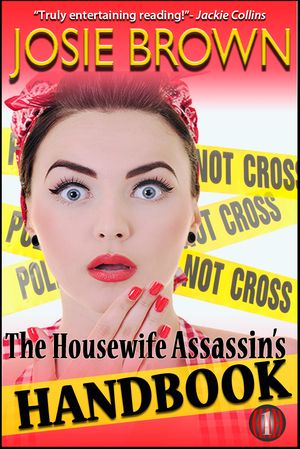
The Housewife Assassin's Handbook cover image

The Housewife Assassin’s Handbook cover image

A few months back I read and reviewed the fabulous Housewife Assassin’s Handbook by Josie Brown. Today I’m thrilled to be welcoming Josie to the CTG blog to talk about the Housewife Assassin Series …

So tell me, how did you get the idea for the Housewife Assassin’s Handbook?

Wow, great question! And believe it or not, no one has ever asked me that before. Go figure. 

It was several years after 911. Still, as a mother, that event had such an impact on me–really, on everyone, parent, child or whomever–

So much so, that I felt…well, helpless.

When that happens, I figure a way in which to turn it around. In this case, I asked myself:  What could a parent–a mother–do to not only protect herself AND her children, but life she thought she’d secured?

That’s how Donna Stone* was born.

And what readers discover is that Donna doesn’t know how close the threat is to her.

Seriously, the day I came up with her and the plot for Book 1 — The Housewife Assassin’s Handbook  — I got chills. It was a hot day in August, and yet I got CHILLS. 

I called an author friend of mine, Karin Tabke, and I said, “Here’s a story I want to write…”

After I told her the plot, she said, “Oh my God. It’s the ultimate woman’s mission: to protect her loved ones–and the ultimate response. Now, write it.”

So I did.

But when I presented it to my first literary agent, he said, “I don’t get it.”

Immediately I got another agent. 


Your main character, Donna Stone, is fabulously dynamic and gutsy. When you created her, did you model her on any actors or people you know?

Ha ha! Personally, I feel there are several actresses who could play her. EMBRACE her gutsiness. I’m happy to say  a television producer feels the same way, and is currently shopping it around. She’s as excited about it as me. So fingers crossed, others will buy into Donna’s world. 

Tell us a little about your writing process, do you plot out the story events before sitting down to write, or do you dive right in and see where the story takes you?

I come up with an overall premise. And then I do the heavy lifting and actually do a full chapter-by-chapter outline. In doing so, I throw “plot spaghetti” at the proverbial wall. In other words, I do a lot of what ifs: 

How will Donna get out of this tight spot, or another?

How will her relationship change–and grow–with Jack?

What threat will the Quorum through their way?

How will Donna’s children survive a world that is more dangerous than anyone realizes?

I endeavor to move her journey forward in each book. I truly am honored when readers appreciate her story.

How do you organise your writing day: do you have a favourite time and place to write?

I write on a netbook, which allows me to roam all over my home and garden (I live in San Francisco, so I’m drawn to the sun, like a moth to a flame), or to a coffee shop, with one of my writer pals (COUGH! — Kate Perry — COUGH!)

What tips and tricks have you learnt that you’d like to pass on to aspiring crime and thriller writers?

I’m so happy to do so. Here’s the one that counts the most:

Don’t be afraid to write the book YOU’D want to read. You are the best judge of what you should be writing: not an editor, not an agent, not a trend, not your mother. Not even your best friend. YOU. 

During NaNoWriMo, I put up thirty-one tips, one for each day, for other authors, both aspiring and published. We all need to remember why we put in the hard hours–and our hearts on ours sleeves-as we scribble away. I wanted to share my thoughts on the industry, now some seven years and twelve books later.

And what’s next for you, have you got a novel in progress at the moment and, if so, when will we be able to read it?

Vacation to Die For cover image

Vacation to Die For cover image

This month in fact, I’ll be releasing a one-off The Candidate, a political thriller. Or as I put it: SCANDAL meets HOMELAND when a political campaign manager discovers that Washington’s power elite have embroiled his presidential candidate in a plot involving an imminent act of terrorism on US soil.

And of course, Donna is back in August, in The Housewife Assassin’s Vacation to Die For

Also I invite your readers to enter my contest (which is running only through August 2nd) for a $100 gift card from the bookstore of their choice. It’s my way of thanking readers for appreciating the fourth book of the series, The Housewife Assassin’s Relationship Survival Guide.

Thanks, Crime Thriller Girl, for sharing me with your friends and readers! — Josie

A huge thank you to Josie Brown for dropping by the blog, and do make sure you follow the links above to pop on over to her website and enter the fantastic contest that’s running to 2nd August. 

Author Interview with Chris Nickson

Chris Nickson

Chris Nickson

Today, I’m delighted to welcome Chris Nickson, author of the historical crime series featuring Constable of Leeds, Richard Nottingham, to the CTG blog.

Chris, your new book, At the Dying of the Year, is your fifth novel in the Richard Nottingham series. What was your inspiration for creating a historical crime series?

When I began it was simply a book, not series. It took me a long time to find a publisher for The Broken Token, until I found Lynne Patrick at Crème da la Crime, who liked the book and wanted to put it out. I’d published plenty of non-fiction books before, but a novel, that was something altogether different. When she said, ‘What’s next?’ I had to think seriously. Continuing the series seemed the natural option. These characters had more to tell me, I wanted to know more about their lives. Then Lynne sold Crème to Severn House and they wanted the next one, Cold Cruel Winter. From there it just continued. Richard Nottingham, John Sedgwick, Rob Lister, their families have become friends now. There really was a Richard Nottingham who was Constable of Leeds from 1717-1737, although the role would have been more ceremonial than my character.

The series is set in 1730s Leeds, England, what research do you do to ensure the historical setting feels so real?

I’ve always been a history buff, but Leeds history – the history of my hometown – wasn’t something I really began to discover until I was living in Seattle! I’d go back to Leeds every year and buy the history books on the city that appeared. Then, when eBay began I could find some rarer, older books on there at low prices. The big problem was the postage costs, of course…Leeds also has a good historical society, which has their own publications and I’ve acquired some of them and been in their library. Essentially I just keep reading and learning more and more. I find it fascinating. I focus on the ordinary people, rather than the rich, and their lives, of course, aren’t documented. But what I try to do is make it an immersive experience, so people feel they’ve walked those streets. Things like, dirt, noise and smell, the things we don’t tend to think about, are important.

At the Dying of the Year centres around a spate of child murders and is your grittiest novel to date, what prompted you to tackle that subject matter? 

A couple of the books have dealt with the vulnerable, and Richard Nottingham – my Richard Nottingham, anyway – was a homeless child, living on the streets for part of his youth. This is an extension of that, in many ways. These are the children with no families, for one reason or another, the ones who’ve always been so easily exploited and used. The theme of abuse and murder of these children was meant to shock and to make people think, as is the idea of the rich protecting their own, this cloud of silence. I completed the book around July or August last year. A month of two later the Jimmy Savile scandal broke, and again, there’s been this conspiracy of silence around abuse by the rich and powerful. I believe that kind of thing has always existed. The book wasn’t written to take advantage of that situation, but more to force readers to think.

It was emotionally draining to write, incredibly so. Not just because of the children and the frustrated attempts to bring the murderers to justice, but also what Nottingham suffers along the way – in many respects that was the hardest thing of all, although I’ll say no more, as it’ll be a spoiler.

As to it being gritty, that’s a word that brings out mixed emotions in me. I prefer to think of it as dark, probably the darkest yet. But fiction is about conflict, and often conflict can take you to very dark places, inside and outside yourself. I hope the characters and the situation seem real. I’ve always tried to show that the essence of human nature doesn’t change over time. The setting might be historical but I try to make it some that readers can understand these characters and their situations. There are more shades of grey in this book than in previous ones – the lines between good and bad have become more blurred.

 Tell us a little about your writing process, do you plot out the story events before sitting down to write, or do you drive right in and see where the story takes you?

I know where the tale begins and I have a rough idea where it ends, but that’s it. From there I’m simply writing down the movie in my head, what the characters say or do. Sometimes I can see ahead a ways, sometime it’s like moving through a heavy thicket. At times they surprise me – I didn’t expect that! – but this process of discovery is one of the joys of writing to me. The family lives of my main characters are as important as the mystery. My father, who was a writer, told me, ‘Create a good character and people will follow them anywhere.’ That’s what I try to do, create good characters that people care about. Even Leeds is a character in these books.

How the story gets from A to Z is a journey it can be difficult to undertake, but it’s one I wouldn’t miss.

What have you learnt through writing your series that you’d like to pass on to aspiring crime thriller writers?

I’m not one for giving much advice, but I would say a writer has to be disciplined. That means writing every single day. The concept of holiday doesn’t exist. It can be 500 words or 1000, over time it mounts up. Care about what you’re writing. If it’s not tearing you apart, you’re not going deep enough. When you’ve finished a draft, put it aside for a month before going back to it so you can look at it objectively. That said, everyone has their own way or working, and who am I to say that someone else’s method isn’t better for them than mine.

Keep faith with your work. If you really believe you have something special, keeping trying it with agents and publishers. And as you are, keep writing the next book. This is a craft just as much as it’s an art.

And what’s next for you, are you planning your next novel, or already well into the writing of it?

2013 is a very busy year for me. At the Dying of the Year came out at the end of February, and March saw the release of a very different book, Emerald City, as an ebook and audiobook (narrated by Lorelei King, who’s won awards for her work and narrates the Janet Evanovich series). It’s still a mystery, but set in Seattle in 1988, in the music scene there – I also work as a music journalist, and have for years. Then, in September, the sixth Richard Nottingham book will be published; that one’s called Fair and Tender Ladies. To round things off, The Crooked Spire, set in Chesterfield in 1361 around the building of the spire on the church there, will be out in November.

I know that seems an awful lot (and yes, it is an awful lot) but it’s the culmination of work over a couple of years that’s just all come together. Writing is what I do. I’m lost without it…

And I’m currently writing another book set in Leeds, this time in the Victorian era, against the backdrop of the Gas Strike of 1890, a famous victory for the workers. A mystery, of course, as I like the moral framework it offers, but with a mix or murder and radical politics, how can I say no? The main female character, Annabelle Atkinson, first appeared in a short story I write before Christmas and won’t go away. She’s based on a female relative from a century ago, who started out as a maid in a pub in Leeds, married the owner, took over the business when he died. She also opened some bakeries around town and lent money at no interest to local poor people. An interesting, strong woman who’s set to marry my main character, Inspector Tom Harper of Leeds Police. When it’s done all I have to do is hope someone wants to publish it!

Wow, it certainly sounds like you’re busy! A huge thank you for dropping by the CTG blog and allowing us to grill you.

To find out more about At the Dying of the Year, and Chris’ other books, pop on over to his website at http://chrisnickson.co.uk/