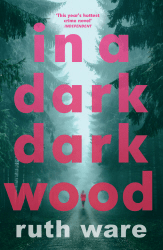
CTG Interviews: Ruth Ware about her psychological thriller IN A DARK, DARK WOOD

unnamed

The night I called Ruth Ware was suitably eerie. Torrential rain and high winds were causing the branches of a tree to bash the window I was sitting next to, and the security light outside kept going on and off ‘for no reason’. All in all it seemed a fitting context for the call to discuss Ruth’s brilliant psychological thriller IN A DARK, DARK WOOD.

If you’ve not read this fantastic thriller, here’s the blurb to give you a flavour: “Leonora hasn’t seen Clare for ten years. Not since Nora walked out of school one day and never went back. Until, out of the blue, an invitation to Clare’s hen do arrives. Is this a chance for Nora to finally put her past behind her? As the champagne corks pop, and the secrets begin to flow, and a hen do for an old school friend begins to take a sinister turn …”

So, to the interview …

I found Nora a hugely compelling character – likeable, genuine, and self-doubting, yet refusing to be beaten by everything thrown at her. What was your jumping off point for creating her?

I like to think of Nora as being vulnerable on the outside but with a core of steel on the inside. The idea for IN A DARK, DARK WOOD came about from a conversation with a friend. They said they’d never read a thriller set on a hen night, and I knew instantly that I wanted to write that book (and luckily they didn’t!).

In the beginning I knew that Nora would struggle with accepting the invitation, and wanted to create an atmosphere of claustrophobia and threat. I think most people, unless they’re real extroverts, find being in a group of relative strangers for a long period tiring. I wanted to bring this out.

Through working with my editors I explored the reclusive, introverted side of Nora’s character, but I also strongly wanted to keep an ‘everywoman’ feel to her. I felt this was important, and it lets the reader ‘tread the path’ with the character – which is something I enjoy to do in a thriller.

The book tells both the modern day action of the hen party, and the past events that led to Nora and Clare not speaking for ten years. Did one of these timelines come to you before the other, or did they develop alongside each other as you wrote?

I always had the sense that there was a lot of history between them, you know the weight of shared experience – good and bad – you have with people you’ve known a long time. And I knew there was a big reason in their past that made Nora reluctant to accept the invitation.

I knew the incident where things all kick off would happen a long way into the book, so the hospital timeline and hen night timeline were really important to get all the players in place first, and for the reader to get to know them. I always find it more interesting to start from a place where you know something dreadful has happened – it’s an easy way to show something bad is coming, without having to do a lot of tedious signposting.

What I especially loved about the book was the uneasy dynamic between the friends at the hen party, and that they felt so incredibly real. When you’re writing do you use actors (or real people) when you picture your characters and how they’ll react in a scene?

I tend to keep everything in my head. I do keep a few notes on basic stuff – eye colour, height if that’s relevant to the plot – but that’s it really. There are quite a few scenes where the guests at the hen are all together, but without any other characters, so that made it easier to flesh them out. Also, the set up [of them meeting on the hen] meant they could introduce themselves, and allowed them to talk about themselves.

I’ve been on a few hens, and I think you start to notice archetypes. In fact, I’ve probably been all of them at one time or other over the years – the organiser, the bride, the new mum – so you could say the characters are all different aspects of me. The alpha girl was also a lot of fun to explore!

The glass house in the forest is chillingly cut off from civilisation, yet the glass allows those outside to see in. It’s creepy and adds an added layer of tension to the story – what gave you the inspiration to create such a setting?

I’ve always been fascinated by forests. Pine forests are always so dark, because they’re evergreen and never lose their leaves. And I love the Scottish forests that go on and on for miles. So setting the story in a forest was a bit of wish fulfilment!

The glass house I pinched from all those American horror films – the ones where the people are going round the house checking all the doors are locked, but you know it’s too late! I thought about the time of day, as it gets dark, when windows stop being a way of looking out, and become a way for people to look in – that’s when I close the curtains! But when I see houses with huge walls of glass, like on Grand Designs, I’ve often wondered what it would be like to live in a house like that – where you can’t have curtains.

One of the themes of the book is exposure – exploring the face we choose to present to others and the face we choose to hide. In a way, the glass house is like a physical representation of this.

IN A DARK, DARK WOOD has been likened to the sort of locked room mystery Agatha Christie would write if she was writing crime novels today. Are you a Christie fan, and what other crime novels do you count among your favourites?

Yes, I’m a Christie fan, although I didn’t set out to write that type of novel – my agent was the first person to say the story was like a modern Agatha Christie. I read a lot of Christie’s books when I was a teen. She was a great plotter and I’ve always loved books which have intricate workings and red herrings. Gone Girl is a lot like that – the plot locks together in a really satisfying way.

I worked in the publishing industry for a long time so I got to read a wide variety of genres and authors, and I still have a magpie reading habit now! I’ve just read the non-fiction book that the movie Pitch Perfect was based on – which was great. I love psychological thrillers – books like Erin Kelly’s The Poison Tree, Clare Mackintosh’s I Let You Go, and Tammy Cohen’s When She Was Bad (which is incredibly scary!)

What would you say your favourite part of the writing process is?

I love the ideas stage, that point where you’re nudging at an idea and letting in take shape. It’s like an unscratched lottery ticket – it could be the most wonderful book ever written. It’s like being in the early stages of a love affair – full of possibility.

IN A DARK, DARK WOOD is your debut thriller, can you tell us a bit about your journey to publication?

I wrote YA books before, but this feels very different – the types of events you do, the amount of exposure you get. It’s very nerve racking, putting yourself out there, and it definitely felt like a risk, trying something out of my comfort zone, but I’m so glad I did. If I’d sat down to write a fantasy wish list, then I think the top three things would have been getting onto the New York Times Best Seller List, the Sunday Times Best Seller List, and achieving a film deal. I would have been over the moon to get any of those – I still can’t quite believe that IN A DARK, DARK WOOD has done all three.

You mentioned the film deal, can you tell us a bit about that?

Yes, it’s still at an early stage at the moment, but very exciting. It’s been bought by New Line (part of Warner Bros) and Reese Witherspoon, who produced Gone Girl, is attached to the project.

Will you be involved in the writing of the screenplay?

A part of me would love to be involved, but I know about books not film, so it’s best to leave the screenplay to those in the film industry I think.

And how have things been since IN A DARK, DARK WOOD was announced as one of the Richard & Judy Book Club Spring Reads?

Surreal! I knew when it was on the shortlist, and that was really nerve racking. Being chosen is a dream come true. The Richard & Judy Book Club persuades people to take a punt on an author they’ve not heard of, because it’s Richard and Judy saying ‘try this, you might like it’. It feels incredibly special to be part of it.

And, finally, what does the rest of the year have in store for you?

Well, I’ve just finished the structural edits on my next book. It’s called The Woman in Cabin 10, and I’ll be spending the next few months doing the copy edits and proof reading on it. Then I’ll start writing the third book. I’ve got a skeleton outline of the plot already, and a cast of characters – I’m in the love affair stage of writing!


A huge thank you to Ruth Ware for letting me interrogate her for the CTG blog.

The fabulous psychological thriller IN A DARK, DARK WOOD is out now. You can buy a copy from Waterstones here  and from Amazon here 

Be sure to check out Ruth’s website at www.ruthware.com and follow her on Twitter @RuthWareWriter

And you can read my review of IN A DARK, DARK WOOD here 
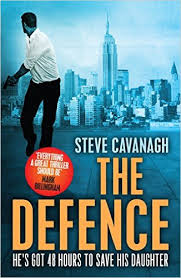
 

CTG Reviews: THE DEFENCE by Steve Cavanagh

Unknown

To celebrate the paperback release of THE DEFENCE I’m re-running my review of this fabulous thriller …

What the blurb says: “Eddie Flynn used to be a con artist. Then he became a lawyer. Turned out the two weren’t that different.

It’s been over a year since Eddie Flynn vowed never to set foot in a courtroom again. But now he doesn’t have a choice. Olek Volchek, the infamous head of the Russian mafia in New York, has strapped a bomb to Eddie’s back and kidnapped his ten-year-old daughter, Amy. Eddie only has forty-eight hours to defend Volchek in an impossible murder trial – and win – if he wants to save his daughter.

Under the scrutiny of the media and the FBI, Eddie must use his razor-sharp wit and every con-artist trick in the book to defend his ‘client’ and ensure Amy’s safety. With the timer on his back ticking away, can Eddie convince the jury of the impossible? Lose this case and he loses everything.”

The Defence is hands down one of the best legal thrillers I’ve read in years. Eddie Flynn – con artist turned lawyer – is haunted by the last case he took to trial. He’s turned his back on the legal profession, taken up drinking and become estranged from his wife and child. Things seem pretty bad, but as the reader discovers from the very start of The Defence, things are about to get much, much worse for Eddie Flynn.

With his daughter abducted, and a bomb strapped to his own body, Eddie is forced to represent Olek Volchek – a man he has no doubt is guilty of murder. In order to buy enough time to figure a way out of the terrifying situation he’s in, Eddie has to draw on all his skills – both legal and criminal – and his friends on both sides of the law, as he gambles against increasingly higher risks in his attempt to get his daughter safe. Smart, courageous and driven by the need to protect his young daughter, Eddie makes for a compelling character – someone you can really root for.

This rapid-paced, page turner has bucket-loads of action and piles of sky-soaring tension.

A fabulous must-read – highly recommended for all thriller fans.

To find out more about Steve Cavanagh and his books hop on over to his website at stevecavanaghbooks.com and be sure to follow him on Twitter @SSCav

And to buy THE DEFENCE from Amazon click here or buy it from Waterstones via the link here

CTG Interviews: David Young debut author of Stasi Child

image001

In celebration of STASI CHILD being published in paperback by Twenty7 Books today, I’m re-running my interview with author David Young. STASI CHILD is David’s debut novel and the winner of the PFD 2014 Crime Prize. Here’s what he told us when he popped along to CTG Towers to chat about the book, his writing process, and his route to publication …

Your debut, STASI CHILD, is out this month. Can you tell us a bit about it?

It’s a crime thriller – part historical crime, part police procedural, part thriller, and I guess a dash of Cold War politics to boot. What it’s not is a traditional Cold War spy thriller – although it’s set in the era of the Cold War. It tells two parallel stories: one in third person past through the eyes of a female detective in the state police, Oberleutnant Karin Müller, who’s trying to solve a gruesome murder but has to battle obstacles put in her way by the secret police, the Stasi. The other, in first person present, follows the life of a 15-year-old female inmate of a communist Jugendwerkhof – which loosely translates into ‘youth workhouse’ or reform school. The two stories eventually collide in a climax on the snowy slopes of northern Germany’s highest mountain, the Brocken, near the border with the west. I think fans of Tom Rob Smith’s Child 44 would enjoy it, and also those who read Anna Funder’s non-fiction account of the Stasi’s methods, Stasiland.

STASI CHILD is set in East Germany in 1975. What drew you to writing about this moment in history?

No-one had yet written a crime series set in East Germany – at least not in English as the original language. So I thought it filled a gap in the market, was something a bit different and – given the success of books like Child 44 and AD Miller’s Snowdrops – could prove popular. The idea originally came from reading Stasiland while on a self-booked (and at times chaotic) mini-tour of eastern Germany with my indiepop band about seven years ago. I was fascinated that you could still feel the ghost of the communist east even though the Berlin Wall had been torn down, at that time, twenty years earlier. Müller’s office is underneath Hackescher Markt S-bahn station – where we played our Berlin gig. So I wanted to choose a time when East Germany was perhaps at its most confident, and yet with enough years to fit a series in, if the first book sold well.

Given the modern historical setting, how did you go about researching the book?

A mixture of things, really. Watching films like The Lives of Others and Barbara, episodes of the original East German detective show, Polizeiruf 110, and the current German TV series set in the period, Weissensee – which is a great watch but inexplicably, and annoyingly, only has English subtitles on the second of its three series so far. I also read a lot of memoirs of inmates of Jugendwerkhöfe, that sort of thing, and true crime books by former GDR detectives. I don’t speak German – so it was a case of tearing out pages, feeding them into an OCR programme via a scanner, and then putting it all through Google Translate! What came out was barely intelligible, but you could pick out the facts even if the actual storytelling was mangled beyond repair. I also had great fun visiting all my locations, and interviewing former East German detectives (with the help of translators). So I loved the research, and I’m itching to get back out to Germany again. I also keep telling myself I must learn German!

You recently completed the City University MA in Creative Writing (Crime Fiction), how do you think this helped you on your journey to publication?

I think it was the key to it, really. We had some great tutors who were all published crime writers: Claire MacGowan, Laura Wilson and Roger Morris were mine – although William Ryan, who writes in a similar genre to me, has now joined. Roger introduced me to Peter May’s Lewis trilogy, and the structure of Stasi Child – with its twin narrative – is quite similar to May’s The Lewis Man. Claire nurtured the original idea, Laura worked on the nuts and bolts as my main novel tutor, and then both of them read and fed back on the full draft. The result was that Stasi Child won the course prize sponsored by the literary agents, PFD, and by the shortlisting stage a young PFD agent, Adam Gauntlett, had already declared his hand in wanting to represent me.

image006

So, what’s it like having your debut novel published? What’s your best moment so far?

Because my publishers Twenty7 (part of the Bonnier group) are e-book first, the biggest thrill was getting a physical copy of the proof. It’s got a slightly different cover, very minimalist, which I love. I’ve only got one copy, though, and the publishers have run out now so I guard it with my life. And then in the last few days [after the eBook publication], Stasi Child became the fourth bestselling Kindle book in the UK, and the number one bestseller in Historical Fiction – for ebooks and paperbacks. It’s fallen back since, but that was a champagne moment, figuratively sitting on top of luminaries such as Robert Harris, Hilary Mantel …well, everyone who’s anyone in historical fiction. Ha! It’ll probably never happen to me again. We made sure we kept the screenshots of the charts!

STASI CHILD is the first in the Karin Müller crime series, can you tell us anything about the next book?

Yes Karin returns, but this time in the model East German new town of Halle-Neustadt, where underneath the ideal communist city gloss, dark things are happening a few months after the closure of the Stasi Child case. The Stasi are heavily involved again, and we also learn more about Karin’s past – with several surprises in store for her. It follows the same twin narrative format, but the second narration this time is darker, more disturbed, and unreliable. In fact the whole thing is darker and more disturbed, which is slightly worrying as most people seem to think Stasi Child’s about as dark as you can get.

And, finally, what does the rest of the year have in store for you?

Initially, I’ll be concentrating on promoting the Stasi Child. Then it will be a combination of reshaping book two with my editor at Bonnier, and researching book three with a trip to Germany. Oh, and I might finally get around to starting to learn German … but no promises!


You can find out more about David by checking out his website at www.stasichild.com and follow him on Twitter @djy_writer

Stasi Child is a great read, perfect for fans of historical crime fiction. Here’s the blurb: “East Berlin, 1975: Questions are dangerous. Answers can kill. When murder squad head Oberleutnant Karin Müller is called to investigate a teenage girl’s body found riddled with bullets at the foot of the Berlin Wall, she imagines she’s seen it all before. But when she arrives she realises this is a death like no other: it seems the girl was trying to escape – but from the West.

Müller is a member of the People’s Police, but in East Germany her power only stretches so far. The Stasi want her to discover the identity of the girl, but assure her the case is otherwise closed – and strongly discourage her asking questions. The evidence doesn’t add up, and it soon becomes clear that the crime scene has been staged, the girl’s features mutilated. But this is not a regime that tolerates a curious mind, and Müller doesn’t realise that the trail she’s following will lead her dangerously close to home.

The previous summer, on Rügen Island off the Baltic Coast, two desperate teenage girls conspire to escape the physical and sexual abuse of the youth workhouse they call home. Forced to assemble furniture packs for the West, the girls live out a monotonous, painful and hopeless life. Stowing away in the very furniture they are forced to make, the girls arrived in Hamburg. But their celebrations are short-lived as they discover there is a price on freedom in the DDR…”

STASI CHILD is out now. To buy a copy via Amazon click here

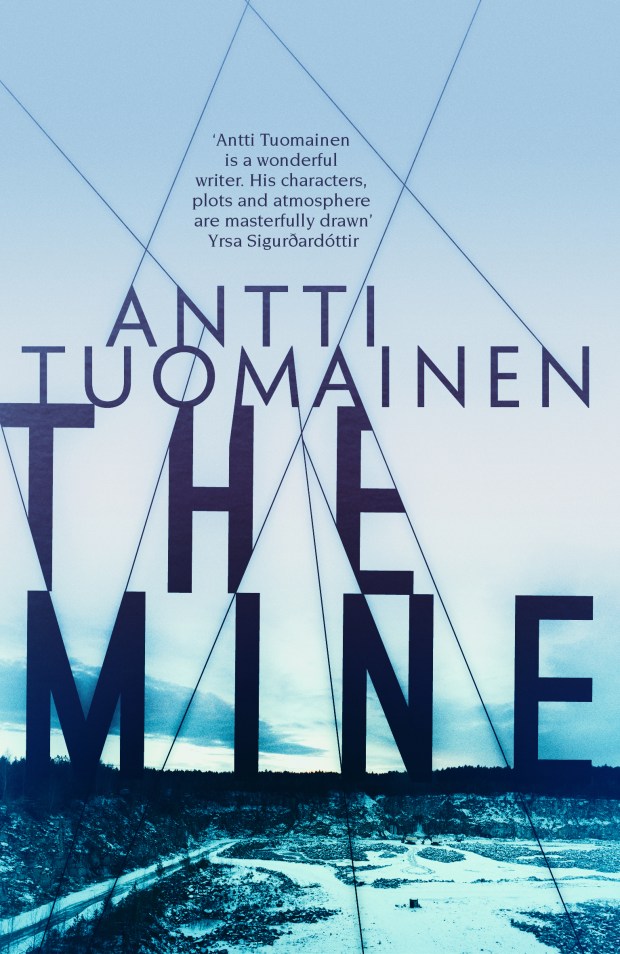
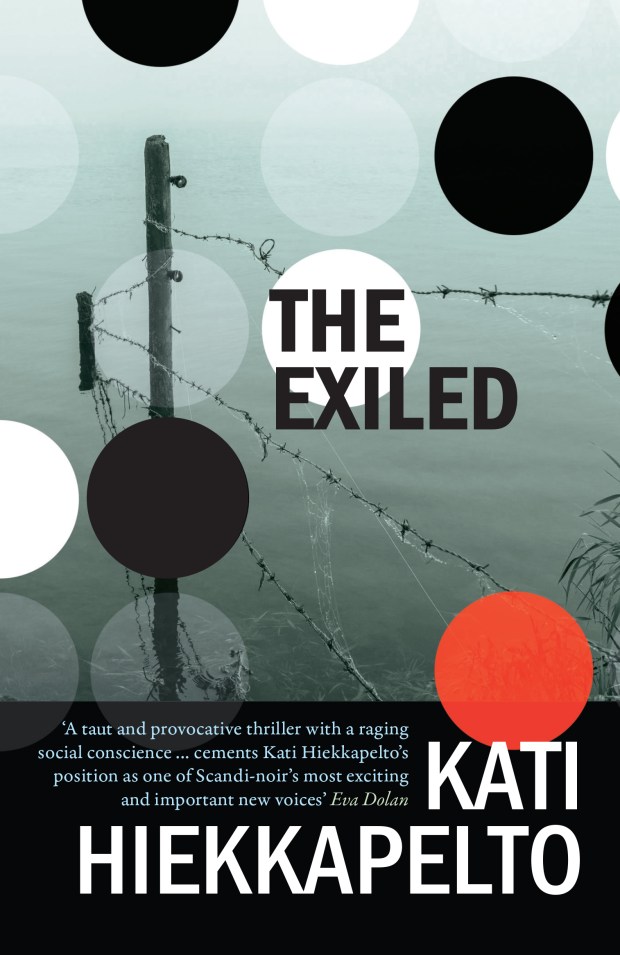
COVER REVEAL: THE MINE by Antti Tuomainen and THE EXILED by Kati Hiekkapelto

I’ve got a real treat for you today!

Not one but two gorgeous cover reveals for the latest books of two of Orenda Books brilliant Finnish crime writers – THE MINE by Antti Tuomainen and THE EXILED by Kati Hiekkapelto.

Both books will be published in paperback on 13th October 2016, but if you just can’t wait that long you’ll be able to get your hands on the eBooks in August.


First reveal … THE MINE by Antti Tuomainen

The Mine

Here’s what the blurb says: “A hitman. A journalist. A family torn apart. Can he uncover the truth before it’s too late? 
In the dead of winter, investigative reporter Janne Vuori sets out to uncover the truth about a mining company, whose illegal activities have created an environmental disaster in a small town in Northern Finland. When the company’s executives begin to die in a string of mysterious accidents, and Janne’s personal life starts to unravel, past meets present in a catastrophic series of events that could cost him his life.
A traumatic story of family, a study in corruption, and a shocking reminder that secrets from the past can return to haunt us, with deadly results … The Mine is a gripping, beautifully written, terrifying and explosive thriller by the King of Helsinki Noir.”


Second reveal … THE EXILED by Kati Hiekkapelto

The Exiled

Here’s what the blurb says: “Murder. Corruption. Dark secrets. A titanic wave of refugees. Can Anna solve a terrifying case that’s become personal?
Anna Fekete returns to the Balkan village of her birth for a relaxing summer holiday. But when her purse is stolen and the thief is found dead on the banks of the river, Anna is pulled into a murder case. Her investigation leads straight to her own family, to closely guarded secrets concealing a horrendous travesty of justice that threatens them all. As layer after layer of corruption, deceit and guilt are revealed, Anna is caught up in the refugee crisis spreading like wildfire across Europe. How long will it take before everything explodes?
Chilling, taut and relevant, The Exiled is an electrifying, unputdownable thriller from one of Finland’s most celebrated crime writers.”

So put the date in your diary! You’re not going to want to miss these new novels by these two great Finnish crime writers.


When CTG went to … David Young’s Stasi Child book launch

IMG_2684

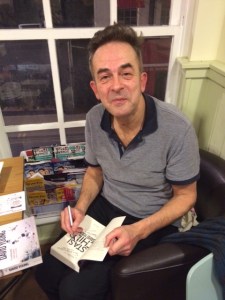
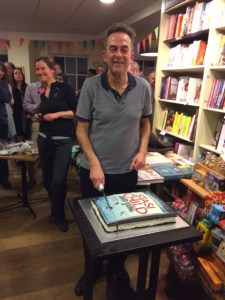
Last week I went along to Waterstones Richmond to the book launch of debut crime writer, and fellow City University Crime Writing alumni, David Young. David’s fantastic historical crime thriller, Stasi Child, is published by Twenty7 Books next week. The launch was a packed event, with lots of food, drink and even a fabulous book-shaped cake.

As part of the event, David read an extract from Stasi Child, and was then kept busy at the signing table for much of the evening.

IMG_2682

Stasi Child is out on the 11th February.

You can read my review of it here and be sure to drop back on Thursday when I’ll be posting my interview with David.

To pre-order Stasi Child from Waterstones click here

To pre-order Stasi Child from Amazon (or buy the eBook) click here


CTG Reviews: STASI CHILD by David Young

image001

The fabulous STASI CHILD, written by debut author David Young, is published in paperback next week on the 11th February.

To celebrate, I’m re-running my review …

What the blurb says: “East Berlin, 1975: Questions are dangerous. Answers can kill. When murder squad head Oberleutnant Karin Müller is called to investigate a teenage girl’s body found riddled with bullets at the foot of the Berlin Wall, she imagines she’s seen it all before. But when she arrives she realises this is a death like no other: it seems the girl was trying to escape – but from the West.

Müller is a member of the People’s Police, but in East Germany her power only stretches so far. The Stasi want her to discover the identity of the girl, but assure her the case is otherwise closed – and strongly discourage her asking questions. The evidence doesn’t add up, and it soon becomes clear that the crime scene has been staged, the girl’s features mutilated. But this is not a regime that tolerates a curious mind, and Müller doesn’t realise that the trail she’s following will lead her dangerously close to home.

The previous summer, on Rügen Island off the Baltic Coast, two desperate teenage girls conspire to escape the physical and sexual abuse of the young workhouse they call home. Forced to assemble furniture packs for the West, the girls live out a monotonous, painful and hopeless life. Stowing away in the very furniture they are forced to make, the girls arrived in Hamburg. But their celebrations are short-lived as they discover there is a price on freedom in the DDR …”

STASI CHILD is David Young’s debut novel and the first in the Oberleutnant Karin Müller series.

Striving for justice whatever the cost is second nature to Müller. She’s a determined, strong and courageous detective, following the evidence and questioning anomalies even when warned off by some very powerful and threatening people. Defying instructions, she leads her team to find the truth hidden beneath the propaganda and cover-ups. But despite her hard-line stance in her job, in her personal life her relationships are imploding and as she juggles the conflict at home with an increasingly tense situation at work, it’s not long before Müller herself could be in danger.

Chillingly authentic and set in our recent-past, this pacey page-turner of a police procedural is filled with fear, power struggles and intrigue making it one hell of a debut novel.

To find out more about David Young follow him on Twitter @djy_writer

To pre-order the paperback (or buy the kindle edition) of STASI CHILD from Amazon click here

To pre-order STASI CHILD from Waterstones click here

The FEVER CITY Blog Tour: CTG Interviews debut author Tim Baker about FEVER CITY

 41WWhrlTU7L._SX315_BO1,204,203,200_

Today I’m delighted to be hosting a tour stop on Tim Baker’s FEVER CITY Blog Tour. Tim’s dropped by the CTG blog to answer a few questions about this stunning noir thriller …

Welcome, Tim! Your debut novel FEVER CITY was published in January, can you tell us a bit about it?

FEVER CITY is a propulsive, seat-of-your-pants noir thriller set in the 1960s with an important contemporary component set in 2014.

There are three separate narratives, each with its own central mystery. As the novel progresses, these three stories begin to converge then intertwine, dovetailing at the end into a resolution of all three mysteries.

The first narrative features a private investigator, Nick Alston, who is brought in to assist the police in their search for the kidnapped child of America’s richest and most hated man.

The second concerns a professional contract killer, Hastings, who is recruited into an attempt to assassinate President Kennedy and who decides to risk his life to sabotage the hit.

And the third concerns Nick’s son, Lewis Alston, who is in Dallas in 2014 to interview JFK conspiracy nuts for a book he’s doing on the Kennedy Brothers and who stumbles across information that could connect his own father to the assassination of President Kennedy.

I’m a big fan of the noir thriller. Can you tell me about what attracted you to writing this kind of story?

I’m also a huge fan of the noir thriller. What I love most is the moral ambiguity and the elevated dramatic stakes, as well as the power of the genre’s central conceit – which is that we are all prisoners of the mistakes of our past. Noir is always character-based storytelling and so tends to occupy a richer, more emotionally complex terrain than ordinary thrillers; a landscape of nuance, despair and danger.

In FEVER CITY you blend historical facts – like the assassination of JFK – with the fictitious storyline. How did you go about researching the era and places featured?

It was very important for me to get all the background historical elements right – whether they were concerning JFK and the documented events leading up to his assassination, or portraying the real-life figures who appear as secondary characters, such as Howard Hughes, Marilyn Monroe or J Edgar Hoover.

Once I had that historical architecture in place, I set about shaping mood and nuance, often by withholding specifics and implying ambiance instead of trying to build it.

As far as place is concerned, I believe that tone is the best way to capture the kind of rich period atmosphere I was after, rather than merely layering factual details down one upon another.

How would you describe your approach to writing – do you dive right in, or plot everything out in detail first?

Normally I begin with a strong sense of place. I try to write a locale in as rich and as vivid a way as possible, so that I feel as though I have entered that terrain; as though I inhabit it.

Once I’ve accomplished that, a certain tone emerges, and with it a voice.

That’s the pivotal moment for me – when I discover that voice. Sometimes it never arrives, and I have to abandon the story, but when I do manage to find it, I get caught up in the voice and just start writing.

I never plot the story at the beginning. Instead I see myself as embarking on a voyage of discovery, knowing there will be surprises along the way and trying not to anticipate them.

After completing several drafts, I begin to step back and take a look at the plot from the point of view of story structure. This is when I try to sharpen details and ensure that the story is both coherent and structurally sound without being obvious. My editor at Faber, Angus Cargill, taught me an enormously important lesson about the power of keeping your writing implicit.

FEVER CITY is your debut novel. Can you tell us a bit about your route to publication?

It was in 2011 that I came up with the idea to combine a fictitious kidnapping with a momentous historical event, the assassination of JFK.

And I also wanted to layer in a contemporary domestic noir style narrative into the story that would give resonance to one of the themes of FEVER CITY, which was that the forces behind JFK’s assassination are the same forces that nearly destroyed the world economy in the 2008 Financial Crisis.

It was an ambitious and complex project, and the book took three years to write, after which I sent it out to agents on both sides of the Atlantic.

The first offer of representation came from a young agent, Tom Witcomb, at Blake Friedmann, and his offer put all the other agents on alert. Many came back requesting I give them additional time to consider the manuscript.

But in the meantime, Tom was already busy outlining his vision of the book and the kind of edits he would suggest, and I just found his enthusiasm contagious and knew he would be able to transfer that genuine passion to potential publishing houses.

Tom put the manuscript out to auction and less than three days, we were excited beyond words to accept Faber’s pre-empt. When I had seen the list of publishers Tom was sending the book to, the one I really wanted far more than any other was Faber and Angus Cargill. I was my dream choice and I was over the moon to find a home with them.

And, finally, what does the rest of 2016 have in store for you?

I’m just completing a thriller set in Mexico in 2000 about the battle for justice of two women aligned against the forces of corrupt political institutes, vicious sweatshop owners, and narco terrorism. I’m also working on a first contact novel set in 19th Century Australia, and the sequel to FEVER CITY. And if all goes well, one of my screenplays will be going into production in September in Brazil.


A big thank you to Tim Baker for dropping by the CTG blog today and talking about his debut novel FEVER CITY.

Here’s what the blurb says: “Nick Alston, a Los Angeles private investigator, is hired to find the kidnapped son of America’s richest and most hated man. Hastings, a mob hitman in search of redemption, is also on the trail. But both men soon become ensnared by a sinister cabal that spreads from the White House all the way to Dealey Plaza. Decades later in Dallas, Alston’s son stumbles across evidence from JFK conspiracy buffs that just might link his father to the shot heard around the world.”

FEVER CITY by Tim Baker is published by Faber & Faber and out now. You can buy it from Amazon here

Be sure to follow Tim on Twitter @TimBakerWrites

And check out all the other fabulous tour stops on the FEVER CITY Blog Tour …

BT Fever City_zpsjv7v2qsl

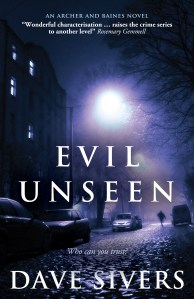
The EVIL UNSEEN Blog Tour: CTG Reviews EVIL UNSEEN by Dave Sivers


eBook_Cover

What the blurb says: “EVEN THE DEAD HAVE THEIR SECRETS. A reformed teenage gang leader is gunned down in cold blood and an angry DS Dan Baines, who knew the victim well, reckons he knows who is responsible. But his boss, DI Lizzie Archer, wants to know the identity of the mystery man who died with him – and whether he was intended victim or innocent bystander. When an officer from the National Crime Agency turns up and declares the case off limits to Archer and her team, it’s clear that there is more going on than meets the eye. Several conflicting agendas are in play and the body count is rising. And Archer and Baines realise that the only people they can truly trust are each other.”


When two people are gunned down in the street in the market town of Aylesbury, DS Dan Baines and his boss, DI Lizzie Archer, are determined to find who has brought gun crime to the Buckinghamshire town. But the case is more than just work for DS Baines, he has been something of a mentor to the younger victim, and the loss hits him hard, bringing losses in his past hurtling back into the present and haunting him day and night. DI Lizzie Archer is battling problems of her own, trying to carve out a new life in Aylesbury after relocating from the MET to escape London. As the two detectives piece the evidence together, and the body count continues to rise, they start to suspect that some of those engaging in criminal activity could be amongst their colleagues.

DI Lizzie Archer is a determined and dynamic detective who, having overcome personal injury, is building herself a new life from scratch. DS Dan Baines is a committed detective who is battling the demons of the past that, in this book, are threatening to overcome him. They make for an engaging duo.

It’s not often I get to read a crime book set in a place I know well, so it was a real treat for me to read this and picture exactly where in Aylesbury and the surrounding area the scenes were set.

EVIL UNSEEN is pacey story, with plenty of twists and intrigue to keep the reader guessing until the finale.

Perfect for fans of police procedurals.


EVIL UNSEEN is out now. To buy the book from Amazon click here

To find out more about Dave Sivers hop on over to his website here and be sure to follow him on Twitter @DaveSivers

And be sure to check out all the other fabulous stops on the EVIL UNSEEN Blog Tour …

Blog Tour Flyer 4 JPEG

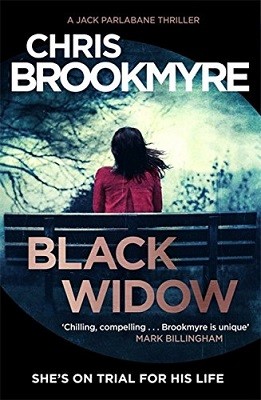
CTG Reviews: BLACK WIDOW by Chris Brookmyre

9781408707159

What the blurb says: “Diana Jager is clever, strong and successful, a skilled surgeon and fierce campaigner via her blog about sexism. Yet it takes only hours for her life to crumble when her personal details are released on the internet as revenge for her writing. Then she meets Peter. He’s kind, generous, and knows nothing about her past: the second chance she’s been waiting for. Within six months, they are married. Within six more, Peter is dead in a road accident, a nightmare end to their fairy-tale romance. But Peter’s sister Lucy doesn’t believe in fairy-tales, and tasks maverick reporter Jack Parlabane with discovering the dark truth behind the woman the media is calling Black Widow …”

This psychological thriller is very difficult to review without giving anything about the story away!

What I will say is that this is one of those books that has you guessing right to the end about what really happened, keeping you locked into the suspense of the story, hooked by the intrigue, and trying to work out who did what, and why they did what they did.

Diana Jager is a fascinating character – strong and driven on the outside, while vulnerable and hurting on the inside. As the story unfolds, revealing that the fairy-tale romance between her and her husband, Peter, wasn’t everything the papers led their readers to be believe, it becomes clear that Diana and Peter were hiding dark secrets of their own.

Jack Parlabane is wrestling with his own demons. A talented but now disgraced investigative journalist, he’s not afraid of digging deep to find the truth behind a story, but his empathy and own desires start to cloud the issues, and have the potential to put him far closer to danger than he’d ever have imagined.

This is a story where nothing is quite as it seems and the characters all have something to hide. It’s also the first Chris Brookmyre novel I’ve read but it certainly won’t be the last, and although it’s part of the Jack Parlabane series I found it worked well as a standalone.

Masterfully plotted and brilliantly observed, with a touch of dark humour and a cracking pace, this intricate thriller will have you captivated right to the final page.


To buy BLACK WIDOW on Amazon click here

To buy BLACK WIDOW from Waterstones click here

To find out more about Chris Brookmyre and his books pop over to his website at www.brookmyre.co.uk and follow him on Twitter @cbrookmyre


[With thanks to Little Brown for my copy of BLACK WIDOW]


CTG Interviews: Chris Brookmyre about his latest novel BLACK WIDOW

9781408707159

Today I’m delighted to be joined on the CTG blog by crime writer Chris Brookmyre. Chris, a former journalist, is one of Britain’s leading crime novelists and more than one million copies of his Jack Parlabane series have been sold in the UK alone. He’s kindly agreed to answer some questions about his latest book in the Jack Parlabane series – BLACK WIDOW – and talk about his writing process.

So, to the interview …

Welcome, Chris! Your latest book BLACK WIDOW is published today, can you tell us a bit about it?

It’s about how the most dangerous lies are the ones we tell ourselves. It’s about a surgeon who has given the best years of her life to her career and is beginning to think that maybe the price was too high: she doesn’t have anyone with whom to share her life and is fearing that the time to have a husband and a family may have passed. Then out of the blue she has a whirlwind romance with a hospital IT tech: within six months they are married, and within six more he is dead. The question is: did she kill him, and if so, did she have a very good reason.

Surgeon Diana Jager is a fascinating character – strong, successful and willing to speak out for what she believes in, yet inwardly vulnerable – what was it that inspired you to create her and tell her story?

My wife is an anaesthetist who has worked in the NHS for twenty years. She saw a lot of her colleagues in the same situation as Diana in terms of giving so much of themselves to their careers. She observed a great deal of sexism in medicine, overt sexism in terms of how people are treated and spoken to, but also a more insidious, pervasive covert sexism in terms of how it is made a lot easier for male doctors to have both a career and a family. They are seldom forced to choose, or judged for their decisions. The other inspiration was the way I’ve seen women abused on social media for being even the slightest bit outspoken. I wanted to create a character who would be an acerbic and divisive blogger in order to show what the fall-out might be like for a woman who dared to stick her head above the parapet.

How does a story idea start for you – with a character, a theme, a plot, all three, or something different?

I honestly can’t remember. By the time I’ve finished writing a book, there has been so many processes gone through that the seeds are lost in this miasma of inter-tangled ideas. It’s different for every book. With Black Widow I wanted to write about how we are inclined to trust people early in a relationship because we are desperate for it to work out, and that can blind you to danger signs. I’ve touched upon this in previous books: how we tend to intellectually rationalise our fears in order to convince ourselves everything will be okay, when in fact we should listen when our instincts are telling us to run.

Can you tell us a bit about your writing process – do you plot your novels out in advance, or dive right in and see where the story takes you?

These days it’s more the former, but in the past it was the latter. I would come up with outlandish ideas that excited me, and before I knew it I was mired in them. I would end up drawing upon my wife to help work out a way of pulling all the threads together into a satisfying conclusion. A good example is All Fun and Games Until Somebody Loses an Eye, where I came up with the concept of this very law-abiding and dutiful grandmother who gets drawn into a world of espionage. The possibilities were so intoxicating that the book just got longer and longer, but in recent times I have been plotting my books very carefully. Not too much because you don’t want it to seem like your characters are on a rail, but with something like Black Widow, which is very twisty turny, if you want to misdirect the reader, you have to control the information and be very conscious of how much the reader knows at any given time. In order to do that, you need to know where it’s all going. As a character says in the Sacred Art of Stealing, you won’t know anything until you know everything.

Unknown

So, what’s next for Jack Parlabane? Do you have another series book planned and, if so, will things start to look up for him in his private life?

I’ve actually just finished the first draft of the next Jack Parlabane book, and having in recent novels been wrestling with the implosion of print journalism, at the start of the new one he is finally turning things around. He bags a job at a very forward-thinking news website, and one of the characters remarks to him that Jack is so used to things going wrong, he finds it hard to accept it when things are going right. Parlabane replies that this is because when everything is going right, that’s usually the sign that a meteor is about to strike, which of course it soon does.

As crime writers are also usually avid crime readers, can you tell us what’s your favourite crime novel and why?

Strangely enough, perhaps my favourite crime novel is Dirk Gently’s Holistic Detective Agency. I always loved Douglas Adams’ work, and when he decided to write a detective story, it was of course an entertainingly bizarre detective story. As soon as I finished it I went back to the beginning and read it again because it was a novel that read completely differently second time around, once you knew what was really going on. Since then it has been my ambition to write a novel that would have readers to that, and hopefully I have realised that ambition with Black Widow. The best twists aren’t merely a surprise: the best twists change the meaning of everything so that you can go back and read the same chapters again and it’s like seeing the same events through different eyes.

And, finally, what does the rest of 2016 have in store for you?

I will be polishing up the next novel, which is entitled Want You Gone, and I am also writing another science fiction novel. It won’t be outlandish far-future science fiction: I am hoping to take my crime readers with me because the plan is that it will be a crime novel that just happens to be set in space.

Huge thanks to Chris Brookmyre for stopping by the CTG blog today and letting me grill him.

BLACK WIDOW is out today.

To buy it from Amazon, click on the link here 

To buy it from Waterstones click on the link here

You can find out more about Chris and his novels by hopping on over to his website here and following him on Twitter @cbrookmyre


And, I’ll be reviewing his fabulous new book – BLACK WIDOW – here tomorrow so don’t forget to stop by then!