CTG Reviews: Dead Man’s Gift (Parts 1 and 2) by Simon Kernick

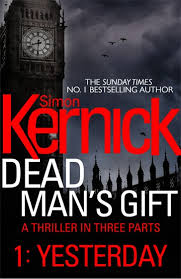
Dead Man's Gift cover image

Dead Man’s Gift cover image

Part 1: Yesterday

What the blurb says: “MP Tim Horton arrives home to find his seven year old son has been abducted by a ruthless gang of kidnappers. All they have left behind is the brutally murdered body of the Horton’s nanny. The gang’s demands are simple: Tim must sacrifice his own life in order to save his son’s. It’s the ultimate dead man’s gift.”

Part 2: Last Night

And for the second part, the blurb continues: “MP Tim Horton is waiting to hear from his son’s kidnappers. Knowing he’s being watched, and too scared to go to the police, he contacts the only man who may be able to help him, his brother-in-law: an ex-soldier called Scope who has a reputation for sorting things out and getting things done.”


Released as a three-part series, Dead Man’s Gift hooked me from the first page of part one and pulled me at break-neck speed through the first installment, and on to the second. It left me breathless, and repeatedly pressing the right side of my Kindle to go to the next page even though it told me I’d reached the end of part two! I was horrified to learn that I’d have to wait until 5th June to download the final part.

As the story is still ‘live’ and in progress it doesn’t feel right to write a full review – you know I don’t do spoilers – and, after all, it’d be much more fun for you to download the first two parts and get caught up with the story for yourself.

But, what I will say, is that Simon Kernick has created a chillingly compelling scenario and a great cast of characters. MP Tim Horton has just hours to save his son, enlisting the help of the only person he knows who just might have the skills to do it. If they fail, Tim will be forced to do what his child’s abductors are demanding or his son will die. But the gang are smarter, and better connected, than Tim could ever have imagined. As the clock counts down, and the criminal’s demands are revealed in their horrifying entirety, it seems that Tim will have no choice but to make the ultimate sacrifice.

This is a pulse-pounding, high-action, gripping read, with the suspense made all the more heightened because of the wait until part three is released on 5th June.

If you like thrillers, this will be a real treat. Go download it. Now!


[I bought my Kindle copies of Dead Man’s Gift parts 1 and 2. I’m now waiting with anticipation for part 3 to be ready for download]


Confessions from CrimeFest: Part Three

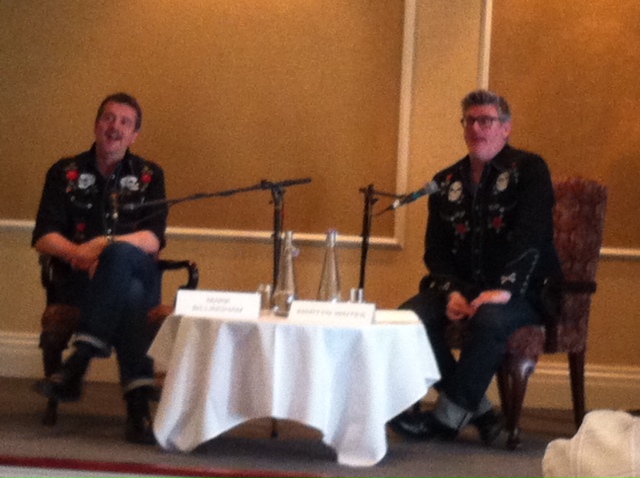
Mark Billingham interviewed by Martyn Waites

Mark Billingham interviewed by Martyn Waites

And so onto Saturday!

First up, I headed to the 9am panel Name Your Price: The Hired Gun. Moderated by Meg Gardiner, with panellists Mason Cross, Hanna Jameson, John Gordon Sinclair, and Mark Allen Smith, the panel discussed the attraction of the ‘hired gun’ as protagonist, the mystery surrounding the character that rides into town, sorts out the problem, then disappears again, and the joys (and challenges) of writing them.

Next, I headed to the lounge to interview Mason Cross, author of The Killing Season and creator of the rather mysterious Carter Blake. It was a fun interview to do – watch this blog for the write-up coming soon.

After a leisurely lunch with friends, I headed to one of the main events of the weekend – Featured Guest of Honour: Mark Billingham interviewed by Martyn Waites. Both wearing fabulous western shirts that I’m sure Mark Billingham’s series character, Tom Thorne, would have been proud of, they took to the stage for a lively and entertaining interview covering everything from Mark’s books, the future of police procedurals, Thorne’s taste in music (it changed quite dramatically between the first book and the second) and even dachshund detectives!

Then it was on to the Arcadia Books Reception complete with tasty wine in beautiful Bristol Blue Glass glasses, followed by the Gala Awards Dinner. It was a fabulous evening with the merriment continuing way into the early hours of Sunday morning.

On Sunday I had a hangover, and it was a big one, which meant I didn’t get up very early! But I did make it along to the last event of the festival, Criminal Mastermind with Quiz Master Maxim Jakubowski interrogating contestants: Mason Cross (specialist subject Lee Child), Kate Ellis (specialist subject Josephine Tey), Paul Johnston (specialist subject Dashiell Hammett) and Susan Moody (specialist subject Raymond Chandler). It was great fun playing along in the audience, but the general crime fiction questions in the second round were seriously hard! In the end Paul Johnston was victorious.

And then the weekend was over.

As ever I was determined to resist the festival book shop – my ever multiplying ‘to be read’ pile already stretches across several rooms of the house! But, as usual, I was unable to resist the papery lure of the all those fabulous looking books, and over the weekend bought several bags full.

Authors whose books I’ve added to my mountainous ‘to be read’ pile are: Simon Kernick, Helen Giltrow, Nev Fountain, Tom Wood, Kevin Wignall, Tanya Carver, and Kate Griffin. Along with the latest books of a few of my favourite authors including Mark Billingham (The Bones Beneath), Meg Gardiner (The Shadow Tracer), and a signed copy of The Killing Season by Mason Cross.

All in all, it was a fabulously fun weekend.

Now I’m off to book my ticket for next year!

Dead Good Fiction Festival #dgfictionfest #FFF

Quick, it’s here, the brand new online fiction festival put together by those fabulous people over at Dead Good Books.

Check out the flyer (below) to join in with the fun: there’s conversations with featured authors Nicci French, Sharon Bolton, and Karin Slaughter, and a monster prize to be won by the winner of the Who ‘Dunnit game.

Festival Flyer

Festival Flyer

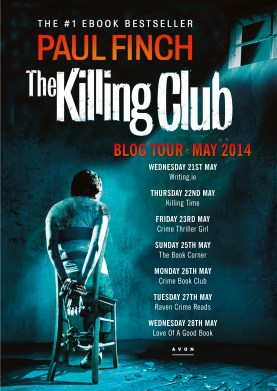
The Killing Club Blog Tour: Guest Post by Paul Finch

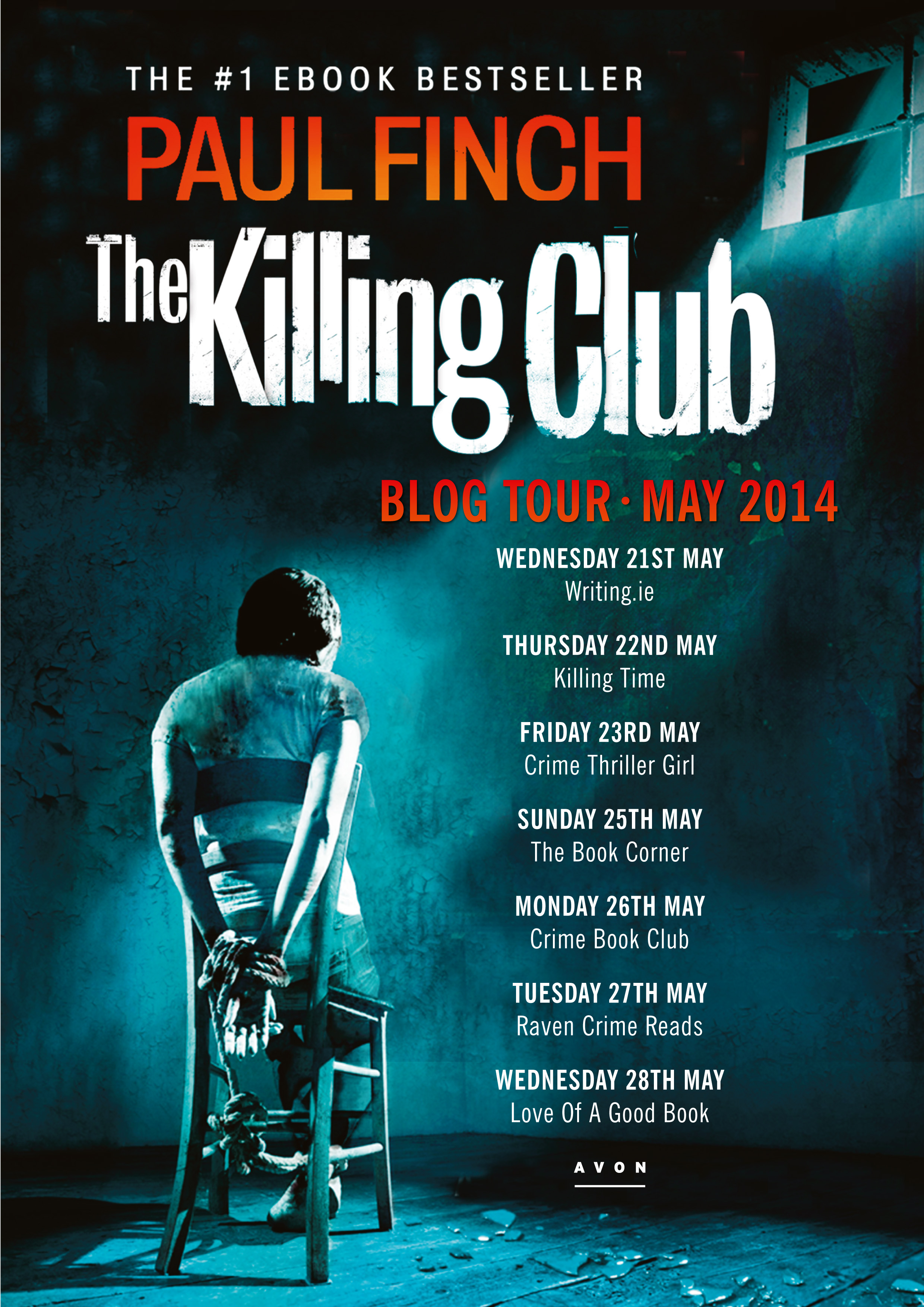
KC blog tour poster

KC blog tour poster

I’m delighted to welcome Paul Finch to the CTG blog. His latest novel, The Killing Club, is published this week, and today Paul is taking over the reins (or rather the keyboard) to guest blog about the books he has read that have been most influential on his career.

Over to Paul …

It would be very easy, I suppose, to respond to the question which books have you read that were most influential on your career, and, given that my own most successful novels are intense murder investigations, simply reel off all the great thriller writers.

It would of course be untrue to say that I haven’t been influenced by other thriller novelists. Stuart MacBride, Mark Billingham, Peter James, Kathy Reichs and Katia Lief are all staggeringly high in my estimation. But I don’t just read within my own genre, and I think it would be an interesting exercise to perhaps consider those other types of books that have blown me away, set me on my current career path, whatever you want to call it.

It’s no secret that, before I began writing my DS Heckenburg thrillers, I dabbled widely in the fields of horror and fantasy. And this wasn’t just during my formative years as a writer, my kindergarten if you like; I wrote lots of this kind of stuff, and still do. I also read in this field enormously. But it’s fascinating now, on reflection, how much these apparently unrelated interests have influenced my DS Heckenburg novels.

For example, THE WOLFEN by Whitley Strieber (pub. 1978) presents us with two tired New York detectives, a man and a woman, investigating the murder and apparent cannibalisation of hobos in the city’s underbelly, and soon reaching the conclusion the perpetrators are not humans, but a highly intelligent werewolf pack.

Now, I suppose there are obvious links here with ‘Heck’: a gang of vicious and relentless killers, a lovelorn boy and girl cop team, and so on. But I think it’s the seamy side of the average detective’s working day that most caught my eye about this striking novel. Strieber really takes us to the backside of New York, the subways and ghettos and derelict lots, and peoples them with hookers, winos and druggies. My own experience as a real life cop taught me these are the places you need to go if you want to catch some bad guys, but here we go way beyond the everyday grim, delving into the world of the true urban gothic: it’s a nightmare landscape, beautifully and poetically described, and yet at the same time filled with such palpable menace that even hardboiled detectives are unnerved.

I make a point of never taking my own crime thrillers into such realms of overt fantasy, but I’d be lying if I said I didn’t try to invoke similar feelings of dread and weirdness in the dark heart of the city.

Another relevant horror novel is surely LEGION by William Peter Blatty (pub. 1983). This is a totally different kind of police story. Again, it follows a time-served detective investigating a series of sadistic murders, though in this case he’s dealing with Satanic ritual. It’s a much subtler tale, ripe with a sense of ancient mystery and slow-burning evil (and that would be real evil, of the distinctly inhuman variety). Yet for all this, the point where LEGION really kicks in is the deep assessment the hero, Lt. Kinderman, constantly makes of himself, examining his own beliefs or unbeliefs, puzzling as to why he exposes himself to this depravity time and again, bleeding inside for the victims. Not exactly Heck, who’s never been much of a philosopher, but the longer you work as a homicide cop, the more you’re going to confront yourself with these issues. There is some really deep character work here by Blatty, which you can’t help but admire.

Moving from horror into science fiction and fantasy, there are two other titles I’d like to mention. The first of these contains the most obvious link to those matters I’ve mentioned previously. It is Philip K. Dick’s sci-fi masterwork, DO ANDROIDS DREAM OF ELECTRIC SHEEP (pub. 1968). Most folk will know this as the movie, BLADE RUNNER, but though there are some similarities, the book goes way beyond the limited scope of a Hollywood adaptation. In Rick Deckard, another dogged man-hunter and, thanks to his wife’s depression, a sad loner, working his way through a world gone mad and yet adding to it with his own role, which conflicts him deeply, there is genuine pathos. The movie, of course, had a strong noirish feel – it was almost Chandleresque – which is not prevalent in the book, but the strong central character is still a great blueprint for the fictional lone-wolf detective. For me, heroes always need to be vulnerable: stricken by self-doubt, and with enemies on all sides, some of whom they thought were friends. I’ve never had much time for men of steel, undefeatable icons of hunky machismo, like Superman or Batman. If I took anything from DO ANDROIDS DREAM … it had to be that deep introspection, that guilt, that conscience. It makes our heroes so much more interesting.

On that same subject, the fantasy novel I’d like to nominate is GRENDEL by John Gardner (pub. 1971). I guess we’re all familiar with the tale of Beowulf, the Viking warrior, and his defence of the hall of Heorot against the ravages of the faceless devil, Grendel, who for no reason other than twisted pleasure, came nightly to slaughter the innocent.

As I say, I’m not big on superhero stories. I loved BEOWULF as a kid – it was probably the first spooky tale my late father told me – but as I grew up, I found the monster more interesting. I mean, let’s not kid ourselves, Grendel is the prototype serial killer. So in many ways, GRENDEL the novel takes us to the other end of the crime thriller spectrum, Gardner depicting his antihero first as an abused and lonely child, later showing him suffer rejection by those he sought to befriend, and finally having him retaliate with homicidal fury, which at last introduces him to a lifestyle of his liking – if he can’t have everyone’s love, he’ll have their terror. There isn’t as much Norse myth woven into this novel as you might expect. Instead Gardner gives us philosophy, social commentary and, a decade before the FBI commenced offender profiling, the psychology of the reviled. Talk about streets ahead of the game. Of course, we all know what happens at the end of BEOWULF, and it’s the same in GRENDEL, so don’t expect any surprises – apart from the dark joy this narrative will elicit as it works its way through the tormented mind and hideous satisfactions of a creature driven solely to hate.

It’s a strange thing that we think we know ourselves so well, our thoughts, interests and aspirations. And yet clearly there are many subliminal strata to our thinking. Even as I wrote this blog, it became more apparent to me how relevant to my current writing so many of these themes explored by earlier authors actually are. I won’t go over them again, because I think they speak for themselves – they certainly will, I hope, if you get the chance to read any of my DS Heckenburg thrillers, STALKERS, SACRIFICE or, most recently, THE KILLING CLUB. On which note, I suspect it’s a good time to end this monologue. Whichever way you go, please enjoy your reading and writing. There are no finer pleasures.

Paul Finch

A huge thank you to Paul for spending time here at the CTG blog today and telling us about the books that have most influenced his career.

To find out more about Paul and his books, including his latest book – The Killing Club – hop on over to his website at http://paulfinch-writer.blogspot.co.uk/

And don’t forget to follow him on Twitter @paulfinchauthor
 

CTG Interviews: AK Benedict, author of The Beauty of Murder

AK Benedict

AK Benedict

Today I’m delighted to welcome the fabulous AK Benedict to the CTG blog. Her spellbinding debut, The Beauty of Murder, was one of my favorite books of 2013, and was shortlisted for this years’ eDunnit Award.

So, to the questions ...

Your fabulous debut novel, THE BEAUTY OF MURDER, comes out in paperback this month. Can you tell us a bit about it?

The Beauty of Murder is a crime thriller with a fantastical twist set in Cambridge in both the 21st and 17th centuries. My main character, Stephen Killigan, is a philosophy lecturer at Sepulchre College and stumbles upon the body of a missing beauty queen and a mystery that changes the way he views the world. The novel includes many of the things that fascinate me: philosophy, music, tattoos, time travel and cake.

In your novel the setting, Cambridge, plays a big part. What was it about that particular city that inspired to you to write about it?

I was an undergraduate at Cambridge and spent a lot of time wandering its streets. I love the austere beauty of its ancient buildings and how some streets make me wonder which century I am in. It is a city of elemental extremes: in summer the old stone shines, trees are big with blossom and people sunbathe by the river but in winter it is cold and forbidding. It feels to me like a place of magic and possibility, the ideal starting point for a mystery. I first thought of a time travelling serial killer while I was at Cambridge and both Jackamore Grass and the city have haunted me since.

Could you tell us a little about your writing process, do you dive right in, or plan the story out first?

It varies: sometimes the words fly right out, other times I sit with stories for a long time, letting ideas and characters wander about before settling down and talking to me. I like to know the beginning, middle and end before I start writing, leaving lots of room to be surprised by what develops. If I know exactly what happens and who has committed all of the crimes, then I feel no need to write! I write by hand and transfer it onto my computer to start with then work straight onto the keyboard when the story gathers momentum. Towards the end of the first draft, I don’t eat, sleep or get out of my onesie. I’m a real catch.

The Beauty of Murder paperback cover image

The Beauty of Murder paperback cover image

THE BEAUTY OF MURDER is your debut novel. What was your route to publication?

I have longed to be a professional writer since I was three so it has been a route taking thirty odd years! I wrote several partial novels, a full one, stories and poems before The Beauty of Murder was published in 2013. Rejection letters sighed through the letterbox with the occasional encouraging remark, small publication or competition win along the way. I enrolled on a creative writing course at the University of Sussex and toned up my dialogue, plotting and pacing while learning how to receive and make use of criticism. I started writing The Beauty of Murder during my second term and worked on it for the next couple of years while working as a musician and composer. I met my agent, Rupert Heath, at a Meet the Agents Day organised by New Writing South and he saw the novel’s potential and encouraged me every step along the way. When it was ready, he sent it out to editors and I was amazed when it went to auction. It was a very surreal time. The three year old me who wanted ‘to be a writer and have lots of pens’ was very happy; thirty-three year old me ran across a hilltop in Hastings with champagne and a grin.

What advice would you give to new writers aspiring to publication?

Write hard, write soft, write about what makes you smile, write about what you want to know and what lies beneath the stones but, most of all, write. When you have a slew of stories, scripts or poems, throw them out into the world and see which ones find land. The pile of rejection letters is something to stand on while you reach for your goal.

And lastly, what does the rest of 2014 have in store for you?

I am in the middle of editing my second novel, due out in November, while starting the sequel to The Beauty Of Murder and researching other ideas. There are also some exciting TV opportunities and visits to crime and fantasy festivals and conventions.

Sounds like 2014 is going to be a busy one!

A huge thank you to AK Benedict for popping by the CTG blog for a chat.

To find out more about AK Benedict hop on over to http://akbenedict.com/

The Beauty of Murder is published by Orion and out in paperback now. You can find it in all good bookstores, and online at http://www.amazon.co.uk/The-Beauty-Murder-A-Benedict/dp/1409144518

And, read our review of The Beauty of Murder here 

CTG Interviews: Edward Wilson about his new book The Whitehall Mandarin

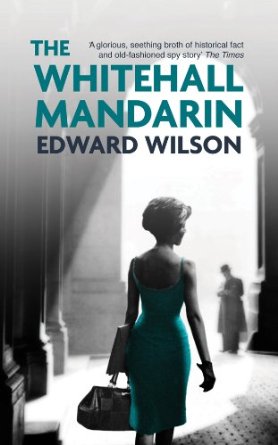
The Whitehall Mandarin cover image

The Whitehall Mandarin cover image

Today I’m pleased to welcome Edward Wilson to the CTG Blog to tell us about his new book – The Whitehall Mandarin – and about his writing process.

So, let’s dive into the interview …

 Firstly, your new book, The Whitehall Mandarin, is coming out in June. Can you tell us a bit about it?

All of my books are literary novels disguised as spy fiction. I try to explore the questions of identity, perception and truth. Can we really know who anyone really is? How can we find truth when it is papered over with lies? My starting point is the party slogan from Orwell’s 1984: ‘Who controls the past controls the future; who controls the present controls the past.’ The Whitehall Mandarin is an ‘insider novel’ that unpeels layers of deception to reveal the most closely guarded state secret of modern times: the China enigma. What is the secret behind China’s rapid rise to become a nuclear armed superpower? And when we think we have found that secret, there is yet another twist.

Lady Penelope Somers, the first woman to head up the Ministry of Defence, seems to have it all: power, beauty and wealth. The superglue that binds together the ruling class is secrecy – but Lady Somers has a dark secret that is unknown to even the inner circle of the Whitehall elite. Catesby’s job is to find that secret and bury it forever.

All of the book’s characters are complex and conflicted. Catesby, an MI6 officer who ironically bears the name of the leader of the Gunpowder Plot, never resolves his working class origins with his OBE and his status as a senior intelligence officer. Cauldwell, a wealthy American reeking of refinement and‘old money’, repudiates his background to become a Communist spy. Henry Bone, Catesby’s boss and mentor, has a closet full of skeletons including a past relationship with Sir Anthony Blunt.

Before writing the Catesby spy series you served as a Special Forces Officer in the US Army, how easy do you find using your real-world experience to inform your fiction?

War is not a good thing for writers or anyone else. I despise writers who become macho war bores and celebrate ‘the cult of the warrior’. Being a Special Forces officer in Vietnam was a lot more than ‘combat’. It was about going native, running intelligence networks and dealing with double agents – experiences which are invaluable for a writer of spy fiction. I was an SF advisor to the CIDG (Civilian Irregular Defense Group), a border screening force that patrolled from remote camps the length of South Vietnam. The CIDG soldiers were mostly Vietnamese or Montagnards, although there were also Khmers and Chinese Nungs. My own CIDG were all Vietnamese; brave fighters certainly, but also heavily infiltrated with sleeper agents. It was estimated that at least 10% of our CIDG were undercover Viet Cong. None of our operational plans were ever secure, none!

One way of dealing with this lack of security was to change plans at the last minute. I tried this on an ambush patrol with a small team of CIDG . We crept into a village after dark and began, covertly, to ask for information about the Viet Cong. An old man took me aside and led me away from the others. He asked to see my map so he could show me where to find the enemy. I refused because there was classified information grease-pencilled all over it, but I finally let him see a little corner and he pointed to a trail where we should set our ambush. It seemed a much better site than the one we had already chosen. I then rejoined the others and put the plan to the Vietnamese in charge of the CIDG, who responded with a resounding ‘khong’ – which is non, no, nein and nyet rolled into one. I couldn’t order him to move his men; I was only an ‘advisor’. So we set our ambush on the site previously chosen.

Later that night all hell broke loose, but nowhere near us – or the trail the old man had suggested. We later discovered that a Regional Forces (RF) outpost, less than a kilometre from our ambush position, had been overrun and sixteen of its defenders killed.

I’ll never know what really happened. Had the Viet Cong who attacked the outpost passed along the trail the old man had pointed out? Could we have saved those sixteen RF if we had redeployed and ambushed the attacking force enroute? Or was the old man a Viet Cong agent who had tried to lure us to a place where we would have been killed? Or was our CIDG leader an undercover VC who refused to budge because he wanted to protect his comrades? But I did learn the intelligence officer’s dilemma: you can never be completely certain who anyone is. Every human being is a mystery. I hope I bring this into my novels.

Author Edward Wilson

Author Edward Wilson

Could you tell us a little about your writing process, do you dive right in, or plan the story out first?

I begin by doing a lot of historical research to try to uncover something that no one has used before. The great thing about writing spy fiction rather than spy non-fiction is that most relevant documents have been destroyed, suppressed or never existed. When the historical trail of dots finally disappears, I keep going with a fictional version of what happened.

When I’ve got a plot outline, I go for characters. Characters, and not plot, are what make a novel take off. The same characters appear, disappear and reappear in my novels – and each time they reappear I reveal something new about them. I research actual historical characters by background reading, but I also use Youtube clips of them to try to discover their inner essence and quirks – Che Guevara’s shy boyishness; Kim Philby’s arrogance (just after he denied being ‘the Third Man’, he sticks his tongue in his cheek).

When I’m in full flow I try to write a minimum of 1,500 words a day. I know that things are going well when the characters take over and tell me what to write. They become real people – and don’t always tell me all their secrets. I just have to wait until they are ready. I don’t own them; they own me.

What advice would you give to those aspiring to publication as crime writers?

Character, character, character. We don’t remember Raymond Chandler’s plots; we remember his characters. I once had the privilege of sitting next to a crime writer named Phyllis at the Hatchards Authors of the Year party. The first thing that Phyllis (aka PD James) said to me was: ‘What is more important: character or plot?’ Phew, I gave the right answer. In fact, characters must shape the plot – otherwise, the plot will appear artificial and unbelievable.

Tension is more important than suspense. Everyone knows that Romeo and Juliet are not going to live happily ever after, but we still go to see the play. Sometimes revealing what happens in the first line of a chapter is more effective than springing it later. Begin a story: ‘She had never stabbed a man before.’ – and the reader is going to be on tenterhooks waiting to find out what actually happened.

Your main character must have a foil. Every Holmes needs a Watson. Revealing plot and narrative movement is a lot easier when two characters are talking about it – and tension between the two is also good for suspense and character development.

Find out what everyone else is doing – and then write something completely different. Make it new. Agents and publishers aren’t looking for copycats, they’re looking for originality.

Learn to pitch your story in fifty words or less.

And lastly, what does the rest of 2014 have in store for you?

The next few weeks are devoted to travelling and promoting The Whitehall Mandarin – including the Penzance LitFest on 18 and 19 July. Half the job of a professional writer is marketing her or his books and meeting people. We owe it to our readers and our publishers.

The other half of a writer’s life is actually writing. My next book is provisionally titled A Very British Ending – and I hope to have finished a first draft by December. Once again, it is an ‘insider novel’ with Catesby and Bone struggling against internal and external enemies. The action takes place between 1947 and 1976. I don’t write to understand myself, but I do write to understand the country that has adopted me and naturalised me – a country that I love. I hope that my next book will reveal some of the hidden and secret forces that have made Britain what it is today.

Thank you so much to Edward Wilson for joining us today and telling us about The Whitehall Mandarin.

The Whitehall Mandarin by Edward Wilson is published by Arcadia, and is out now in hardback. To find out more pop over to http://www.amazon.co.uk/The-Whitehall-Mandarin-Edward-Wilson/dp/1909807532

CTG Interviews: Paul Gadsby about his new book Chasing the Game

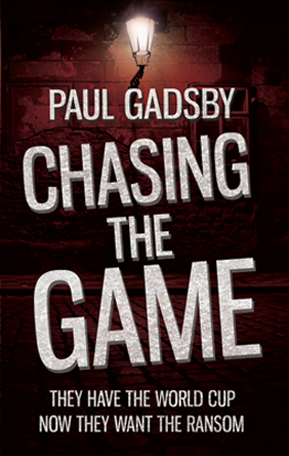
Chasing the Game cover image

Chasing the Game cover image


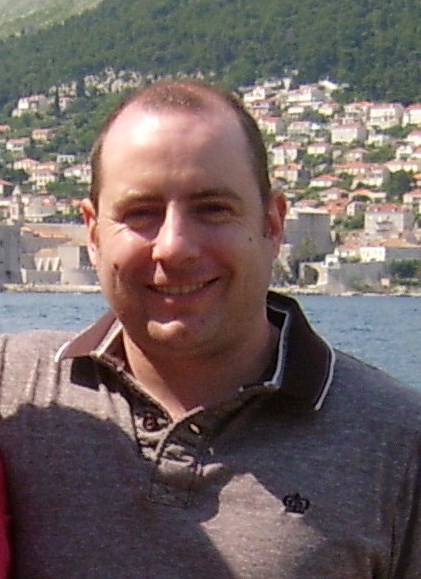
Today I’m delighted to welcome Paul Gadsby to the CTG blog to talk about his new book – Chasing the Game.

So, let’s get to it …

Chasing the Game is out now, and gathering rave reviews. Can you tell us a bit about it?

It’s a crime thriller depicting one of the most fascinating real-life crimes in British history – the theft of the Jules Rimet Trophy in 1966. Three months before the football World Cup tournament was due to begin, the trophy, on display in Westminster Central Hall, was stolen in an audacious daylight raid with the back doors of the building forced open. No one actually saw the trophy being taken but a ransom demand was made a few days later to the Football Association (FA), who were desperate to save face and reclaim the trophy, and a rendezvous organised where the trophy would be exchanged for cash. But the exchange never happened, one man was arrested for demanding the ransom but was never connected to the actual theft, so the identity of the thieves remains a mystery. Bizarrely, the trophy was discovered under a bush in a suburban street in Norwood a week after the theft by a dog named Pickles, who subsequently became a national hero.

I wanted Chasing the Game to be very much a fictional novel before anything else (not a documentary-style review of the crime etc), so the make-up of the gang of thieves and their particular characters and motivations were all driven by my imagination and I had a blank canvas to work on there. I used elements of the real-life tale (the ransom demand, the exchange set-up) and created extra conflict by having my FA chairman as a steely character who is determined to recover from the global humiliation the theft caused him and his organisation, and hell-bent on making the criminals pay. I had a theory early on about how I believed the trophy ended up under that bush, and basically worked back from there to create a gripping story.

In Chasing the Game, a real-life event – the theft of the Jules Rimet Trophy (the football World Cup) in London in March 1966 – is integral to the story. What was it about this event that sparked your idea for the novel?

I was drawn in by the fact that the crime has so many unanswered questions to it. The actual theft appears to have been carried out with a fair degree of good planning and professional expertise, so it seems a group of people did it rather than someone alone snatching an opportunity. But then the trophy – their only asset in getting something out of their efforts – ends up under a hedge a week later. Something must have gone dramatically wrong between that group of people during those seven days, as the pressure mounted with the case attracting international publicity.

I’ve always been fascinated by the internal structure of organised criminal set-ups and the personality clashes that rise to the surface. I’d been toying with a theme for a crime novel about leadership – about how some people have the natural skillset to be an effective operations man in a number two role but not necessarily the abilities to handle the wider scale responsibilities that come with being number one – and thought it would be good fun to drop this theme into the midst of a dramatic story such as the 1966 theft.

How did you go about researching the time period and the real life events?

I’ve always been into 1960s-set gangster stuff such as the Krays and the Great Train Robbery, so I read a lot of books surrounding those characters and looked into the pressures they faced in their lives at that time; what kind of lifestyles they were living and what they were aspiring to. I also watched a number of television documentaries about everyday life in Britain in the 1960s (thank you BBC4 et al) because I was determined to make that period a character of its own in the book. I love the music of that era but have always felt the way the 1960s is often portrayed to people like me who were born after then (Swinging Sixties, everyone flocking to a vibrant Carnaby Street to spend a fortune on the latest fashions etc) is a little skewed from reality. I wanted people consumed with the grind of their jobs, their money problems, their marital problems, their parenting problems and so on – characters burdened by the harsh challenges that life always throws into people’s laps.

That’s where the ransom demand in Chasing the Game proved really handy as a motivation driver within the narrative. I deliberately placed my ‘firm’ of criminals in west London, a few miles away from the central Soho scene they ultimately want to get to and grab a stake in – and the ransom cash is their leg-up to this world, their ticket to a brighter future. The trophy theft is also a chance for my ageing, old-school FA chairman to hit back against the thieves he sees as a stark representation of an increasingly insurgent society, and leaves him questioning his place in the world.

Could you tell us a little about your writing process, do you dive right in, or plan the story out first?

Chasing the Game is my first novel to be published but I’d written a few before that and with each one the process was slightly different. With this one I had the end of the story in place first, and worked back from there, carefully mapping out the characters and the various conflicts they would face, then drawing up a detailed chapter breakdown before getting into the actual writing. With other books I delved into the writing a lot quicker – happy with the overall concept and where things would finish, I went for it, adopting the ‘car headlights in the dark’ approach (writing away knowing what is immediately in front of you as well as the end destination, but never seeing what is a little further down the road). This approach allows the detail of each chapter to develop more organically and is an enjoyable way to write, but is probably more suited to character-driven work rather than plot-driven material. Either method (and many more besides) is fine and can be successful as far as I’m concerned, as long as the writer has a burning passion to explore the themes they want to unravel, and has created mesmerising characters who have plenty at stake within a tension-riddled story.

Author Paul Gadsby

Author Paul Gadsby

Who are your favourite crime writers – which books and authors have inspired you?

I have tended to prefer standalone books rather than mass-volume serials; I love it where the writer has the freedom to take his main character down any dark alley and the reader really doesn’t know how bad things will get. With the serials, we always know the main character is going to be fine and any injuries sustained will not be too serious because they’ll be back in another adventure next summer. That said, although I’m no great fan of those formats, there have been some tremendous writers who have gone down that path and deserve every credit – Ian Fleming for one, while Ian Rankin and Mark Billingham are delightful writers and I’ve enjoyed many of their books. Ray Banks’ mini-series following PI Cal Innes was fantastic and wrapped up with great humility, while David Peace’s Red Riding Quartet inspired me to explore mixing fact with fiction.

I love noir classics as well as slick contemporary thrillers. Elmore Leonard’s ear for dialogue is, in my opinion, unmatched. James Crumley is a big hero of mine as are the likes of Ken Bruen, James Sallis, Patricia Highsmith, Jake Arnott, Graham Greene, Jim Thompson, Adrian McKinty and James Ellroy. Eddie Bunker’s No Beast So Fierce is a glorious standalone book and one of my all-time favourites, as is The Ice Harvest by Scott Phillips.

And lastly, what does the rest of 2014 have in store for you?

I have written the first draft of another novel, a tale about a recently-retired boxer who is forced into a life of crime by his former manager, and look forward to editing and polishing that soon. But in the meantime I’m enjoying promoting Chasing the Game – reviews from crime fiction sites have been fantastic so far, while I’ve been asked to speak about the book at this summer’s Festival of Football Ideas in Bristol, a literary-music-art-themed event, which I’m really looking forward to.

A huge thank you to Paul for allowing us to grill him! 

If you’d like to find out more about Paul Gadsby and Chasing the Game pop on over to his website at http://www.paulgadsbyauthor.co.uk/

CTG Reviews: The Accident by Chris Pavone

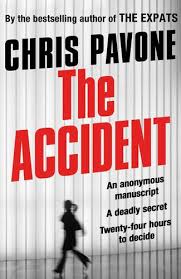
The Accident cover image

The Accident cover image

What the blurb says: “Isabel Reed, one of the most respected and powerful literary agents in New York, is in possession of a time bomb and she’s about to give it to her good friend and trusted editor at one of the top publishing houses in the US. Anyone who begins reading the manuscript is immediately struck by the importance of its contents. They can also see that publishing it could be dangerous, but it could also be the book that every agent, editor and publishing house dreams of … What they don’t realise is that reading it could get them killed.

Veteran CIA Station Chief, Hayden Gray, is a man not to be trifled with. At his beck and call is a vast artillery of CIA personnel and he’s prepared to use every single one of them to stop that manuscript from getting into the public domain. He has twenty-four hours to do so.”

Set in the world of publishing, this book takes what starts out as an everyday occurrence – a new manuscript delivered to literary agent Isabel Read’s office – and turns it into a twist-filled story with danger lurking around every page turn. The book – entitled ‘The Accident’ – is filled with secrets so explosive, about a media tycoon so well-known and influential, that there are people prepared to do anything to stop the book being read.

So Isabel’s day turns into a 24-esque chase, with lots of running, hiding and dodging. As the body count rises, she knows that someone, or some people, are trying to kill her and the manuscript, but she doesn’t know who. So she turns to the one person she’s sure she can trust: Jeff Fielder – her long-time friend, and editor at a major publishing house – to help her get the book published, and to stay alive.

The book alternates between character point-of-views, primarily Isabel, Jeff, Hayden Gray, and the unnamed author of the book. With each character’s narrative you get a glimpse of the history that led to the book being written, and the impact it having been written, allowing you as the reader to piece together the complex web of secrets that have been hidden for so long.

This story has intrigue and mystery in spades. As the plot unfolds, and more about each of the key characters is revealed, you start to understand the complex relationships that connect so many of them.

A gripping read, with an artfully crafted plot and fabulously engaging characters, the story includes some major twists towards the end – several of which I really didn’t see coming. The Accident is an engaging, entertaining, page-turner of a thriller.

Highly Recommended.


[with many thanks to Faber & Faber for my copy of The Accident]


eBooks by Sainsbury’s May promotion


If you like your books in the eBook format, this could be an offer for you …

eBooks by Sainsbury's logo

eBooks by Sainsbury’s logo

A little bird tells me that during May, lucky Sainsbury’s customers can be in with a chance of winning Nectar points galore, as part of a massive giveaway on the eBooks by Sainsbury’s website.

Throughout the month, prize draws will be take place every day in which up to four customers who’ve bought ebooks from the site will receive 10,000 Nectar points each.

To find out more about eBooks by Sainsburys, the Nector point promotion, and a load more, hop on over to: www.sainsburysebooks.co.uk


Shortlists for the 2014 CrimeFest Awards Announced

CrimeFest logo

CrimeFest logo

The shortlists have been announced for the annual CrimeFest Awards!

Now in its seventh year, the winners of the 2014 CrimeFest Awards will be revealed at the CrimeFest Gala Awards Dinner on Saturday, 17 May 2014. It promises to be a great night, and I can’t wait to find out which of the books from the fabulous novels shortlisted are going to be awarded the prizes.


The shortlisted authors and books are …


The Audible Sounds of Crime Award:  for the best crime audiobook first published in the UK in 2013 in print and audio format, and available for download from audible.co.uk (Sponsored by Audible UK).

Nominees:

Ben Aaronovitch for Broken Homes, read by Kobna Holdbrook-Smith (Orion Audio)

John le Carré for A Delicate Truth, read by John le Carré (Penguin)

Robert Galbraith for The Cuckoo’s Calling, read by Robert Glenister (Hachette Audio)

Peter James for Dead Man’s Time, read by Daniel Weyman (Macmillan Audio)

Peter May for The Chessmen, read by Peter Forbes (Quercus)

James Oswald for Natural Causes, read by Ian Hanmore (Penguin)


The eDunnit Award: for the best crime fiction ebook first published in hardcopy and  electronic format in the British Isles in 2013.

Nominees:

A.K. Benedict for The Beauty of Murder (Orion)

Thomas H. Cook for Sandrine (Head of Zeus)

Sara Gran for Claire DeWitt and the Bohemian Highway (Faber and Faber)

Elizabeth Haynes for Under a Silent Moon (Sphere)

Val McDermid for Cross and Burn (Sphere)

Derek B. Miller for Norwegian by Night (Faber and Faber)

Denise Mina for The Red Road (Orion)

Thomas Mogford for Sign of the Cross (Bloomsbury)

George Pelecanos for The Double (Orion)

Anne Zouroudi for The Feast of Artemis (Bloomsbury)


The Goldsboro Last Laugh Award: for the best humorous crime novel first published in the British Isles in 2013 (Sponsored by Goldsboro Books, the UK’s largest specialist in first edition, signed books).

Nominees:

Colin Bateman for Fire and Brimstone (Headline)

Alan Bradley for Speaking from Among the Bones (Orion)

Colin Cotterill for The Axe Factor (Quercus)

Shamini Flint for A Calamitous Chinese Killing (Little, Brown)

Carl Hiaasen for Bad Monkey (Little, Brown)

Suzette A. Hill for A Little Murder (Allison & Busby)

Derek B. Miller for Norwegian by Night (Faber and Faber)

Teresa Solana for The Sound of One Hand Killing (Bitter Lemon Press)


CrimeFest runs 15th – 18th May 2014 in Bristol, UK, and will be featuring guest authors including Mark Billingham, Yrsa Sigurdardottir and Simon Brett, who will be joined by the likes of Ben Aaronovitch, Jasper Fforde, Nicci French, Lars Kepler and Peter James.

The CrimeFest programme includes a full schedule of panel events and interviews, and aspiring crime novelists can also attend the CrimeFest Crime Writing Day, which includes a workshop with M.R. Hall and William Ryan, and a Pitch-an-Agent event where aspiring authors can pitch their unpublished manuscript to a top line-up of literary agents.

To find out more about CrimeFest, and the authors attending the convention, pop over to www.crimefest.com/attend.html