CTG EXCLUSIVE: STASI WOLF AND THE CROSSWORD PUZZLE MURDER

Today I’m super excited to have award winning crime writer (and good pal of mine) David Young guest posting on the CTG blog as part of his STASI WOLF Blog Tour. STASI WOLF is the second book in the Oberleutnant Karin Müller series following up from the smash hit STASI CHILD. Today, David Young is talking about the real life case that inspired the story in STASI WOLF.

Over to David …

Twenty-six years ago this month communist East Germany’s most well-known murder hunt began when the torso of a young boy was found stuffed in a suitcase by the side of the Halle to Leipzig rail line.

The body was soon identified as that of seven-year-old Lars Bense, who’d gone missing on a cinema trip two weeks earlier in the supposedly ideal socialist new city of Halle-Neustadt. A city where every apartment was near-identical, where streets didn’t have names, and where addresses were simply a strange six-digit code.

It’s the city that is the setting for Stasi Wolf, and although my fictional story is set six years earlier than the real-life murder, I’ve ‘borrowed’ some aspects of the murder investigation for the novel.

In the actual murder case, the only clue detectives had to the identity of the killer was found in a newspaper the body was wrapped in. A crossword puzzle was partially completed – the idiosyncratic handwriting, so experts said, was that of a middle-aged woman.

So began what still ranks as the biggest-ever handwriting sampling exercise in world history as part of the Kreuzworträtselmord – the Crossword Puzzle Murder. More than half-a-million samples of writing were collected, sometimes by ingenious methods such as staged competitions.

Die grossen Kriminalfaelle

At the heart of the hunt were the GDR’s reviled secret police, the Stasi – only this time they were doing some good, providing the manpower to help the overworked CID section of the People’s Police. I have them playing the same role in the novel – but also have them constantly overseeing my fictional detective Karin Müller’s work, because they don’t want news of her investigation to alarm the model city’s residents. And that has some basis in truth too. The successful end of the actual investigation was – in East German times – only mentioned in one small local newspaper report.

Today Halle-Neustadt is battered and worn, with many of its apartment blocks empty and condemned. A once-thriving population of 100,000 – mostly workers at the giant chemical works at nearby Merseburg – has shrunk to less than 40,000. But memories of the Crossword Puzzle Murder live on.

The team that eventually cracked the case – after several months – was led by Halle murder squad head Hauptmann Siegfried Schwarz. ‘Sigi’ – as he’s known – is still a hunter – but now it’s his hobby, and animals and birds are the quarry, rather than murderers, in the fields north-east of Halle where he now lives.

He agreed to meet me in Halle-Neustadt as part of his research and talked me through some of his cases, as well as his most famous one.

Although generally a jovial man, his face clouded over with sadness and his voice cracked with emotion when he spoke of another case that is perhaps closer to the central plot of Stasi Wolf – the killing of a baby whose body was found stuffed in a drawer in Halle city itself.

But it’s the Crossword Puzzle that he’s most well-known for. Some nine months after the hunt began the culprit was arrested. The handwriting had been matched to a resident of Block 398 – a middle-aged woman working as a seasonal worker on the Baltic Coast.

A male friend of the woman’s daughter fitted the profile of the killer, and eventually confessed to murder and sexual abuse of the boy, and was jailed for life – although after reunification this sentence was reduced because as he was eighteen at the time, he qualified as a juvenile.

He was released in 1999 and died in 2013 – on the day of the 32nd anniversary of his crime.

But – just as in the fictional Stasi Wolf – the real-life case has a final twist. His then girlfriend published what was supposedly a German-language ‘novel’ based on the murder that same year. Prosecutors opened a new case against her, on the grounds of alleged complicity to murder, because her statements in the novel differed from her accounts at the time.

However, she and her publishers insisted her book was fiction – and the case against her was subsequently dropped for lack of evidence.

A huge thank you to David Young for guest posting on the CTG blog today.

STASI WOLF is out now. Here’s the blurb: East Germany, 1975. Karin Müller, sidelined from the murder squad in Berlin, jumps at the chance to be sent south to Halle-Neustadt, where a pair of infant twins have gone missing. But Müller soon finds her problems have followed her. Halle-Neustadt is a new town – the pride of the communist state – and she and her team are forbidden by the Stasi from publicising the disappearances, lest they tarnish the town’s flawless image. Meanwhile, in the eerily nameless streets and tower blocks, a child snatcher lurks, and the clock is ticking to rescue the twins alive . . .”

You can buy STASI WOLF from Amazon HERE

And be sure to check out all the fantastic stops on the STASI WOLF Blog Tour and follow David Young on Twitter @djy_writer
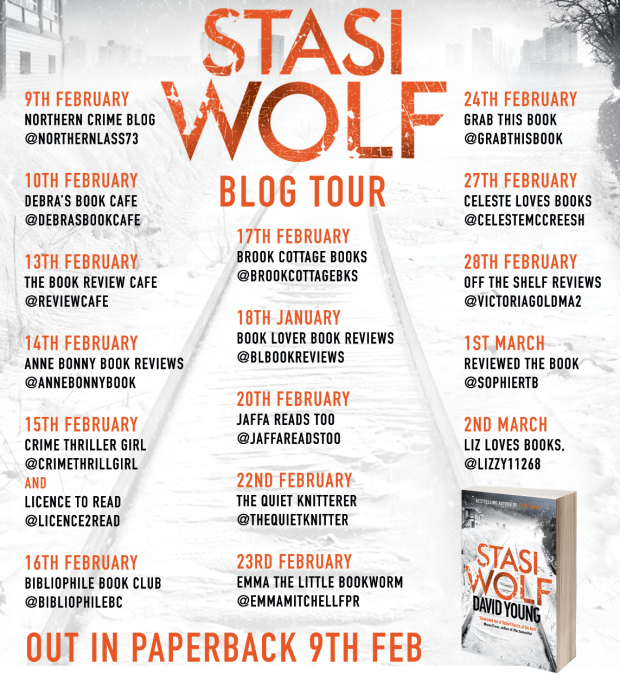
 

stasi-wolf-tour-banner

CTG’s CRIME THRILLER CLUB: #DEEPDOWNDEAD VALENTINE #COMP #WIN

img_4447


This week valentine’s day happens, and that sounds like a good excuse for a competition to me …

… so everyone who subscribes to my new Crime Thriller Club will be automatically entered into a prize draw with the chance to win this valentine’s prize (pictured) including:

  • A signed copy of DEEP DOWN DEAD
  • A box of valentine’s chocolates from Hotel Chocolat
  • A mini bottle of rose champagne (only to UK entrants, sorry!)
  • A pair of handcuffs (cos nothing says ‘be my valentine’ like a pair of handcuffs right?)

By signing up to the CTG Crime Thriller Club you’ll get access to my eNewsletters with exclusive subscriber competitions, content and will be the first to hear about my book news and events.

It only takes a moment, so CLICK HERE to sign up now to be in with a chance to win!

** This competition closes at 9pm on Sunday 19th February 2017 **

Rules
(1) One entry per subscriber (2) Open worldwide, but champagne will only be posted to UK addresses – sorry! (3) All entrants must be 18 years or over (4) The winner will be drawn at random (5) No cash alternative (6)  The judge’s decision is final and no correspondence will be entered into

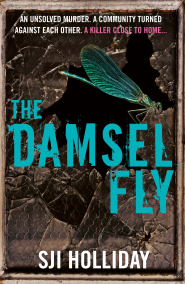
CTG REVIEWS: THE DAMSELFLY by SJI HOLLIDAY

the-damselfly

What the blurb says: “Katie Taylor is the perfect student. She’s bright and funny, she has a boyfriend who adores her and there are only a few months left of school before she can swap Banktoun for the bright lights of London. Life gets even better when she has an unexpected win on a scratch card. But then Katie’s luck runs out.

Her tragic death instead becomes the latest in a series of dark mysteries blighting the small town. The new school counsellor Polly McAllister, who has recently returned to Banktoun to make amends in her own personal life, is thrown in at the deep end as the pupils and staff come to terms with Katie’s death. And it’s not long before she uncovers a multitude of murky secrets. Did Katie have enemies? Is her boyfriend really so squeaky clean? And who is her brother’s mysterious friend?

With Banktoun’s insular community inflamed by gossip and a baying mob stirring itself into a frenzy on social media, DS Davie Gray and DC Louise Jennings must work out who really murdered Katie before someone takes matters into their own hands…”

THE DAMSELFLY is the third book in the Banktoun series, and a real firecracker of a read.

Series favourite, DS Davie Gray is back, joined by DC Louise Jennings to try and work out who killed local teenager Katie Taylor, a resident of the rather ill-fated Banktoun in Scotland.

As always with this series, I found myself hooked fast and pulled deep into the small town whisperings and curtain-twitching claustrophobia of the small Scottish town. Katie is a compelling character, and although she is only alive for a short time on the page, she is a constant presence within the book, one that has you willing DS Gray and DC Jennings on in their search for her killer.

But they don’t have an easy task. Banktoun is a place of many secrets, and getting them uncovered is a difficult job. With the police no closer to an arrest, and the outrage in the town growing by the hour, it isn’t long before social media is used to incite townsfolk to take matters into their own hands. Someone is playing an evil game. Question is, who?

As DS Davie Gray and DC Louise Jennings are soon to find out, in a town plagued by lies and resentments, danger can be far closer than you think.

I loved this book. It’s a brilliant page turner of a read with and a twisting, turning story that takes you on a rollercoaster of emotions. It’s also gut-wrenchingly emotive, with vivid characters, and a creepy and stiflingly intense location.

An outstanding police procedural that had me captivated from the very first page to the jaw-dropingly shocking finale, THE DAMSELFLY is a must read for all crime fiction fans.

THE DAMSELFLY is out today. You can buy it from Amazon here

And be sure to pop over to SJI Holliday’s blog here and follow her on Twitter @SJIHolliday 

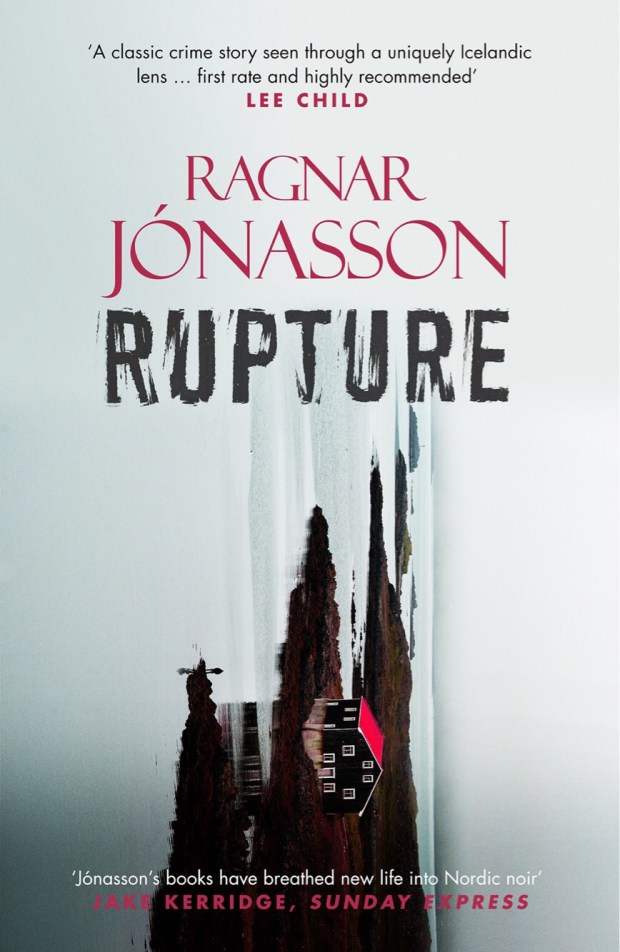
#RUPTURE Blog Tour: Ragnar Jonasson’s book launch in a deserted fjord

photo1

Photo credit: Tomas Jonasson


This evening I’m thrilled to be joined by Icelandic crime writer Ragnar Jonasson whose latest book RUPTURE is out now with Orenda Books. The book is already published in Iceland, and Ragnar’s popped by to talk about its rather unusual launch.

Over to Ragnar …

In 2012, Rupture was published in Iceland (as Rof). In Iceland, I usually have a traditional book launch at a downtown bookstore in Reykjavik, and we did just that for Rupture, but then I also had a bit of a crazy idea. I suggested to my publishers that we would do a second book launch in Héðinsfjörður, a fjord next to Siglufjordur, in the northernmost part of Iceland, where the book is set (actually the first crime novel ever to be set in this beautiful location).

Héðinsfjörður, in terms of its natural beauty, is of course an ideal spot for a launch, but there was this one downside; the fjord hasn’t been inhabited since 1951, so no-one lives there. But we decided to go for it, and I drove up north in the middle of winter ahead of the scheduled launch date, and those who may have read Snowblind know that Siglufjordur and neighbouring areas can be very unpredictable in terms of weather in the winter! So that was the second challenge, preferably to avoid any snowstorms.

When we arrived there, it turned out that the weather was actually incredibly good, still and bright. But would someone actually show up? Well, it wouldn’t be just me, because my parents, my brother and brother-in-law had joined me, but I was fully prepared to read a bit from the book to just them. Incredibly, though, people started showing up. Some from Siglufjordur, and some even further away, from Akureyri for example (the capital of the north, featured in Blackout) – and in the end we had about 40 people there listening to the reading. Needless to say, this was the first ever book launch in Héðinsfjörður!

RUPTURE is the fourth book in the fantastic Ari Thor series. Here’s the blurb: “1955. Two young couples move to the uninhabited, isolated fjord of Héðinsfjörður. Their stay ends abruptly when one of the women meets her death in mysterious circumstances. The case is never solved. Fifty years later an old photograph comes to light, and it becomes clear that the couples may not have been alone on the fjord after all. In nearby Siglufjordur, young policeman Ari Thor tries to piece together what really happened that fateful night, in a town where no one wants to know, where secrets are a way of life. He’s assisted by Isrun, a news reporter in Reykjavik, who is investigating an increasingly chilling case of her own. Things take a sinister turn when a child goes missing in broad daylight. With a stalker on the loose, and the town of Siglufjordur in quarantine, the past might just come back to haunt them. Haunting, frightening and complex, Rupture is a dark and atmospheric thriller from one of Iceland’s foremost crime writers.”

RUPTURE is out now, you can buy it from Amazon here

And be sure to follow Ragnar on Twitter @ragnarjo

img_9408

#TheIntrusions Blog Tour: Stav Sherez talks about writing Prologues


Today I’m delighted to be hosting a stop on the #TheIntrusions Blog Tour and am joined by fabulous crime writer Stav Sherez.

Stav is a fan of using prologues in his novels (as am I) and he’s kindly agreed to talk about his process for prologue writing and how the prologue in his latest book – THE INTRUSIONS – came about.

Over to Stav …

Every crime novel has a beginning, middle and end – but where, exactly, do you begin? The question of whether to prologue or not is one of the most frequently asked in creative writing classes. The answer is often hotly debated but, like everything else in fiction, there is no right or wrong way, only what suits the book in question.

I’ve seen so many creative writing tips and lists that tell you never to prologue. They claim it slows the action down, prevents readers from immediately engaging with the narrative, and is unnecessary.

I disagree with this. I love prologues. I love to read them and I love to write them. All my novels have featured them. And – despite being beginnings – they’re nearly always the last sections to be written.

There’s something about the very nature of a prologue that is perfect for creating mystery. The prologue, rather than putting off the action, plunges you straight into the story, not knowing if it’s the beginning, middle or end of the narrative. Prologues create a frame and that’s perhaps one of the main reasons I like them, the way they stand outside the main action – the prologue can chart events that take place days or weeks or even years before the central narrative or they can be enigmatic flash-forwards straight into the heart of the book. As a reader, my favourite type of prologues are the ones where I have no idea how they relate to the plot until three-quarters of the way through – it all clicks into place.

But I never get it right the first time. Or the second. Or the third. Or the twenty-third. Every novel I’ve ever written has featured several very different prologues before I settled on the final one. I never know how to start until I have reached the end.

The Intrusions proved the hardest of my novels to write a prologue for. I wrote what I thought was a decent prologue after I’d finished the first draft. It was set 30 years before the action of the novel and in another country – but it didn’t fit. It knocked the main storyline off-kilter. I cut it and rethought the beginning. My second prologue was 10,000 words and consisted of only one sentence! The idea was to start the book with a long tracking shot the way Orson Welles does in Touch of Evil. The prologue followed a relay of CCTV cameras across London on a Friday night, picking up the main characters, following them, dropping them, and roving across the capital. I’m kind of glad I didn’t stick with that one…

The next prologue was set during one of the character’s childhood years. It was a family dinner scene, static and tense and a world away from the previous prologue. I was quite happy with it but one of the benefits of doing many drafts is you get to read over the novel a hundred times or more and anything that doesn’t fit or is boring becomes obvious very quickly – and the new prologue was just too far removed from the action and themes of the novel.

I tried again. I started from scratch and this time the prologue, though it takes place some time before the action of the book, supplied part of the puzzle that Carrigan and Miller would later have to solve. It also introduced some of the themes I wanted to explore in the novel and, finally, it felt exciting, plunging the reader directly into peril.

It took me two and a half years of writing different prologues before I found the one which suited the book but, sometimes, you need to write all the wrong things before you can get it right.

A huge thank you to Stav Sherez for popping over to the CTG blog today and talking about prologues.

THE INTRUSIONS is out now. Here’s what the blurb says: “When a distressed young woman arrives at the station claiming her friend has been abducted, and that the man threatened to come back and ‘claim her next’, Detectives Carrigan and Miller are thrust into a terrifying new world of stalking and obsession.

Taking them from a Bayswater hostel, where backpackers and foreign students share dorms and failing dreams, to the emerging threat of online intimidation, hacking, and control, The Intrusions explores disturbing contemporary themes with all the skill and dark psychology that Stav Sherez’s work has been so acclaimed for.

Under scrutiny themselves, and with old foes and enmities resurfacing, how long will Carrigan and Miller have to find out the truth behind what these two woman have been subjected to?”

THE INTRUSIONS is out now on Kindle and the 2 February in trade paperback. You can order it from Amazon here

To find out more about Stav Sherez hop over to his publisher Faber’s website here and be sure to follow him on Twitter @stavsherez

You can also check out the great stops on THE INTRUSIONS Blog Tour …

intrusions-blog-tour

CTG REVIEWS: THE INTRUSIONS by STAV SHEREZ

unknown

What the blurb says: “When a distressed young woman arrives at the station claiming her friend has been abducted, and that the man threatened to come back and ‘claim her next’, Detectives Carrigan and Miller are thrust into a terrifying new world of stalking and obsession.

Taking them from a Bayswater hostel, where backpackers and foreign students share dorms and failing dreams, to the emerging threat of online intimidation, hacking, and control, The Intrusions explores disturbing contemporary themes with all the skill and dark psychology that Stav Sherez’s work has been so acclaimed for.

Under scrutiny themselves, and with old foes and enmities resurfacing, how long will Carrigan and Miller have to find out the truth behind what these two woman have been subjected to?”

Not only is Stav Sherez a masterful word wizard, he also knows how to tell one hell of a story.

THE INTRUSIONS is the latest book in the Carrigan and Miller series and thrusts the detective duo deep into the warped and brutal world of a smart and sadistic killer who is leaving a trail of broken minds and broken bodies in their wake.

This is one of those novels that grabs you from the very start and dares you not to look away as it takes you on an uncompromising dive into the dark recesses of online behaviour. It’s an authentically real feeling police procedural with a strong emotional heart. Every character is rounded and nuanced, and every twist and turn in the plot hooks you harder and propels you quicker through the chapters towards the breathtaking finale.

Darkly poetic and chillingly haunting, THE INTRUSIONS gets under your skin and into your mind, lingering long after the final page has been turned.

An absolute must read for all crime fiction fans.

THE INTRUSIONS is published on 31 January on Kindle and the 2 February in trade paperback. You can order it from Amazon here 

To find out more about Stav Sherez hop over to his publisher Faber’s website here and be sure to follow him on Twitter @stavsherez

You can also check out the great stops on THE INTRUSIONS Blog Tour …

intrusions-blog-tour


GUEST POST: Dave Weaver talks Unreliable Narrators

unknown

Today I’m handing over the reins at CTG HQ to author Dave Weaver. Dave’s a fan of unreliable narrators and uses one in his latest book THE UNSEEN. Over to Dave …

The Reliable ‘Unreliable Narrator’

It’s something both ‘Gone Girl’ and ‘The Girl on the Train’ have in common as well as many other popular thrillers and famous novels across genres – the ‘unreliable narrator’. Our protagonist appears to be balanced and coherent but then unfolding events contradict their skewed reasoning and drive an ever-growing wedge between their perception of reality and ours. Things just don’t add up; the reader can no longer take the story at face value. Is the POV character insane, lying, deluded or just plain wrong? We won’t know until the final piece of the jigsaw that is their damaged mind fits into place.

This is what gives the narrative its strength; the need to understand the true nature of the head we are locked in and the reason that person disguises it. For once we give them our trust there is no escape from the consequences of their actions. We become helpless partners in their chaotic drift towards disaster.

The unreliable narrator works particularly well in crime and mystery plots where the reasons for a person’s odd behaviour are shown in the story’s resolution. But how can the author make the reader understand that he or she is not to be believed or trusted? Clues must be planted at regular intervals to make sure the reader understands that things are not as they should be, even if the narrator remains unaware of this. Other characters’ reactions, the narrator’s inappropriate behaviour in various situations and a general sense of normalcy slipping away can help achieve this.

The phrase ‘unreliable narrator’ was first coined by literary critic Wayne Booth in the early 1960s. It has many classic examples:

Humbert Humbert in Vladimir Nabakov’s ‘Lolita’, whose unreliability is shown by his outrageous claims, endless self justification and contempt for others; Alex from Anthony Burgess’ dystopian classic ‘A Clockwork Orange’ who proves at the very start to be a violent, manipulative sociopath who uses a fictional language, has delusions of grandeur and enjoys exaggerating his reprehensible acts to strut and show off to us, his horrified accomplices; the main character in Chuck Palahniuk’s Fight Club’, a maladjusted insomniac who joins an underground fight club for therapy that quickly transforms into a terrorist group, leading us down a particularly nasty rabbit hole to a stunning reveal that makes us question everything gone before; J. D. Salinger’s cynical teenage Caulfield in ‘Catcher in the Rye’, an admitted liar whose opinions are provoked by adolescent angst and filtered through the distorting prism of immaturity.

What does the writer gain from this deception of using a misleading main character to tell the story? The main reward would seem to be balance, or rather lack of it. If the reader’s perceptions are continually challenged they are in a state of constant tension and the story becomes a fairground ride of unexpected twists and turns. They cannot rely on their guide with any degree of certainty and they cannot predict the outcome. In fact anything could happen; a healthy state for a thriller to be in.

Sometimes the narrator is unreliable by nature, so awful they cannot be objective about themselves even when behaving abominably; they continually self-justify the most terrible acts.

Sometimes they are damaged; an accident or psychological impairment has caused them, and by definition us, to see the world in a particular way others don’t.

Sometimes they are young or naive; the narrator of Mark Haddon’s ‘The Curious Incident of the Dog in the Night’ is an autistic child seeking to explain their understanding of events. There is no trickery involved in these reports, at least on the teller’s part; they are telling us what they know. It is the miss-fitting framework around what they say that gives the lie to their words.

A further type of narrator is different from the above in that their misconceptions are due to a lack of, or incorrect, information. This is particularly effective in the thriller genre as having only half the picture can lead to some pretty spectacular leaps in the dark. Of course, in crime there are any number of unreliable narrators; they’re called witnesses and constantly contradict each other. The character of the investigator who will sift all this for the truth must be the one reliable factor. If we cannot trust their best efforts at enlightening us anarchy will quickly ensue. This would be problematic in a crime novel which is a carefully constructed and methodical machine with room for doubt and suspension of disbelief but never anarchy.

A final benefit of the unreliable narrator is that they can be used to cross genres. If their state of mind is in question we may start out with what appears to be fantasy and end up in psychological melodrama thus getting the best of both genre worlds; something I have attempted with my latest novel, ‘The Unseen’.

However the device of unreliable narrator is used though, it generally proves to be a reliable method of delivering the chilling psychodrama every thriller writer aspires to and every reader wants to read.

Big thanks to Dave Weaver for sharing his thoughts on the reliable ‘unreliable narrator’.

Dave’s latest book THE UNSEEN is out now. Here’s the blurb: Ex-advertising man John Mason is driving to the small town of Hambleford to view a cottage that is for sale, when he is caught in a sudden hailstorm. It brings back memories of the crash a year before in which he lost his wife Judith; a crash caused by a woman in white standing in the middle of the road – a woman who was nowhere to be found after the accident. As the hailstorm lashes his car he has a vision of her, with empty eyes and a silent screaming mouth. John had been having regular dreams about her ever since the crash, but lately they have been replaced by dreams of an idyllic cottage on a hillside like the one in which Judith had wanted them to live. John is special – he sees things that others can’t. Since childhood he’s had strange experiences but has tried to shut them out; now he thinks Judith is trying to contact him, that she’s been sending his mind images of the house where her spirit will join him again, and that Pine Cottage in Hambleford is literally the cottage of his dreams. But things aren’t all as they appear and John quickly becomes convinced that a spirit other than Judith is trying to manipulate him.”

You can buy THE UNSEEN from Amazon here

And find out more about Dave over on the Elsewhen Press website here


CTG EXCLUSIVE: NIGHT MARKET by DANIEL PEMBREY LAUNCHES & ‘Mirakel van Amsterdam’ GIN #GIVEAWAY


After a cracking start to the week at a super fun speakeasy event downstairs in The Vault at Milroy’s of Soho we’re on an alcohol theme here at CTG HQ.

On Tuesday night, Daniel Pembrey, Rod Reynolds, Michael Grothaus and me chatted about ‘Spirits in Noir Fiction’, moderated by expert noirist Barry Forshaw. There was bookish conversation, whiskey cocktails (I can recommend the Smoking Gun) and the fabulous folks from South Ken Books created a pop-up bookstore around one of the fireplaces! [Hop over to the lovely Joy Kluver’s blog here to read a full write-up from the event]

At the event, Daniel Pembrey talked about his new book NIGHT MARKET which is out in e-book today. This is the sequel to the fabulous THE HARBOUR MASTER and Detective Henk van der Pol is hitting the Dutch gin. As you may already know, Henk likes to have a beer and a gin chaser; it’s sometimes called a kopstoot in Amsterdam (headbutt), or a duikboot in Flanders (submarine).

You can buy NIGHT MARKET on Kindle here

THE COMPETITION: To toast the launch of this Harbour Master sequel, Daniel is giving away a bottle of Mirakel van Amsterdam – single old grain, Henk’s favourite, and originating from centuries-old independent Amsterdam distillery Van Wees. Trust me, this is a bottle you want in your drinks cabinet – though don’t have it within too easy reach if you want to keep temptation at bay! (I believe the seal is unbroken.)

TO ENTER: email Daniel, danielpembrey@gmail.com, saying where you found the first occurrence of Henk ordering a beer-with-gin-chaser in Night Market

The winner will be picked on 5th February.

Good luck!


[Please note the winner needs to provide a UK address for shipment and to be aged over 18 years]


GUEST POST: Ankush Saikia talks about his Arjun Arora series


Today I’m handing the controls of CTG HQ over to Ankush Saikia who’s here to talk about his detective Arjun Arora series, including Dead Meat (2015) and Remember Death (2016), both published by Penguin Random House India.

Welcome Ankush Saikia! So how did the Delhi detective series comes about, and what is the social relevance of the books?

I was born in Assam in 1975, and grew up there and (along with a few years in the US, where my father was teaching) in Shillong, both in North East India. When I was 21 I left for Delhi, where I stayed for a long time (more than a decade), working first in journalism and then in publishing. Delhi was a city I grew to love and detest in equal measure, a tough, almost-violent place that taught one how to survive. I returned to North East India in 2011, and, after writing a noir thriller set in Shillong (The Girl From Nongrim Hills, Penguin India 2013), I began trying to write something which had been on my mind for a while: a dark novel set in Delhi that looked at the multiple layers of existence in that city.

The detective came about as a character who, by virtue of his profession, would be able to easily access different levels of society in the capital. Delhi is a city of outsiders, but to make Arjun Arora even more of an outsider, I made him the only child from a mixed marriage (a Punjabi father, a Nepali mother) who grew up in North East India, but was forced to move with his family in his teens to Delhi after his construction-supervisor father was shot in the knee by insurgents in remote Manipur. His memories of his time in North East India remain a source of nostalgia for Arjun Arora; he is someone with one foot permanently in the past. Then there is his time as a major in the Indian army, which he was asked to leave due to insubordination. A stint as a private security contractor in Iraq sees him narrowly escaping a beheading after being kidnapped. Back in Delhi he tries his hand and fails at various businesses, and starts drinking too much. His wife and teenage daughter leave him. Then he finds something which he is good at, being a detective, even as handling cases involving greed and deceit leads him further into the darkest corners of his soul.

Both the books so far have elements of true crime in them: the infamous Delhi “tandoor” murder and cricket match-fixing in the first book, a gruesome murder case of a woman in Bangalore (she was drugged and buried alive in a box) and the strange lives of Bollywood actresses from the 1960s in the second. The third book should see Arjun Arora travel to Nagaland and Manipur in North East India in connection with a case, where he gets mixed up in smuggling and insurgent activity.

As far as the social relevance of the books are concerned, I would like to think they shine a light on the varied lives and classes in India, from the high to low, from the innocent to corrupt, and reinterpret the traditional detective character in an Indian setting. Also, the country is undergoing social change on a vast scale, which means there are more and more people—especially in the cities—who are adrift, cut loose from traditional beliefs and a sense of rootedness. Arjun Arora can be taken as a representative of this change. India is a vast country with myriad problems—and so that can only mean more interesting cases for detective Arjun Arora in the future.

A big thank you to Ankush for joining us at CTG HQ today.

To find out more about Ankush Saikia over on his website: www.ankushsaikia.com

Follow him on Instagram & Twitter: @ankushsaikia

Publisher’s links …

Remember Death http://penguin.co.in/book/fiction/remember-death/

Dead Meat http://penguin.co.in/book/fiction/dead-meat/

The Girl from Nongrim Hills http://penguin.co.in/book/fiction/girl-nongrim-hills/

And check out some reviews here …

Remember Death

http://www.hindustantimes.com/books/review-of-ankush-saikia-s-remember-death/story-DxUn52QjxME4bvx677o7KM.html

Dead Meat

http://www.tripfiction.com/murder-thriller-set-in-delhi-best-indian-noir/

The Girl from Nongrim Hills

http://www.deccanherald.com/content/374577/northeast-noir.html


#DeepDownDead DEBUT DIARY: LAUNCH PARTY!

Last week we had the official DEEP DOWN DEAD launch party at the fabulous Waterstones Piccadilly bookstore in London. I was really nervous beforehand – what if no one came? What if I said something stupid? What if I was too nervous to say anything at all?

I shouldn’t have worried – so many lovely people came along to celebrate the launch, and we packed out the room until there was standing room only – amazing! Also, I had my marvelous publisher Karen Sullivan of Orenda Books at the helm, my brilliant agent Oli Munson providing moral support, and the awesome crime writer Martyn Waites to interview me. They made it fun (for me, and hopefully everyone else!), and soon after Martyn asked me the first question (possibly something to do with tasers!) I forgot to be nervous and had fun.

There was wine, and beer, and bourbon, and cake. There was cornbread (my most favourite food!) and peanut butter chocolate cookies (big thank you to Joy Kluver for baking them) plus Reeces Pieces and Hersheys Kisses. And country music!

Me and Martyn dressed appropriately for the occasion – he wore a gorgeous red western shirt and I wore my favourite red with white flowers cowboy boots. I wore a sparkly black dress too, although in some pictures it kind of looks like I’m not wearing a skirt (note to self – wear a longer dress next time!).

A huge thank you to everyone who came along to celebrate the launch of DEEP DOWN DEAD, who bought books and let me sign them, and who took photos and live tweeted, and who came over and said hello. And to those who couldn’t make it and sent messages and tweeted and RTed the event.

Thank you – you made the night special.