CrimeFest announce their 2013 Awards Shortlists

CRIMEFEST logo

CRIMEFEST logo

There’s not long to go before the annual CrimeFest crime writing convention running from 30th May – 2nd June in Bristol, England.

A highlight of the event is the CrimeFest Awards, and this week the shortlists for 2013 have been announced.

First up, is The Audible Sounds of Crime Award. This award celebrates the best crime audiobook published in both print and audio in 2012. Shortlists and winning titles are selected by Audible.co.uk, the UK’s leading producer of downloadable audiobooks.

And the shortlist is:

– Michael Connelly for The Black Box read by Michael McConnohie (Orion Audio)

– John Grisham for The Racketeer read by J.D. Jackson (Hodder & Stoughton)

– Peter May for The Lewis Man read by Peter Forbes (Quercus)

– Jo Nesbø for Phantom read by Sean Barrett (Random House with Isis Publishing)

– Ian Rankin for Standing In Another Man’s Grave read by James MacPherson (Orion Audio)

Next up is The Goldsboro Last Laugh Award. This award is for the best humorous crime novel of 2012. The shortlist and winning title are selected by a team of British crime fiction reviewers.

The shortlist is:

– Colin Bateman for The Prisoner of Brenda (Headline)

– Simon Brett for The Corpse on the Court (Severn House)

– Declan Burke for Slaughter’s Hound (Liberties Press)

– Ruth Dudley Edwards for Killing The Emperors (Allison & Busby)

– Christopher Fowler for Bryant & May and the Invisible Code (Doubleday, Transworld)

– Hesh Kestin for The Iron Will of Shoeshine Cats (Mulholland Books, Hodder & Stoughton)

The next up is the eDunnit Award. This award recognises the best crime fiction ebook published in 2012 in both hardcopy and in electronic format. The shortlist and winning title are selected by a team of British crime fiction reviewers.

The shortlist is:

– Andrea Camilleri for The Age of Doubt (Mantle, Macmillan)

– Ruth Dudley Edwards for Killing The Emperors (Allison & Busby)

– Christopher Fowler for Bryant & May and the Invisible Code (Transworld)

– C.J. Sansom for Dominion (Mantle, Macmillan)

And finally, the H.R.F. Keating Award. This award is for the best biography/critical book related to crime fiction ebook published between 2008 and 2012. Again, the shortlist and winning title has been selected by a team of British crime fiction reviewers.

The shortlist is:

– Declan Burke & John Connolly for Books to Die For (Hodder & Stoughton, 2012)

– John Curran for Agatha Christie’s Secret Notebooks (HarperCollins, 2009)

– Barry Forshaw (editor) for British Crime Writing: an Encyclopaedia (Greenwood World Publishing, 2008)

– Christopher Fowler for Invisible Ink (Strange Attractor, 2012)

– Maxim Jakubowski (editor) for Following the Detectives (New Holland Publishers, 2010)

– P.D. James for Talking about Detective Fiction (The Bodleian Library, 2009)

Now the shortlist has been announced, the nominees have to wait it out until the winners of each award are  announced at CrimeFest’s annual Gala Dinner on Saturday 1st June. With so many great books on the shortlists it’s going to be a tough call.

I’ve got my ticket and I can’t wait to find out who the winners are.

To find out more about CrimeFest hop on over to www.crimefest.com

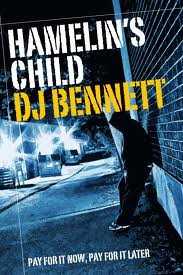
Just Finished Reading: Hamelin’s Child by DJ Bennett

cover image

cover image

What the blurb says: “Michael Redford died on his seventeenth birthday – the night Eddie picked him up off the street, shot him full of heroin and assaulted him. 

Now he’s Mikey and he works for Joss. With streaked blond hair and a cute smile, he sleeps by day and services clients at night. Sometimes he remembers his old life, but with what he’s become now, he knows there is no return to his comfortable middle-class background.

Then he makes a friend in Lee. A child of the streets, Lee demands more from friendship than Mikey is prepared to give. But the police are closing in on them now and Mikey’s not sure anymore who he really is – streetwise Mikey or plain Michael Redford.”

Set in the seedy world of London’s drug and prostitution rings, this is a harrowing and gritty story. However, as brutal as parts of this novel are, I found that I kept reading on, wanting to find out if Mikey could turn things around, get out of the horrendous situation he found himself in, and get some of his old life back.

This is a well written, fast paced thriller with plenty of twists and turns to keep the reader guessing. It’s gritty and has adult content, but is never gratuitous.

If you’re looking for hard-hitting realism, this could be well worth a read.

[With thanks to the author DJ Bennet for my copy of Hamelin’s Child]

Review: Just What Kind of Mother Are You? by Paula Daly

cover image

cover image

What the blurb says: “She’s gone and it’s your fault. You were supposed to be watching your best friend’s 13-year-old daughter, and now she’s missing. But you know she’s not just missing – she’s been taken. Because Lucinda is the second girl to be abducted within a fortnight. And the first was found on a busy high street, naked and severely traumatized. No one expects the next to be so lucky. You’re going to have to figure this out – who did it. Because if you don’t, then Lucinda will be next. And you’ll never forgive yourself.”

Lisa’s life is beyond hectic. With her family, her job at the animal shelter, and the demands of her friends she rarely has a minute to herself. It’s easy to empathize with her, and it’s easy to understand how she might overlook the odd detail. An odd detail that leads to her worst nightmares coming true.

Alternating point-of-view characters – Lisa, DC Joanne Aspinall, and the child abductor – show the situation from three different angles. Like all the characters in this book, they don’t feel like characters in a story, they feel like real live people.

As DC Aspinall investigates the case as part of her job, Lisa sets out to find the truth herself as a way to try and make amends to her friend. As a reader you get a real sense of the close-knit community in Troutbeck – a small ‘typically English’ village near Lake Windermere in the Lake District. But the close knit-ness can be a blessing and a curse, and some residents’ lives are not exactly as they might have seemed, as Lisa discovers.

From the outset, the story sets off at a rapid pace. For me it was a real page turner with plenty of twists and turns in the plot to keep me hooked. High stakes and high tension equalled high speed reading – I finished this book in 24 hours, unable to put it down until it was finished. It also made me want to go and adopt another animal from the local shelter.

What Kind of Mother Are You? Is a stunning debut novel.

If you enjoy fast-paced psychological thrillers with an emotional kick, then this is for you. Read it. Now!

Highly recommended.


[With thanks to the publishers, Bantam Press, for my copy of Just What Kind of Mother Are You?]

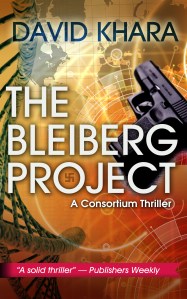
Interview: Author David Khara talks to us about The Bleiberg Project

cover image

cover image

Today, I’m pleased to welcome David Khara, author of The Bleiberg Project, a new conspiracy theory action thriller from France.

The Bleiberg Project is an adrenaline-pumping conspiracy thriller and the first in the Consortium Thriller series by the French writer David Khara. Are Hitler’s atrocities really over? This thriller full of humour and humanity was an immediate sensation in France, catapulting the author to the ranks of the country’s top thriller writers. It is now available in English.

Before we get started with the interview, here’s a little taster of the book (please note contains strong language):

Excerpt

“Besides work and getting high, what do you do all day?”

No answer. You’re out of luck, pal. I’m pig-headed. “The journey will seem shorter if we talk, don’t you think?”

He sighs. “When I’m not on an assignment, I paint.” I can’t help laughing. “You think that’s funny?”

“I’m picturing you on a stool with your palette and brush, gazing at a green valley or a snowy mountaintop. Sorry, but with your look and build, it’s funny!”

“If you’re just going to make fun of me, the trip is going to seem very, very long.” He clams up.

“There’s no harm in a little fun. OK, I’ll stop,” I snort, laughing even louder. Why do giggling fits always hit at inappropriate times?

“What about you? Besides driving home from clubs dead drunk, what do you do?”

Bastard. That’s below the belt. On second thought, I guess I deserved it. “I try to survive. I thought about blowing my brains out, but I’m too much of a coward. So I drink. I smoke like a chimney. Every day, I destroy myself a little bit more.”

“Suicide isn’t a sign of bravery, but of giving up. We all make mistakes. You don’t judge somebody by the number of blows they can give.”

“What do you judge somebody by, Mr Freud?”

“The number of blows they can take.”

His words hit home. “You’ve taken a lot, right?” I ask. A long, long beat.

“More than you can ever imagine.”

Why am I not surprised? This guy’s been around the block. I’d bet my life on it. “How do you do it?”

“Pardon me?”

“Blowing guys away like that. How do you do it?”

“Who said it was easy?” He sighs heavily. A long awkward silence.

(Excerpted from The Bleiberg Project by David Khara. First published in French as Le Projet Bleiberg, ©2010 Editions Critic. English translation ©2013 Simon John. First published in English in 2013 by Le French Book, a digital-first publisher specializing in best-selling mysteries and thrillers from France.).

And now, for the interview
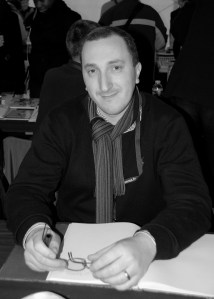
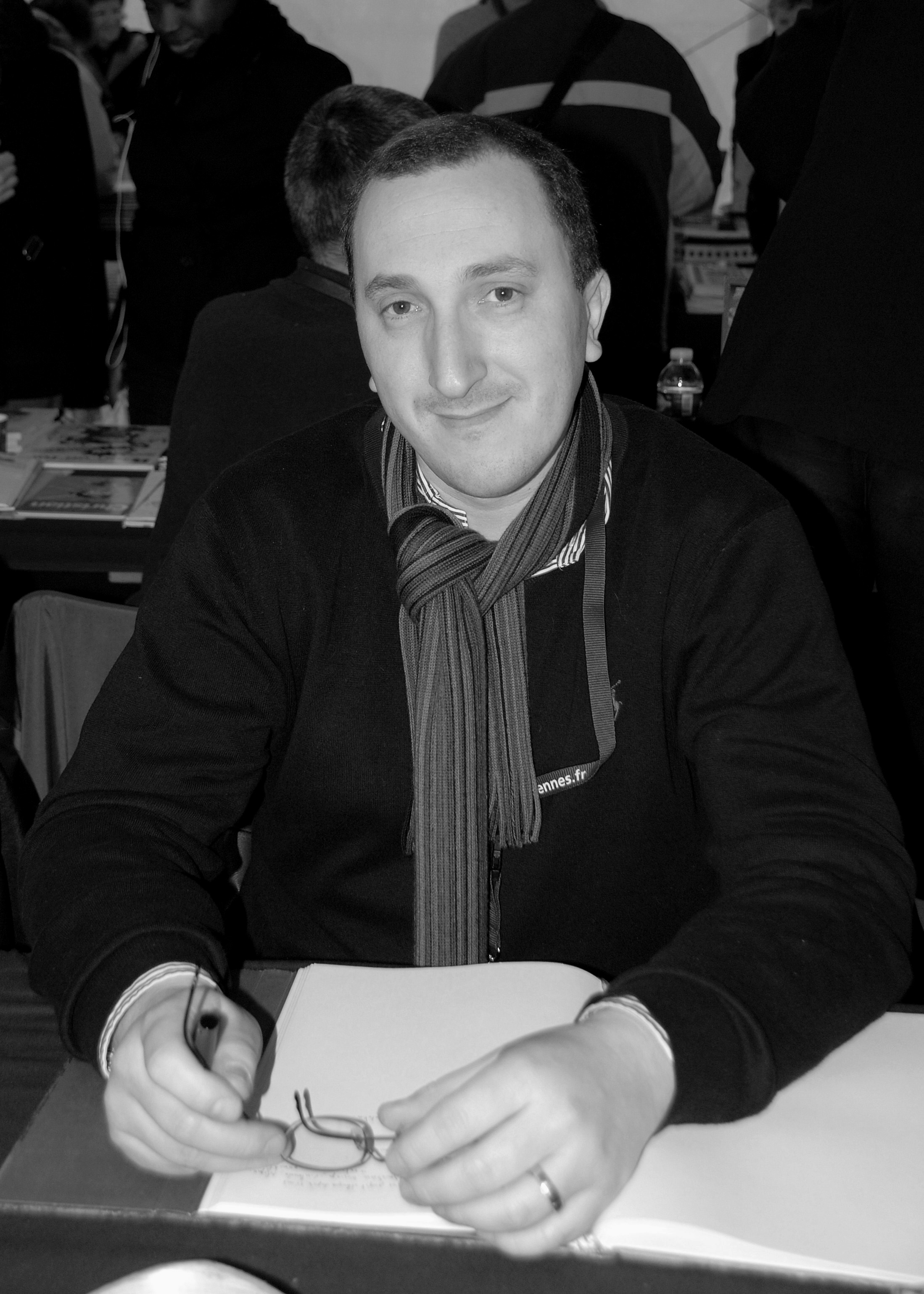
Author David Khara

Author David Khara

So David, your new book, The Bleiberg Project, is a thriller with links to World War II. What was it that inspired you to write a novel along that theme?

The whole idea for The Bleiberg Project idea came while I was driving to my office, listening to the news. A pharmaceutical company was doing research on an orphan disease that touched fewer than 100 kids in Europe. A man said that the study was being ended because the budget was 50,000 euros short. I was stunned. These companies make tons of money, amazing profits, and 50,000 euros is a drop in the ocean. When I got to my office, I started looking into the subject and found articles establishing links between Nazi and Japanese scientists during WWII and pharmaceutical companies. I also found information about how Allied governments were interested in the results of immoral and incredibly cruel human experiments. Through my research, I realized the world we live in rose up from the ashes of war, and was built on the corpses of 60 million victims. I wanted to write about it, through entertainment to make it more bearable.

What research do you do to ensure the atmosphere, locations and characters feel authentic?

The answer is pretty easy: 1000 hours listening to survivors, watching documentaries over and over again, and reading biographies. The point was not for me to merely tell the stories. I needed to get in the minds of both victims and criminals. I wanted to be there with them. This inspired many of the characters of the series, even those set in the present day. And everything that happens in the past is, at one point or another, is based on the truth.

Tell us a little about your writing process, do you plot out the story events before sitting down to write, or do you drive right in and see where the story takes you?

It is a very delicate mix of both. I’ve got a few dots I need to link together to get the whole picture. I do not use notes, nor do I write an outline. I know what I’m going to write, and since the novels are built as puzzles with chapters taking us back in time, I have everything in mind before starting. That means I constantly think about it. There is just no day off when I start working. Still, the absence of a written script gives the characters some space to explore unplanned directions. My job is then to make sure they don’t stray too far from the plot and my goals.

How do you organise your writing day: do you have a favourite time and place to write?

My writing day is a well-established ritual. I write in my garden, a cup of coffee on the left side of my computer, and my cigarettes (bad, I know) on the right side.  I put sunglasses on, then headphones because I need music to keep me in the mood of each chapter. With that, I’m ready for 6 to 8 hours of intensive writing. I usually work from 10 in the morning to 6 in the evening, with a break for lunch. When I’m not in the mood for writing, I go back to my research.

And what’s next for you, are you planning your next novel, or already well into the writing of it?

The Morgenstern Project, the third book in the Consortium thriller series, was just released in France, so I’m traveling a lot for book signings and interviews. My next novel is planned, and I’ll start writing it pretty soon and it is about time because I’ve had it in mind for three years now and lots of readers ask for it. The Bleiberg Project movie production should move to a new phase soon, which will have a direct impact on my schedule. 2014 will be a very busy year, believe me.

A big thank you to David Khara for dropping by to talk to us. To find out more about David and The Bleiberg Project, you can check out the link below:

Web page: http://www.thebleibergproject.com

The Bleiberg Project is out now and available via Amazon Kindle, Barnes and Noble, and Kobo.
Fancy doing an MA in Creative Writing – Crime Thriller Novels?

English: City University The City University d...

English: City University The City University dates back to 1894 when it was founded as the Northampton Institute (being located in Northampton Square). It achieved university status in 1966, as an independent institution outside the University of London federation. It has always had strong links with the City of London and the Lord Mayor is the university’s chancellor. This attractive sign stands outside a rather less attractive concrete building on Spencer Street. (Photo credit: Wikipedia)

Ever thought of doing an MA in Creative Writing? How about one that specializes in crime thriller novels?

Well, if you’ve ever toyed with the idea, this could be the perfect course for you …

City University, London, added a Crime Thriller Novels strand to their already hugely popular MA in Creative Writing in 2012. I’m lucky enough to be one of the first cohort of students, and I’m having a fantastic time. It’s lots of work, lots of reading, and it’s challenging and encouraging all at once. I’d certainly recommend it.

Sound like it’s something you’d be interested in?

If so, you can find out more over at the City University website at: http://www.city.ac.uk/courses/postgraduate/creative-writing-novels

Also, there’s an open evening on Wednesday 19th June from 5pm – 7pm, so you can meet the tutors and ask questions about the course.

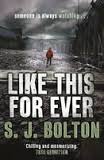
Review: LIKE THIS FOR EVER by S.J. Bolton

cover image

cover image

What the blurb says:

“Bright red. Like petals. Or rubies. Little red droplets.

Barney knows the killer will strike again soon. The victim will be another boy, just like him. He will drain the body of blood, and leave it on a Thames beach. There will be no clues for detectives Dana Tulloch and Mark Joesbury to find.

There will be no warning about who will be next.

There will be no good reason for Lacey Flint to become involved … And no chance that she can stay away.”

It’s hard to write a review of this novel without included spoilers and I don’t want to spoil the story for you. So all I’m saying is that Barney, an eleven-year-old boy with a gift for spotting patterns, is looking for the connections to help him solve the child murders while he’s home alone while his Dad works late. He’s also Lacey Flint’s neighbour.

The story is shown primarily from three perspectives – Barney’s, Lacey’s and Dana’s. This lets you, as the reader, in on a lot more of the facts than any one of the main characters have – a sure-fire recipe for heart-banging moments!

The story is artfully plotted, with many possibilities for who is behind the killings. This, and the multiple twists and turns, create an unputdownable puzzle that kept me reading well into the night.

But it wasn’t just the puzzle that kept me reading. SJ Bolton creates such deeply drawn characters, like the smart, often strong and yet also emotionally fragile heroine, Lacey Flint, that I felt compelled to read on just to stay with them on their journey within the story.

As well as motivation to murder, the story touches on a number of themes including modern-day vampire culture, online stalking and how social media influences, aids and inhibits investigations.

Utterly gripping, tense and suspenseful: this is a real page-turner of a crime novel.

Highly recommended.

[My copy of Like This For Ever was provided by the publisher]

Today is Get Writing 2013 Day!

Get Writing 2013 logo

Get Writing 2013 logo

Today I’m at Verulam Writers’ Circle’s Get Writing 2013 Conference at the University of Hertfordshire’s De Havilland Campus.

As well as attending many of the wonderful workshops and sessions at the conference, I’ve got the pleasure of chairing the Crime Panel in the Main Hall.

The four fabulous crime writers on the panel are:

ANN CLEEVES

Ann is the author of the books behind ITV’s VERA and BBC One’s SHETLAND. She has written over twenty-five novels, and is the creator of detectives Vera Stanhope and Jimmy Perez – characters loved both on screen and in print. Her books have sold over 1 million copies worldwide.

LESLEY HORTON

Lesley’s books have been described as interesting, serious and gritty. After a career in teaching, Lesley took early retirement and has written five novels featuring DI (now DCI) John Handford and has completed her sixth. Her next novel will be a psychological suspense stand-alone. She is a founder member of the Airedale Writers’ Circle set up in 1995.

ADRIAN MAGSON

Adrian is the author of 13 crime/thriller novels and hundreds of short stories and magazine articles. His latest novels are ‘ Retribution’, the fourth in his Harry Tate spy series, and ‘Death on the Pont Noir’, third in his Inspector Lucas Rocco French police series. He’s a reviewer for Shots Magazine, he writes the ‘Beginners’ and ‘New Author’ pages for Writing Magazine, and is the author of ‘Write On! – The Writer’s Help Book’ .

CLARIE McGOWAN

Claire is the Director of Crime Writers’ Association and teaches on the new Crime Fiction MA at City University, London. Her first novel, The Fall, was published in 2012. Her second novel, The Lost, featuring forensic psychologist, Paula Maguire, was published earlier this month.

I’m really looking forward to it.

You can follow Get Writing 2013 on Twitter at @GetWriting2013

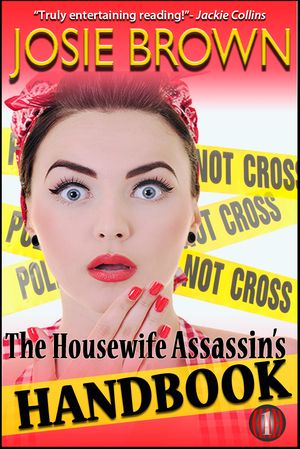
Review: The Housewife Assassin’s Handbook by Josie Brown

cover image

cover image

Donna Stone isn’t a regular mom. She might be super efficient at managing her home, and her three kids, but she’s got a deadly job – she’s a trained assassin focused on avenging the death of her husband, Carl.

But things hadn’t always been that way, until Carl’s death five years earlier she’d been unaware of his job as an assassin for the black ops organisation known only as Acme Industries. That all changed the night she gave birth to their third child, and Carl’s car blew up on the way to the hospital.

Since then, Donna trained hard and has become an elite ‘honey trap’ assassin. When Acme Industries discover that the organisation believed to be responsible for Carl’s murder, The Quorum, have planted operatives in Donna’s community, she’s keen to bring them to justice. So they decide to bring Carl back from the dead (in the shape of sexy super-agent, Jack) to act as bait. As they race against time to foil The Quorum’s plans, Donna discovers that everything might not be as she’s been led to believe.

The Housewife Assassin’s Handbook is a hilarious, laugh-out-loud read. Donna is a fantastic character – practical, witty, and kick-ass tough. There’s plenty of action – both in and out of the bedroom – and although there are a few grittier scenes, generally this is a light, humourous caper of a crime novel. I especially love the house-keeping tips at the start of each chapter – each with its own deadly twist!

This book is perfect for relaxing in the bath with after a long day. I can’t wait to read the next in the series.

Highly Recommended.

[I bought my copy of The Housewife Assassin’s Handbook via Amazon Kindle] 

Author Interview with Chris Nickson

Chris Nickson

Chris Nickson

Today, I’m delighted to welcome Chris Nickson, author of the historical crime series featuring Constable of Leeds, Richard Nottingham, to the CTG blog.

Chris, your new book, At the Dying of the Year, is your fifth novel in the Richard Nottingham series. What was your inspiration for creating a historical crime series?

When I began it was simply a book, not series. It took me a long time to find a publisher for The Broken Token, until I found Lynne Patrick at Crème da la Crime, who liked the book and wanted to put it out. I’d published plenty of non-fiction books before, but a novel, that was something altogether different. When she said, ‘What’s next?’ I had to think seriously. Continuing the series seemed the natural option. These characters had more to tell me, I wanted to know more about their lives. Then Lynne sold Crème to Severn House and they wanted the next one, Cold Cruel Winter. From there it just continued. Richard Nottingham, John Sedgwick, Rob Lister, their families have become friends now. There really was a Richard Nottingham who was Constable of Leeds from 1717-1737, although the role would have been more ceremonial than my character.

The series is set in 1730s Leeds, England, what research do you do to ensure the historical setting feels so real?

I’ve always been a history buff, but Leeds history – the history of my hometown – wasn’t something I really began to discover until I was living in Seattle! I’d go back to Leeds every year and buy the history books on the city that appeared. Then, when eBay began I could find some rarer, older books on there at low prices. The big problem was the postage costs, of course…Leeds also has a good historical society, which has their own publications and I’ve acquired some of them and been in their library. Essentially I just keep reading and learning more and more. I find it fascinating. I focus on the ordinary people, rather than the rich, and their lives, of course, aren’t documented. But what I try to do is make it an immersive experience, so people feel they’ve walked those streets. Things like, dirt, noise and smell, the things we don’t tend to think about, are important.

At the Dying of the Year centres around a spate of child murders and is your grittiest novel to date, what prompted you to tackle that subject matter? 

A couple of the books have dealt with the vulnerable, and Richard Nottingham – my Richard Nottingham, anyway – was a homeless child, living on the streets for part of his youth. This is an extension of that, in many ways. These are the children with no families, for one reason or another, the ones who’ve always been so easily exploited and used. The theme of abuse and murder of these children was meant to shock and to make people think, as is the idea of the rich protecting their own, this cloud of silence. I completed the book around July or August last year. A month of two later the Jimmy Savile scandal broke, and again, there’s been this conspiracy of silence around abuse by the rich and powerful. I believe that kind of thing has always existed. The book wasn’t written to take advantage of that situation, but more to force readers to think.

It was emotionally draining to write, incredibly so. Not just because of the children and the frustrated attempts to bring the murderers to justice, but also what Nottingham suffers along the way – in many respects that was the hardest thing of all, although I’ll say no more, as it’ll be a spoiler.

As to it being gritty, that’s a word that brings out mixed emotions in me. I prefer to think of it as dark, probably the darkest yet. But fiction is about conflict, and often conflict can take you to very dark places, inside and outside yourself. I hope the characters and the situation seem real. I’ve always tried to show that the essence of human nature doesn’t change over time. The setting might be historical but I try to make it some that readers can understand these characters and their situations. There are more shades of grey in this book than in previous ones – the lines between good and bad have become more blurred.

 Tell us a little about your writing process, do you plot out the story events before sitting down to write, or do you drive right in and see where the story takes you?

I know where the tale begins and I have a rough idea where it ends, but that’s it. From there I’m simply writing down the movie in my head, what the characters say or do. Sometimes I can see ahead a ways, sometime it’s like moving through a heavy thicket. At times they surprise me – I didn’t expect that! – but this process of discovery is one of the joys of writing to me. The family lives of my main characters are as important as the mystery. My father, who was a writer, told me, ‘Create a good character and people will follow them anywhere.’ That’s what I try to do, create good characters that people care about. Even Leeds is a character in these books.

How the story gets from A to Z is a journey it can be difficult to undertake, but it’s one I wouldn’t miss.

What have you learnt through writing your series that you’d like to pass on to aspiring crime thriller writers?

I’m not one for giving much advice, but I would say a writer has to be disciplined. That means writing every single day. The concept of holiday doesn’t exist. It can be 500 words or 1000, over time it mounts up. Care about what you’re writing. If it’s not tearing you apart, you’re not going deep enough. When you’ve finished a draft, put it aside for a month before going back to it so you can look at it objectively. That said, everyone has their own way or working, and who am I to say that someone else’s method isn’t better for them than mine.

Keep faith with your work. If you really believe you have something special, keeping trying it with agents and publishers. And as you are, keep writing the next book. This is a craft just as much as it’s an art.

And what’s next for you, are you planning your next novel, or already well into the writing of it?

2013 is a very busy year for me. At the Dying of the Year came out at the end of February, and March saw the release of a very different book, Emerald City, as an ebook and audiobook (narrated by Lorelei King, who’s won awards for her work and narrates the Janet Evanovich series). It’s still a mystery, but set in Seattle in 1988, in the music scene there – I also work as a music journalist, and have for years. Then, in September, the sixth Richard Nottingham book will be published; that one’s called Fair and Tender Ladies. To round things off, The Crooked Spire, set in Chesterfield in 1361 around the building of the spire on the church there, will be out in November.

I know that seems an awful lot (and yes, it is an awful lot) but it’s the culmination of work over a couple of years that’s just all come together. Writing is what I do. I’m lost without it…

And I’m currently writing another book set in Leeds, this time in the Victorian era, against the backdrop of the Gas Strike of 1890, a famous victory for the workers. A mystery, of course, as I like the moral framework it offers, but with a mix or murder and radical politics, how can I say no? The main female character, Annabelle Atkinson, first appeared in a short story I write before Christmas and won’t go away. She’s based on a female relative from a century ago, who started out as a maid in a pub in Leeds, married the owner, took over the business when he died. She also opened some bakeries around town and lent money at no interest to local poor people. An interesting, strong woman who’s set to marry my main character, Inspector Tom Harper of Leeds Police. When it’s done all I have to do is hope someone wants to publish it!

Wow, it certainly sounds like you’re busy! A huge thank you for dropping by the CTG blog and allowing us to grill you.

To find out more about At the Dying of the Year, and Chris’ other books, pop on over to his website at http://chrisnickson.co.uk/

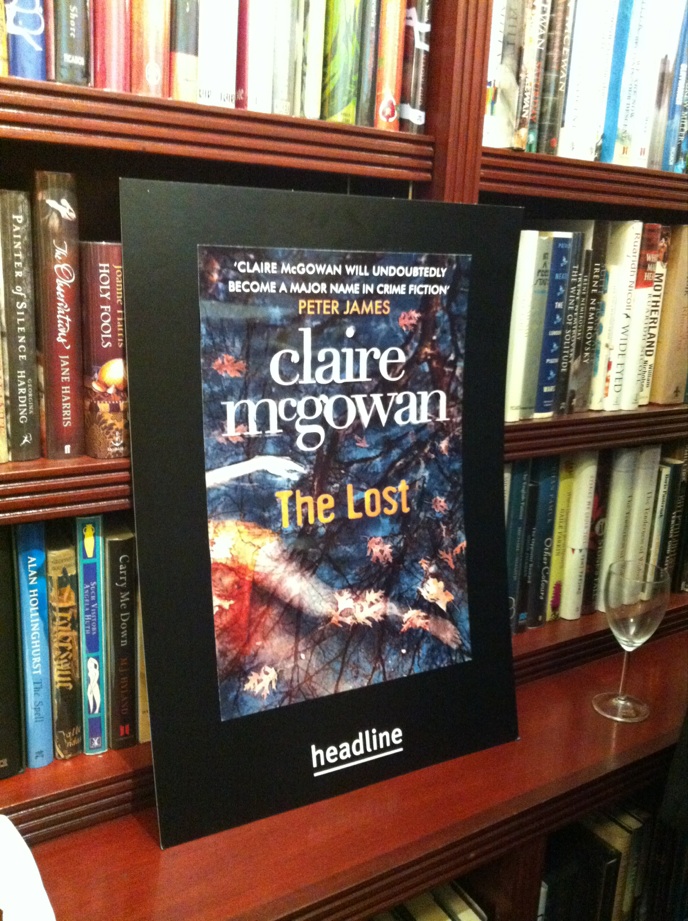
Book Launch: The Lost by Claire McGowan

display at launch event

display at launch event

Earlier this week I was excited to attend the book launch of Claire McGowan’s new book, The Lost.

Her debut novel, The Fall, was one of my favorite books of 2012, so I’ve been really looking forward to getting my hands on a copy of The Lost.

The launch party was held at the fabulous Goldsboro Books, just off Leicester Square, London. The place was full to bursting and I was thrilled to get a signed copy of the book.

Set in Ireland, The Lost is the first of a new series featuring forensic psychologist, Paula Maguire.

What the blurb says: “When two teenage girls go missing along the Irish border, forensic psychologist Paula Maguire has to return to the home town she left years before. Swirling with rumour and secrets, the town is gripped with fear of a serial killer. But the truth could be even darker. 

Surrounded by people and places she tried to forget, Paula digs into the cases as the truth twists further away. What’s the link with two other disappearances from 1985? And why does everything lead back to the town’s dark past – including the reasons her own mother went missing years before?

As the shocking truth is revealed, Paul learns that sometimes it’s better not to find what you’ve lost.”

Sounds great – I can’t wait to start reading …