CTG Reviews: The Long Fall by Julia Crouch

The Long Fall cover image

The Long Fall cover image

What the blurb says: “Greece, 1980: You are a bright young woman with a brilliant future ahead of you. Then you do the worst possible thing a person could do to someone else: you are guilty of the greatest transgression. How do you go on to live a life?

Now: To the outside observer, Kate Barratt has it all: the wealthy husband who was once mistaken for George Clooney, the brilliant, feisty daughter, two homes in London and Cornwall, and understated designer wardrobe and a satisfying sideline as figurehead for a worthwhile charity. But all is not as comfortable as it seems, because Kate harbours a terrible secret that no-one in her current life knows anything about. A secret that hails back to a different time, when she was a skinny, dirty, punk-haired teenager who took too many drugs and nearly threw herself off an Athens hostel roof.

Then, one day, in Starbucks near Tottenham Court Road Tube Station, that secret appears out of the past to face her. Can Kate carry on with the life she has built for herself? Or does it mean that everything is completely, irrevocably, changed?”

It’s very hard to review this book within giving any spoilers, but I’ll do what I can!

Set across two points in time, and two countries, Julia Crouch artfully weaves the story of what happened to Emma – a young, naïve and curious teenage traveller on her first visit to Greece in 1980, with that of present day Kate – a wealthy wife and mother, and founder of international children’s charity ‘Martha’s Wish’.

Packed with suspense, each scene of the book reveals a little more of the horrific chain of events that Kate has tried her whole life to keep hidden, and the extreme lengths she has gone to in order to do so. Kate is a compelling character, so damaged by her past and the grief of losing her youngest daughter, yet desperate to atone for what happened and driven to make a difference through her charity work. When a person from her past tracks her down, Kate’s secret past collides with her present and threatens to destroy all she has worked for, and puts those she loves into the very danger she has sought her whole adult life to avoid.

This dark and chilling story of love, betrayal and guilt shows how one moment of violence can result in a chain reaction that continues across the decades. Highly atmospheric, with fabulously flawed and complex characters, and a super twisty plot, it’s a great read.

The Long Fall is domestic noir at its very best.

Highly recommended.

[Many thanks to Headline for my copy of The Long Fall]

CTG Interviews: Bruce McCabe, author of SKINJOB

SKINJOB cover image

SKINJOB cover image

Today I’m joined by Bruce McCabe whose debut novel – SKINJOB – is coming out with Bantam Press this month.

Welcome to the CTG blog, Bruce.

Your debut novel – SKINJOB – is out this month. Can you tell us a bit about it?

Skinjob is a thriller set in the boardrooms, brothels, churches and alleyways of the near future. It follows the fortunes of Daniel Madsen, a cop trained to deliver rapid results in high-pressure cases where lives are on the line, and Shari Sanayei, an SFPD surveillance officer. The action takes place over just six days. Underneath the surface, the novel takes a provocative look at a series of looming social challenges.

You chose to set the story in the near future, what attracted you to this time period?

I love exploring the big “what if?” and the way we are challenged and changed by technology. Plus I’m privileged, due to my professional background, to talk to the scientists and innovators creating our future in their labs. I find the combination irresistible!

Technology is obviously something you’re very knowledgeable about. Did you need to do any specific research for SKINJOB, and if so how did you go about it?

Most of the research was already done – the book was inspired by a technology demonstrated to me that I found profoundly disturbing, and which stayed with me for years. While writing I spent time in San Francisco and other cities, walking the streets, getting everything just right. I conducted a few interviews too — a special agent I was introduced to was particularly helpful in understanding FBI internal affairs and inter-agency politics!

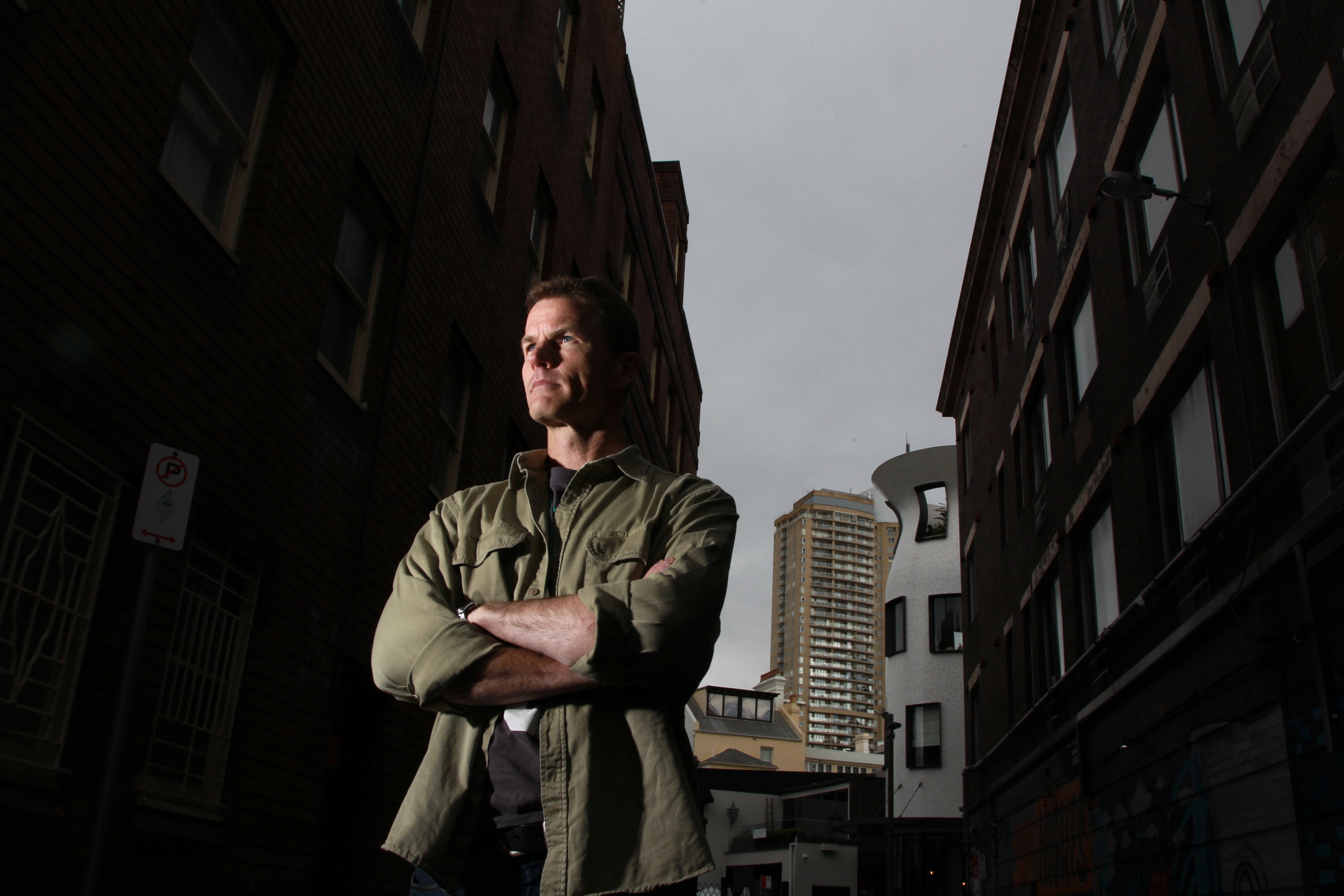
Bruce McCabe

Bruce McCabe

Could you tell us a little about your writing process, do you dive right in, or plan the story out first?

A mixture. I start with a big “What if?”. After I get a very high level sketch in my head (what I want to say, the characters, the kind of ending I want to arrive at), I dive in and start writing. After two or three chapters I pause and do a basic outline, then it’s back to writing. Over the course of the novel I return and rework that outline perhaps two or three times, each time adding structure and more detail. The plot is always in flux, right up until the last page.

What advice would you give to those aspiring to publication as crime writers?

To me, good crime writing is about the ‘slow reveal’: keep the revelations coming, but don’t give away too much and don’t be in too much of a hurry! Get that pace just right and your readers are bursting by the time they get to whodunit. On writing generally: read and write a lot, and understand that all first drafts look awful; everything good was re-written and polished many times over before it saw the light of day.

And lastly, what does the rest of 2014 have in store for you?

Completing my second novel. It’s getting very close now and I’m both exhausted and excited! Then some downtime and some travel – during which I’ll probably scout locations for the next one!

Sounds great. Many thanks for dropping by the CTG blog and answering our questions.

To find out more about Bruce McCabe, pop over to his website at http://www.brucemccabe.com

SKINJOB is out now, and we’ll be posting our review shortly. In the meantime, here’s what the blurb says: “A bomb goes off in down town San Francisco. Twelve people are dead. But this was no ordinary target. This target exists on the fault line where sex and money meet. Daniel Madsen is one of a new breed of federal agents armed with a badge, a gun and a handheld lie detector. He’s a fast operator and his instructions are simple: find the bomber – and before he strikes again. In order to understand what is at stake, Madsen must plunge into a sleazy, unsettling world where reality and fantasy are indistinguishable, exploitation is business as usual, and the dead hand of corruption reaches all the way to the top. There’s too much money involved for this investigation to stay private …”

Dead Good Fiction Festival #dgfictionfest #FFF

Quick, it’s here, the brand new online fiction festival put together by those fabulous people over at Dead Good Books.

Check out the flyer (below) to join in with the fun: there’s conversations with featured authors Nicci French, Sharon Bolton, and Karin Slaughter, and a monster prize to be won by the winner of the Who ‘Dunnit game.

Festival Flyer

Festival Flyer

CTG Interviews: AK Benedict, author of The Beauty of Murder

AK Benedict

AK Benedict

Today I’m delighted to welcome the fabulous AK Benedict to the CTG blog. Her spellbinding debut, The Beauty of Murder, was one of my favorite books of 2013, and was shortlisted for this years’ eDunnit Award.

So, to the questions ...

Your fabulous debut novel, THE BEAUTY OF MURDER, comes out in paperback this month. Can you tell us a bit about it?

The Beauty of Murder is a crime thriller with a fantastical twist set in Cambridge in both the 21st and 17th centuries. My main character, Stephen Killigan, is a philosophy lecturer at Sepulchre College and stumbles upon the body of a missing beauty queen and a mystery that changes the way he views the world. The novel includes many of the things that fascinate me: philosophy, music, tattoos, time travel and cake.

In your novel the setting, Cambridge, plays a big part. What was it about that particular city that inspired to you to write about it?

I was an undergraduate at Cambridge and spent a lot of time wandering its streets. I love the austere beauty of its ancient buildings and how some streets make me wonder which century I am in. It is a city of elemental extremes: in summer the old stone shines, trees are big with blossom and people sunbathe by the river but in winter it is cold and forbidding. It feels to me like a place of magic and possibility, the ideal starting point for a mystery. I first thought of a time travelling serial killer while I was at Cambridge and both Jackamore Grass and the city have haunted me since.

Could you tell us a little about your writing process, do you dive right in, or plan the story out first?

It varies: sometimes the words fly right out, other times I sit with stories for a long time, letting ideas and characters wander about before settling down and talking to me. I like to know the beginning, middle and end before I start writing, leaving lots of room to be surprised by what develops. If I know exactly what happens and who has committed all of the crimes, then I feel no need to write! I write by hand and transfer it onto my computer to start with then work straight onto the keyboard when the story gathers momentum. Towards the end of the first draft, I don’t eat, sleep or get out of my onesie. I’m a real catch.

The Beauty of Murder paperback cover image

The Beauty of Murder paperback cover image

THE BEAUTY OF MURDER is your debut novel. What was your route to publication?

I have longed to be a professional writer since I was three so it has been a route taking thirty odd years! I wrote several partial novels, a full one, stories and poems before The Beauty of Murder was published in 2013. Rejection letters sighed through the letterbox with the occasional encouraging remark, small publication or competition win along the way. I enrolled on a creative writing course at the University of Sussex and toned up my dialogue, plotting and pacing while learning how to receive and make use of criticism. I started writing The Beauty of Murder during my second term and worked on it for the next couple of years while working as a musician and composer. I met my agent, Rupert Heath, at a Meet the Agents Day organised by New Writing South and he saw the novel’s potential and encouraged me every step along the way. When it was ready, he sent it out to editors and I was amazed when it went to auction. It was a very surreal time. The three year old me who wanted ‘to be a writer and have lots of pens’ was very happy; thirty-three year old me ran across a hilltop in Hastings with champagne and a grin.

What advice would you give to new writers aspiring to publication?

Write hard, write soft, write about what makes you smile, write about what you want to know and what lies beneath the stones but, most of all, write. When you have a slew of stories, scripts or poems, throw them out into the world and see which ones find land. The pile of rejection letters is something to stand on while you reach for your goal.

And lastly, what does the rest of 2014 have in store for you?

I am in the middle of editing my second novel, due out in November, while starting the sequel to The Beauty Of Murder and researching other ideas. There are also some exciting TV opportunities and visits to crime and fantasy festivals and conventions.

Sounds like 2014 is going to be a busy one!

A huge thank you to AK Benedict for popping by the CTG blog for a chat.

To find out more about AK Benedict hop on over to http://akbenedict.com/

The Beauty of Murder is published by Orion and out in paperback now. You can find it in all good bookstores, and online at http://www.amazon.co.uk/The-Beauty-Murder-A-Benedict/dp/1409144518

And, read our review of The Beauty of Murder here 

CTG Interviews: Edward Wilson about his new book The Whitehall Mandarin

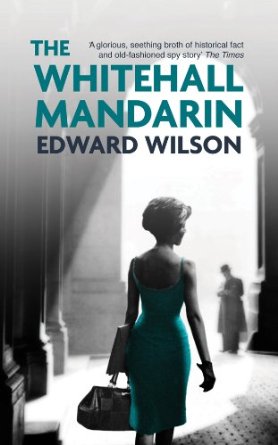
The Whitehall Mandarin cover image

The Whitehall Mandarin cover image

Today I’m pleased to welcome Edward Wilson to the CTG Blog to tell us about his new book – The Whitehall Mandarin – and about his writing process.

So, let’s dive into the interview …

 Firstly, your new book, The Whitehall Mandarin, is coming out in June. Can you tell us a bit about it?

All of my books are literary novels disguised as spy fiction. I try to explore the questions of identity, perception and truth. Can we really know who anyone really is? How can we find truth when it is papered over with lies? My starting point is the party slogan from Orwell’s 1984: ‘Who controls the past controls the future; who controls the present controls the past.’ The Whitehall Mandarin is an ‘insider novel’ that unpeels layers of deception to reveal the most closely guarded state secret of modern times: the China enigma. What is the secret behind China’s rapid rise to become a nuclear armed superpower? And when we think we have found that secret, there is yet another twist.

Lady Penelope Somers, the first woman to head up the Ministry of Defence, seems to have it all: power, beauty and wealth. The superglue that binds together the ruling class is secrecy – but Lady Somers has a dark secret that is unknown to even the inner circle of the Whitehall elite. Catesby’s job is to find that secret and bury it forever.

All of the book’s characters are complex and conflicted. Catesby, an MI6 officer who ironically bears the name of the leader of the Gunpowder Plot, never resolves his working class origins with his OBE and his status as a senior intelligence officer. Cauldwell, a wealthy American reeking of refinement and‘old money’, repudiates his background to become a Communist spy. Henry Bone, Catesby’s boss and mentor, has a closet full of skeletons including a past relationship with Sir Anthony Blunt.

Before writing the Catesby spy series you served as a Special Forces Officer in the US Army, how easy do you find using your real-world experience to inform your fiction?

War is not a good thing for writers or anyone else. I despise writers who become macho war bores and celebrate ‘the cult of the warrior’. Being a Special Forces officer in Vietnam was a lot more than ‘combat’. It was about going native, running intelligence networks and dealing with double agents – experiences which are invaluable for a writer of spy fiction. I was an SF advisor to the CIDG (Civilian Irregular Defense Group), a border screening force that patrolled from remote camps the length of South Vietnam. The CIDG soldiers were mostly Vietnamese or Montagnards, although there were also Khmers and Chinese Nungs. My own CIDG were all Vietnamese; brave fighters certainly, but also heavily infiltrated with sleeper agents. It was estimated that at least 10% of our CIDG were undercover Viet Cong. None of our operational plans were ever secure, none!

One way of dealing with this lack of security was to change plans at the last minute. I tried this on an ambush patrol with a small team of CIDG . We crept into a village after dark and began, covertly, to ask for information about the Viet Cong. An old man took me aside and led me away from the others. He asked to see my map so he could show me where to find the enemy. I refused because there was classified information grease-pencilled all over it, but I finally let him see a little corner and he pointed to a trail where we should set our ambush. It seemed a much better site than the one we had already chosen. I then rejoined the others and put the plan to the Vietnamese in charge of the CIDG, who responded with a resounding ‘khong’ – which is non, no, nein and nyet rolled into one. I couldn’t order him to move his men; I was only an ‘advisor’. So we set our ambush on the site previously chosen.

Later that night all hell broke loose, but nowhere near us – or the trail the old man had suggested. We later discovered that a Regional Forces (RF) outpost, less than a kilometre from our ambush position, had been overrun and sixteen of its defenders killed.

I’ll never know what really happened. Had the Viet Cong who attacked the outpost passed along the trail the old man had pointed out? Could we have saved those sixteen RF if we had redeployed and ambushed the attacking force enroute? Or was the old man a Viet Cong agent who had tried to lure us to a place where we would have been killed? Or was our CIDG leader an undercover VC who refused to budge because he wanted to protect his comrades? But I did learn the intelligence officer’s dilemma: you can never be completely certain who anyone is. Every human being is a mystery. I hope I bring this into my novels.

Author Edward Wilson

Author Edward Wilson

Could you tell us a little about your writing process, do you dive right in, or plan the story out first?

I begin by doing a lot of historical research to try to uncover something that no one has used before. The great thing about writing spy fiction rather than spy non-fiction is that most relevant documents have been destroyed, suppressed or never existed. When the historical trail of dots finally disappears, I keep going with a fictional version of what happened.

When I’ve got a plot outline, I go for characters. Characters, and not plot, are what make a novel take off. The same characters appear, disappear and reappear in my novels – and each time they reappear I reveal something new about them. I research actual historical characters by background reading, but I also use Youtube clips of them to try to discover their inner essence and quirks – Che Guevara’s shy boyishness; Kim Philby’s arrogance (just after he denied being ‘the Third Man’, he sticks his tongue in his cheek).

When I’m in full flow I try to write a minimum of 1,500 words a day. I know that things are going well when the characters take over and tell me what to write. They become real people – and don’t always tell me all their secrets. I just have to wait until they are ready. I don’t own them; they own me.

What advice would you give to those aspiring to publication as crime writers?

Character, character, character. We don’t remember Raymond Chandler’s plots; we remember his characters. I once had the privilege of sitting next to a crime writer named Phyllis at the Hatchards Authors of the Year party. The first thing that Phyllis (aka PD James) said to me was: ‘What is more important: character or plot?’ Phew, I gave the right answer. In fact, characters must shape the plot – otherwise, the plot will appear artificial and unbelievable.

Tension is more important than suspense. Everyone knows that Romeo and Juliet are not going to live happily ever after, but we still go to see the play. Sometimes revealing what happens in the first line of a chapter is more effective than springing it later. Begin a story: ‘She had never stabbed a man before.’ – and the reader is going to be on tenterhooks waiting to find out what actually happened.

Your main character must have a foil. Every Holmes needs a Watson. Revealing plot and narrative movement is a lot easier when two characters are talking about it – and tension between the two is also good for suspense and character development.

Find out what everyone else is doing – and then write something completely different. Make it new. Agents and publishers aren’t looking for copycats, they’re looking for originality.

Learn to pitch your story in fifty words or less.

And lastly, what does the rest of 2014 have in store for you?

The next few weeks are devoted to travelling and promoting The Whitehall Mandarin – including the Penzance LitFest on 18 and 19 July. Half the job of a professional writer is marketing her or his books and meeting people. We owe it to our readers and our publishers.

The other half of a writer’s life is actually writing. My next book is provisionally titled A Very British Ending – and I hope to have finished a first draft by December. Once again, it is an ‘insider novel’ with Catesby and Bone struggling against internal and external enemies. The action takes place between 1947 and 1976. I don’t write to understand myself, but I do write to understand the country that has adopted me and naturalised me – a country that I love. I hope that my next book will reveal some of the hidden and secret forces that have made Britain what it is today.

Thank you so much to Edward Wilson for joining us today and telling us about The Whitehall Mandarin.

The Whitehall Mandarin by Edward Wilson is published by Arcadia, and is out now in hardback. To find out more pop over to http://www.amazon.co.uk/The-Whitehall-Mandarin-Edward-Wilson/dp/1909807532
CTG Interviews: Paul Gadsby about his new book Chasing the Game

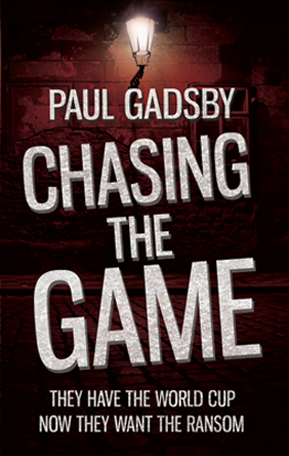
Chasing the Game cover image

Chasing the Game cover image


Today I’m delighted to welcome Paul Gadsby to the CTG blog to talk about his new book – Chasing the Game.

So, let’s get to it …

Chasing the Game is out now, and gathering rave reviews. Can you tell us a bit about it?

It’s a crime thriller depicting one of the most fascinating real-life crimes in British history – the theft of the Jules Rimet Trophy in 1966. Three months before the football World Cup tournament was due to begin, the trophy, on display in Westminster Central Hall, was stolen in an audacious daylight raid with the back doors of the building forced open. No one actually saw the trophy being taken but a ransom demand was made a few days later to the Football Association (FA), who were desperate to save face and reclaim the trophy, and a rendezvous organised where the trophy would be exchanged for cash. But the exchange never happened, one man was arrested for demanding the ransom but was never connected to the actual theft, so the identity of the thieves remains a mystery. Bizarrely, the trophy was discovered under a bush in a suburban street in Norwood a week after the theft by a dog named Pickles, who subsequently became a national hero.

I wanted Chasing the Game to be very much a fictional novel before anything else (not a documentary-style review of the crime etc), so the make-up of the gang of thieves and their particular characters and motivations were all driven by my imagination and I had a blank canvas to work on there. I used elements of the real-life tale (the ransom demand, the exchange set-up) and created extra conflict by having my FA chairman as a steely character who is determined to recover from the global humiliation the theft caused him and his organisation, and hell-bent on making the criminals pay. I had a theory early on about how I believed the trophy ended up under that bush, and basically worked back from there to create a gripping story.

In Chasing the Game, a real-life event – the theft of the Jules Rimet Trophy (the football World Cup) in London in March 1966 – is integral to the story. What was it about this event that sparked your idea for the novel?

I was drawn in by the fact that the crime has so many unanswered questions to it. The actual theft appears to have been carried out with a fair degree of good planning and professional expertise, so it seems a group of people did it rather than someone alone snatching an opportunity. But then the trophy – their only asset in getting something out of their efforts – ends up under a hedge a week later. Something must have gone dramatically wrong between that group of people during those seven days, as the pressure mounted with the case attracting international publicity.

I’ve always been fascinated by the internal structure of organised criminal set-ups and the personality clashes that rise to the surface. I’d been toying with a theme for a crime novel about leadership – about how some people have the natural skillset to be an effective operations man in a number two role but not necessarily the abilities to handle the wider scale responsibilities that come with being number one – and thought it would be good fun to drop this theme into the midst of a dramatic story such as the 1966 theft.

How did you go about researching the time period and the real life events?

I’ve always been into 1960s-set gangster stuff such as the Krays and the Great Train Robbery, so I read a lot of books surrounding those characters and looked into the pressures they faced in their lives at that time; what kind of lifestyles they were living and what they were aspiring to. I also watched a number of television documentaries about everyday life in Britain in the 1960s (thank you BBC4 et al) because I was determined to make that period a character of its own in the book. I love the music of that era but have always felt the way the 1960s is often portrayed to people like me who were born after then (Swinging Sixties, everyone flocking to a vibrant Carnaby Street to spend a fortune on the latest fashions etc) is a little skewed from reality. I wanted people consumed with the grind of their jobs, their money problems, their marital problems, their parenting problems and so on – characters burdened by the harsh challenges that life always throws into people’s laps.

That’s where the ransom demand in Chasing the Game proved really handy as a motivation driver within the narrative. I deliberately placed my ‘firm’ of criminals in west London, a few miles away from the central Soho scene they ultimately want to get to and grab a stake in – and the ransom cash is their leg-up to this world, their ticket to a brighter future. The trophy theft is also a chance for my ageing, old-school FA chairman to hit back against the thieves he sees as a stark representation of an increasingly insurgent society, and leaves him questioning his place in the world.

Could you tell us a little about your writing process, do you dive right in, or plan the story out first?

Chasing the Game is my first novel to be published but I’d written a few before that and with each one the process was slightly different. With this one I had the end of the story in place first, and worked back from there, carefully mapping out the characters and the various conflicts they would face, then drawing up a detailed chapter breakdown before getting into the actual writing. With other books I delved into the writing a lot quicker – happy with the overall concept and where things would finish, I went for it, adopting the ‘car headlights in the dark’ approach (writing away knowing what is immediately in front of you as well as the end destination, but never seeing what is a little further down the road). This approach allows the detail of each chapter to develop more organically and is an enjoyable way to write, but is probably more suited to character-driven work rather than plot-driven material. Either method (and many more besides) is fine and can be successful as far as I’m concerned, as long as the writer has a burning passion to explore the themes they want to unravel, and has created mesmerising characters who have plenty at stake within a tension-riddled story.

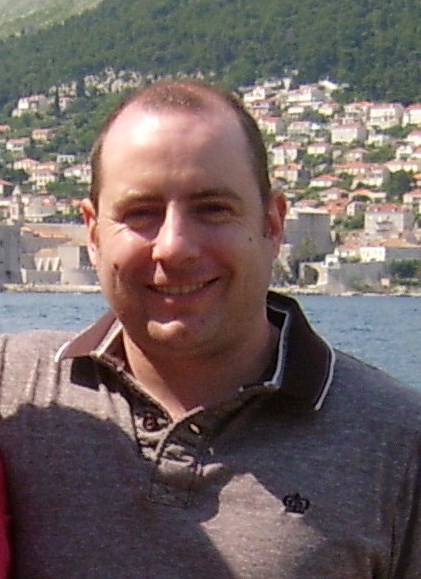
Author Paul Gadsby

Author Paul Gadsby

Who are your favourite crime writers – which books and authors have inspired you?

I have tended to prefer standalone books rather than mass-volume serials; I love it where the writer has the freedom to take his main character down any dark alley and the reader really doesn’t know how bad things will get. With the serials, we always know the main character is going to be fine and any injuries sustained will not be too serious because they’ll be back in another adventure next summer. That said, although I’m no great fan of those formats, there have been some tremendous writers who have gone down that path and deserve every credit – Ian Fleming for one, while Ian Rankin and Mark Billingham are delightful writers and I’ve enjoyed many of their books. Ray Banks’ mini-series following PI Cal Innes was fantastic and wrapped up with great humility, while David Peace’s Red Riding Quartet inspired me to explore mixing fact with fiction.

I love noir classics as well as slick contemporary thrillers. Elmore Leonard’s ear for dialogue is, in my opinion, unmatched. James Crumley is a big hero of mine as are the likes of Ken Bruen, James Sallis, Patricia Highsmith, Jake Arnott, Graham Greene, Jim Thompson, Adrian McKinty and James Ellroy. Eddie Bunker’s No Beast So Fierce is a glorious standalone book and one of my all-time favourites, as is The Ice Harvest by Scott Phillips.

And lastly, what does the rest of 2014 have in store for you?

I have written the first draft of another novel, a tale about a recently-retired boxer who is forced into a life of crime by his former manager, and look forward to editing and polishing that soon. But in the meantime I’m enjoying promoting Chasing the Game – reviews from crime fiction sites have been fantastic so far, while I’ve been asked to speak about the book at this summer’s Festival of Football Ideas in Bristol, a literary-music-art-themed event, which I’m really looking forward to.

A huge thank you to Paul for allowing us to grill him! 

If you’d like to find out more about Paul Gadsby and Chasing the Game pop on over to his website at http://www.paulgadsbyauthor.co.uk/

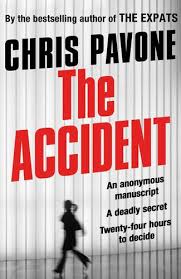
CTG Reviews: The Accident by Chris Pavone

The Accident cover image

The Accident cover image

What the blurb says: “Isabel Reed, one of the most respected and powerful literary agents in New York, is in possession of a time bomb and she’s about to give it to her good friend and trusted editor at one of the top publishing houses in the US. Anyone who begins reading the manuscript is immediately struck by the importance of its contents. They can also see that publishing it could be dangerous, but it could also be the book that every agent, editor and publishing house dreams of … What they don’t realise is that reading it could get them killed.

Veteran CIA Station Chief, Hayden Gray, is a man not to be trifled with. At his beck and call is a vast artillery of CIA personnel and he’s prepared to use every single one of them to stop that manuscript from getting into the public domain. He has twenty-four hours to do so.”

Set in the world of publishing, this book takes what starts out as an everyday occurrence – a new manuscript delivered to literary agent Isabel Read’s office – and turns it into a twist-filled story with danger lurking around every page turn. The book – entitled ‘The Accident’ – is filled with secrets so explosive, about a media tycoon so well-known and influential, that there are people prepared to do anything to stop the book being read.

So Isabel’s day turns into a 24-esque chase, with lots of running, hiding and dodging. As the body count rises, she knows that someone, or some people, are trying to kill her and the manuscript, but she doesn’t know who. So she turns to the one person she’s sure she can trust: Jeff Fielder – her long-time friend, and editor at a major publishing house – to help her get the book published, and to stay alive.

The book alternates between character point-of-views, primarily Isabel, Jeff, Hayden Gray, and the unnamed author of the book. With each character’s narrative you get a glimpse of the history that led to the book being written, and the impact it having been written, allowing you as the reader to piece together the complex web of secrets that have been hidden for so long.

This story has intrigue and mystery in spades. As the plot unfolds, and more about each of the key characters is revealed, you start to understand the complex relationships that connect so many of them.

A gripping read, with an artfully crafted plot and fabulously engaging characters, the story includes some major twists towards the end – several of which I really didn’t see coming. The Accident is an engaging, entertaining, page-turner of a thriller.

Highly Recommended.


[with many thanks to Faber & Faber for my copy of The Accident]


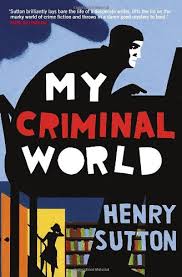
CTG Reviews: My Criminal World by Henry Sutton

My Criminal World cover image

My Criminal World cover image

What the blurb says: “In awe of his wife, hounded by his agent and ignored by his editor, crime novelist David Slavitt finds his life is spiralling out of control. As his wife grows increasingly distant and his agent insists that his new book needs more violence – a lot more violence – David is getting worried. He needs to do something if he is to save his career, and his marriage. But just how far is this most mild-mannered of crime writers prepared to go? And who is the person really pulling the strings in his story? In this ingenious crime novel, there is more than one mystery to be solved.”

I think the first thing that attracted me to this book was its cover – bright and funky with a rather retro-cool design. So, I picked it up and starting reading, and the story was just as fun – quirky and really intriguing.

It’s like two crime books in one. The first story is of crime writer, David Slavitt, whose career is stalling and knows he needs to pull a bestseller out of the back to keep his publisher, and his agent, on board. The second story is the crime book he’s writing, based in a small, coastal location near his home and seemingly part-based on the strange experiences he begins to have in his day-to-day life.

As he battles to get to his daily word target, and his anxiety about his future reaches break point, events conspire to make him take his head out the sand and face up to the fact that his beloved wife could be having an affair. He uses the confusion, the paranoia, and the fear she’ll leave him, pouring it into his novel and using it as fuel to write some of the more violent, more gory scenes his agent has constantly urged him to. But, just when the novel is going well, disaster strikes in his personal life and it seems that his fiction and real-life could be more connected than anyone around David had ever expected.

This book was great fun to read, packed with mystery and intrigue, and kept me, as the reader, on my toes as it switched between the fictional book David is writing and his own personal life. I loved how he used the things he saw and experienced in daily life, changed them a bit, and put them into his novel, and the endearing, self-doubting inner monologues he often had while writing. Packed with larger-than-life characters, this is a perfect novel to devour in a weekend, or take on holiday to read poolside.

Highly recommended.


[Many thanks to Vintage for my copy of My Criminal World]


I AM PILGRIM by Terry Hayes

I AM PILGRIM cover image

I AM PILGRIM cover image

Out in paperback this month …

What the blurb says: “Pilgrim – the codename for a man who doesn’t exist – who once headed up a secret espionage unit for US intelligence. Before he disappeared into deep-cover retirement, he put all his experience into the definitive book on forensic criminal investigation. But that book will come back to haunt him.”

Pilgrim has retired from the spy life. He’s walked away from the job, written his book, and disappeared into a new life in a new country. But when NYPD cop, Ben Bradley, comes to call he realises that he didn’t erase his previous life (or lives) as thoroughly as he’d thought. Drawn back to New York, Pilgrim is pulled in to help solve a seemingly unsolvable crime – a woman found in a bath of acid, all forensic evidence destroyed. He recognises the case – it’s straight from the pages of his book – and finds only one small clue to the whereabouts of the killer. But that small clue, and the horrifying discovery of the US intelligence agency, sets Pilgrim on the first steps of an against the clock race to prevent a devastating attack on his country.

It’s tough to give a worthy description of I AM PILGRIM. Perhaps it’s a spy thriller, it certainly immerses the reader into the world of espionage and counter-intelligence, like a cross between Bourne, 24 and Homeland. But it’s also more than that. As a reader it feels like you’ve been sucked inside the private world of Pilgrim – you see what he sees, know what he knows, and feel what he feels – and that’s one hell of a scary place!

As Pilgrim pursues the man believed to be preparing a terrorist attack on US soil, he learns how the events in his life have led him to believe in the absolute necessity of the devastation he is planning. What I found particularly powerful about this story is how it builds a vivid picture of the life of the antagonist. It allows the reader to understand his conviction, although not forgive the horrendous actions he chooses to take as a result.

And the book is a brick: 700 pages of captivating story. By the end, not only had I learned more than I’d ever imagined about the intelligence world, travelled around the world, and been pulled along by the story, reading well into the night to discover what would happen next, but I’d also developed some pretty good muscle tone on my biceps! [although I guess this isn’t so relevant if you read the story on Kindle!]

A must-read for fans of spy thrillers, action thrillers and stories which have you thinking about the characters, and their world-apart realities, long after you’ve finishing reading the final page.

Highly recommended.


[Many thanks to Corgi Books for my copy of I AM PILGRIM]

CTG Reviews: NEVER GO BACK by Lee Child [out in paperback today!]

NEVER GO BACK cover image

NEVER GO BACK cover image

Reacher fans will be delighted to learn that NEVER GO BACK is out in paperback today (27th March) in the UK, Ireland, Australia and New Zealand, and on Tuesday 1st April in the US and Canada.

Plus, as an added bonus, the paperback edition also features a quick peep at the next Reacher book – PERSONAL – that’s due for release later this year. Today you can also read it online by hoping on over to http://leechild.com/books/personal.php 

NEVER GO BACK was one of our favourite books of 2013 and here at the CTG blog we’re counting down the days until PERSONAL is released – especially now we’ve read the teaser on leechild.com

But, in the meantime, to get your Reacher fix check out NEVER GO BACK.

Here’s our review …

NEVER GO BACK – What the blurb says: “After an epic and interrupted journey all the way from the snows of South Dakota, Jack Reacher has finally made it to Virginia. His destination: a sturdy stone building a short bus ride from Washington DC, the headquarters of his old unit, the 110th MP. It was the closest thing to a home he ever had. Why? He wants to meet the new commanding officer, Major Susan Turner. He liked her voice on the phone. But the officer sitting behind Reacher’s old desk isn’t a woman. Why is Susan Turner not there? What Reacher doesn’t expect is what comes next. He himself is in big trouble, accused of a sixteen-year-old homicide. And he certainly doesn’t expect to hear these words: ‘You’re back in the army, Major. And your ass is mine.’ Will he be sorry he went back? Or – will someone else?”

Classic Reacher. Unputdownable.

When I was halfway through this book I started to slow down, I was so enjoying the story that I wanted to make it last longer. Now that, to me, is a great book. In fact, I think this might just be my new favourite of the series – and that’s a tough call to make because they are all so good.

Anyway, this book sees Reacher finally getting to Virginia. Only Major Susan Turner isn’t there and Reacher is recalled back into the army to face an old homicide charge (and another, more personal relationship-based, legal situation). But does Reacher quit? Of course not, he’s going to find out why both he and Susan Turner are being held on trumped-up charges, and ensure that justice is served.

So I’m not going to discuss the plot further than that because, quite frankly, you need to discover it as you read and I really don’t want to spoil it for you.

What I will say though is that this book is a little different to the majority of the others in the series due to the depth of connection between Reacher and Major Susan Turner. Reacher isn’t alone. Sure, you might say that in previous books he’s always teamed up with someone (often a woman) to sort out whatever situation he’s uncovered. But this is different. With Susan Turner the connection is way more than professional and way more than physical. This isn’t a knight rescuing a damsel in distress. This is a pair of knights, a partnership of equals, a meeting of minds, bodies and souls. And it makes for some gripping reading.

It also shows elements of Reacher that have been less touched upon in other books. Yes, sure, there’s still the great action sequences at the series is famous for, and Reacher is just as tough and able to win a fight (even with his hands behind his back) and he’s super smart at thinking through the complex problems that he encounters. But this time the personal stakes are higher, and so is the tension.

In this book, more than any other, Reacher has the chance to put down roots and, for the first time, it seems like he’s really considering it. Question is, after so long on the road, will he?

Highly recommended.


[I bought my copy of NEVER GO BACK from Waterstones book shop]