CTG Interviews: P D Viner, author of Summer of Ghosts

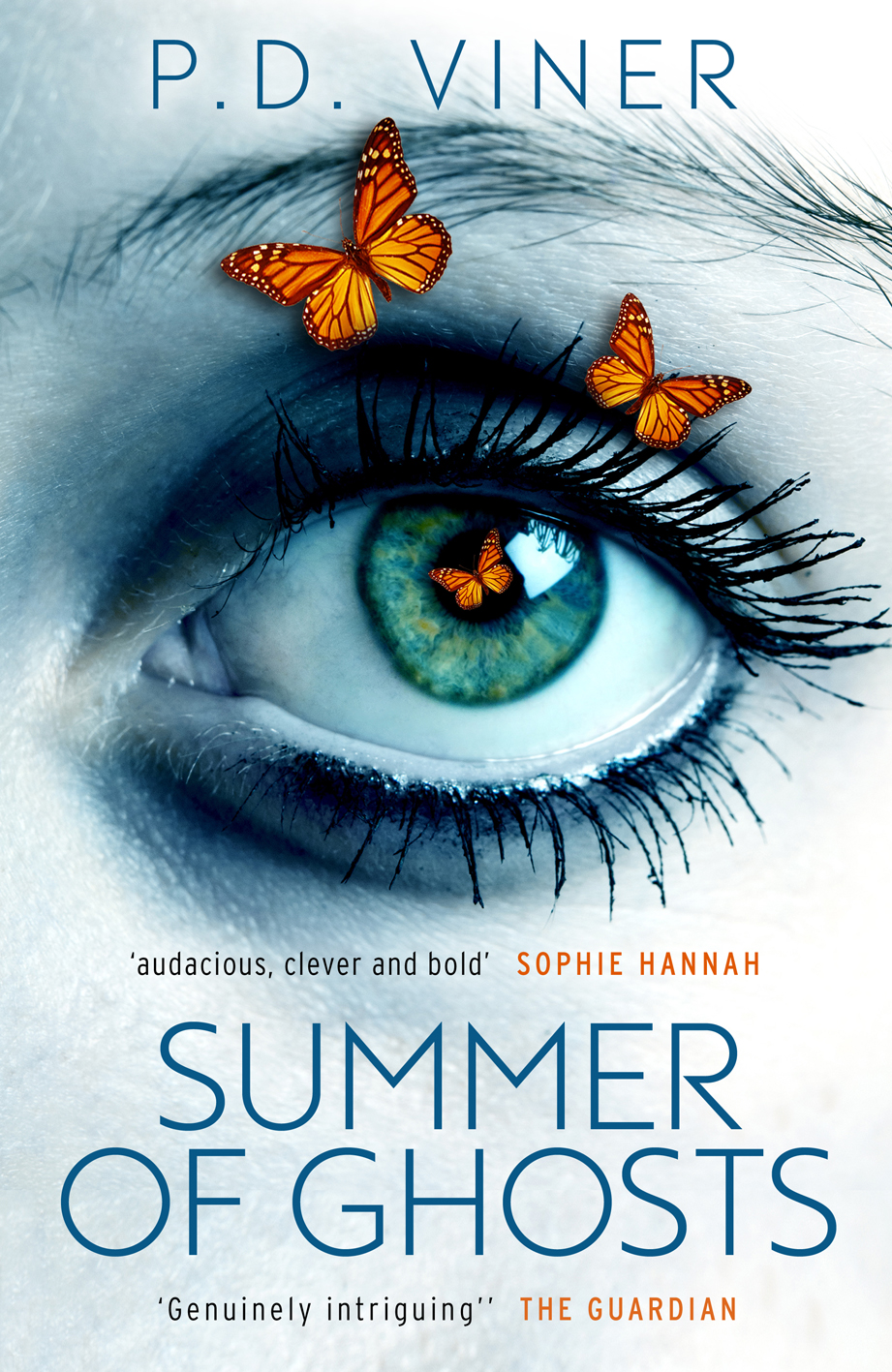
Summer of Ghosts cover image

Summer of Ghosts cover image


Today I’m delighted to welcome author P D Viner – author of the recently published Summer of Ghosts – to the CTG blog. 

So, to the questions …

Your latest book – Summer of Ghosts – came out a few weeks ago. Can you tell us a bit about it?

August was an incredibly busy month as on August 1st my second novella, The Ugly Man was released as a free download and on August 14th the paperback of my first novel, The Last winter of Dani Lancing, came out as well as the hardback of Summer of Ghosts.

So, I want to start by telling you that The Last Winter of Dani Lancing is the story of three people who have been traumatised by violence and left damaged and untethered from life as something happened to the girl they loved. In 1989 Dani Lancing went missing and for 22 years her parents, and the man who loves her, are frozen in their pain and loss. Her mother, Patty, was a crime journalist and she gave up her work to devote all her time to investigating the crime. Jim Lancing, Dani’s father, is left alone except for the spirit (if that is what it is) of his daughter who lives with him – and Dani’s boyfriend, Tom Bevans becomes a policeman as he needs to make up for the fact that he could not protect her. Tom Bevans, who rises to the rank of Detective Superintendent, but who is known to all his colleagues as The Sad Man due to the incredible loss he bears with him, heads up a serious crimes unit that deals with sexually motivated murders of young women. These three characters, the trinity of the pained, are all haunted by what happened to Dani in some way, they are all paralysed by their grief for 22 years. Then, out of the blue, a clue is revealed – something that could reveal what happened to her all those years ago. But it leads all three of them back down into the hell of Dani’s death… they will discover the truth of her death but it is at a great cost.

Summer of Ghosts (Hardback out Aug 14 2014) continues the story six months after the first novel. Jim and Patty are dealing with the truth of Dani’s final days (spoilers) but Tom has had a kind of breakdown. For six months he has wallowed in his self-pity and sense of loss – but he has to get back to work as the beautiful skin murderer has returned. Four years before, Tom swore to three mothers he would solve the murders of their daughters… but he failed. Now there may be a fourth victim – the daughter of the man who helped Tom try to find Dani all those years ago. A man called Franco, who also heads London’s biggest drugs gang – a man who is ruthless and cruel, a killer. Together he and Tom must track down the most dangerous man in Europe. Oh and Tom needs the best investigator he knows to help him: Patty Lancing.

Together they follow a train of events that take them from Greenwich to death inside a royal palace in Brighton, to the heart of darkness inside a war in Africa and finally to a showdown with a corrupt policeman and a man who has killed hundreds if not thousands. And, heartbreakingly, there is more about the death of Dani Lancing for her parents to uncover. For them the nightmare will not end.

So, Summer of Ghosts carries the story begun in The Last Winter of Dani Lancing, on a step further but it can be read as a stand-alone thriller without the sense that you are missing something. The plot twists and it is a real page turner, but the intention is also to drag you into the emotional lives of Tom, Patty and Jim. Reviewer and crime writer Stav Sherez said: Summer of Ghosts is strong, assured and with a plot that will poke your heart. I always love fiction that draws you into the lives of the characters – and that is always my intention.


And does Summer of Ghosts end the story for Tom Bevans and Patty and Jim lancing?

No, I have always planned the mystery of Dani Lancing to emerge over three books and there are also four novellas that deepen the understanding of the characters. Two of those novellas are already available as FREE downloads from all good ebook stockists. They are The Sad Man, which is a 110 page book that details the case in 1999 that made Tom Bevans’ career and allowed him to set-up operation Ares – his serious crimes unit that investigates sexually motivated, multiple murders. The second is The Ugly Man (120 pages) and is set in the heatwave of 1976 and has Patty dispatched by her newspaper to a sleepy Derbyshire village to investigate a brutal murder – and it leads to her uncovering thirty years of secrets and lies.

Next year the cycle of stories will be concluded by a third novel and two more novellas. It will not be the end of the line for Patty or Tom but will conclude this story. I have always loved linked books and while each one can be read alone, if you do read them as a set, then the tension does build and build. I hope when they are all done that my publisher will release a box set or a single volume collection with the novellas fitted in between the novels as I intend them to be read… that will be very exciting.
The Last Winter of Dani Lancing cover image

The Last Winter of Dani Lancing cover image


Summer of Ghosts examines some strong themes including loss and grief. What was it that sparked the inception of the story – the characters or the plot (or something else)? 

When I began writing The Last Winter of Dani Lancing (then titled Three Drops of Blood), I had not thought about going beyond that story. TLWODL is dark and full of rage and pain – all the resentment I felt about my business being destroyed (I had a small audiobook company with my sister and we produced audio books of Shakespeare and the classics for GCSE and A level students) in the financial meltdown and the fear I had surrounding being the father to a two-year old when I was unemployed and in my forties… well, all of that was channeled into the book. Grief and just what we will do for love and to revenge ourselves on those who hurt our family – that was the touchstone that set the tone for the first book. As I wrote that story there was a tipping point, and I became so engrossed in the character’s lives that I began to imagine further – where they could go after the big reveal in Durham cathedral – the point where they finally know the truth of Dani’s disappearance and what happened to her. Then I thought: okay, what would happen to Jim and Patty after the truth was finally revealed. Could they stay together now? How did you cope with knowing the truth after twenty-two years of being in the darkness? How would they cope… that was the question, and the same was true for Tom; for him the finale of TLWODL is like a bomb exploding. I had to know more!

And that is one of the things that I often find series of books (and especially crime) gets wrong. The character just resets for the next book and is fine again… and I didn’t want that. I wanted the weight of the truth to sit heavily on my characters (especially as book three is going to beat them down to the essentials of their humanity) because that is life, human beings dwell in bad news, they get depressed and resentful and petty and angry and let stuff fester for months and years.

Summer of Ghosts keeps the sense of loss from the first books, though it becomes skewed as the world view shifts. Firstly we have three girls who have been murdered. We meet them in TLWODL as a background case – in fact we see Tom visiting the murder scene of the third victim – but in this book Tom is haunted by the fact that he failed these girls. We also have a major new character: Franco. Well I say new – actually we did meet him in the first book but he was a minor (though interesting) character then. Now he is the head of a large drugs ring and he wants out. He is a man who has killed many, created destruction everywhere he has gone… but… can he have a good heart? Could he, in some way, have a sense of morality, even if it is skewed and hard for us to see? That was what fascinated me about his life and the world he operated in – a world where violence is everywhere and life is cheap. It is the opposite of the world of the first book where one life is everything and one act of violence has destroyed the lives of Dani, Tom, Patty and Jim.


As a highly successful audio and film-maker, what was it that attracted you about writing fiction?

Success? Ha. As a film-maker I had some early success but after three years trying to make two projects I had written, I gave up and ran away to join the circus. The world of film is so tough and I just folded. I wrote two novels then and they lie under my bed like two deformed children. I feed them raw meat once in a while – but nobody was interested in them. Setting up my audio business was a way of being creative and making a living and working with actors and musicians with achievable budgets. I could direct hamlet with 21 actors and afford to make it and then sell it. They also won awards and got great reviews… but the business relied on library sales and after the financial crisis all libraries slashed their budgets and I was out of a job. I turned back to fiction writing as a way to salve my soul. Also I had a two year old and she needed me to pick her up from pre-school and have her two days a week (my remarkable wife has a real job) and so writing fitted the lifestyle I had. It was crazy to think that this time could get published – and so I didn’t think like that, I just wrote for me and I loved the puzzle of solving this mystery in my head. As it became more complex I had to get cleverer – writing crime is quite addictive you know. So that was that – I fell into an old love due to circumstance and (fingers crossed) this time it worked… as long as I keep killing.


Could you tell us a little about your writing process, do you dive right in, or plan the story out first?

It is somewhere between the two. Of course when I began TLWODL it was all fragmented as I learned how to craft a story over 100,000 words. With Summer of Ghosts, I had an idea of where I was going and I knew the ending – but it was the research process that filled out the bare bones. I spent a few days with the Sussex police – including a night out in a first response unit and with the 999 team – and that propelled areas of the story forward. The truth about being a professional writer as opposed to a part-time hopeful, is that you have deadlines to meet. I had less than 6 months to write Summer of Ghosts and so you have to be better prepared and plan more. That being said, every time I sat down to write the story would take me be surprise in so many ways. With the third book (in my head I am calling it The Fall of Hope) I have spent a day in a Victorian prison and spoken to a charity for victims. I know the broad outline of the book and have two notebooks full of ideas, but over the next 4 months I will write the first draft and it will take on life of its own.


What advice would you give to new writers aspiring to publication?

Write. I did a two-year creative writing course that was excellent and it didn’t teach me to write but it challenged me to flex my writing muscle and try different styles and think about who I was and what I wanted to say. During the course I began the book and at the end of the course I had 67,000 words and I had shared almost all of it with ten people who had helped me grow my characters. Having people you trust to take the journey with you is great – but we all have different circumstances. If you want to get published you have to write a book. Judge your own efforts with a critical eye and don’t be afraid to throw out large swathes. Write and re-write and discover what makes you tick as a writer. Don’t be afraid.


And lastly, what does the rest of 2014 have in store for you? 

Well there are only 4 months left and mostly I will use that to write the first draft of my third novel. As I said earlier the Dani Lancing mystery is 3 novels and 4 novellas, so I also have a novella to edit and a novella to write.

The other creative project, pinging about in my head, is a TV show I have written an extended outline for. This year I sold TV rights for TLWODL to Warner TV. It will almost certainly come to nothing but has been exciting (I do like a conference call with Hollywood) – but during the process I was thinking a lot about crime TV and was approached by a UK production team who also wanted to option Dani. I turned them down, but pitched them a new idea, written specifically for TV. They liked it, so I have written the 5 episode break-down and will make that into a script (in my spare time). It will probably never get made (I find it much easier to be pessimistic about TV and movies) – but I have really enjoyed writing it and I think it is bloody good. Anyway I shouldn’t get bored over the next six months.


A huge thank you to P D Viner for popping over to see us at the CTG blog and letting us grill him. It sounds like he’s going to be busy for good while yet!

To find out more about P D Viner and his books, hop on over to his website at: http://pdviner.com/
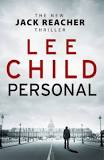
CTG Reviews: Personal by Lee Child

Personal by Lee Child cover image

Personal by Lee Child cover image

What the blurb says: Someone has taken a long-range shot at the French president but failed to kill him. The suspected sniper has serious skills and is a hard man to find. Reacher tracked him down once and put him in jail. Now he’s asked to hunt him again, and put him away permanently.
Tracking the shooter will take Reacher from France to England after a killer with a treacherous vendetta. He’ll need to uncover who did the hiring and what’s behind the assassination attempt before executing his orders.”

As a massive fan of Lee Child’s writing, I must confess that it was a huge thrill and a privilege to get to read an advance copy of PERSONAL.

In PERSONAL – the latest novel and nineteenth in the Jack Reacher series – Reacher spots an advert in the Personals from a military colleague asking him to get in touch. He owes this guy from way back and so Reacher being Reacher, he makes the call and finds himself pulled into a high profile case that threatens international security.

There’s been an attempt to assassinate the French president. The sniper fired from a range of fourteen hundred yards, more than three-quarters of a mile. There are very few people in the world that could have made the shot, and one of them has a bad history with Reacher. Question is, was he the one who pulled the trigger? And, if he was, can Reacher track him down before he tries again at the London G8 summit?

Partnering up with young agent Casey Nice, Reacher follows the trail, taking him from the US to Paris, on to London and back to the US. But with half-truths and bureaucracy at every turn, the inter-agency team remains a step behind their person of interest. With the time ticking away, Reacher takes matters into his own hands – in a way that only he can.

This is a fast paced, action packed story, with all the twists and turns you’d expect from a Reacher novel. Reacher himself is as witty and smart as ever, and a strong mentor for Casey on her first operational mission on overseas soil. And it’s great to see Reacher making a trip across to Europe. I particularly loved the London scenes, and picturing this great anti-hero in locations that I know.

Cinematic and slick, this heart-thumping, page-turning read is a must for all thriller fans.

Highly recommended.


PERSONAL is out today in the UK, Ireland, Australia and New Zealand, and on September 2nd in the US and Canada.

[with big thanks to Random House – Bantam Dell for my copy of PERSONAL]

CTG Interviews: Chris Culver, author of the Ash Rashid series

Today, I’m delighted to welcome author Chris Culver, New York Times Bestselling author of the Ash Rashid series of mysteries, to the CTG blog.

Welcome, Chris. Let’s jump straight into the questions …

Your latest book NINE YEARS GONE is out this month. Can you tell us a bit about it?

NINE YEARS GONE is a standalone, which is a little unusual for me. It’s the story of an average guy from the Midwest who, to save her life, helps his girlfriend disappear and then frames her evil and quite powerful stepfather for her murder. Then, nine years later on the evening after the wicked stepfather is executed and when my hero is married and has everything he’s ever wanted in life, his former lover returns to upend his entire world.

It’s a story about revenge and the fine line between love and obsession. I’m probably biased, but I think it’s fun.

NINE YEARS GONE cover image

NINE YEARS GONE cover image

NINE YEARS GONE is your second standalone book. What was it that prompted the idea for the story?

NINE YEARS GONE was a departure for me, both from my Ash Rashid series and my typical genre, thrillers. It’s psychological suspense, and I wrote it because I needed a break. I love my reoccurring series character, and I don’t plan to abandon him anytime soon, but it’s easy to get stuck in a rut writing in the same universe over and over again. I don’t know where this analogy originally came from, but I think it’s fitting: writing in a series is a bit like a painter buying a canvass only to discover half the painting is done. The painter still has a lot of room to work with, but his new work has to fit the old work. Sometimes, it’s just nice to try something new.

The actual idea for the book came from a footnote in a legal textbook. It involved a 17th or 18th century case in which a man was hanged for murdering his neighbor and then disposing of the body. Unfortunately, that neighbor was on a trip abroad and returned just in time to see a familiar man swinging from the gallows in the town square. When I read that, I couldn’t help but wonder if it could happen in the contemporary United States. From there, I just started asking myself “What if. . .?”


Could you tell us a little about your writing process, do you dive right in, or plan the story out first?

I do a little bit of both. My outline for NINE YEARS GONE ran 40 single-spaced pages and contained almost 20k words. It had snippets of dialogue, outlines of the various plot twists, the backstory—everything I needed to write the plot of the novel. In addition to that, I have character worksheets that I keep for every character in the book.

As soon as I sit down and start typing, I throw it all out the window. My characters take on a life of their own and do things that surprise even me. At that point, they sort of take over.


What advice would you give to new writers aspiring to publication?

Practice. Your first book is the hardest to write and, hopefully, the worst book you’ll ever write. My first book was an absolute affront to literature, but it taught me a lot. My second book was significantly better, and my third book was even better than that. Most writers go through that sort of progression. So don’t give up. If you want to be a writer, keep writing, keep practicing, and never stop trying to improve your craft.

Author Chris Culver

Author Chris Culver

And lastly, what does the rest of 2014 have in store for you?

I’m going to be busy. I’m about 65% complete with my fourth Ash Rashid title. I think it’ll be a great book when it’s done. After that, I’m thinking of starting a new series. It’s a big undertaking but one I’ve wanted to do for quite a while.


Sounds exciting. I can’t wait to read them.

Thanks so much for dropping by the CTG blog to answer our questions.

Chris Culver’s latest book, NINE YEARS GONE, is out this week.

Here’s what the blurb says: “Nine years ago, Steve Hale saved the love of his life from her abusive and very powerful stepfather by helping her disappear and framing him for her murder. Today, that stepfather is dead, executed by the state of Missouri for a crime he didn’t commit, and Steve has a loving wife, a little girl who depends on him, a home, a career – everything he ever wanted and believed he could never have. He also has a new voice mail from a woman the rest of the world believes is dead.

A reunion with his former girlfriend quickly sours when Steve realizes that her stories don’t match up – the one she told nine years ago and the one she told today.

As he unravels her twisted knot of lies, he discovers that events are already in motion and plans are being carried out. Unwittingly, he’s hurtling toward a dark secret – one some very dangerous people are willing to protect at any cost.”

And, you can connect with Chris at: 

Twitter: https://twitter.com/@Culver_C
Facebook: https://www.facebook.com/ChrisCulverBooks
Goodreads: https://www.goodreads.com/author/show/4697453.Chris_Culver?from_search=true

CTG Reviews: SKINJOB by Bruce McCabe

SKINJOB cover image

SKINJOB cover image

What the blurb says: “A bomb goes off in downtown San Francisco. Twelve people are dead. But this is no ordinary target. This target exists on the fault line where sex and money meet. Daniel Madsen is one of a new breed of federal agents armed with a badge, a gun and the Bureau’s latest technological weapon. He’s a fast operator and his instructions are simple: find the bomber – before he strikes again. In order to understand what is at stake, Madsen must plunge into a sleazy, unsettling world where reality and fantasy are indistinguishable, exploitation is business as usual, and the dead hand of corruption reaches all the way to the top. There’s too much money involved for this investigation to stay private …”

Bruce McCabe has created a darkly fascinating future world. It’s similar to the world as we know it, but with many elements taken to technology-enabled extremes. Like the hand-held lie detectors that allow FBI ‘plotters’ to determine the truth of a crime at faster rates than ever before, and the new, utterly lifelike sex dolls – ‘skinjobs’ – that look, feel and act like real people (although, spookily, can’t speak), and the dramatic rise in politically active religions lobbying against their use. It’s a world where secrets are outlawed, and good law officers can lose their jobs at the beep of a device. And, as a result of this new technology, careers and fortunes can be made and lost at an increasingly rapid rate.

‘Plotter’ Daniel Madsen is part of the new world. He’s hard-working to the point of extreme, super-smart, and determined to find the truth and get justice in all the cases he works. When he’s called in to work with the local cops after a bomb goes off in one of the ‘dollhouses’ – a place men can go to have sex with dolls – he approaches the case as he would any other. But this one is different. The forensic evidence doesn’t tie up with the CCTV footage. Under increasing pressure to generate leads and suspects, Daniel works around the clock trying to unravel the truth. But there is more to this case that first appears, and some very powerful people whose reputations (and fortunes) will rise or fall on the outcome.

But the story isn’t just about technology. As well as Daniel’s quest for the truth, what makes the story even more human is the internal conflict of Shari Sanayei, local PD Viddy Ops specialist (video surveillance), who is in charge of analysing the CCTV footage, and has to watch the police officer she was having a secret affair with enter the building where the bomb detonated just moments before it happened. If she declares the relationship, she’ll be removed from the case, and she doesn’t want that. Not only is she the best at viddy ops, she’s also determined to bring her lover’s killer to justice. Even if withholding their affair costs her the job she loves.

This is one of the best techno-thrillers I’ve read. Filled with intrigue and high on action it pulls you into an artfully crafted future world and has you follow Daniel Madsen as he searches for the person responsible for the bombing. With a cast of interesting characters, and the puzzle of evidence that doesn’t make sense, it had me trying to guess the killer’s identity all the way through and still managed to pack a great twist at the end.

Reminiscent of the great Michael Crichton, this is a techno-thriller with heart. A great read, a cracking high-adrenalin story, and a future world to make you think a little more about just where technology might lead us.

Highly recommended.

[Many thanks to Bantam Press for my copy of SKINJOB]


CTG Reviews: The Long Fall by Julia Crouch

The Long Fall cover image

The Long Fall cover image

What the blurb says: “Greece, 1980: You are a bright young woman with a brilliant future ahead of you. Then you do the worst possible thing a person could do to someone else: you are guilty of the greatest transgression. How do you go on to live a life?

Now: To the outside observer, Kate Barratt has it all: the wealthy husband who was once mistaken for George Clooney, the brilliant, feisty daughter, two homes in London and Cornwall, and understated designer wardrobe and a satisfying sideline as figurehead for a worthwhile charity. But all is not as comfortable as it seems, because Kate harbours a terrible secret that no-one in her current life knows anything about. A secret that hails back to a different time, when she was a skinny, dirty, punk-haired teenager who took too many drugs and nearly threw herself off an Athens hostel roof.

Then, one day, in Starbucks near Tottenham Court Road Tube Station, that secret appears out of the past to face her. Can Kate carry on with the life she has built for herself? Or does it mean that everything is completely, irrevocably, changed?”

It’s very hard to review this book within giving any spoilers, but I’ll do what I can!

Set across two points in time, and two countries, Julia Crouch artfully weaves the story of what happened to Emma – a young, naïve and curious teenage traveller on her first visit to Greece in 1980, with that of present day Kate – a wealthy wife and mother, and founder of international children’s charity ‘Martha’s Wish’.

Packed with suspense, each scene of the book reveals a little more of the horrific chain of events that Kate has tried her whole life to keep hidden, and the extreme lengths she has gone to in order to do so. Kate is a compelling character, so damaged by her past and the grief of losing her youngest daughter, yet desperate to atone for what happened and driven to make a difference through her charity work. When a person from her past tracks her down, Kate’s secret past collides with her present and threatens to destroy all she has worked for, and puts those she loves into the very danger she has sought her whole adult life to avoid.

This dark and chilling story of love, betrayal and guilt shows how one moment of violence can result in a chain reaction that continues across the decades. Highly atmospheric, with fabulously flawed and complex characters, and a super twisty plot, it’s a great read.

The Long Fall is domestic noir at its very best.

Highly recommended.

[Many thanks to Headline for my copy of The Long Fall]

CTG Interviews: Julia Crouch, author of The Long Fall

The Long Fall cover image

The Long Fall cover image

Today I’m delighted to welcome Julia Crouch to the CTG blog.

Famous for her darkly chilling novels of domestic noir, Julia’s latest book – The Long Fall – is published this week in paperback, eBook and as an audio download. 

So, to the questions …

Your latest book – The Long Fall – is out this week. Can you tell us a bit about it?

I started off wondering how someone could continue a life after being guilty of the worst possible transgression.

The story is set in two time frames – 1980 and 2013. The 1980 sections are the diary of 18 year old Emma who is backpacking solo through Europe in her year off. At the end of her journey, something awful happens. The 2013 part is about Kate, a wealthy, high profile charity campaigner, Hedge Fund Manager’s wife and mother to drama student Tilly. When someone turns up from Kate’s past, her superficially perfect life begins to disintegrate around her.

The book takes place in Greece and London, what was it about these particular places that inspired to you to pick them?

I have always loved Greece – I go there whenever I get the opportunity. My first proper visit was as a lone, backpacking eighteen year old. I kept a diary of what I got up to while I was there, and I have mercilessly raided the detail in it for The Long Fall. On the very edge of Europe, Greece is a country of contrasts – of ancient and modern, of East and West, of land and sea. I knew I wanted to set part of the story on an island – as distant, disconnected and isolated as possible – and my son Owen told me about Ikaria, which his Greek girlfriend Eva took him to a couple of years ago. It seemed perfect and, since the novel starts with a fall from a cliff, the idea of the island named after Icarus, the boy who fell when he flew too close to the sun, seemed too perfect to resist.

I had to go and research the island – an arduous task for a Grecophile such as myself – and found to my delight that it was perfect – wind-buffetted with enormous, looming black and grey cliffs, deserted perfect beaches, a jungly interior and a world untouched as yet (touch wood) by mass tourism. Setting is as important to me as my characters and plot, so it was really, really exciting to find Ikaria. I spent a week there, driving a tiny Chevy Matiz over almost impassable mountain roads, exploring mountain villages and isolated bays.

I wanted the contrast of Kate’s world to the Greek scenes to be very stark. A couple of years ago I did a photoshoot for a magazine and they had hired a gorgeous house in a converted school in Battersea. It’s vast – all enormous high ceilings, white walls and wooden floors. The people who own it live in it – although they were away for the day of the shoot – and there’s a big photograph canvas of the family on the kitchen wall. They are beautiful. The impression is one of a perfect life.

I was just beginning to think about The Long Fall at the time, and it seemed to me that this would be the perfect building for Kate to inhabit – gated, turretted luxury. So I’m afraid I ‘stole’ it!

As a trailblazer of the hugely popular Domestic Noir, how would you describe the characteristics of the sub-genre?

Domestic Noir doesn’t necessarily mean a home setting, but it’s often in there somewhere. it’s about the things people do to each other in the name of love. It’s about the levels at which we can deceive ourselves and others, and how we manage to live with our secrets. It can include police and murders, but that’s certainly not essential. The mystery lies in the why – rather than the whodunnit. Because it is rooted in messy old life and relationships, it doesn’t always provide the neat ending of more traditional crime fiction.

Could you tell us a little about your writing process, do you dive right in, or plan the story out first?

Usually, I just dive in and start a story, researching as I go along. I keep writing until I reach the end, even if I know things have to change quite radically in the earlier stages of the novel to support my new discoveries. This I call draft zero, because no one ever sees it except me. Then I go back and rewrite the entire thing, building a firmer structure for the plot, excising loads of guff and putting in hopefully more focussed material. For me, this is the most exciting way to write, because every day you discover something new about your characters and story.

However, it can be difficult to fit this style of working into a publishing schedule. The Long Fall is the first book of a new contract I signed with my publishers Headline, and to secure that I had to put together a pretty clear outline of the story, long before I started. The plot I came up with was quite detailed and so clear that it changed very little in the writing – so I knew what each scene had to do, where the characters had to go. I didn’t know exactly how I was going to structure it, though, so there was still quite a bit of head scratching at the end of draft zero. It is probably a quicker way to finish a novel, but I have to say I have reverted to my old approach for the novel I am currently working on (working title, rather imaginatively, novel #5) and, while it is scarier, I find it more exciting writing, as E L Doctorow put it, “…like driving a car at night. You can only see as far as your headlights, but you can make the whole trip that way.”

What advice would you give to new writers aspiring to publication?

Write the best novel you possibly can, then edit it and make it better. Don’t be in a hurry to submit. Do your homework finding an agent – do they represent authors you like? Do they deal with your genre? See what they say on Twitter. Follow submission guidelines slavishly – they all have different rules, so you will have to work around them, which is a good thing. Be patient. Be polite. Be prepared for rejection, but also be prepared to work on editing suggestions from agents. If you are rejected, there will be a good reason. Try to work out what it is.

If you want to self-publish, pay someone to edit your novel, and try to forget that you are paying so that you listen to their edits. Pay someone to typeset it and design the cover. Learn the business. You have to be aware that you are going into business not only as a writer but also as a publisher. It’s a lot of work.

And lastly, what does the rest of 2014 have in store for you?

Novel #5 will take up the next five months, and we’re beginning to plan Dark & Stormy Brighton 2015 (the crime festival I launched this year with Emlyn Rees and Ray Leek). I’m putting together proposals for three more novels – a process I really enjoy. And something might be happening in Hollywood, although that’s all I’m allowed to say right now. Other than that, I’m promoting The Long Fall all over the shop: I’ll be at Harrogate, Bloody Scotland and Edinburgh Book Festival, as well as many other libraries, bookshops and festivals around the country. Good job I love writing on trains!

Sounds like 2014 is shaping up to be a very busy year!

A huge thank you to Julia Crouch for dropping by and chatting about The Long Fall and her writing process. To find out more about Julia and her books pop on over to http://juliacrouch.co.uk/


And watch this space for our review of The Long Fall – coming soon.

CTG Interviews: Bruce McCabe, author of SKINJOB

SKINJOB cover image

SKINJOB cover image

Today I’m joined by Bruce McCabe whose debut novel – SKINJOB – is coming out with Bantam Press this month.

Welcome to the CTG blog, Bruce.

Your debut novel – SKINJOB – is out this month. Can you tell us a bit about it?

Skinjob is a thriller set in the boardrooms, brothels, churches and alleyways of the near future. It follows the fortunes of Daniel Madsen, a cop trained to deliver rapid results in high-pressure cases where lives are on the line, and Shari Sanayei, an SFPD surveillance officer. The action takes place over just six days. Underneath the surface, the novel takes a provocative look at a series of looming social challenges.

You chose to set the story in the near future, what attracted you to this time period?

I love exploring the big “what if?” and the way we are challenged and changed by technology. Plus I’m privileged, due to my professional background, to talk to the scientists and innovators creating our future in their labs. I find the combination irresistible!

Technology is obviously something you’re very knowledgeable about. Did you need to do any specific research for SKINJOB, and if so how did you go about it?

Most of the research was already done – the book was inspired by a technology demonstrated to me that I found profoundly disturbing, and which stayed with me for years. While writing I spent time in San Francisco and other cities, walking the streets, getting everything just right. I conducted a few interviews too — a special agent I was introduced to was particularly helpful in understanding FBI internal affairs and inter-agency politics!

Bruce McCabe

Bruce McCabe

Could you tell us a little about your writing process, do you dive right in, or plan the story out first?

A mixture. I start with a big “What if?”. After I get a very high level sketch in my head (what I want to say, the characters, the kind of ending I want to arrive at), I dive in and start writing. After two or three chapters I pause and do a basic outline, then it’s back to writing. Over the course of the novel I return and rework that outline perhaps two or three times, each time adding structure and more detail. The plot is always in flux, right up until the last page.

What advice would you give to those aspiring to publication as crime writers?

To me, good crime writing is about the ‘slow reveal’: keep the revelations coming, but don’t give away too much and don’t be in too much of a hurry! Get that pace just right and your readers are bursting by the time they get to whodunit. On writing generally: read and write a lot, and understand that all first drafts look awful; everything good was re-written and polished many times over before it saw the light of day.

And lastly, what does the rest of 2014 have in store for you?

Completing my second novel. It’s getting very close now and I’m both exhausted and excited! Then some downtime and some travel – during which I’ll probably scout locations for the next one!

Sounds great. Many thanks for dropping by the CTG blog and answering our questions.

To find out more about Bruce McCabe, pop over to his website at http://www.brucemccabe.com

SKINJOB is out now, and we’ll be posting our review shortly. In the meantime, here’s what the blurb says: “A bomb goes off in down town San Francisco. Twelve people are dead. But this was no ordinary target. This target exists on the fault line where sex and money meet. Daniel Madsen is one of a new breed of federal agents armed with a badge, a gun and a handheld lie detector. He’s a fast operator and his instructions are simple: find the bomber – and before he strikes again. In order to understand what is at stake, Madsen must plunge into a sleazy, unsettling world where reality and fantasy are indistinguishable, exploitation is business as usual, and the dead hand of corruption reaches all the way to the top. There’s too much money involved for this investigation to stay private …”

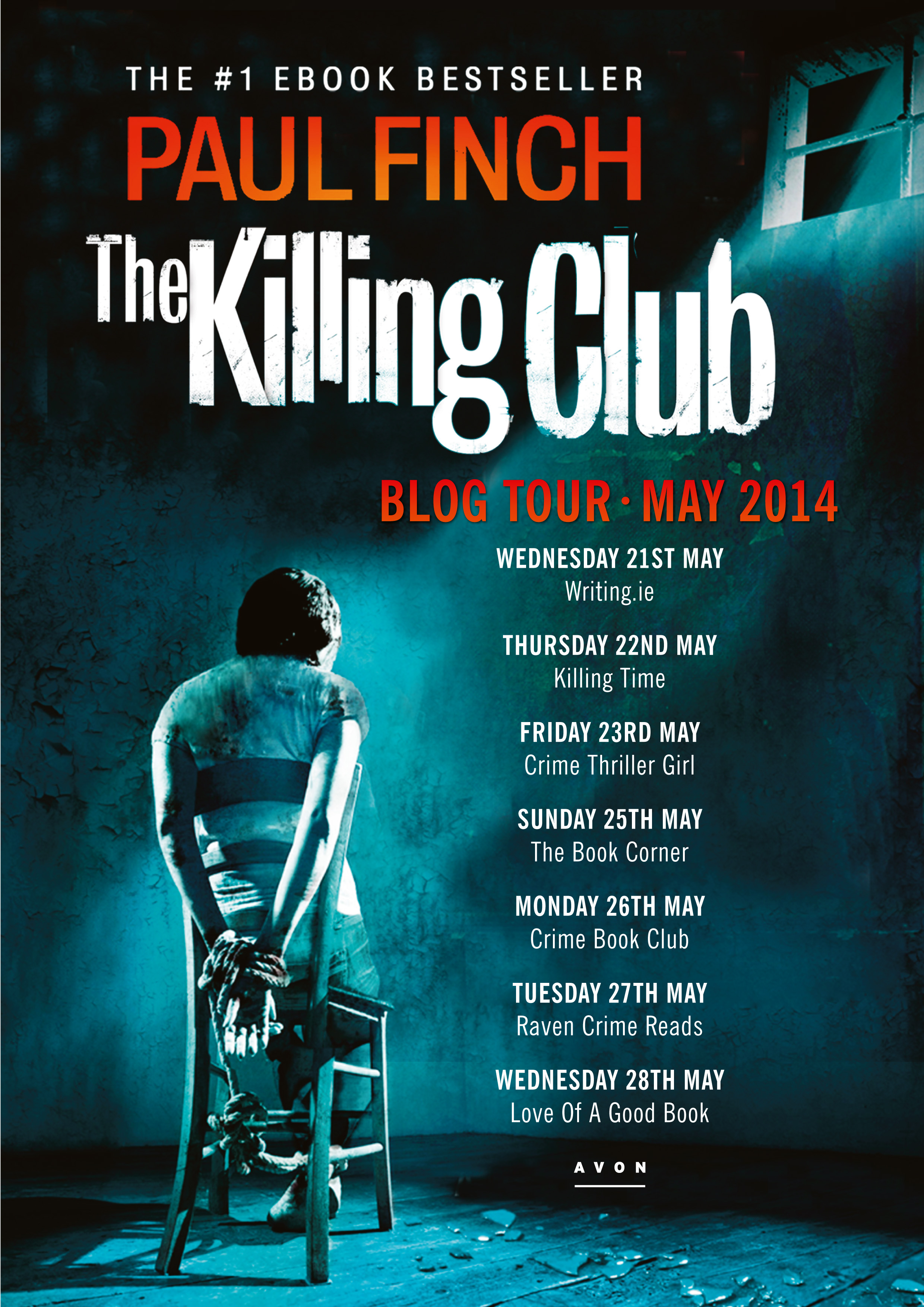
The Killing Club Blog Tour: Guest Post by Paul Finch

KC blog tour poster

KC blog tour poster

I’m delighted to welcome Paul Finch to the CTG blog. His latest novel, The Killing Club, is published this week, and today Paul is taking over the reins (or rather the keyboard) to guest blog about the books he has read that have been most influential on his career.

Over to Paul …

It would be very easy, I suppose, to respond to the question which books have you read that were most influential on your career, and, given that my own most successful novels are intense murder investigations, simply reel off all the great thriller writers.

It would of course be untrue to say that I haven’t been influenced by other thriller novelists. Stuart MacBride, Mark Billingham, Peter James, Kathy Reichs and Katia Lief are all staggeringly high in my estimation. But I don’t just read within my own genre, and I think it would be an interesting exercise to perhaps consider those other types of books that have blown me away, set me on my current career path, whatever you want to call it.

It’s no secret that, before I began writing my DS Heckenburg thrillers, I dabbled widely in the fields of horror and fantasy. And this wasn’t just during my formative years as a writer, my kindergarten if you like; I wrote lots of this kind of stuff, and still do. I also read in this field enormously. But it’s fascinating now, on reflection, how much these apparently unrelated interests have influenced my DS Heckenburg novels.

For example, THE WOLFEN by Whitley Strieber (pub. 1978) presents us with two tired New York detectives, a man and a woman, investigating the murder and apparent cannibalisation of hobos in the city’s underbelly, and soon reaching the conclusion the perpetrators are not humans, but a highly intelligent werewolf pack.

Now, I suppose there are obvious links here with ‘Heck’: a gang of vicious and relentless killers, a lovelorn boy and girl cop team, and so on. But I think it’s the seamy side of the average detective’s working day that most caught my eye about this striking novel. Strieber really takes us to the backside of New York, the subways and ghettos and derelict lots, and peoples them with hookers, winos and druggies. My own experience as a real life cop taught me these are the places you need to go if you want to catch some bad guys, but here we go way beyond the everyday grim, delving into the world of the true urban gothic: it’s a nightmare landscape, beautifully and poetically described, and yet at the same time filled with such palpable menace that even hardboiled detectives are unnerved.

I make a point of never taking my own crime thrillers into such realms of overt fantasy, but I’d be lying if I said I didn’t try to invoke similar feelings of dread and weirdness in the dark heart of the city.

Another relevant horror novel is surely LEGION by William Peter Blatty (pub. 1983). This is a totally different kind of police story. Again, it follows a time-served detective investigating a series of sadistic murders, though in this case he’s dealing with Satanic ritual. It’s a much subtler tale, ripe with a sense of ancient mystery and slow-burning evil (and that would be real evil, of the distinctly inhuman variety). Yet for all this, the point where LEGION really kicks in is the deep assessment the hero, Lt. Kinderman, constantly makes of himself, examining his own beliefs or unbeliefs, puzzling as to why he exposes himself to this depravity time and again, bleeding inside for the victims. Not exactly Heck, who’s never been much of a philosopher, but the longer you work as a homicide cop, the more you’re going to confront yourself with these issues. There is some really deep character work here by Blatty, which you can’t help but admire.

Moving from horror into science fiction and fantasy, there are two other titles I’d like to mention. The first of these contains the most obvious link to those matters I’ve mentioned previously. It is Philip K. Dick’s sci-fi masterwork, DO ANDROIDS DREAM OF ELECTRIC SHEEP (pub. 1968). Most folk will know this as the movie, BLADE RUNNER, but though there are some similarities, the book goes way beyond the limited scope of a Hollywood adaptation. In Rick Deckard, another dogged man-hunter and, thanks to his wife’s depression, a sad loner, working his way through a world gone mad and yet adding to it with his own role, which conflicts him deeply, there is genuine pathos. The movie, of course, had a strong noirish feel – it was almost Chandleresque – which is not prevalent in the book, but the strong central character is still a great blueprint for the fictional lone-wolf detective. For me, heroes always need to be vulnerable: stricken by self-doubt, and with enemies on all sides, some of whom they thought were friends. I’ve never had much time for men of steel, undefeatable icons of hunky machismo, like Superman or Batman. If I took anything from DO ANDROIDS DREAM … it had to be that deep introspection, that guilt, that conscience. It makes our heroes so much more interesting.

On that same subject, the fantasy novel I’d like to nominate is GRENDEL by John Gardner (pub. 1971). I guess we’re all familiar with the tale of Beowulf, the Viking warrior, and his defence of the hall of Heorot against the ravages of the faceless devil, Grendel, who for no reason other than twisted pleasure, came nightly to slaughter the innocent.

As I say, I’m not big on superhero stories. I loved BEOWULF as a kid – it was probably the first spooky tale my late father told me – but as I grew up, I found the monster more interesting. I mean, let’s not kid ourselves, Grendel is the prototype serial killer. So in many ways, GRENDEL the novel takes us to the other end of the crime thriller spectrum, Gardner depicting his antihero first as an abused and lonely child, later showing him suffer rejection by those he sought to befriend, and finally having him retaliate with homicidal fury, which at last introduces him to a lifestyle of his liking – if he can’t have everyone’s love, he’ll have their terror. There isn’t as much Norse myth woven into this novel as you might expect. Instead Gardner gives us philosophy, social commentary and, a decade before the FBI commenced offender profiling, the psychology of the reviled. Talk about streets ahead of the game. Of course, we all know what happens at the end of BEOWULF, and it’s the same in GRENDEL, so don’t expect any surprises – apart from the dark joy this narrative will elicit as it works its way through the tormented mind and hideous satisfactions of a creature driven solely to hate.

It’s a strange thing that we think we know ourselves so well, our thoughts, interests and aspirations. And yet clearly there are many subliminal strata to our thinking. Even as I wrote this blog, it became more apparent to me how relevant to my current writing so many of these themes explored by earlier authors actually are. I won’t go over them again, because I think they speak for themselves – they certainly will, I hope, if you get the chance to read any of my DS Heckenburg thrillers, STALKERS, SACRIFICE or, most recently, THE KILLING CLUB. On which note, I suspect it’s a good time to end this monologue. Whichever way you go, please enjoy your reading and writing. There are no finer pleasures.

Paul Finch

A huge thank you to Paul for spending time here at the CTG blog today and telling us about the books that have most influenced his career.

To find out more about Paul and his books, including his latest book – The Killing Club – hop on over to his website at http://paulfinch-writer.blogspot.co.uk/

And don’t forget to follow him on Twitter @paulfinchauthor


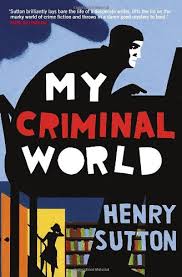
CTG Reviews: My Criminal World by Henry Sutton

My Criminal World cover image

My Criminal World cover image

What the blurb says: “In awe of his wife, hounded by his agent and ignored by his editor, crime novelist David Slavitt finds his life is spiralling out of control. As his wife grows increasingly distant and his agent insists that his new book needs more violence – a lot more violence – David is getting worried. He needs to do something if he is to save his career, and his marriage. But just how far is this most mild-mannered of crime writers prepared to go? And who is the person really pulling the strings in his story? In this ingenious crime novel, there is more than one mystery to be solved.”

I think the first thing that attracted me to this book was its cover – bright and funky with a rather retro-cool design. So, I picked it up and starting reading, and the story was just as fun – quirky and really intriguing.

It’s like two crime books in one. The first story is of crime writer, David Slavitt, whose career is stalling and knows he needs to pull a bestseller out of the back to keep his publisher, and his agent, on board. The second story is the crime book he’s writing, based in a small, coastal location near his home and seemingly part-based on the strange experiences he begins to have in his day-to-day life.

As he battles to get to his daily word target, and his anxiety about his future reaches break point, events conspire to make him take his head out the sand and face up to the fact that his beloved wife could be having an affair. He uses the confusion, the paranoia, and the fear she’ll leave him, pouring it into his novel and using it as fuel to write some of the more violent, more gory scenes his agent has constantly urged him to. But, just when the novel is going well, disaster strikes in his personal life and it seems that his fiction and real-life could be more connected than anyone around David had ever expected.

This book was great fun to read, packed with mystery and intrigue, and kept me, as the reader, on my toes as it switched between the fictional book David is writing and his own personal life. I loved how he used the things he saw and experienced in daily life, changed them a bit, and put them into his novel, and the endearing, self-doubting inner monologues he often had while writing. Packed with larger-than-life characters, this is a perfect novel to devour in a weekend, or take on holiday to read poolside.

Highly recommended.


[Many thanks to Vintage for my copy of My Criminal World]


CTG Interviews: Rachel Abbott author of SLEEP TIGHT

Author Rachel Abbott

Author Rachel Abbott

Today I’d like to welcome Rachel Abbott, who has dropped in to the CTG blog to answer a few of our questions. So, to business …

Your new book, SLEEP TIGHT, came out last month. Can you tell us a bit about it?

SLEEP TIGHT is a psychological thriller, which poses the question “how far would you go to hold on to the people you love?” It’s a story of obsession, deception and retribution.

The story opens when Olivia Brookes calls the police because her husband took the children out for a pizza, and he hasn’t come home. Has there been an accident? But the police don’t think so.

The problem is, this isn’t the first time that Olivia has had to contact the police. Seven years earlier her boyfriend and father of her first child called to say he was on his way home. But he never arrived.

To say any more about this story would give too much away. It was incredibly difficult to write the blurb for the cover for that very reason. Just let’s say that things are not always as they seem, and some times good people are forced to do bad things.

Could you tell us a little about your writing process, do you dive right in, or plan the story out first?

I am a huge planner. I don’t always stick to the plan, but I have to really understand my characters and what is motivating them before I start. So I have detailed character outlines for each of them usually including a picture that I find on Google images. I know what their favourite drinks are, what colour lipstick they wear (when appropriate, of course), their hobbies, the biggest thing that has ever happened to them, and what their story goal is. It is so easy to write books in which the characters can’t be differentiated, and to avoid that I want to get to know my characters really well.

In addition to having a plot timeline, I also have character timelines. I need to know what year they were born, when they met their partners, when their children were born – things that happen outside of the story, but may be referenced. I can’t tell you how many times I have read a book and thought “that’s not right – the child would have only been two at the time” or something similar.

And then because my books tend to have complex plots, I flowchart the main themes. This is the bit that sometimes goes to pot when I’m writing because the story starts to have a life of its own. But I use a piece of software called Scrivener to write my first draft. With that, I can attach keywords to individual scenes, with each keyword relating to a plot point in the story. I can then search on these keywords and reveal only the scenes that are relevant. That way, I can check each element of the story to make sure there are no loose ends or inconsistencies.

What books and authors have inspired you as a reader and writer?

I think my early inspiration came from Daphne du Maurier. I would say that Rebecca is one of my favourite books of all times – and of course, just like my books, in Rebecca you could say that good people are moved to do bad things. It was the whole sense of suspicion and threat that had me hooked, but a great love story at the same time.

Writers like Val McDermid are responsible for raising my interest in thrillers, and Harlan Coben’s early stand alone books made me think about writing from the perspective of the protagonist instead of always from the point of view of the police. I am now a fan of Sharon Bolton’s books too, which can be really dark. I am a member of a book club now, though, and trying hard to read as many non-thrillers as possible.

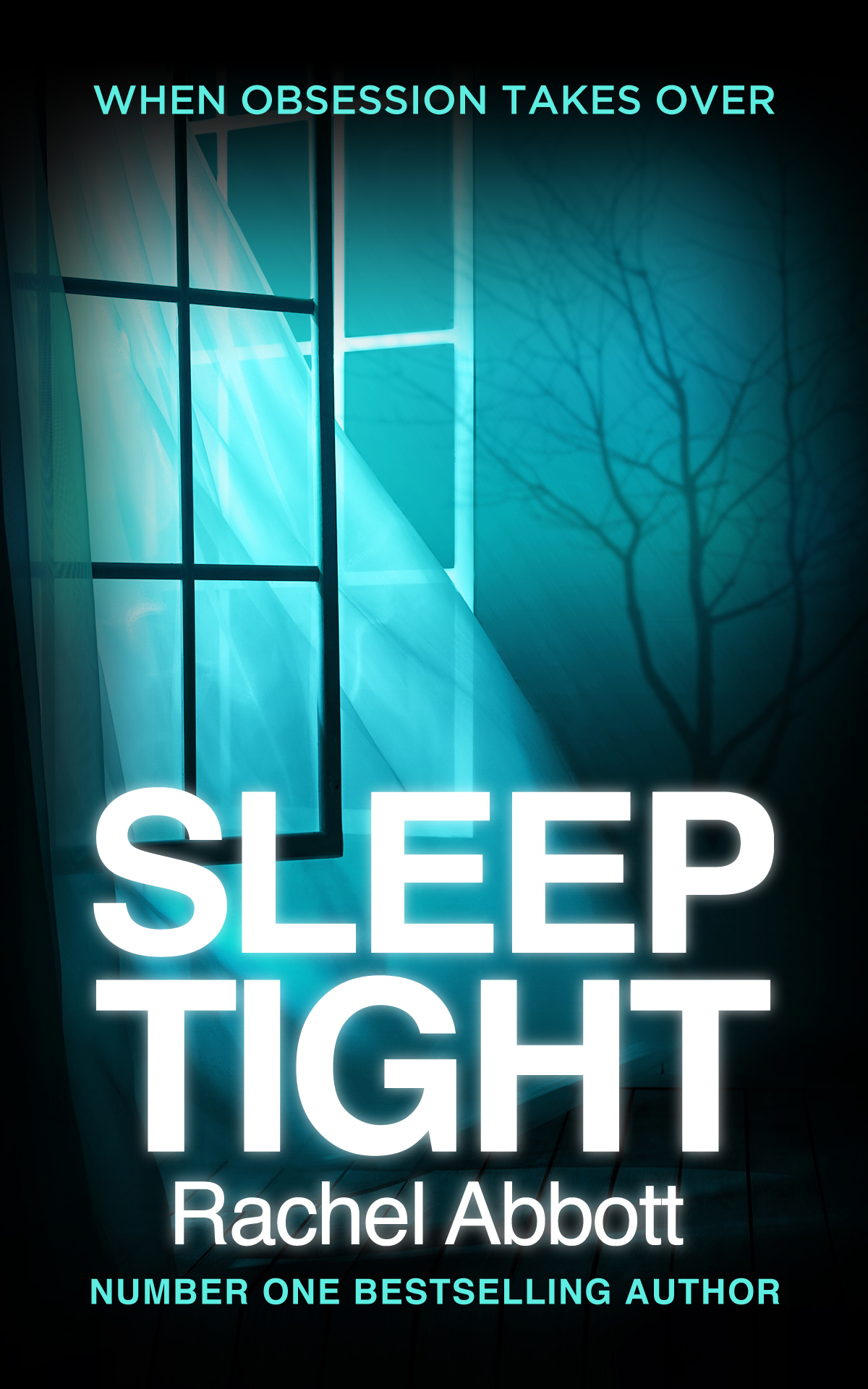
Sleep Tight cover image

Sleep Tight cover image

What advice would you give to those aspiring to publication as crime writers?

Make sure you do your research. Even if you decide to stretch the truth, be sure you have your facts right. There was one point in SLEEP TIGHT that I thought was a pretty safe bet – part of the book is set on Alderney, which is classed as the UK (it’s a Crown Dependency) and I assumed that – should it be necessary – a British policeman could arrest a suspect on Alderney. Not true! Fortunately, I happened to mention in passing to one of the two Alderney policemen, and he put me straight. So it really is important to check every detail.

Other than that, I would advise any writer to have their book professionally edited. I always believed that editing meant proof reading, and had no idea what it REALLY meant. There is the structural editing in which you might be told to cut things down, reorganise them, change points of view – and that can be expensive. But as a minimum you need a proper copy-edit – somebody to tell you about inconsistencies as well as typos. My copy edits are more red than black when they come back – but it’s all really good stuff. My copy editor picked up things such as two different people being described as deranged, even though the descriptions were a hundred pages apart. Repetition of words is a huge thing that they can help you to improve on, and I would seriously consider this.

But other than that, make sure your book is as good as it possibly can be, with a great title and then if you can’t find an agent or a publisher, don’t be frightened to self-publish. But if you do, you need to ask yourself a question: why are you publishing your book? The three most obvious answers would be:

I just want to see it in print (or virtual print). If that’s the case, stick it up there, and admire your Amazon page from time to time, and get on with the next book

I want as many people as possible to read my book, but I’m not concerned with making money.If that’s the case, consider using Amazon’s free posting and just make sure you let as many of the free sites know as possible.

I want my book to be a commercial success. If that’s what you want, then not only do you have to be sure your book is the best it can possibly be, but also you need to learn about marketing, and you are going to have to dedicate some time to getting it noticed. And you are probably going to have to pay for a really good cover design.

And lastly, what does the rest of 2014 have in store for you?

I am really looking forward to the rest of this year. I am starting on my new novel, and I am going to be attending a few events in the UK over the course of the year, including the London Book Fair, the Literary Festival and the Crime Festival at Harrogate, so I’m hoping to meet a lot of people that up to now I have only spoken to on Twitter or Facebook.

I’m also hoping to move in to a new place to live, which, if I can reach agreement with the current owners, will be a spectacular home overlooking the sea. I’m also hoping to take a trip up the Irrawaddy River in Burma – but that’s gone on the back burner a bit because of the move and the new book. But there’s certainly plenty to be excited about.

It sounds like it’s going to be a busy year!

A huge thank to you Rachel Abbott for dropping by and answering our questions.

You can find out more about SLEEP TIGHT and Rachel’s other books on her website over at http://www.rachel-abbott.com/ on Facebook at http://www.facebook.com/RachelAbbott1Writer and follow her on Twitter as @Rachel_Abbott