CTG Interviews: John Altman about his latest thriller DISPOSABLE ASSET

Unknown

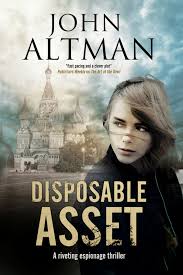
Today I’m delighted to welcome John Altman to the CTG blog to talk about his new book DISPOSABLE ASSET.

So, to the questions …

Your latest thriller DISPOSABLE ASSET is out now, can you tell us a bit about it?

DISPOSABLE ASSET is about a CIA-sponsored assassin who kills an Edward Snowden-like figure in Russia, and then finds herself on the run not only from the Kremlin and the Russian mafia, but from her own agency handlers.

It’s also – like all my books – about loyalty and treason, and the tension between ideological and personal motives. The question that fascinates me is: What makes people spy for their countries, and what happens when their own interests diverge from those of their agency?

In this particular story, the theme of privacy, and lack thereof, permeates everything. The cutting-edge technologies used to track the assassin drive home the very reasons someone might have fled American to expose intelligence overreaches in the first place. And the backdrop of a Russia that ever more closely resembles an artifact from the Cold War portrays where these overreaches might wind up in a worst-case scenario.

Was Edward Snowden’s flight to Russia the inspiration for this book?

Actually, this story started developing years before Snowden. I had the character of the assassin, a ‘disposable asset’ – a young female runaway developed by the CIA, used to complete a high-stakes mission, and then discarded to cover their tracks. La Femme Nikita was an early influence. But the book wasn’t quite jelling. Once the Snowden angle came into it, however, everything fell together.

You’re American, with no intelligence background (that we know of); how did you research DISPOSABLE ASSET?

I do a lot of reading about espionage and intelligence, and in this case also about Russia. I also travelled to Russia several times, and talked at length with Russian friends, and also with some intelligence veterans. Reading provides valuable context, but I find that only primary research really lets me get the little things right. Someone said that good research is like an iceberg – most of it remains invisible below the surface, and the reader sees only the tip peeking above the water.

How did you get into writing thrillers – what was it about the genre that attracted you?

I grew up loving science fiction and horror. And for years, all through my teens and into my twenties, I imitated these books as a writer, and failed to get a publisher interested. Then I went through a mystery phase: Sherlock Holmes and Ed McBain and Raymond Chandler and James M. Cain. When I was almost thirty years old, I discovered 1970s-era political thrillers – Eye of the Needle and The Day of the Jackal – and they just clicked with my writing style. My first try in this vein was the World War II spy thriller A GATHERING OF SPIES, which found a publisher. And I’ve been writing spy thrillers ever since.

Can you tell us a bit about your writing process – do you plot everything out first or dive right in?

I’m of the Stephen King school – instead of planning everything in advance, I like to throw characters into a situation and then watch them try to fight their way out. My favorite stories are always driven by characters. But spy thrillers do require some tricky plotting, so I usually have some general sense of where the story is heading, some primary plot beats in each of the three major acts. I just don’t know exactly how the story is going to reach these beats. And sometimes it ends up going somewhere else entirely.

What advice would you give a writer aspiring to publication?

Keep plugging. Not only will you get better, but there is an element of luck involved – the right book crossing the right editor’s desk at the right moment. And never forget that a writer is someone who writes, not someone who gets published. Don’t let your feeling of worth depend entirely on outside feedback. Easier said than done, of course; a little validation (and a paycheck) helps a lot. But with the advent of self-publishing and e-books, the industry is a lot more open to self-starters than it used to be – just ask E.L. James.

And, finally, what does the rest of 2015 have in store for you?

I have a four-year-old son and a nine-week-old daughter, so I expect the rest of 2015 will involve mostly playdates and changing diapers! I’m trying to squeeze in some work on a new thriller, but sleep deprivation makes it hard to concentrate. All in due time.

A big thank you to John Altman for dropping by the blog today to talk to us about his latest book and his writing process.

To find out more about John and his books be sure to pop over to his website at www.johnaltman.net

DISPOSABLE ASSET, published by Severn House, is out now.

To see it on Amazon click the book cover below:


http://


The Jump Blog Tour: CTG interviews Doug Johnstone about #TheJump

Unknown

Today I’m delighted to welcome author Doug Johnstone to the CTG blog as part of his blog tour marking the launch of his new thriller THE JUMP.

And so, to the questions …

Your latest book – THE JUMP – is out this month, can you tell us a bit about it?

The book is all about Ellie, a woman in her forties who is struggling after the suicide of her teenage son six months ago. Her son jumped off the Forth Road Bridge near their house in South Queensferry, and the story opens with her finding another teenage boy on the bridge about to jump. She sees a chance at redemption for what she thinks are her failings as a mother, but in reality she gets sucked into a whole new nightmare that threatens everyone around her.

I’ve been skirting around the issue of suicide for a long time in my writing, and this book feels like a culmination of that obsession. I wanted to write about the loss and lack of resolution for those left behind by suicide, how there are no easy answers, but I wanted to embed that in a thriller storyline. Hopefully The Jump manages to pull that off, but I guess readers will have to decide for themselves. Although Ellie does some terrible things, I think she’s the most sympathetic central character I’ve had in a book, and hopefully, if I’ve done my job, the reader will care about what happens to her and those around her.

How did you get into writing thrillers – what was it about the genre that attracted you?

I kind of fell into it really. My first two books were less obviously thriller-ish, though they were marketed as crime books by the publisher. I’ve always read thrillers and crime, in fact, I never really thought about the distinction between any genres of book when I was reading and then also when I first started writing. All good books have conflict at their core, and more often than not that involves criminal activity.

I suppose I write domestic noir, if you want to define it, thrillers about ordinary people like you or me getting sucked into horrible, extraordinary, tragic situations. Hopefully the reader then wonders what they would do in a similar situation. I’ve always been interested in how ordinary folk act under extreme pressure – we all like to think we’d do the ‘right’ thing, but morality is never black and white, and I have a lot of sympathy for people doing wrong things in seemingly impossible circumstances. So that’s what I write about.

Can you tell us a bit about your writing process – do you plot everything out first or dive right in?

I’m somewhere in between. I like to be pretty organized before I begin the first draft, but I don’t have everything nailed down in terms of plot. I usually have a pretty clear idea about the opening few scenes, and the same goes for the final few chapters, but I deliberately leave a little bit of a grey area in the middle to get to where I’m going to. So much of the story depends on the characters and how they react to the crap you’re throwing at them, you have to leave a little wriggle room there. Plot ultimately stems from character, so if I need to change ideas about what happens because of the way the book is progressing, then I’m happy to do that.

What advice would you give a writer aspiring to publication?

It’s kind of banal advice, but just keep at it. Getting published can feel like a war of attrition sometimes, like you’re banging your head against a brick wall, but you just have to keep plugging away at it. Keep reading all the time, even the rubbish books teach you something and act as inspiration to write better. And keep writing all the time, you get better and better at it without even noticing sometimes.

It’s good to be clued up about the industry, but writers should never try to chase whatever they think the next big trend is going to be. For one thing, that bandwagon will be long gone before you can get on it, but more importantly, you’ll be writing something that isn’t true to yourself. Write the story you want to read, write it as well as you can, and eventually, hopefully, people will notice. Don’t be disheartened!

And, finally, what does the rest of 2015 have in store for you?

I’m currently re-drafting the next novel, a kind of femme fatale thing set in Orkney that starts with a plane crash and gets nastier. I’ve still got a fair bit to do on that, so that’ll take me to the autumn, then I usually spend a month or two working on new ideas before I settle down to the next book. I have a few kicking around at the back of my mind, but I try not to think about it while I’m still working on something. Apart from that, two of my books are optioned for film and television, so hopefully there will be some movement there, and I also work part-time at Queen Margaret University as a literary fellow. Plus I’m looking after my two young kids, so plenty to be getting on with!

Massive thanks to Doug Johnson for stopping by to chat about his latest book THE JUMP and tell us about his writing process.

THE JUMP is out now. Here’s the blurb: “You can do anything, if you have nothing left to lose. Struggling to come to terms with the suicide of her teenage son, Ellie lives in the shadows of the Forth Road Bridge, lingering on its footpaths and swimming in the waters below. One day she talks down another suicidal teenager, Sam, and sees for herself a shot at redemption, the chance to atone for her son’s death. But even with the best intentions, she can’t foresee the situation she’s falling headlong into – a troubled family, with some very dark secrets of its own.”

To find out more about Doug Johnstone and his books hop on over to his website at www.dougjohnstone.wordpress.com/novels/ and be sure to follow him on Twitter @doug_johnstone

To look at THE JUMP on Amazon click on the book cover below:

http://

And be sure to check out these other fab stops on THE JUMP blog tour …

Jump_blog


#Untouchable Blog Tour: CTG interviews Ava Marsh

Untouchable-new-rondel

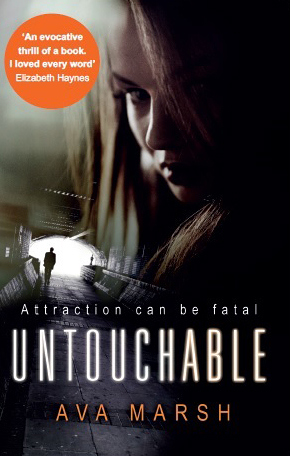
Today I’m thrilled to be hosting a stop on Ava Marsh’s UNTOUCHABLE blog tour, and interviewing the author herself. UNTOUCHABLE is a sizzling new crime thriller that’s published this month, and is one of my must-reads of the year.

So, to the interview …

Welcome, Ava. Your new book UNTOUCHABLE is out now, can you tell us a bit about it?

Certainly. It’s the story of Stella, an expensive London call girl, who stumbles into a top-level conspiracy when a friend and colleague is found murdered in a hotel room. Nothing about this death adds up for Stella, who finds she can’t leave it alone. But uncovering the truth comes at a high price, especially for a woman whose past refuses to stay buried.

How did you get the idea for the story?

Two things converged. One, I was interested in writing crime, and when the whole Fifty Shades thing broke out, it occurred to me that perhaps a slightly racier thriller might be a good way to go. But I was also curious about high-end sex work, as it seemed that call girls, who often ‘service’ the rich and powerful, enjoy a great deal of insight into those men’s private lives. Untouchable was born with the idea that such insight might include something impossible to ignore.

UNTOUCHABLE is a crime story set in the world of high-class escorts. How easy (or not) was it to do the research you needed?

Much easier than you’d imagine. Escorts working at this level have a lot of downtime – they might only have a few appointments a week – so a lot write or blog about their work. Most famously, Brooke Magnanti, otherwise known as Belle de Jour, though I deliberately avoided reading her novels, good as they are, for fear of unconscious plagiarism.

And yes, I know some people in the business. Intelligent, well-educated, professional women who decided to escort for all sorts of reasons. Obviously they had some interesting tales to tell.

What’s your writing process – do you plan first or jump right in?

I plan. I’d be too scared to embark on a complex thriller without having a pretty clear idea of where the story was going. That said, I leave plenty of room for inspiration or a change of heart.

Usually I’ll do a rough outline, and split that into chapters, working further on the plot until I have enough scenes to start writing. Then off I go, though there’s always a lot of swapping things around until I get a structure I’m happy with. And of course you get to do it all over again during publisher edits.

What advice would you give a writer aspiring to publication?

  1. Learn your craft. Writers are made rather than born, and there are dozens of ways you can learn how to write well and structure a novel – creative writing courses, books, online programmes, there’s a wealth of material out there to help you on your way.
  2. Grow a thick skin. You are going to face rejection a lot. Even when you find an agent, your book will be rejected on submission. Even when you secure a publisher, there’s still a thousand ways for that novel to be unloved – failing to garner online promotions or deals, getting shitty reviews, not being picked for prizes or festival slots. And so on and so on. Try not to be too downhearted when that first wave of ‘no’ hits you. Perseverance is everything in this game.
  3. Be nice. Be nice to other aspiring writers, be nice to published authors, be nice to the gatekeepers. Just be as nice as you can, given that writing is a difficult and often frustrating line of business. And by nice, I mean reciprocate. Make sure you’re bigging up others as well as yourself, and be grateful when they return the favour. Don’t make it all about you.

And finally, what does the rest of the year have in store for you?

Err… work. Further editing on my next book, Exposure, about a young porn star who ends up in prison for double murder. More promotional stuff. And my tax return is looming larger by the day. Oh, joy.

On the bright side, I’m brewing up an exciting new idea. Something I can’t wait to get stuck into, so that’s sustaining me through the grittier side of things.

And wine. I predict the rest of the year will involve some choice bottles of red.

Huge thanks for making the CTG blog the latest stop on her UNTOUCHABLE blog tour. To find out more about Ava pop over to her website at http://www.avamarsh.co.uk and be sure to follow her on Twitter @MsAvaMarsh

UNTOUCHABLE is out now. Here’s the blurb: “Stella is an escort, immersed in a world of desire, betrayal and secrets. It’s exactly where she wants to be. Stella used to be someone else: respectable, loved, safe. But one mistake changed all that.

When a fellow call girl is murdered, Stella has a choice: forget what she’s seen, or risk everything to get justice for her friend. In her line of work, she’s never far from the edge, but pursuing the truth could take her past the point of no return.

Nothing is off limits. Not for her – and not for them. But is anyone truly untouchable?”

To order it via Amazon click on the book cover below:

 http://


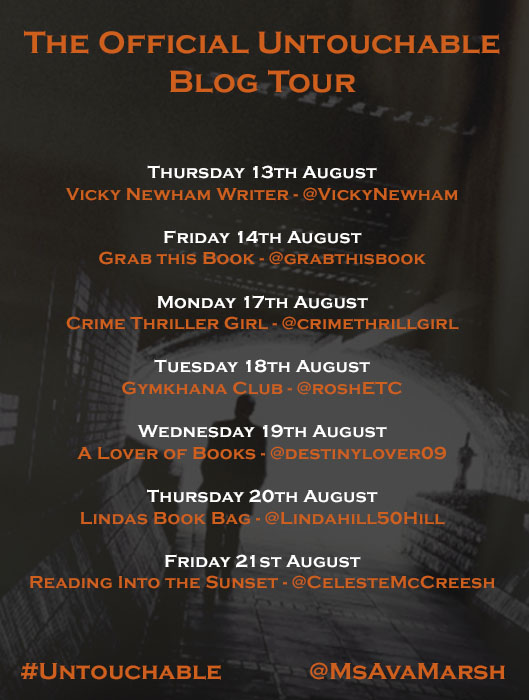
And be sure to check out the rest of the fabulous UNTOUCHABLE blog tour …

UntouchableBlogTour (2)


#BloodyBlogTour Day 9: CTG interviews Dr Kathryn Harkup – author of A IS FOR ARSENIC

IMG_2070

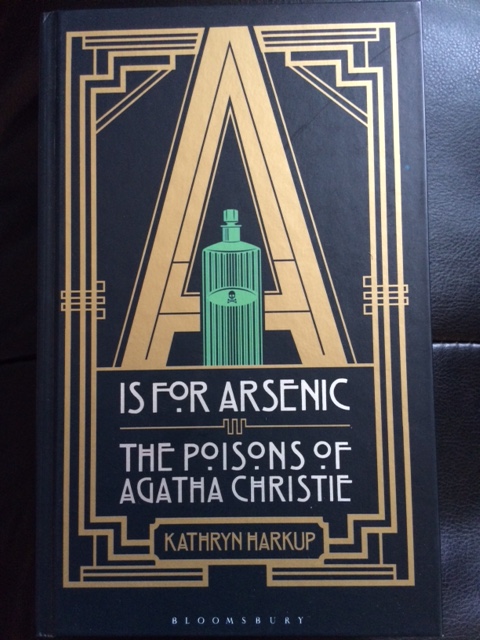
Today I’m thrilled to be part of the Bloody Scotland Crime Writing Festival #BloodyBlogTour and delighted to be welcoming the fabulous Dr Kathryn Harkup to the CTG blog. Kathryn’s background as an avid Agatha Christie reader, and chemist with a doctorate on her favourite chemicals – phosphines – plus loads of postdoc research, makes her perfectly placed to investigate just how much science fact went into the fiction of Agatha Christie’s novels. Her book A IS FOR ARSENIC: The Poisons of Agatha Christie does just that.

It’s a fascinating read, investigating fourteen of the poisons Christie used in her books and looking at the scientific reality behind the poisons, the feasibility of getting hold of them, administering them, and detecting them historically and in modern times, and comparing actual cases with the murders written in Christie’s books.

So, welcome Kathryn to the CTG blog. Let’s kick off with my first question …

The premise of A IS FOR ARSENIC – a book focused on fourteen of the poisons Agatha Christie used, and the novels she used them in – is so intriguing. What was it that first gave you the idea?

It came about from a discussion with my editor at Bloomsbury. At first I was going to base each chapter on a different Agatha Christie book, but as I started researching it I realised it would be better to base the chapters on the poisons and draw on several different books for each. As I worked on it, and chatted about what I was doing with friends, I got asked the question ‘are you ordering it alphabetically?’ I wasn’t at that point, but when they asked me it seemed a great idea.

You say in the book that you’ve been a Christie fan since you were a teenager. How did you decide which poisons to feature in A IS FOR ARSENIC?

Well, the ones everyone knows were easy to pick – like cyanide and barbiturates. Some poisons have the most fascinating histories, in the way they were used, or in medical terms, so I picked them too. The science is subtle in Christie’s work, but it’s all there, so I re-read all her books, made a list and revised down from there. The list of novels including arsenic and cyanide was huge, but including Sparkling Cyanide was an obvious must!

In the book, you show how each poison was used in Christie’s novels, and investigate the feasibility of its use both at the time the novel was written and in the present day. How did you go about researching this?

Lots of background reading! Scientific texts and Christie’s novels. My Google search history is amazing – I must be on all kinds of watch lists! The British Library was great, they answered all my many questions and were so helpful. Reading isn’t a chore when what you’re looking at is so interesting. I just wish I could have fitted in more [to the book]!

What was your favourite part of the writing process?

The reading and the research. I love learning new things so any opportunity to do so is fantastic. As the focus of A IS FOR ARSENIC is so specific I had a clear goal and could be really structured in now I did the research.

Have you been tempted to follow in Christie’s footsteps and write a novel?

No! I absolutely couldn’t. I’m in awe of people who do. Having read 83 of her books I’ve only once guessed the murderer! I’d be rubbish at writing fiction – I’m creative in some ways, but not in that. You could say that the focus of my work is very different to Christie’s – my aim is to illuminate how things are done, Christie’s was to disguise and cover.

If you had to pick one Christie novel, which would you say was your favourite?

For sheer fun it would have to be the ABC Murders, but there’s no poison in that. So, if you’re after a poisoning one, I’d pick Five Little Pigs as it’s so well plotted, with the poison symptoms threaded so brilliantly into the plot.

You and Christie share a passion for chemistry. Do you think that reading her books had any influence on your choice for career?

I’d like to say yes, but I doubt it did. It was the problem solving aspect of Christie’s books that I loved so much. And you could say it’s the problem solving, puzzle, aspects of science that interests me. In terms of the chemistry in her novels, I think it probably passed me by back then. Christie explains all the necessary information, but does it in a way that doesn’t make you feel like you’re having a science lesson.

Christie was a pioneer of her time, both in terms of her writing and also as a women working in a scientific profession. Still today there are far fewer female than male scientists; what do you think can be done to encourage women into science?

I think it’s great that there’s lots more popular science around now. It makes everyone more aware of science. When Christie was working and writing science was a lot more distant – it was mainly done by men who’d been to University – but now it’s more accessible. I would really encourage anyone – whatever background or gender they are from – who wants to do science to do so.

You’ll be appearing at the Bloody Scotland Crime Writing Festival in September. What can the audience look forward to hearing about during the event?

All sorts of disgusting stories about horrible poisons! It’ll be good fun. Christie has a great humour to her books. Also, as far as it’s possible, I’ll talk about the good things about poisons too. The main thing I want to do is to show how awesome Agatha Christie is and how great the science behind her books is too.

And, finally, what does the rest of the year have in store for you?

I’ll be very busy this autumn going all over the place talking about Agatha Christie and her poisons. I’ll also be doing more research and more writing. I have the best job!

Huge thanks to Dr Kathryn Harkup for spending time chatting to us about A IS FOR ARSENIC: The Poisons of Agatha Christie.

Kathryn is appearing at the Bloody Scotland Crime Writing Festival in Stirling on Saturday 12th September. To celebrate 125 years since the birth of Agatha Christie, Kathryn will be joined by novelist Ragnar Jonasson – an Agatha Christie expert who has translated fourteen of her books into Icelandic. Together they will offer unique insights into the work of the enduringly popular author who’s still an influence and inspiration to crime writers around the world today. To find out more and book tickets, hop on over to the Bloody Scotland website at www.bloodyscotland.com/event/the-poisons-of-agatha-christie/

And be sure to check out A IS FOR ARSENIC: The Poisons of Agatha Christie – it’s a fabulous read and a real must for fans of Agatha Christie, murder mysteries, and anyone who wants to learn more about the real life science behind the poisons used in fiction. The book is published on 10th September by Bloomsbury. To find out more and pre-order, click here to go to Amazon.

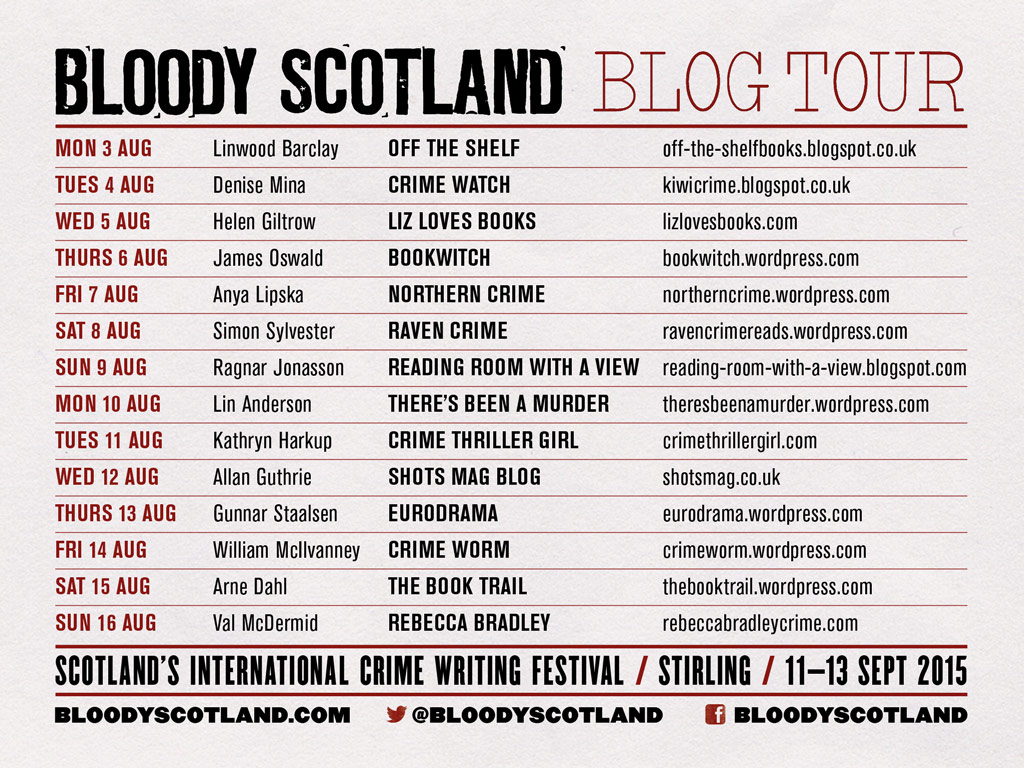
And don’t forget to check out the rest of the wonderful stops along the #BloodyBlogTour …

BLDYSCT15-Blog-Tour-1024px-A

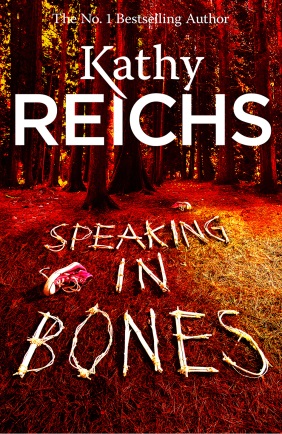
CTG Interviews: best-selling crime writer Kathy Reichs #SpeakingInBones

image001

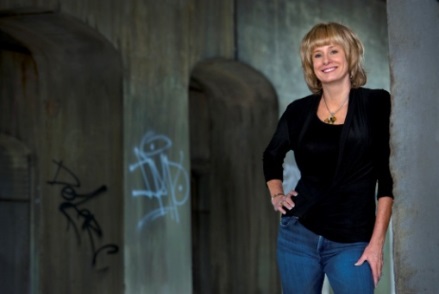
Today I’m delighted to welcome crime writer Kathy Reichs to the CTG blog. Kathy is the best selling and award winning author of the Dr Temperance Brennan series and the Tory Brennan series, and is a producer of the chilling hit TV series Bones. She is also a Professor of Forensic Anthropology and Vice President of the American Academy of Forensic Scientists.

So, to the interview …

Your latest novel – Speaking in Bones – is out this month. Can you tell us a bit about it?

Tempe doesn’t solve every case.   And it bothers her that a few nameless dead languish unidentified in her lab. Information on some of these UIP’s, unidentified persons, is available online, and “websleuths” work to match them with MP’s, reported missing persons. At the outset of the story, Tempe is visited by one such amateur detective who believes she’s successfully connected skeletal remains in Tempe’s storage facility to a young woman missing for three years.  What seems at first to be an isolated tragedy takes on a more sinister cast as Tempe uncovers two more sets of bones. Still reeling from her mother’s diagnosis and the shock of Andrew Ryan’s potentially life-changing proposal, Tempe tries to solve the murders before the body count climbs further.

In the story, your main character, Dr Tempe Brennan, is approached by an amateur detective who thinks they’ve identified some remains – what was it that sparked the idea for this story?  


As usual, the story emerged from the coalescence of different idea particles floating around in my brain.  Thousands engage in websleuthing worldwide.  I was intrigued by the concept and thought my readers might also find the pursuit interesting. Brown Mountain, located in my home state of North Carolina, is famous for an unexplained phenomenon of floating lights whose origin no one can explain.  The Blue Ridge Mountains are home to many unusual and little-known religious groups, some of whom handle poisonous snakes and speak in tongues as part of their worship.  I took these disparate bits of knowledge, threw in some old cases, and Speaking in Bones was the result.

Your books always have a great balance of technical fact and fast paced fiction – what’s the secret to achieving this?  

I think what gives my books authenticity is that I actually do what it is I’m writing about.  I think the fact that I am in the autopsy room, I go to the crimes scene and I work in a full-spectrum forensic lab gives my books a flavor they otherwise wouldn’t have.  I think my readers want to learn something.  They want to read about the science behind DNA, ballistics, blood splatter pattern analysis.  I write for the reader who wants to learn something new and enjoy a good old -fashioned murder mystery at the same time. The key to the science? Keep it short, entertaining, and jargon free.

image003

Could you tell us a bit about your writing process – do you plot the story out in advance or jump right in and see where it takes you?  

My writing days begin in the morning and end in the evening.  If I am not inspired, I write anyway.  I start with a chapter by chapter outline of the story, then write in a linear fashion moving from beginning to end.  I have the plot twists and ending in mind.  But if I stumble upon a great idea midstream, in it goes.

What advice would you give a writer aspiring to publication?  

Write every day.  Or every week.  Perhaps every dawn.  Whatever time block you have available.  Don’t accept writer’s block.  If what you are writing is disappointing, at the end of the day you can delete it.  Write every chance you get, no matter what.

And finally, what does the rest of 2015 have in store for you?  

I’m actually working on an off-series novel.  Brand new, not Temperance Brennan.  New characters, setting, and premise.  No more spoilers!

A huge thank you to Kathy Reichs for stopping by the CTG blog today and answering our questions.

Kathy’s latest book – SPEAKING IN BONES – is out this week. Here’s the blurb: When forensic anthropologist Dr Tempe Brennan is approached by amateur detective Hazel ‘Lucky’ Strike, at first she is inclined to dismiss the woman’s claims that she’s matched a previously unidentified set of remains with a name. 
But as the words of a terrified young woman echo round her office from an audio recorder found near where the bones were discovered, something about the story won’t let Tempe go. 

As Tempe investigates further she finds herself involved in a case more complicated and horrifying than she could ever have imagined.”

To find out more, hop on over to her website at www.kathyreichs.com and be sure to follow her on Twitter @KathyReichs

CTG Interviews #NeilWhite for THE DOMINO KILLER Blog Tour

crime writer Neil White

crime writer Neil White

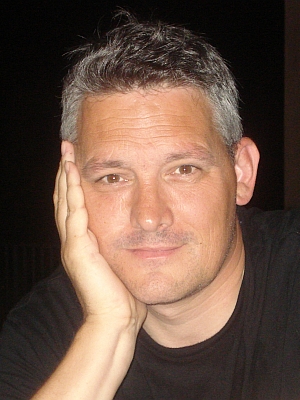
Today I’m delighted to be hosting the latest stop on best selling crime writer Neil White’s blog tour. Neil’s kindly agreed to let me grill him about his latest books and his writing process.

And so, to the questions …

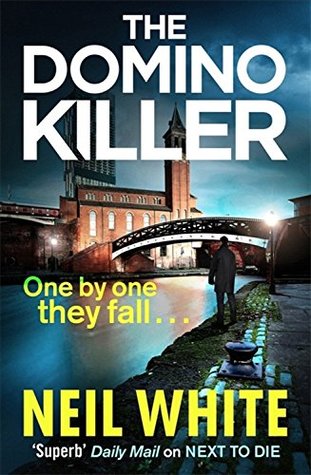
Your latest thriller – THE DOMINO KILLER – comes out this week, can you tell us a bit about it?

It’s the concluding book in the Parker brothers trilogy and deals partially with the running thread through the first two books, the murder of their sister many years earlier. As well as that, men are being murdered in Manchester, with a link between each one. The story starts with the murder of a man in a park, and it’s discovered that the dead man’s bloodied fingerprint was found on a knife near a body a few weeks earlier. What links them, and is there a connection with Sam and Joe’s murdered sister?

Your lead characters are brothers Joe Parker (a top criminal defence lawyer) and Sam Parker (a talented detective) – what gave you the idea for them?

It was really the notion of conflict, which I hit upon by accident when I was writing my first series involving a crime reporter and a detective who were also in a relationship. What seemed to work was that the reporter wanted to know about the cases his partner was involved in, and of course she wanted to keep him out of them.

When I realised I had to come up with a new idea, I stuck with the notion of two people who are close but have conflicting roles. Two brothers on the opposite side of the legal fence seemed to fit.

It fitted also with my own desire to make the books more legal.

I’d flirted with legal elements in the earlier books, but had always worried that I would become obsessed by making them so accurate that they ceased to be interesting; a day in court can occasionally be as mundane as any other job, punctuated by delays and often filled with so much routine.

When the drama does happen, however, it’s often pretty fun. I’m a prosecutor, and I’ve been shouted at and threatened, and at one point invited outside to “resolve matters”, and that’s just from the defence lawyers (yes, really, including the invitation to a street brawl). The criminals, on the whole, have been okay.

25643638

You’re a lawyer by day and a crime writer by night, what’s your secret to juggling these two roles?

I wish I knew it. I do what I have to do, and I don’t doubt that each job impacts negatively on the other through fatigue.

I’m not as good as I used to be after a day at work. I work just three days a week now, so I write off those nights, but I find it hard to believe that it isn’t that long since I was doing both full-time. I remember getting to the end of one of my books, I can’t remember which, and just said that was it, I was beat. I was shattered, a squeezed sponge. So I gave up a couple of days of work and now it feels more balanced.

The hardest thing is losing so much of my time. I never truly have a day off, and have taken my laptop on most of my family holidays.

What got you started writing crime fiction?

That is probably a two-part question.

What got me writing fiction? Because I always thought it was something I could do. That is just about as simple as it gets. It was something I was able to do well at school and seemed to stand me in good stead during university. I said even then that I wanted to be a writer, and at one point thought of giving up my law degree to switch to journalism, just because I thought putting words on a page was my strength.

So why crime? It’s because that’s what I read, and crime has always been my interest. As a student, I imagined myself in a courtroom, not a boardroom. I’m a criminal lawyer because I like crime. I write crime fiction because I like crime. Who couldn’t be interested in the extremes of human behaviour and emotion?

What’s your best writing moment so far?

Reaching number one in the ebook charts with my fifth book, Cold Kill. To go onto Amazon and see my book at the top of the pile on the homepage was unreal. It was something I couldn’t have imagined when I started out.

For those aspiring to publication, what advice would you give them?

That depends on what sort of publication.

If someone is aspiring towards traditional publishers, keep on plugging. If you’re good enough, someone somewhere will spot you.

If someone is wanting to self-publish through ebooks or print, engage an editor. I self-published in 2004, and it was the self-published book that got me an agent and eventually a publishing deal, but the one thing I hate about it is the failure to engage an editor. There are typos and grammatical howlers in it, and it would have been so much better for me to be proud of it still, but instead it’s the one I’m happy to see fade into history.

And, finally, what does the rest of the year have in store for you?

I’ve just signed a deal for three books with Bonnier, under their new imprint Zaffre, and it sounds like they have exciting things planned. It’s a move of publishers but that brings new challenges and new adventures. The first book should be out next summer; once I’ve written it, of course.

Fantastic! Thanks so much to Neil White for taking the time to come and chat to us on the CTG blog today.

19569558

Be sure to check out Neil’s latest thriller – THE DOMINO KILLER – which is out this week in hardback. Here’s the blurb: “When a man is found beaten to death in a local Manchester park, Detective Constable Sam Parker is one of the investigating officers. Sam swiftly identifies the victim, but what at first looks like an open and shut case quickly starts to unravel when he realizes that the victim’s fingerprints were found on a knife at another crime scene, a month earlier. Meanwhile, Sam’s brother, Joe – a criminal defence lawyer in the city – comes face to face with a man whose very presence sends shockwaves through his life. Joe must confront the demons of his past as he struggles to come to terms with the darkness that this man represents. Before long, Joe and Sam are in way over their heads, both sucked into a terrifying game of cat-and-mouse that threatens to change their lives for ever …”

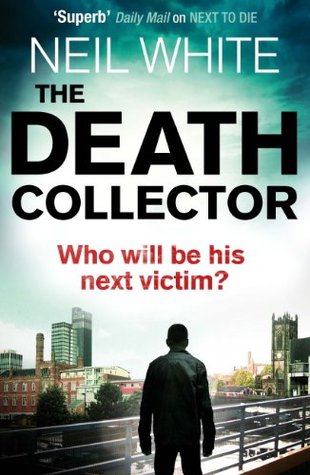
You can also now get your hands on THE DEATH COLLECTOR in paperback now (released last week). Here’s the blurb: “Danger sometimes comes in the most unexpected guises. The Death Collector is charming, sophisticated and intelligent, but he likes to dominate women, to make them give themselves to him completely; to surrender their dignity and their lives. He’s a collector of beautiful things, so once he traps them he’ll never let them go. Joe is drawn into the Death Collector’s world when he becomes involved in a supposed miscarriage of justice, and when the case becomes dangerous, Sam is the first person he turns to. In this gripping thriller, danger lurks for not only the Parker brothers, but also those closest to them.”

To find out more about Neil and his books hop on over to his website at www.neilwhite.net and follow him on Twitter @neilwhite1965


#ColdMoon Blog Tour: CTG interviews author Alexandra Sokoloff

Alexandra Sokoloff

Alexandra Sokoloff

Today I’m delighted to welcome author Alexandra Sokoloff to the CTG blog as part of her COLD MOON Blog Tour. Alexandra is the Thriller Award-winning, Bram Stoker and Anthony Award-nominated author of The Huntress FBI series. As a screenwriter she has sold original scripts and written novel adaptations for numerous Hollywood studios, and teaches the internationally acclaimed Screenwriting Tricks for Authors workshops. 

And so, to the interview …

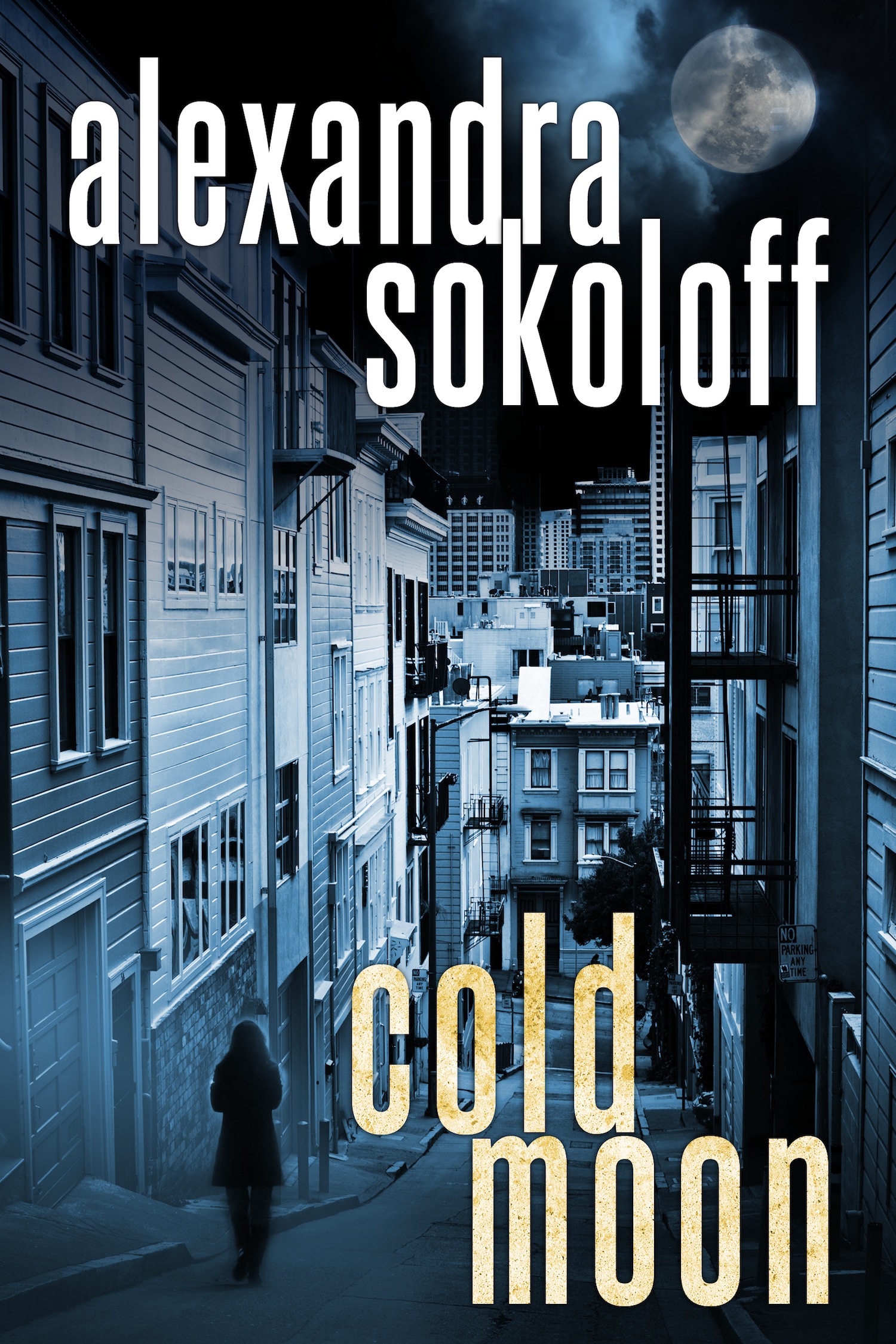
Your latest book in the Huntress Moon series – COLD MOON – is out this month, can you tell us a bit about it?

Cold Moon is the third in the Huntress series, and I highly recommend that new readers start with Book 1, Huntress Moon, because the action is continuous, really a binge read! – more like a serial than a series. The books are intense psychological suspense, and take the reader on an interstate manhunt with a haunted FBI agent, on the track of what he thinks may be that most rare of killers: a female serial. But here’s the thing. Arguably there’s never been any such thing as a female serial killer in real life. The women that the media holds up as serial killers actually operate from a completely different psychology from the men who commit what the FBI calls sexual homicide. I wanted to use that psychological fact to turn the cliché of the serial killer novel and the tired trope of “woman as victim” completely inside out. Whoever she is, whatever she is, the Huntress is like no killer Agent Roarke – or the reader – has ever seen before. And you may find yourself as conflicted about her as Roarke is.

How did you get into writing thrillers – what was it about the genre that attracted you?

I have to admit, I love a good adrenaline rush in a book (in fact I pretty much require them, repeatedly!). And I’ve always had a dark turn of mind – I’ve always read and watched and written a lot of psychological horror, too. But a good thriller is so much more than that. I agree with Val McDermid that crime novels are the best way to explore the deep issues of society. I’m very passionately political, and I have a lot of social outrage built up from years working with abused and incarcerated kids in the California prison system. I learned a lot about what seem to me to be clear-cut issues of good and evil. And thrillers are a great vehicle to explore the roots of evil in a very emotional, visceral way. As long as you’re delivering great suspense, you can ask the hard questions – in the context of such a exciting story that people don’t even realize what you’re doing until they’re too hooked to put the book down!

Can you tell us a bit about your writing process – do you plot everything out first or dive right in?

I’m a total plotter. I use index cards and a three-act, eight-sequence story structure grid to start brainstorming a plot. I was a screenwriter for ten years before I wrote my first novel, and the index card method is a very common plotting technique in Hollywood because you have to come up with full story ideas so quickly, sometimes literally overnight.

trifold_story_board

But it’s also the fastest and deepest way I know to outline a novel, and a lifesaver if you’re writing thrillers with lots of subplots. I teach the method in my story structure workshops, on my blog (http://www.screenwritingtricks.com/) and in the two Screenwriting Tricks for Authors workbooks that I’ve written, and I definitely practice what I preach!

What advice would you give a writer aspiring to publication?

How much time do we have? J The best and truest advice I’ve ever heard about becoming a writer was from Willam Saroyan: “Find a small room in a big city and put your desk in front of the window and sit down in front of the blank page. And when you stand up ten years later, you will be a writer.”

The trick, of course, is that you have to STAY in the chair. For ten years. That’s not usually what people want to hear. What people want to hear is more like this: Find a system. Read a lot of books on writing, take a lot of classes, and when you find a writing system that makes sense to you, follow it. And then expand on that. There are some very, very good teachers out there, and some not so good, but you have to decide for yourself who is the best teacher for you at a certain time.

And of course everyone is welcome and encouraged to check out my Screenwriting Tricks for Authors blog, which I have been told is a gold mine of information for free.

Lastly, I have to say – Read everything you can about the options in indie publishing as well as traditional routes to publication. I think the rise of indie publishing is best thing that’s ever happened for writers. It means that if an author is willing to work hard, they have unprecedented access to distribution, and can cut out the often crippling middleman of traditional publishing. It’s devastating to authors how much traditional publishers charge for e books. Indie publishing allows you to control your own prices. I’m both traditionally published and indie published, and that diversity has made for a much larger readership and much more stable living for me. Make sure you know the options before you sign a contract!

COLD MOON cover image

COLD MOON cover image

And, finally, what does the rest of 2015 have in store for you?

So much! Of course I’m working on the fourth book in the Huntress Moon series.

I’m also starting a new, dark crime series set half in Scotland and half in Los Angeles – I live with the Scottish noir author Craig Robertson, so I have someone to vet the Scottish parts!

In August the textbook version of my writing workbooks will be coming out – Screenwriting Tricks for Authors: Stealing Hollywood. I’ve doubled the material from the ebooks, and this version will have ten full story breakdowns. The e workbooks are being used in college film classes and it’s about time I had a full print textbook version available!

And I’m very excited to be working with a writer/producer I love and have worked with before to develop the Huntress series into a TV series. I am sick to death of the misogyny in crime series like True Detective. But I also think there is some absolutely brilliant television being made these days, on HBO and Showtime and FX, and I would so love to see a series that gives equal time and depth to female characters and deals with crimes against women and children as the evil they are. We couldn’t have made this happen just ten years ago, but I think finally, finally, it’s time.

Huge thanks to Alexandra Sokoloff for stopping by to answer our questions today. I can thoroughly recommend her excellent Screenwriting Tricks for Authors blog and books – they’re packed with great tips.

Be sure to check out Cold Moon (you can read my review here) and the rest of The Huntress FBI series at

Amazon US http://amzn.to/1z3pSh5
Amazon UK http://amzn.to/1wEwxZo
Amazon AU http://www.amazon.com.au/Huntress-Moon-FBI-Thrillers-Book-ebook/dp/B00NKTTDH4

And find out more about Alexandra and her books on her website at www.alexandrasokoloff.com and her amazing blog www.screenwritingtricks.com

You can also catch her on Facebook at www.facebook.com/alexandra.sokoloff and follow her on Twitter @AlexSokoloff

Also, don’t forget to check out all these great stops on the tour …

Cold Moon Blog Tour Poster

The INTO THE FIRE blog tour: CTG interviews Manda Scott – plus a fab #IntoTheFireComp

INTO THE FIRE cover image

INTO THE FIRE cover image

Today I’m delighted to welcome author Manda Scott to the CTG blog as part of the INTO THE FIRE blog tour. Manda is the author of four critically acclaimed novels about Boudica and, writing as MC Scott, four novels set in Ancient Rome featuring assassin and spy Sebastos Pantera. She is founder and Chair of the Historical Writer’s Association, the Historical Publishers’ Group, Chair of the HWA Debut Crown and of the programming panel for the Harrogate History Festival.

So, to the interview …

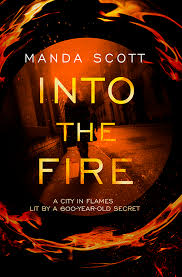
Your latest book INTO THE FIRE is out in hardback this month, can you tell us a bit about it?

It’s a dual time line thriller – the contemporary thread is set in 2014 and there’s a historical thread in 1429, when a young girl, who claimed to be a peasant, turned up at Chinon and told the king she had been sent to free France from English rule (I paraphrase, but that was the gist).

In 2014, Inès Picaut is a police chief in Orléans, called to the site of a fire at a hotel, that is clearly arson. It’s the third such fire in as many weeks, but the first in which there is a body – and so she is now leading a murder hunt. The dead man in this case has been burned beyond recognition, but for the fact that he swallowed a USB drive before he died, and it contains three enciphered files which may help Picaut and her team to identify him – a task which becomes ever more pressing as further fires erupt, and more people die.  

In 1429, Tod Rustbeard, a man of French and English nationality, fights on the English side as the self-styled Maid of Orléans breaks the siege of Orléans. As the English defences crumble, he is sent behind enemy lines with an explicit task: to find the truth behind this girl who cannot be what she says she is – and then to use that truth to destroy her.  As he grows ever closer to his quarry, he has to question not only her identity, but his own. 

The two timelines weave together, each informing the other, so that the central question WHO WAS SHE? drives both forward.  I am absolutely convinced that she wasn’t an illiterate peasant girl, but we can talk about that more in the next question.   Beyond that, any good thriller is driven by a mix of anticipation and uncertainty, and each thread has to have its own threats, rhythms, internal questions that make the two together greater than the sum of their parts.

What was it that sparked your idea for writing INTO THE FIRE?

I’d always had an interest in Joan of Arc’s reputation as a woman warrior – having written about Boudica, it at least made sense to take a look at  the next most famous woman warrior – but I always got stuck on the notion that she was a peasant girl who turned up out of nowhere, got on a warhorse and led the troops into battle. Either she was a cipher, a flag-carrier and nothing more… or she had to be trained. If she was the former, I wasn’t interested. If she was the latter, I couldn’t see how it was possible.  Then I read an article that pointed me in the direction of who she could have been and the more I read about it, the more sense it made – until in the end, it seemed to me she couldn’t have been anyone else.  The question of why she had to spin her own lies in the beginning also makes so much more sense once everything falls into place.

Then I learned that the man who proposed this theory first was thrown out of France and even now, is immensely bitter about it – and it seemed to me that this, the current way of looking at her, was the most important.  She has been mis-represented for 600 years, and even now, she’s being held up as an icon of ‘perfect womanhood’ (virginal, godly, republican) by the far right in France.  So iI really wanted to explore how the political movements of the twenty first century hijack the myths of the past – and how they’ll kill to keep that myth intact. I believe absolutely in the maxim of ‘show, don’t tell’ in writing, so that meant that if I wanted to do what I thought was possible, it had to be through the vehicle of a dual time line narrative – that I had to *show* who she was in the past, in order for us to understand more deeply the projections and patho-mythologies of the present..  It’s a lot harder to write, but if the author gets it right, it’s immensely satisfying to read.

How would you describe your writing process – do you plot the story out in advance or jump right in and see where it takes you?

I never plot in advance, although if there is a historical thread to the book, then I need to make sure I know the history of who was where, doing what and when – and that I have all the ancillary data correct: the things that bring history alive. But for me to write a book, it needs to live inside me, which means the characters have to have their own freedom and they have to have the power to surprise me. I’d grow bored otherwise, and if I’m bored, then the reader is going to be bored too…

INTO THE FIRE features both an investigation taking place in present day Orleans and a historical timeline featuring Joan of Arc in 1429 – how did you go about researching them?

First, I got on the EuroStar and went to Orléans – that was really key to understanding the dynamics of both past and present.  In anything I write, the characters matter most, their identities and inner integrities and the charisma of the situation, but always, the place shapes its people and Orléans was key to both threads.  Having been there, I spent a very large amount of time reading everything I could about Joan of Arc (and there’s a lot), particularly the transcripts of the two trials – her trial by the English and the ‘rehabilitation trial’ by the French 30 years later that endeavoured to prove she wasn’t really a heretic after all – eye witness statements at the latter were crucial to understanding what actually happened, although of course we have to remember that human memory is flawed and undoubtedly coloured by time.  But still, having got my head around her, the modern day narrative of Picaut and Patrice, her computeroid cyber-brain assistant was fast and furious and most of it just rolled out almost unaided. I’m very wary of people who say that books write themselves, because they never do, but some are less effort than others and this bit flowed particularly sweetly – I revelled in the cyber-crime aspects, and the breaking of ciphers.  I’d written a series of spy thrillers just before and the cadences of that were still working their way through.

What was it that first attracted you to writing crime fiction?

I read Val McDermid’s Lyndsey Gordon series back in the 90s and fell in love with the genre. I wrote HEN’S TEETH in the late 90s because I thought I needed the exigencies of plot to help me complete a novel and then I joined the CWA and learned the actual rules of crime writing, as opposed to the ones I had invented for myself, and found that it was a fascinating structure within which to explore the things that matter most to people – I hate the kinds of novels that look at our masks. I am most interested in what happens when we drop those masks and we do so in the presence of death and danger – so crime writing, and thriller writing in particular – is the obvious medium. I consider my historical novels to be thrillers too, they’re just written in a different milieu.

For those writers aspiring to publication, what advice would you give?

I’d say what Fay Weldon said to me on my first writing course, which was ‘Find your own voice’, and then what Terry Pratchett (one of the greats, so sadly missed) said on the second writing course which was, ‘just keep writing.’  And then last, from me: Read.  Read everything.  Read books you love and books you loathe and books you don’t really care about – and work out what you love and why you love it and how it was done, and what the good bits are and what works and what doesn’t.  Reading is the apprenticeship for writing so read and read and read.

And, finally, what does the rest of the year have in store for you?

I’m 3/4 of the way through a sort-of sequel to INTO THE FIRE called ACCIDENTAL GODS so I have to finish that, and then we seem to be about to sell the TV rights to Into the Fire and the company wants me to write the screenplay which is both an enormous honour and an enormous privilege, so I’ll crack on with that.   I’ll be at Theakston’s Old Peculiar Crime Writing Festival in July in Harrogate and then back up again for the History Festival in October. I’m Chair of that for the third and final time this year and so it’ll be all-out to make it the best yet.  I’m handing over Chair of the Historical Writers’ Association to the brilliant historical crime writer Imogen Robertson also in October and Andrew Taylor, multiple winner of the Historical Dagger will take over Chair of the HWA Debut Crown, so between now and October, I’ll be flat out, but I’ll have a rest in November. Perhaps.  I suspect something else will have come up by then.

A massive thank you to Manda Scott for talking to us today on the CTG blog.

To find out more about Manda and her books hop on over to her website at www.mandascott.co.uk and be sure to follow her on Twitter @hare_wood


*** COMPETITION ALERT ***

 I’m thrilled that those lovely folks at Bantam Press have given me a copy of INTO THE FIRE to giveaway to one lucky winner! To be in with a chance to win all you need to do is tweet the link to this post (using the Twitter button below) OR retweet one of the CTG tweets about the giveaway – making sure to include the hashtag #IntoTheFireComp. You’ll also need to follow us on Twitter so we can send you a direct message should you win.

Rules: (1) One entry per reader (2) UK residents only – due to postage costs – sorry! (3) We will draw the winner at random (4) No cash alternative (5) The competition closes for entries at 9pm GMT on Monday 29th June 2015 (6) The judge’s decision is final and no correspondence will be entered into.


Also, make sure you check out all the other fabulous stops along the INTO THE FIRE blog tour …

Unknown

CTG Interviews: best-selling thriller writer Simon Kernick

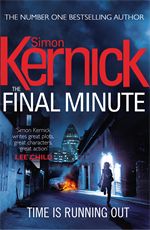
The Final Minute cover image

Today I’m delighted to be joined on the CTG blog by thriller writer Simon Kernick. Known for his fast-paced, action-packed thrillers, Simon spills a few of his writing secrets as he tells us how he goes about creating his best-selling books …

Your latest novel THE FINAL MINUTE is out this month, can you tell us a bit about it?

The Final Minute, centres round Matt Barron, a man with severe amnesia who keeps have a recurring, and very vivid, dream in which he is in a house looking down at two dead women. This leads him to think that he may have killed them. As the book starts, he’s living with his sister in Wales but when a pair of menacing strangers turn up out of the blue with questions for Matt, he realizes that somewhere in his unconscious he possesses a piece of information that is extremely valuable for some very dangerous people. He’s soon on the run, being chased by people at every turn, including the police, and enlists the help of a hardnosed private detective Tina Boyd, to help him find out his true identity and what the information he possesses is before he’s either caught or killed.

You’re well known for writing super pacey thrillers like THE FINAL MINUTE. What’s your writing process – do you plan the stories first, or do you jump right in?

I’m very much a planner. I get my idea, then produce a chapter by chapter synopsis, and only when I’m absolutely sure I know where the book is going and how it’s going to end, do I finally start the writing process.

9781473535084

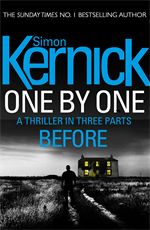
You’ve also recently published a three-part novella ONE BY ONE about a group of school-friends coming together on a remote island twenty-one years after one of their friends was found dead. What attracted you about releasing a story in episodes and did the different format change your writing process?

I had a story idea two years ago that I really liked but wasn’t big enough to fit it in a book and so I used it as a novella. Since I’ve been a fan of serials since childhood I thought it would be an interesting idea to make the novella 3 parts, with parts 1 and 2 ending on real cliffhangers.

What was it that drew you to writing thrillers?

I’ve written stories of one sort or another right back from the age of 5, and I’ve always been a fan of reading thrillers so it seemed like a natural progression to try my hand at writing one.

For those aspiring to write a thriller, what’s your top tip for writing a great story?

Keep the story moving. Always. Let no word be wasted. People aren’t interested in padding when they’re reading a thriller.

9781473535091

And finally, what does the rest of the year have in store for you?

I’m writing a new thriller which needs to be finished by the end of September, then I’m going to have a nice holiday. Then it’ll be onto planning the next one. There’s no rest for the wicked.

A massive thank you to best-selling thriller writer Simon Kernick for dropping by the CTG blog today.

To find out more about Simon and his books you can hop on over to his website at www.simonkernick.com/books/

His latest book is THE FINAL MINUTE – here’s the blurb: “It’s night and I’m in a strange house. The lights are on, and I’m standing outside a half-open door. Feeling a terrible sense of foreboding, I walk slowly inside. And then I see her. A woman lying sprawled across a huge double bed. She’s dead. There’s blood everywhere. And the most terrifying thing is that I think her killer might be me …

After a traumatic car accident wipes out his memory, Matt Barron retreats to his sister’s house in Wales to begin his slow recovery. But something’s wrong. He keeps having a recurring dream of being in a house with a group of dead bodies and a bloody knife in his hand, and he’s beginning to have real doubts that he is who his sister says he is. Then one night, the past comes calling in the most terrifying way imaginable and Matt is forced to flee for his life. He needs to find out who he is, whatever the cost, and there’s only one person who can help: ex Met cop, turn private detective, Tina Boyd. But Matt’s a hunted man and, as Tina digs into his background, she suddenly finds herself in the firing line. She needs to find out the truth. And fast.”

9781473535107

Also, be sure to check out his three-part novella ONE BY ONE – here’s the blurb: “Seven ex-school friends have been brought together on a remote island. They haven’t all been in contact since a fateful night twenty-one years ago, when their friend Rachel Skinner was found dead. The man arrested for her murder has now been acquitted, and the seven friends fear for their lives. But are they hiding from the right person? Or have they fallen into a deadly trap?”

CTG Interviews: Chris Culver about his new book Measureless Night

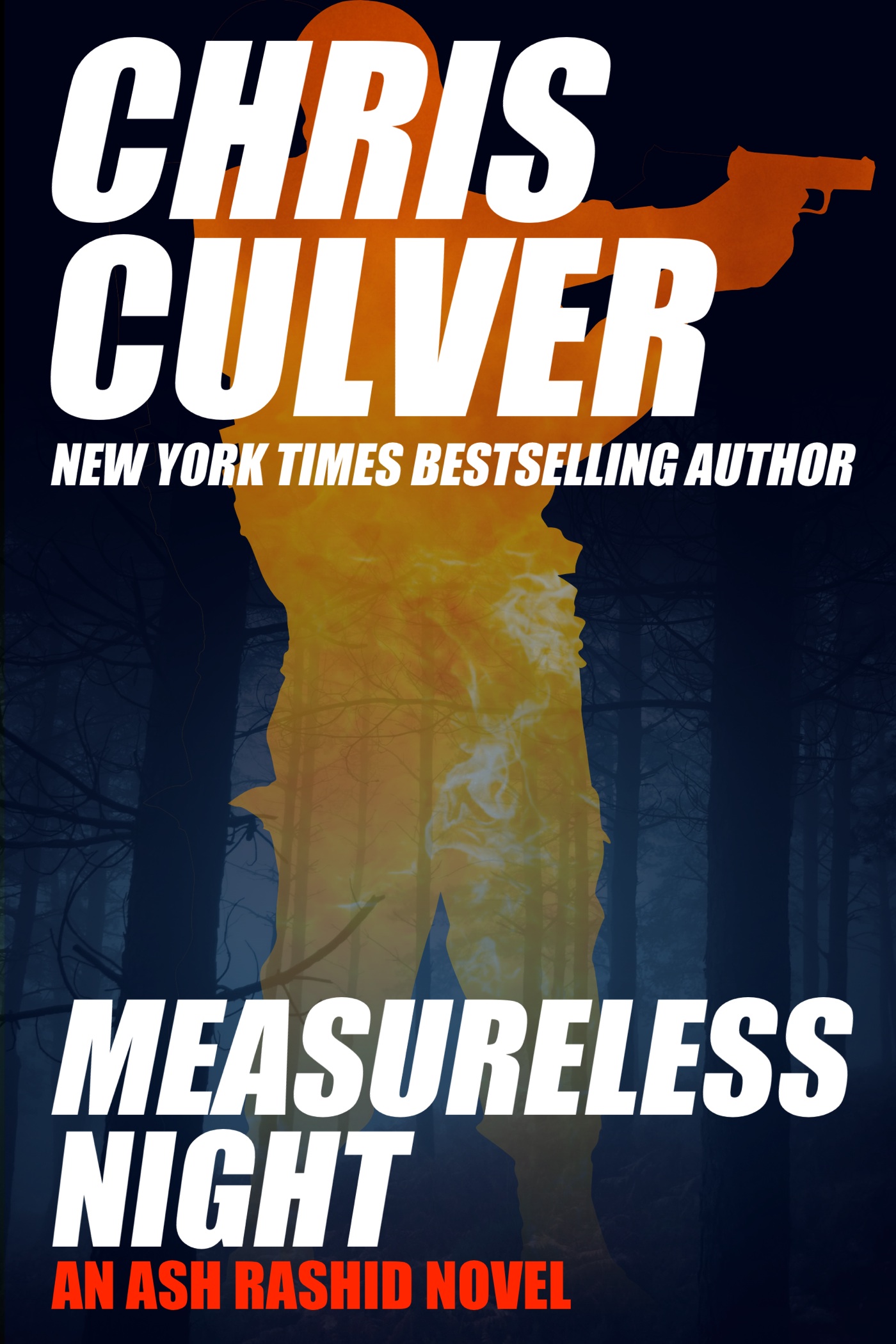
Measureless Night cover image

Measureless Night cover image

Today I’m delighted to be joined by Chris Culver, author of the New York Time bestselling Ash Rashid crime series. His latest novel MEASURELESS NIGHT is out today (28th May).

And so, to the interview …

Your latest book in the DS Ash Rashid series – MEASURELESS NIGHT – is out on 28th May, can you tell us a bit about it?

MEASURELESS NIGHT is the fourth book in my Ash Rashid mystery series. It’s about a detective from Indianapolis who’s recently discovered someone is murdering men and women who witnessed a murder Ash investigated many years ago. It straddles that fine line between being a mystery and a thriller, but I think it works pretty well.

Where did you get the idea/the inspiration for this story?

I come up with ideas for stories all the time. I live near St. Louis, Missouri, so we’re not short on crime, some of which is fairly interesting. So I get a lot of ideas from the newspaper. I also keep in touch with a lot of lawyers and law enforcement officials, and they give me a lot of ideas. By the time I write a book, I’ve extended that idea and twisted it so that it’s barely recognizable, but most of my ideas come from reality.

MEASURELESS NIGHT is an exception. The concept evolved over time from a very simple kernel of an idea to something much more complicated. This was one of those rare books that didn’t start with an “Aha!” moment. It started with me wondering how Ash Rashid would handle finding out that a witness to an old case of his was murdered. From there, I just started asking the kind of questions Ash would ask. Why would someone kill this witness? Who had something to gain by this victim’s death? The story snowballs from there and, hopefully, takes some interesting twists and turns along the way.

What got you started writing crime fiction?

Like most crime writers, I started writing crime fiction because I loved reading crime fiction. Even as a very young boy, I loved mysteries. When I was in third grade, I read through the entire Hardy Boys series. Before that, I read the Boxcar Children, and the Encyclopedia Brown novels. I couldn’t get enough of them as a kid.

As I got older, my tastes shifted to more serious work, and I fell in love with early hard-boiled mystery novels, especially those by Raymond Chandler and later Mickey Spillane. They were terrific books with great twists and unforgettable characters. When I sat down to write my first novel, I didn’t even consider writing anything else.

Can you tell us a bit about your writing process – do you plan first or jump right in?

I’m a big planner. By the time I sit down and type “Chapter 1”, I’ve already written about a hundred pages of notes. I know reasonably well how the book will start and finish, I know all the major twists, and I’ve got a pretty good idea of what’s going to happen in the middle. I know the characters equally well.

Of course, things can change rapidly when I start writing. When that happens, I throw my notes out the window and see where the story takes me.

If you had to pick one, what’s your best writing moment so far?

Probably finishing my first novel. At the time, I thought I had written the greatest book the world had ever seen, but looking back, it was a mess. The characters were clichés, the plot meandered, and the writing was stilted at best. Despite being a miserable failure, that first book taught me a lot and gave me the confidence to work on my second book.

For those looking to get published, what advice would you give them?

I’d suggest a writer look at every option he or she has available because there are advantages and disadvantages to every choice. An enormous publisher has market clout and the ability to get books into Walmart, Cosco, and everywhere in between. That’s great if your publisher is willing to put every resource it has at its disposal into your career. Chances are that won’t happen unless your name happens to be James Patterson. In fact, chances are quite high that they will give you excellent editing and a terrific cover but no marketing support whatsoever. Your book will come out, sit on store shelves, and no one will ever hear about it. That’s just how this business works.

At a smaller publisher releasing fewer titles, you’ll probably get more attention from the marketing department. Unfortunately, they will likely have fewer resources than a larger publisher and fewer options to help push your book.

You can also self-publish a book now. This is a hard route, but it’s one worth considering. You keep a larger percentage of the book’s sale price, but you pay for everything—editing, cover design, formatting, etc. In addition, you’ve got to do your own marketing. This route has a steep learning curve, but it’s one worth considering in a market that’s increasingly shifting to digital.

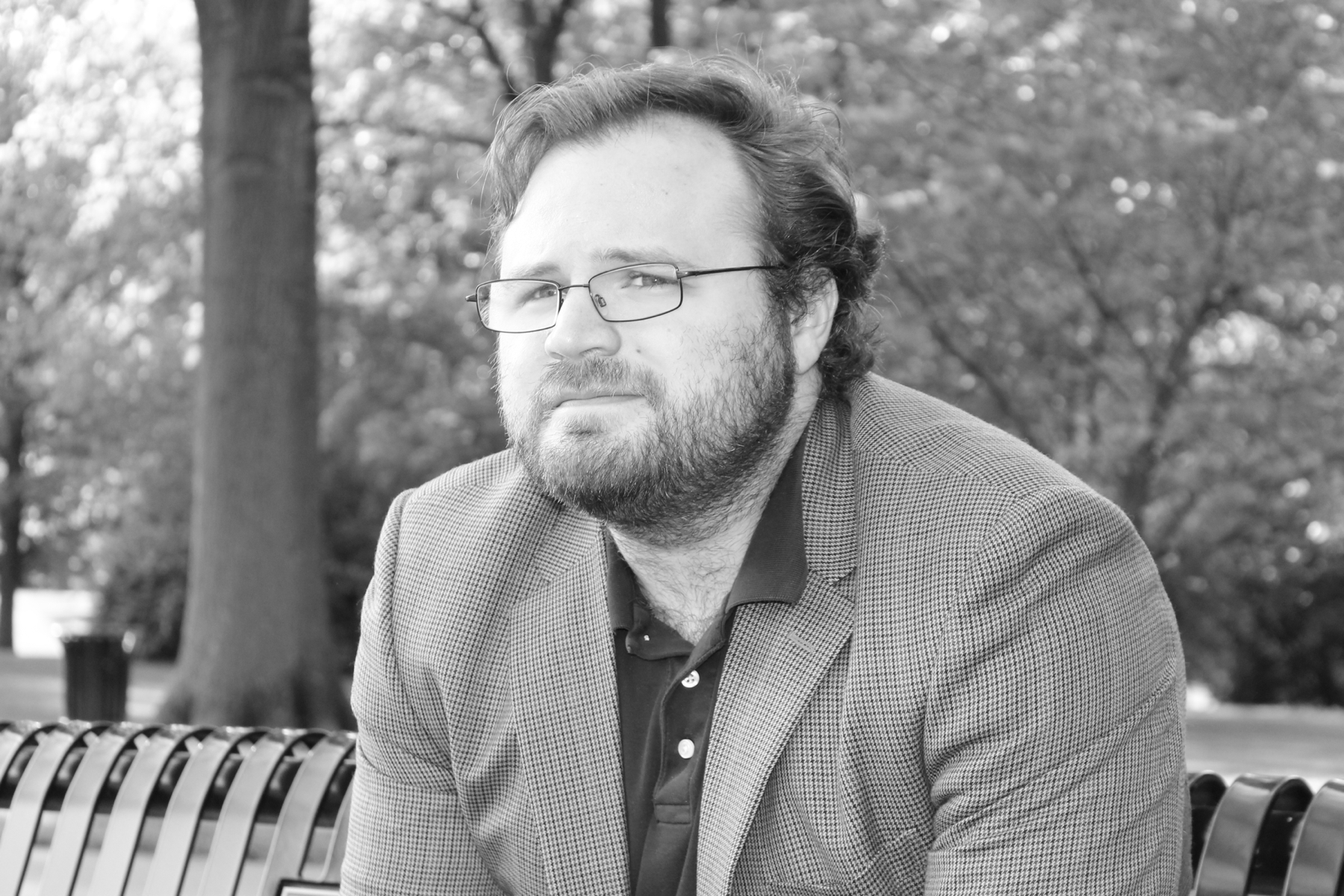
Author Chris Culver

Author Chris Culver

And, finally, what does the rest of 2015 have in store for you?

To be honest, I don’t know. Right now, I’m a stay-at-home dad who occasionally writes books. We’ll see how that goes.


Big thanks to Chris Culver for dropping by to see us and talking about his writing.

Chris has also given readers of the CTG blog a lucky peep at MEASURELESS NIGHT …

Measureless Night – what the blurb says: “Detective Sergeant Ash Rashid wants little out of life: a steady job, a quiet place to call home, and a healthy family. Now three hundred days sober, for the first time he can see his happy ending forming on the horizon.

Then patrol officers find the body.

The victim has chemical burns on her arms, two broken legs, and a gash on her throat so deep it exposes the vertebrae of her neck. Then they find a second body and then two more. The killings aren’t random, far from it. Each victim testified in a murder trial ten years ago, one that launched Ash’s career. Each of them helped put a very dangerous man in prison, and now each of them has paid the price.

Ready or not, Ash will soon learn the true cost of his happy ending. Because very dangerous men have a knack for reaching through walls. Ten years ago, Ash helped send a predator to death row. Now someone plans to make him pay. And she’s willing to kill everyone who stands in her way.”

What Chris says about the book: “Measureless Night is the fourth novel in my New York Times bestselling Ash Rashid series. Big picture, it’s the story of a detective who’s trying to solve a grizzly murder and protect others from being murdered as well. At it’s heart, Measureless Night is a mystery, but it has a lot of suspense elements as well.

On a slightly smaller scale, it’s the story of an average man who’s trying to balance the various roles he plays in life. He’s a devoted father, a loving husband, a dogged detective, and a religious man among other things. Those various roles are in constant tension, which is something, I think, most of us can relate to. In my own life, I’m a dad, a husband, a writer, etc. It’s not always easy to balance work and family, especially with a young child.”

EXCERPT:

The picture was a wide-angle shot of Michelle Washington’s body. Someone had ripped off her shirt and bra. A dark liquid glistened against her brown skin, forming a word from her neck to her navel. I felt sick, but I forced my face to remain impassive, a skill I had picked up from several years working homicides.

“The liquid is probably blood, and it says slut,” said Bowers. “Someone cut off her hand—before she died, according to Dr. Rodriguez—and then used her fingertips as a brush.”

I’ve been a police officer for a long time, even spending a couple of very good years as a homicide detective. Rarely did I hear things that took me aback, but this did. You’ve really got to hate somebody to dismember her while she’s alive, to hear her scream as the knife strikes bone, and to keep going until the deed is done.

“How’d you connect her to me?”

Bowers glanced up from his phone, but then glanced back at the screen. “She had your card in her purse.” He slipped the phone back into his pocket. “And you can’t think of any reason why someone would want to hurt her?”

I started to tell him no, but a sick thought hit me. Michelle and I hadn’t met by chance. Ten years ago, she and her brother had witnessed a murder. It was one of the first homicides I ever worked, and their testimony helped send a violent and very well-connected gang leader to prison for murder. I didn’t often keep up with the criminals I put away, but Santino Ramirez had a special place in my heart. He was the first and only man I ever sent to death row. Unless he won a last-minute appeal, he’d get a needle in the arm in a couple of days. The world would be a better place without him.

I swallowed a lump in my throat and hoped I was wrong about what I was about to say.

“She testified against Santino Ramirez ten years ago,” I said. “His old gang might have just called her out.”


To find out more about Chris Culver and his books be sure to check out …