#MyGirl Blog Tour: a sneak peep at Chapter One of MY GIRL by Jack Jordan

CknFWlEW0AAsX9N

Today I’m joined on the CTG blog by Jack Jordan, bestselling author of Anything for Her and My Girl. To celebrate the worldwide release of his second thriller My Girl on 4th July, he’s letting CTG blog readers into a sneak peep and sharing the first chapter with us here at Crime Thriller Girl. 

To get you in the mood, here’s the blurb:

“Paige Dawson: the mother of a murdered child and wife to a dead man. 

She has nothing left to live for… until she finds her husband’s handgun hidden in their house.

Why did Ryan need a gun? What did he know about their daughter’s death?

Desperate for the truth, Paige begins to unearth her husband’s secrets.

But she has no idea who she is up against, or that her life isn’t hers to gamble – she belongs to me.

From the bestselling author of Anything for Her, Jack Jordan’s My Girl is the new chilling thriller that you won’t want to miss.”


And now, the first chapter …

1

For the first few seconds after she woke, Paige Dawson lived in a world where her husband Ryan was snoring lightly beside her, and her daughter Chloe was sleeping peacefully in the next room. When reality slowly trickled in, she instantly wanted to return to sleep – to forget they were dead – to stop the tears from rolling down her cheeks.

As her eyes adjusted to the room, she coughed violently. Stale smoke sat in the air. Worn clothes lay crumpled on the living room floor, smelling of damp and old sweat. Cigarette ash had been trodden into the carpet. A photo frame faced the ceiling. Ryan smiled from behind the cracked glass; a time when he was happy – before he slashed his wrists.

Get up. You need to get up.

She reached down to the carpet and patted around the mess in the dark until she found the tray of tablets. It shook in her hands as she popped each pill through the foil: one, two, three. She placed them on her dry tongue, picked up the half-empty wine bottle from the floor and took a swig. The wine was warm, but it did the job. The diazepam would kick in soon.

As she sat up, pain exploded in her temples. She lit a cigarette, cringed with the first toke, and stared at the daylight creeping from behind the closed curtains. The real world was taunting her: you can’t hide away from me forever.

The smell of sick filled the house. How long it had been in the house with her: a night? A week? She wondered if there would be blood in it again.

What would Chloe think if she saw me like this?         
Chloe would have been twenty-four years old by now. Her severed arm had been found in the river, her fourteen-year-old fingertips breaking through the surface. They never found the rest of her body, nor did they find the person who killed her. The forensics team had tested her blood: she had been alive when her murderer began chopping her up.

The diazepam wasn’t working fast enough. She could still feel the painful void in her chest; she could still see her husband’s blood swirling around in the bathwater. If she closed her eyes, Ryan’s lifeless eyes flashed in front of hers.

She snatched the packet of codeine from the side table and swallowed two tablets with more wine.

When she lifted the cigarette to her lips, she found it wasn’t there. She peered over the edge of the sofa and saw the cigarette burning a black hole into the carpet.

Maybe the diazepam is working.

She picked up the cigarette, spat on the blackened carpet, and gave it a rub with her finger, as though she had kissed a child’s plastered graze. There. All better.

She spotted Ryan watching her from the mess on the ground, his lips frozen in an eternal smile.

However hard she tried, she couldn’t remember the last time she kissed those lips. She couldn’t remember when the kisses stopped, or when the distance started.

She shook the thought from her head and stumbled into the kitchen.

The bin was bulging with weeks of waste. Empty wine bottles lined the wall by the back door. Loud, languid flies buzzed around in hopeless circles. An uneaten meal sat in a pan on the stove, discoloured and congealed. She couldn’t even remember cooking it, let alone forgetting to eat it.

The last time she had looked into Ryan’s eyes while he was alive, he had been pinning her to the floor with his body as he forced a slice of bread into her mouth. His frustrated tears fell onto her face as he begged her to eat. He only stopped when the bread lodged in her throat. He had freed the blockage with fingers bent like a fishhook and then, as she gasped for air, he had sobbed from where he lay on the carpet, with bits of bread and saliva coating his fingers.

She wasn’t starving herself – she just forgot to eat.

The sound of the key turning in the lock made her jolt. Her mother-in-law gasped. Shame turned in Paige’s gut.

Greta stood in the doorway with her eyes on the mess.

‘Paige, this is…’

‘I was about to clean up,’ she replied as she returned to the living room.

Greta placed her bags by the door. She looked reluctant to close it, to say goodbye to the fresh air, but when she did, it slammed.

‘How could you let it get this bad?’

Greta threw open the curtains. Paige squinted as daylight burst into the room.

‘Are those burns on the carpet?’

As Greta rifled through the mess, Paige wondered how the woman before her held herself together. Her hair had been set at the salon, her make-up was perfect, her clothes were ironed and fresh. No one would have known that her only son had committed suicide just two months before.

‘I expected better from you, Paige.’

Paige glanced at herself in the mirror above the fireplace and saw greasy auburn hair, streaks of mascara hardened on her cheeks, the stained nightgown stuck to her body with sweat. She looked older than her forty-two years.

‘I don’t know why, but I had a feeling you might have changed the locks.’

‘I wouldn’t do that.’

Greta spotted the photo of Ryan, hidden beneath the cracks in the glass. She sighed and took it in her hands. For a moment her frown disappeared, and she looked almost beautiful. She stood the photo frame on the coffee table and looked back to Paige. The frown immediately returned.

‘Not up to cleaning yet?’ Greta asked, as she picked up her bags and carried them into the kitchen.

‘I’ve got other things on my mind,’ Paige replied, following her into the kitchen.

‘Shall I? I’ve done your food shopping, so I might as well do your cleaning.’

Paige held her resentment back. ‘I was just heading out.’

‘Presumably after you’ve showered.’

She looked Paige up and down again.

‘Obviously.’

‘I will clean while you’re out, then.’

‘If that would please you, Greta.’

‘It would. Ryan would want me to look out for you.’

‘Thanks.’

Greta looked around the mess for other aspects to criticise. Paige waited patiently, longing to be alone.

‘Are you sleeping on the sofa?’

‘For now.’

‘Imagine if one of your neighbours should walk past and see you.’

Greta went into the living room to stare at the mess again, lost at where to start. Paige followed behind her.

‘I don’t care what people think of me.’

‘Clearly. I can’t remember the last time I saw you clean and dressed.’

 ‘That’s the thing with being a widow, you focus on the death of your partner, rather than what people think of you.’

‘Well, if I were you—’

‘But you aren’t, Greta.’

They stared at each other, like two cats about to fight. They stood in silence for a while, their eyes locked.

‘You said you were off out?’

‘Doctor’s appointment.’

‘Who is it you see?’

‘Dr Abdullah.’

‘Ah yes, the Muslim fellow. I prefer Dr Phillips. She’s Christian.’

‘Dr Abdullah is a Christian, too, I believe.’

‘Really? Still, I prefer Sally. She has a kind air about her, and presents herself well.’ Greta looked her up and down as she spoke.

‘Well, I’ll leave you to it.’

‘Yes. I’d better start cleaning, before this place becomes infested with rats.’ Greta picked up an ashtray from the coffee table. ‘Must you really smoke in the house? Ryan would have never allowed it.’

‘Well Ryan’s dead now, isn’t he? So I’ll smoke in my house if I want to.’

Greta flinched, but held her tongue.

‘Thanks for the food,’ Paige said, and made for the stairs.

The moment she got upstairs, she turned on the shower and retrieved the bottle of wine she had hidden under her bed. She certainly wasn’t going to step out into the real world without help.

Paige returned to the bathroom and locked the door behind her. She peeled off the nightgown that stuck to her like a second skin, sat on the toilet and drank wine straight from the bottle as steam filled the room. She stared at the bath and saw Ryan’s lifeless body lying in the red water, his vacant eyes locked on hers. Paige clenched her eyes shut and shook her head.

He’s not real. He’s gone.

When she opened her eyes again, the bath was empty. Ryan was gone.

She checked her urine: blood again. She flushed the blood from the toilet, and the thought from her mind. She couldn’t think about that right now.

As she breathed in the thick, hot mist, and drank warm wine from the bottle, she began to cry silent tears: she could never escape the fact that she was the mother of a murdered child and wife to a dead man.

Jack Jordan

Jack Jordan

A big thank you to Jack Jordan for sharing the first chapter of his latest thriller – MY GIRL – here on the CTG blog.

You can pre-order your copy of My Girl for Kindle, here. Paperback available worldwide, 4th July 2016.

You can grab your copy of Jack’s first thriller, Anything for Her, here.

 To find out more about Jack Jordan and his books head on over to www.jackjordanofficial.co.uk and follow him on Twitter @_JackJordan_
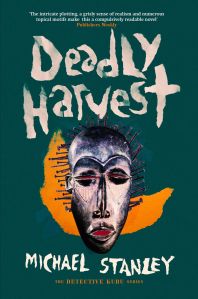

 

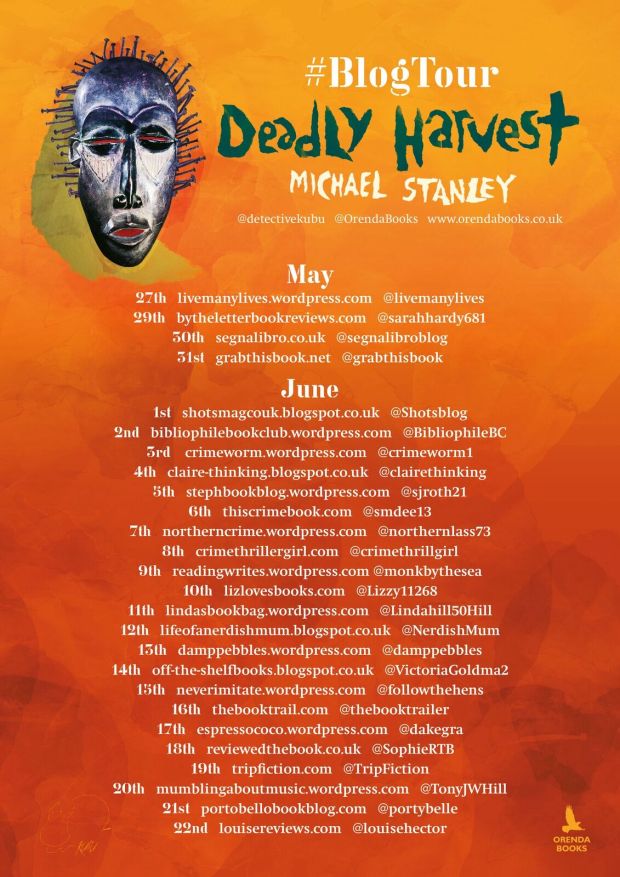
The Deadly Harvest Blog Tour: Guest Post by Michael Stanley and Detective Kubu

Today I’m delighted to be joined by Michael Stanley for the next stop on their DEADLY HARVEST Blog Tour. Deadly Harvest, the latest in their popular Detective Kubu series, is out now. On the tour today, Michael Stanley take their detective to lunch and chat to him about his latest case.

But first, here’s the blurb on Deadly Harvest: “A young girl goes missing after getting into a car with a mysterious man. Soon after, a second girl disappears, and her devastated father, Witness, sets out to seek revenge. As the trail goes cold, Samantha Khama –new recruit to the Botswana Criminal Investigation Department –suspects the girl was killed for muti, the traditional African medicine usually derived from plants, sometimes animals and, recently and most chillingly, human parts. When the investigation gets personal, Samantha enlists opera-loving wine connoisseur Assistant Superintendent David ‘Kubu’ Bengu to help her dig into the past. As they begin to discover a pattern to the disappearances, there is another victim, and Kubuand Samantha are thrust into a harrowing race to stop a serial killer who has only one thing in mind…”

And now, over to Michael Stanley …

A couple of weeks ago, Orenda Books released the fourth Detective Kubu mystery Deadly Harvest in the UK and Europe. Naturally we wanted to tell you about it, but we decided to let the person who knows most about it – our protagonist Assistant Superintendent David “Kubu” Bengu – talk about it instead.

unspecified-3

We were in Botswana recently, so we lured him away from the Criminal Investigation Department of the Botswana police by offering him lunch at one of his favorite restaurants in Gaborone, the Caravela, which serves delicious Portuguese fare.

Once we had settled down and Kubu had regretfully passed on the wine because he was on duty, we chatted. Of course we are old friends so we used his nickname “Kubu”, which means hippopotamus in the Setswana language. Kubu doesn’t mind. It is part of his persona and has been with him since his school days at the Maru a Pula school.

Michael asked him about being a detective in Botswana.

Kubu laughed. “I thought you’d want to talk about food and recipes! You know there’s a cookbook out now with my favorite African dishes? Sometimes I think I’m better known as a gourmet than a detective. But don’t ask me to be the cook! By the way shall we order? Joy says I should have a salad for lunch. It’s part of my diet. So I’ll start with the avocado salad. It’s excellent. Then I’ll have the peri-peri whole chicken. I really recommend that. We can wait till after the main course before we order the desserts.”

tasteofafrica

While we were wondering about the salad ‘diet’ and whether we’d brought enough pula to pay for all these courses, Kubu returned to the subject of police work.

“Michael, you have to understand that Botswana is a very big country. The size of France. Less than two million people though. We have about twenty main police centers, but they all have a lot of area to cover and lots of places for criminals to hide. And the countryside is very diverse. We’ve got the huge Kalahari desert with very low population – mainly Bushmen. There’s the lush northern area along the Chobe and Linyanti rivers, with all that spectacular wildlife. But, at Kazangula, Botswana has a joint border with three other countries – Zimbabwe, Zambia, and Namibia. Think of the smuggling possibilities that offers. Then there are the cities like Gaborone and Francistown, nothing like Johannesburg, but they have their share of crime.”

courtyard

Figure 1: Courtyard at the Caravela (Photo: J Everitt)

We really wanted to know about muti murders: people – especially children – being murdered so that witch doctors can use their body parts for black magic. It’s a scary practice becoming more, rather than less, prevalent in sub-Saharan Africa, and it provides the backstory of Deadly Harvest. Michael asked Kubu how these cases were handled in Botswana.

witchdoctor

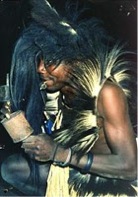
Figure 2: Witchdoctor (Photo courtesy Alex Zaloumis)

He hesitated, then said: “You must understand that most witchdoctors do good. They have a variety of herbal remedies, usually supplied with a dash of good advice or a prayer. My father is a herbalist, although recently… Well, that’s another story. Now a few witch doctors might add animal parts – like the heart of a lion to give the client strength. But a very few – reputed to be the most powerful – use human body parts. Children are abducted. It’s horrible. And the culprits are very hard to find because the victims aren’t related in any way to their abductors. Worse, everyone is too scared of the witch doctors to give information. Even some policemen are nervous. Not me, of course.”

fetishes

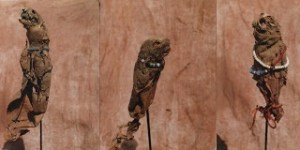
Figure 3: Fetishes (Photo courtesy Alex Zoloumis)

We said we found it hard to understand that educated people in today’s world still believed in these types of potions. Kubu shook his head. “It’s supposed to give the evil witch doctors tremendous power, the ability to change shape, invisibility. The witch doctor I had to deal with in the Deadly Harvest case was thought to be invisible. As you can imagine, it was a very hard case to solve. Fortunately the CID has a new detective – a woman, believe it or not – who really pushed us to make progress. It took both of us to get to the bottom of it all.”

He paused. “These cases really shake things up. There is the infamous case of a young girl, Segametsi Mogomotsi, which occurred in Mochudi in 1994. She and her friend were selling oranges and became separated. Segametsi disappeared and her mutilated body was found weeks later. Segametsi’s murder caused the community to come out in violent protests because they believed the police were protecting the witch doctor’s powerful clients. One person was shot and killed by a policeman. The government eventually felt it necessary to conduct an independent enquiry, so it called in Scotland Yard from the United Kingdom.”

We nodded. We had heard about that awful case at our first meeting with the previous director of the CID, Tabathu Mulale. The Scotland Yard report was never released and the case remains unsolved.

To lighten the rather sombre mood, Stan asked: “Have you ever met Precious Ramotswe? You’re sort of in the same line of work.”

Kubu laughed. “No, not really. She’s that lady private investigator? She solves people’s problems, but I’m after murderers. She’s very resourceful, but our cases don’t overlap much. Maybe I’ll bump into her one day.”

At that point the food arrived, and that was all we could get out of Assistant Superintendent David “Kubu” Bengu.


A big thank you for Michael Stanley (and Assistant Superintendent David “Kubu” Bengu for talking about Deadly Harvest on the CTG blog today. You can find out more about Michael Stanley over on Facebook and follow them on Twitter @detectivekubu

DEADLY HARVEST is out now. You can buy it from Amazon here

And be sure to check out all the great stops along the Deadly Harvest Blog Tour …

unspecified-2

#WhoKilledSherlockHolmes Blog Tour: Paul Cornell talks WHO KILLED SHERLOCK HOLMES? and delights of genre-swapping

blog tour banner-2


This afternoon I’m handing over the reins at CTG HQ to screen-writer and novelist Paul Cornell who’s popped by to tell us all about his latest book WHO KILLED SHERLOCK HOLMES? 

Over to Paul …

Crime writing is quite like writing SF and fantasy, in that both audiences are used to looking for specific things, moment by moment, during their reading experience. Crime audiences seek clues and red herrings, often hoping to play along in a ‘pure whodunit’, but at least hoping the text will convince them of its plausibility. SFF audiences look for the cues of world building, the slow release of information that will tell them what the rules are. They seek a suspension of disbelief. I generalise, of course.

The lovely thing about combining those genres, as I do in my Shadow Police books, is that I can swap one set of expectations for the other. A point of how my London is set-up may also turn out to be a clue. My characters, five modern Metropolitan Police officers who have been cursed with ‘the Sight’, the ability to see the magic and the monsters, use their Ops Board to dissect the nature of the world they’ve found themselves in, as much as they use it to break down a crime. I’m proud that they use only their training and techniques, and have no occult mentor, and not much knowledge of how magic works (though, three books in, Detective Constable Kev Sefton is just about to attempt a small spell).

I’ve really enjoyed, as I got into writing these books, meeting crime fans, at gatherings like Crimefest and the big convention in Harrogate. Lovely people, surprisingly few serial killers. And now, because of what the new books is about (and also because I just wrote an episode of Elementary) I’m encountering a whole new and equally terrific fandom…

The new novel, Who Killed Sherlock Holmes? is a pure whodunit about the death of a ghost. That is, in my London, ghosts are the memories of all Londoners, living and dead, and include not only the deceased, but also fictional and mythological characters. My heroes find the ghost of Sherlock Holmes, face down in the Museum at 221b Baker Street, flickering between every version of himself ever imagined, intangible, but with a dagger in his back. What does it mean to kill a ghost? Is this anything to do with the crimes from the Conan Doyle stories being re-enacted in order in their original locations? Is it a result of the three different productions of Holmes all being filmed in the city at once?

It’s also designed as a jumping-on point for the series, with the back story of what’s going on filled in for new readers very easily. Whether or not you’ve come for the Holmes, the ghost or the mystery, we hope you’ll join in and play along.

Big thanks to Paul for coming by and telling us all about his latest book and the similarities between crime fiction, SF and fantasy.

Who Killed Sherlock Holmes? is published by TOR UK and is out this week. You can buy in here from Waterstones or from Amazon here

Paul Cornell has been Hugo-nominated for his work in TV, comics and prose, and is a BSFA award-winner for short fiction. He has also written some of Doctor Who’s best-loved episodes for the BBC, and has more recently written for the Sherlock-inspired TV show Elementary, starring Jonny Lee Miller and Lucy Liu. He lives in Gloucestershire.

Find out more about Paul at http://www.paulcornell.com and @paul_cornell.


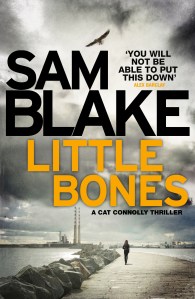
LITTLE BONES Blog Tour: Guest post by author Sam Blake – The Trouble with Titles

little bones

Today I’m handing over the reins at CTG HQ to author Sam Blake who is going to talk about the trouble with titles. Over to Sam …

Book titles and with that covers, are strange things – you spend months, often years, writing a book –  ideas forming, sentences taking shape, then reshaping, then reshaping again through the editorial process, but it’s not until you see your title on a cover, that it feels like a real thing. To get to this stage there are far more people involved than just the writer, and it can take months for everyone to be happy that what is on the outside of a book reflects what is on the inside.

For many years this book was called The Dressmaker, and this is why:

Stephen King talks about story being the collision of two unrelated ideas – the ideas behind Little Bones weren’t entirely unrelated but they collided one sunny Sunday afternoon as I was driving back from a Readers Day that author Sarah Webb and I had programmed at a hotel in Dublin Airport. It was about five o’clock in the afternoon and pre M50 so a LONG drive home (I once counted 35 sets of traffic lights) but as I put on the radio and pulled out of the carpark a documentary was starting on RTÉ about Kerry born playwright George Fitzmaurice. Fitzmaurice is best remembered for his play The Country Dressmaker that he submitted to the Abbey Theatre in 1907. It was such a success that it rescued the theatre after all the problems of John Millington Synge’s The Playboy of the Western World that same year. Fitzmaurice enlisted in the British army in 1916 and returned from the front with neurasthenia, rendering him fearful of crowds. He became more introverted and isolated as he grew older and eventually died in 1963, in a rented upstairs room in No.3 Harcourt Street, Dublin. He was aged 86 years and left no will and few personal belongings – apart from a copy of every play he had ever published and a few in draft form, which were in a suitcase under his bed.

For me, it was Fitzmaurice’s suitcase that caused the collision of ideas.

Several years previously I’d watched an RTÉ TV documentary about a twenty-three year old girl from Boyle, Belinda Agnes Regan who in 1947 was living in lodgings in Manchester. She had left Ireland knowing she was pregnant, but terrified of the disgrace of the pregnancy, had concealed it. She went into labour in the middle of the night and delivered the baby herself, incredibly, in a room she shared with a younger girl who apparently slept through her ordeal. Covering the baby with a blanket “so Shirley would not see it,” she crept to the bathroom. When she returned, the baby wasn’t breathing.  Wrapping the body in brown paper and a ‘blue frock’ she hid it in her suitcase, which she concealed under her bed, leaving it there when she returned home for Christmas. While she was in Ireland the body was discovered, and on her return she was arrested for infanticide.

These two stories, heard many years apart, came together in my head, and on the drive home I started wondering about suitcases and dresses and dress makers and what would happen if the bones of the baby had ended up in a dress – a wedding dress – the crucial thing that Belinda Regan had perhaps yearned for, for nine long months. At that point I had no idea who owned the dress, or how the bones got there or WHY…but I knew the story was called The Dressmaker.

When my agent, Simon Trewin mentioned my book to Bonnier’s Mark Smith over lunch, it was The Dressmaker, when Twenty7 Books snapped it up the next day, it was still The Dressmaker. All through the edits it was The Dressmaker.

Then ‘The Dressmaker’ movie came out.

Much discussion was had – the book and the movie would get confused, if you Googled ‘The Dressmaker’ how many hundreds of pages would it take to get to my book? My agent was almost mown down by a bus on Tottenham Court Road that had an ad for ‘The Dressmaker’ plastered down the side. Someone was telling us that this WASN’T the title of the book.

But coming up with a title for a book isn’t easy. Here are just some of the ideas I came up with (suitably in the bar at Waterford Writers Weekend when you’d think the atmosphere would be conducive to creativity), with Alex Barclay who was one of the few people who had read the book at that stage. It took us almost three hours and we still didn’t have it.

titles pic

I brainstormed it with Simon, my agent, and the team at Bonnier sweated at it too. Then a very lovely lady called Kate Parkin, Executive Director of Adult Publishing at Bonnier had a flash of inspiration. Joel Richardson, my editor at Twenty7 Books emailed me to say, “What do you think of Little Bones? We like it.

And so did I.  A lot.


© Sam Blake

Sam Blake is a pseudonym for Vanessa Fox O’Loughlin, the founder of The Inkwell Group publishing consultancy and the national writing resources website Writing.ie. She is Ireland’s leading literary scout who has assisted many award winning and bestselling authors to publication. Vanessa has been writing fiction since her husband set sail across the Atlantic for eight weeks and she had an idea for a book.

Little Bones is the first in the Cat Connolly Dublin based detective thriller trilogy. When a baby’s bones are discovered in the hem of a wedding dress, Detective Garda Cathy Connolly is face with a challenge that is personal as well as professional – a challenge that has explosive consequences.

Follow Sam Blake on Twitter @writersamblake or Vanessa @inkwellhq – be warned, they get tetchy with each other!


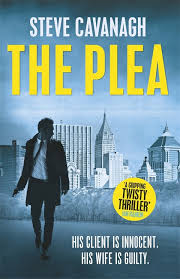
#ThePlea Blog Tour: Guest Post by Steve Cavanagh – Influences. I’ve had a few.

Unknown

Huge thanks to CTG for letting me have a guest spot on this great blog. I’ve chosen to talk a little about my influences, and how they may have affected the books that I write, or even the way that I write. Style. That’s the word. At my first ever event as an author I remember being asked by Colin Bateman what I would say my “style” of writing was like. At the time, I’d written my first book, I’d been lucky enough to get a book deal, and I was working on my second novel, The Plea. My answer must’ve been disappointing, but it was honest. I said, “To tell you the truth, I’m not sure that I have a style.”

To me, other authors that I’d read and loved for years, had style. The likes of John Connolly – who writes in beautiful, poetic prose. His Charlie Parker novels are essentially gothic detective novels, but they are shot through with humour, warmth, and a good dollop of the supernatural. Raymond Chandler had style. His language was at times strange and wonderful especially in those extended metaphors. Michael Connelly has an almost journalistic style – a beautiful, unadorned simplicity that somehow transports you straight into the heart of Los Angeles and into the passenger seat beside Bosch. I also love the stripped back genius of Lee Child – with those tripping, declarative sentences that are almost musical. Speaking of music, Elmore Leonard played a tune in dialogue that few others could even get close to – perhaps only Ian Rankin is Leonard’s equal.

So having read all of those authors, and more, what kind of style did I have? At the time, I couldn’t see it. I think that it takes a few books to emerge. At the time I began writing, I never once thought about my style of writing or even trying to create one.

It’s difficult to determine how those authors I’ve mentioned above have influenced me or the books that I write. In asking myself that question, I can only think of one answer. All of them tell brilliant stories. And those stories are told in uniquely brilliant ways.

A style, I suppose, is the sum total of its different parts. So it’s every author that I’ve read, filtered through me. And no-one else can sound like that. If you asked me today what my style is, I’d still have to give a bit of a vague answer. I only know what I like to write. I like stories that start quickly, that move with enough speed to keep the reader hooked, and while all the fireworks are going off, I like to try and make the reader think. My language is fairly simple because I like it that way. I do aim for a twist or two, because as a reader I enjoy twists and turns. Most of my style probably comes down to character. If I can get my characters to tell the story, rather than me – the writer, then I think I’m going in the right direction.

Influences are like parents, you can’t really choose them. I’ve been lucky in that the writers that have influenced and inspired me the most are some of the greats of the genre. There’s not a bad book in any of them. Apart from the pleasure I get from their work, they also drive me to try and be a better writer.

That’s really all the influence you need.


A big thank you to Steve Cavanagh for making the CTG blog today’s stop on his blog tour.

THE PLEA is out on May 19th in Trade Paperback, eBook and Audio. It’s a tremendous read and an absolute must for all thriller fans. Here’s what the blurb says: “When David Child, a major client of a corrupt New York law firm, is arrested for murder, the FBI ask con-artist-turned-lawyer Eddie Flynn to secure Child as his client and force him to testify against the firm. Eddie’s not a man to be coerced into representing a guilty client, but the FBI have incriminating files on Eddie’s wife, and if Eddie won’t play ball, she’ll pay the price. When Eddie meets Child he’s convinced the man is innocent, despite overwhelming evidence to the contrary. With the FBI putting pressure on him to secure the plea, Eddie must find a way to prove Child’s innocence while keeping his wife out of danger – not just from the FBI, but from the firm itself.”

Pre-order THE PLEA here from Waterstones or from Amazon here

To find out more about crime writer Steve Cavanagh hop over to his website at www.stevecavanagh.com and be sure to follow him on Twitter @SSCav


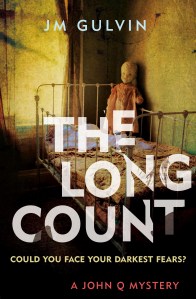
The Long Count Blog Tour: JM Gulvin talks about creating

The Long Count

Today I’m delighted to welcome JM Gulvin to the CTG Blog to talk about how he created Texas Ranger John Quarrie. His latest book – THE LONG COUNT – is out this month and is the first in a new series featuring John Quarrie.

Here’s the blurb: “In The Long Count, the first book of JM Gulvin’s masterful new crime series, we meet Ranger John Quarrie as he is called to the scene of an apparent suicide by a fellow war veteran. Although the local police want the case shut down, John Q is convinced that events aren’t quite so straightforward. When his hunch is backed up by the man’s son, Isaac – just back from Vietnam and convinced his father was murdered – they start to look into a series of other violent incidents in the area, including a recent fire at the local Trinity Asylum and the disappearance of Isaac’s twin brother, Ishmael. In a desperate race against time, John Q has to try to unravel the dark secrets at the heart of this family and get to the truth before the count is up…”

And now, over to JM Gulvin to talk about creating Texas Ranger John Quarrie … 

It was 2003 and I was researching a novel in Idaho. Taking a break, I switched on the TV and came across a documentary about a police officer from Rock Springs, Wyoming called Ed Cantrell. He was a man born out of his time, old school, tough, honest and uncompromising. Master of the quick draw, he shot and killed a fellow police officer called Michael Rosa who was going to shoot Cantrell. Rosa’s gun remained holstered and Cantrell was tried for murder. He was acquitted however, because it was proven that Rosa was going for his weapon. Cantrell just got to his faster and killed him in self-defence.

That story blew me away. It was the beginning of John Quarrie. I actually wrote a novel called THE DEFENDANT largely a fictionalization of that event, but I could not sell it. Undeterred, I knew I had found the kind of character I wanted to write, I just had to develop him.

I decided to make him a Texas Ranger and move my setting back ten years or so to a time when the world was changing and an old school police force like the Rangers were attempting to change with it. That gave me the opportunity to have this old fashioned cop, who was tough, honest and uncompromising. He was working alone in the vast landscape that is Texas in a time when prevention was still much better than cure.

I didn’t want any modern technology. No cell phones or satellite tracking. I wanted one man, one car; but none of the “lone wolf” clichés. I gave him a son, a best friend he’d served with in Korea and an extended “family” of friends all living on the same ranch in the Texas panhandle.

JM Gulvin

I already had a basis in reality through Cantrell, but in a more overt fashion I used Frank Hamer. Captain Hamer was one of the most famous Texas Rangers of the 20th century, brought out of retirement to go after Clyde Barrow and Bonnie Parker when their robberies started to involve murder. Hamer epitomized the “One riot, one Ranger” epithet that’s been applied to a group of men who, by the admission of most historians, really were “a breed apart” from the rest of us.

When WWII broke out Frank Hamer wrote to King George in London and offered a personal bodyguard of retired Rangers in case Germany managed to invade. He meant it, every word. I knew all about him before I created Quarrie so for that extra dusting of reality I made Hamer Quarrie’s godfather.


Big thanks to JM Gulvin for making the CTG blog a stop on his THE LONG COUNT Blog Tour today, and for talking to us about how he created his lead character Texas Ranger John Quarrie.

THE LONG COUNT is out this month. You can buy it here from Waterstones or from Amazon here

Find out more by following JM Gulvin on Twitter @jmgulvin

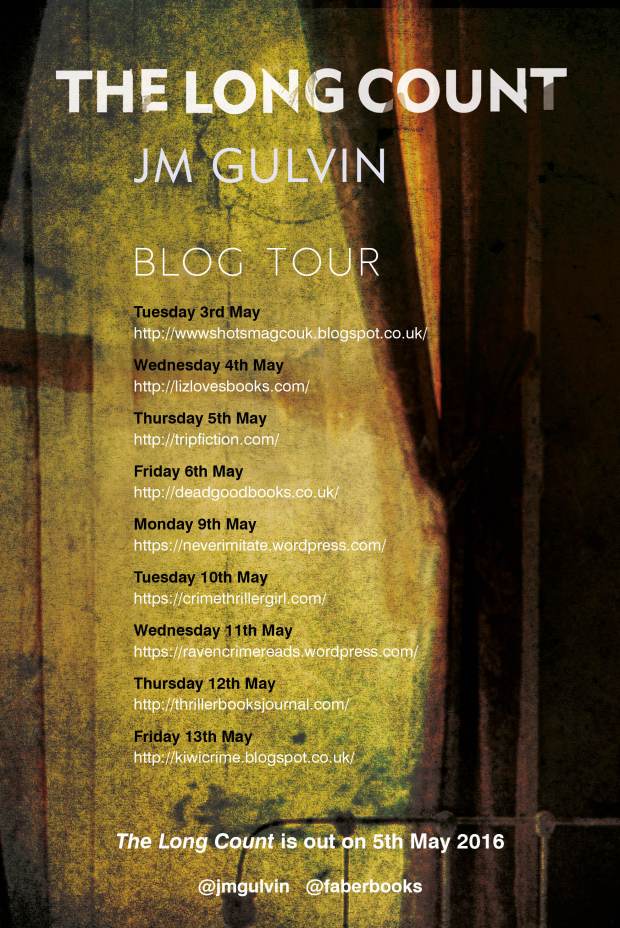
And be sure to check out all the great stops along THE LONG COUNT Blog Tour here …

LONGCOUNT_blog

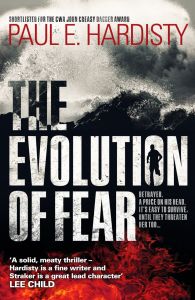
#TheEvolutionOfFear Blog Tour – Guest Post: Fear of Drowning by Paul E. Hardisty

unspecified-3

Today I’m delighted to be hosting a stop on Paul E. Hardisty’s THE EVOLUTION OF FEAR blog Tour. Paul’s debut novel, the first in the Claymore Straker series, was one of my favourite reads of 2015. Now he’s back with another stonking thriller.

Here’s the blub: “Claymore Straker is a fugitive with a price on his head. Wanted by the CIA for acts of terrorism he did not commit, his best friend has just been murdered and Rania, the woman he loves, has disappeared. Betrayed by those closest to him, he must flee the sanctuary of his safe house in Cornwall and track her down. As his pursuers close in, Clay follows Rania to Istanbul and then to Cyprus, where he is drawn into a violent struggle between the Russian mafia, Greek Cypriot extremists, and Turkish developers cashing in on the tourism boom. As the island of love descends into chaos, and the horrific truth is unveiled, Clay must call on every ounce of skill and endurance to save Rania and put an end to the unimaginable destruction being wrought in the name of profit. Gripping, exhilarating and, above all, frighteningly realistic, The Evolution of Fear is a startling, eye-opening read that demands the question: How much is truth, and how much is fiction?”

With the theme of ‘fear’ strong within the story, Paul E. Hardisty is talking today about that very subject. Over to Paul …

The Evolution of Fear is the sequel to the CWA Creasy New Blood Dagger award short-listed The Abrupt Physics of Dying, featuring Claymore Straker. As the book opens, Clay is a fugitive, hiding in a lonely cottage on the rugged windswept coast of north Cornwall. Rania, the woman he loves (in his own, battle-scarred way) has disappeared, and he learns that the assassins closing in on him are after her, too. To save her, and save himself, Clay must not only vanquish those who want him dead, but he must face up to and overcome his own fears.

The cover of The Evolution of Fear features the clash of two primal elements: the towering waves of an ocean storm, and the searing flames of a deadly inferno. Both, once unleashed, can bring terror to the strongest hearts, and both can kill. It is perhaps this implacable, uncaring quality, the sense that these things – fire and water, waves and flames – are beyond reason, beyond emotion, which makes them so terrifying. Their judgement is arbitrary and fickle. Of all the ways to die, drowning and being burnt alive are, for me, among the very worst, the stuff of nightmares, the kind from which you wake up screaming, covered in sweat, heart jack-hammering. In the book, Clay must face both.

unspecified-4

As the title of the book implies, fear is a central theme of the book. In small ways and large, fear drives us to safety, to inaction, to the course that involves the fewest risks but also, usually, the least reward. And so we don’t go on the big trip, or take that exciting new job in a foreign country, or walk across the bar to that beautiful stranger and say hi, or stand up to that injustice. Instead we choose an easier course, we stay with what we know, or we simply do nothing. As Shakespeare said, ‘Our fears do make us traitors.’

And knowing this, those that seek to control us use fear as their weapon of choice. By playing on our fears, they manipulate us into betraying ourselves. In The Evolution of Fear, powerful people are at work enriching themselves at the expense of all. They do it, largely, with the mute compliance, and in many cases the enthusiastic support, of the population. Amazingly, and consistently, the powerful few somehow get the rest of us to act in ways which are not in our own best interest. For me, as an author, this one of the critical and most perplexing issues of our time.

As revealed in first book in the series, The Abrupt Physics of Dying, Claymore was named after the famous Scottish broadsword. Perhaps more appropriate is the eponymous M18 directional command-detonated anti-personnel mine, the Claymore, with its inscription ‘front towards enemy.’ This is what Clay must do. For this is the choice each of must make, in small ways and large, every day. Do we front up to our fears, and those that others would lodge inside us, and do what we know is right, for ourselves and others, or do we turn away, chose inaction and ease, conform to the directions others would chose for us? And if we do confront those fears, what are the costs, and what, in the end, might be gained? These are the fundamental questions explored in both books of the Claymore Straker series.

Big thanks to Paul for popping by the CTG blog today and talking about fear and his new thriller THE EVOLUTION OF FEAR.

You can find out more about Paul E. Hardisty on the Orenda Books website here and follow him on Twitter @Hardisty_Paul

THE EVOLUTION OF FEAR is published tomorrow – May 5th. You can order it from Waterstones here or Amazon here

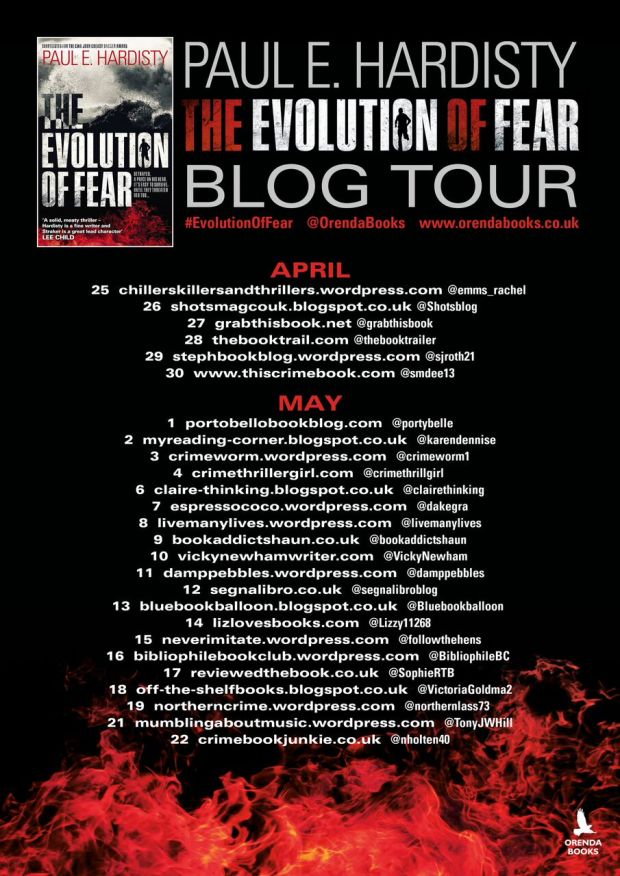
And be sure to check out all the other fabulous stops along THE EVOLUTION OF FEAR Blog Tour …

unspecified-2

The #ARisingMan Blog Tour: Abir Mukherjee talks about his lead character, Captain Sam Wyndham

image001

I’m delighted to host a stop on Abir Mukherjee’s A Rising Man Blog Tour. Abir is the winner of the Telegraph Harvill Secker Crime Writing Competition. A Rising Man is his debut novel and is out later this week on May 5th.

Here’s the blurb: “1919. Calcutta. Captain Sam Wyndham, former Scotland Yard detective, is a new arrival to Calcutta. Desperately seeking a fresh start after his experiences during the Great War, Wyndham has been recruited to head up a new post in the police force. But with barely a moment to acclimatize to his new life or to deal with the ghosts which still haunt him, Wyndham is caught up in a murder investigation that will take him into the dark underbelly of the British Raj. A senior official has been murdered, and a note left in his mouth warns the British to quit India: or else. With rising political dissent and the stability of the Raj under threat, Wyndham and his two new colleagues – arrogant Inspector Digby and British-educated, but Indian-born Sergeant Banerjee, one of the few Indians to be recruited into the new CID – embark on an investigation that will take them from the luxurious parlours of wealthy British traders to the seedy opium dens of the city.”

Today, Abir Mukherjee is dropping by to tell us a bit more about Captain Sam Wyndham. Over to Abir …

Sam is an ex-Scotland Yard detective and veteran of the First World War who’s been scarred by his experiences and finds himself in Calcutta looking for a fresh start.

Life’s not exactly done him many favours. His mother died when he young and he was packed off to a boarding school in the middle of nowhere, which he was forced to leave when the money ran out. From there he pretty much fell into becoming a policeman, a job which, fortuitously, he’s rather good at. He’s quickly promoted from a beat copper to CID and then to Special Branch. The coming of the war derails his career and in 1915, he enlists in the army, mainly to impress the girl he loves into marrying him.

After a year of sitting in a trench and being shot at, his superiors realise that his talents could be put to better use and he’s transferred to Military Intelligence. He’s wounded close to war’s end and is shipped home, recovering in time to find that his wife has died in an influenza epidemic.

Scarred by his experiences, and because there’s nothing left for him in England, he accepts the offer of a job with the Imperial Police Force in Calcutta.

Like anyone else, Sam’s a product of his experiences. He’s always been an outsider, but what he saw during the Great War – the carnage, the futility and the ineptitude of those in authority – has left him cynical. He likes to think he sees the world for what it is, rather than blindly swallowing other people’s preconceptions and prejudices, and in this sense, he is a man of the modern age, and a man with a conscience. But I don’t think he’s as ‘modern’ as he likes to think he is. In truth, his unwillingness to accept what he’s told is as much down to his general stubbornness and distrust of authority as it is to any sense of open-mindedness, and despite his protestations to the contrary, I think there are certain racial taboos he’s not willing to break.

He has a rather dark, gallows sense of humour, which colours much of his outlook on life, and I think this is a reaction to what he’s been through. The war and the death of his wife have destroyed his faith in a god, and he’s come to see the world as a cruel and arbitrary place where any search for meaning or justice is absurd and ultimately futile. If he has a philosophy, it would be similar to Kierkegaard, not that Sam would ever have read any of the man’s work.

Finally, I think Sam’s come to India to find something. He doesn’t know what it is, and I don’t know if he’ll ever find it, but it’ll be an interesting to see where it goes and I’m looking forward to the journey.

Big thanks to Abir Mukherjee for making the CTG blog a stop along his A RISING MAN Blog Tour, and for dropping by to tell us more about his lead character – Captain Sam Wyndham – from A RISING MAN. It’s a fabulous book, and you can catch my review of it here on Saturday. 

A RISING MAN is out this week on May 5th. You can buy it from Waterstones here or Amazon here.  

To find out more about Abir follow him on Twitter @radiomukhers

And don’t forget to check out all these fab tour stops …

ChhwPMoW4AAFXXB

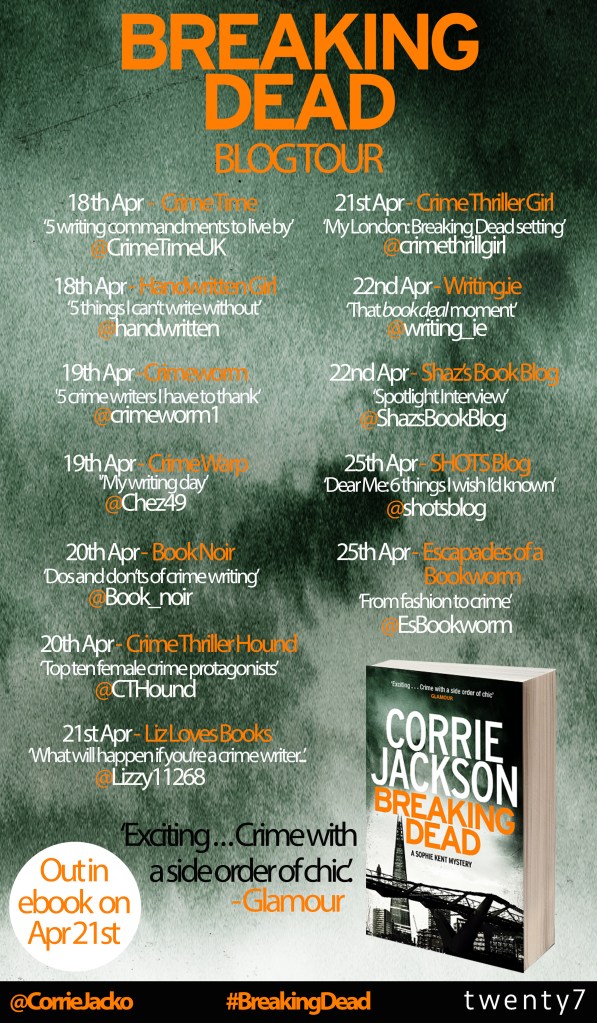
The #BreakingDead Blog Tour: Corrie Jackson talks about her London – the places that inspired the book

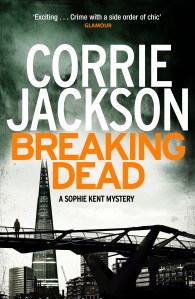
Breaking Dead

Today I’m delighted to be hosting a stop on the fabulous Breaking Dead Blog Tour and have Corrie Jackson take over the reins here at CTG HQ and talk about her London: the places that inspired Breaking Dead. Over to Corrie …

When it came to choosing a setting for my debut thriller, there was only one contender. Noel Coward famously remarked: ‘I don’t know what London’s coming to – the higher the buildings, the lower the morals’. From leafy squares and supercars to concrete jungles and crack-dens, London is a city bursting at the seams. Here are five of the capital’s gems that guest-star in the book.

The Covent Garden Hotel
In my novel, a grisly murder occurs on the third floor of fictional hotel, The Rose. My inspiration was this discreet establishment in the heart of the West-End. It’s a stone’s throw from where I used to work at Grazia magazine and I spent many a lunch meeting celeb-spotting at Brasserie Max (whilst hard at work, ahem). However, the sleek hotel lobby that appears in the book is based on another London institution: Claridge’s. Why the mish-mash? I have no idea; it just felt right.

Bywater Street
I wanted my protagonist, Sophie Kent, to live somewhere classy but charming. This Chelsea cul-de-sac, complete with pastel houses and shiny black railings, hits the spot. Sophie lives at number seven (my old house number in Fulham). London trivia: John Le Carre’s fictional MI6 intelligence officer, George Smiley, lived at number nine. Sophie is in good company!

Corrie Jackson
Wild Honey
The tense dinner between Sophie and her dad takes place at this Mayfair hotspot (although I renamed it L’Ondine in the book). The restaurant is within spitting distance of Conde Nast (the publisher of VOGUE, GLAMOUR and GQ) and it became our unofficial HQ when it first opened in 2007. I’m happy to say every meal I’ve eaten at Wild Honey has ended better than the one in the book.

Berkeley Square
Historians know it as the residence of two former Prime Ministers: Winston Churchill and George Canning. I know it as the setting for the annual GLAMOUR Women of the Year Awards (a celeb-packed, debauched affair). I set my fictional fashion show here but combined it with another memory. In 2011, designer Erdem held his spring/summer show in a giant white tent in the middle of Bedford Square. I reported on the backstage antics for GLAMOUR and the essence of the show appears in Breaking Dead.

Albert Bridge
Built in 1873, the bridge is nicknamed ‘The Trembling Lady’ because it vibrates when large numbers of people walk across it. I used to live in Pimlico and my running route took me along Embankment towards Albert Bridge (the same route Sophie walks in the book). My heart lifted the moment I spotted this candy-floss pink bridge dotted with twinkling fairy lights. Sophie, on the other hand, associates it with her brother’s death. Mainly because I liked the idea of her tragedy being entangled with such a beautiful landmark.

A big thank you to Corrie for making the CTG Blog a stop on her tour and talking to us about the places that inspired BREAKING DEAD. 

Intrigued to find out more about BREAKING DEAD? Here’s the blurb: “Newspaper journalist Sophie Kent is hanging by a thread following her brother’s suicide, her personal life in chaos. When the mutilated body of a Russian model turns up in an upmarket hotel on the eve of London Fashion Week, Sophie recognises her from a recent interview and knows she could have saved her. Eaten away by guilt, she throws herself headfirst into the edgy, fast-paced world of fashion with one goal in mind: to catch the killer. Only then can she piece her grief-stricken self back together. As she chips away at the industry’s glittery surface, she uncovers a toxic underworld rife with drugs, secrets, prostitution and blackmail. Battling her demons and her wealthy, dysfunctional family along the way, Sophie pushes her personal problems to one side as she goes head to head with a crazed killer; a killer who is only just getting started…”

BREAKING DEAD is out today in eBook (and will be released in paperback in September). To buy the eBook from Amazon click here

To find out more about Corrie Jackson pop over to her website here and follow her on Twitter @CorrieJackson

And be sure to check out all the other fantastic stops along the BREAKING DEAD Blog Tour …

Breaking Dead Tour Banner


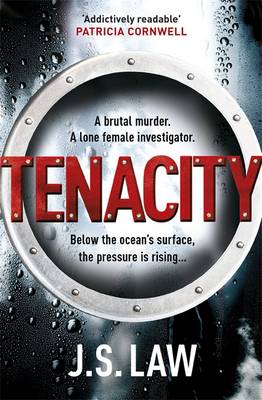
The #TENACITY NAVAL TOASTS BLOG TOUR: Ourselves! by J.S. Law plus CTG’s review

9781472227911

Today I’m thrilled to be hosting a stop on J.S. Law’s TENACITY Blog Tour. On each day of the tour, James has been introducing readers to a different Naval toast. Here’s his toast for Wednesday …

Wednesday’s Naval toast – ‘Ourselves’ (as no one else is likely to be concerned for us!)If you’ve followed my blog tour at all, you’ll know that at mess dinners in the Royal Navy, immediately after the Loyal Toast of ‘The Queen’, the youngest officer present will normally offer the traditional drinking toast of that day.
The toast for Wednesday is ‘Ourselves’ with ‘as no one else is likely to be concerned for us’ murmured after, or kept silently within. I love this toast because it reminds me that the submarine environment is one like no other, yet we often forget that. When I was on my road to publication, I once spoke to an agent who told me that he loved my writing (this was for a book before Tenacity) but that he wasn’t sure what I’d written, genre-wise. We had a few minutes left on the slot and so he asked me what I did for a living.
‘Submarines,’ I replied, feeling dejected as I realised he wasn’t going to offer representation. ‘I work on submarines.’
‘why aren’t you writing about that?’ he said, suddenly animated. ‘Write me a book about submarines and send it to me…’
As it is, I signed with a different agent, but that meeting stays with me as a reminder to never forget the obvious, never look beyond ‘Ourselves’.
I went away and wrote that novel, but it’s not about submarines, it’s just set on-board one, and I decided that if a submarine was the ultimate locked room environment then I was going to put the ultimate outsider on there, someone who wouldn’t be included in the toast ‘Ourselves’…


James’ debut novel – TENACITY – absolutely is set in the ultimate locked room environment. Here’s the blurb and my review of the book:

“A brutal murder. A lone female investigator. Two hundred metres below the ocean’s surface, the pressure is rising … Suicide must be investigated, especially when a Royal Navy sailor kills himself on a nuclear submarine only days after his wife’s brutal murder.

Now Lieutenant Danielle “Dan” Lewis, the Navy’s finest Special Branch investigator, must interrogate the tight-knit, male crew of HMS Tenacity to determine if there’s a link. Isolated, and standing alone in the face of extreme hostility, Dan soon realises that she may have to choose between the truth and her own survival. Justice must be served, but with a possible killer on board the pressure is rising and her time is running out …”

This debut novel from J.S. Law is a tense read from start to finish. Danielle “Dan” Lewis – a top investigator with more than a fair share of secrets hidden in her past – is brought in to investigate the alleged suicide of a member of HMS Tenacity’s Ship’s Company. Right from the get-go it’s clear that the odds are stacked against her – Tenacity’s men are a close-knit team and they don’t want anyone – especially a woman – poking around in their business.

Despite the hostility towards her, Dan presses on with the investigation. Master-At-Arms John Granger lends his support (although there are unresolved tensions between the pair that make for a tricky working relationship) and it seems that the investigation will manage to move forward. Then Tenacity gets the order to dive, and Dan has to continue the investigation on-board beneath the ocean’s surface. As she studies the nuances of the case and interviews the men, Dan begins to uncover the lies and secrets hidden within Tenacity’s history, and the danger that might still lurk within.

Like the novel’s title suggests, Dan is a tenacious lead character and someone that, as a reader, I found it easy to root for. She’s a survivor of injustice, using her own experiences as fire to fuel her unrelenting determination to achieve her goal – utterly focused on searching out the truth, even when it puts her own life in danger.

As an ex-submariner, author J.S. Law’s detailed knowledge of the Navy and submarines shines through to make for a highly authentic and atmospheric setting. The uniqueness of the tightly sealed environment of HMS Tenacity is made increasingly claustrophobic through the ever-increasing build-up of jeopardy.

Gritty, super-charged with tension and claustrophobically atmospheric, TENACITY is a real page-turner of a read.

You can find out more about J.S. Law by popping over to his website here and following him on Twitter @JSLawBooks

TENACITY is out in paperback tomorrow (21st April). You can buy it here from Waterstones. Or here from Amazon.

And don’t forget to check out all the other fabulous stops along the route of the TENACITY NAVAL TOASTS Blog Tour …

CgamZqOXIAAMxsL