
#WhoKilledSherlockHolmes Blog Tour: Paul Cornell talks WHO KILLED SHERLOCK HOLMES? and delights of genre-swapping

blog tour banner-2


This afternoon I’m handing over the reins at CTG HQ to screen-writer and novelist Paul Cornell who’s popped by to tell us all about his latest book WHO KILLED SHERLOCK HOLMES? 

Over to Paul …

Crime writing is quite like writing SF and fantasy, in that both audiences are used to looking for specific things, moment by moment, during their reading experience. Crime audiences seek clues and red herrings, often hoping to play along in a ‘pure whodunit’, but at least hoping the text will convince them of its plausibility. SFF audiences look for the cues of world building, the slow release of information that will tell them what the rules are. They seek a suspension of disbelief. I generalise, of course.

The lovely thing about combining those genres, as I do in my Shadow Police books, is that I can swap one set of expectations for the other. A point of how my London is set-up may also turn out to be a clue. My characters, five modern Metropolitan Police officers who have been cursed with ‘the Sight’, the ability to see the magic and the monsters, use their Ops Board to dissect the nature of the world they’ve found themselves in, as much as they use it to break down a crime. I’m proud that they use only their training and techniques, and have no occult mentor, and not much knowledge of how magic works (though, three books in, Detective Constable Kev Sefton is just about to attempt a small spell).

I’ve really enjoyed, as I got into writing these books, meeting crime fans, at gatherings like Crimefest and the big convention in Harrogate. Lovely people, surprisingly few serial killers. And now, because of what the new books is about (and also because I just wrote an episode of Elementary) I’m encountering a whole new and equally terrific fandom…

The new novel, Who Killed Sherlock Holmes? is a pure whodunit about the death of a ghost. That is, in my London, ghosts are the memories of all Londoners, living and dead, and include not only the deceased, but also fictional and mythological characters. My heroes find the ghost of Sherlock Holmes, face down in the Museum at 221b Baker Street, flickering between every version of himself ever imagined, intangible, but with a dagger in his back. What does it mean to kill a ghost? Is this anything to do with the crimes from the Conan Doyle stories being re-enacted in order in their original locations? Is it a result of the three different productions of Holmes all being filmed in the city at once?

It’s also designed as a jumping-on point for the series, with the back story of what’s going on filled in for new readers very easily. Whether or not you’ve come for the Holmes, the ghost or the mystery, we hope you’ll join in and play along.

Big thanks to Paul for coming by and telling us all about his latest book and the similarities between crime fiction, SF and fantasy.

Who Killed Sherlock Holmes? is published by TOR UK and is out this week. You can buy in here from Waterstones or from Amazon here

Paul Cornell has been Hugo-nominated for his work in TV, comics and prose, and is a BSFA award-winner for short fiction. He has also written some of Doctor Who’s best-loved episodes for the BBC, and has more recently written for the Sherlock-inspired TV show Elementary, starring Jonny Lee Miller and Lucy Liu. He lives in Gloucestershire.

Find out more about Paul at http://www.paulcornell.com and @paul_cornell.
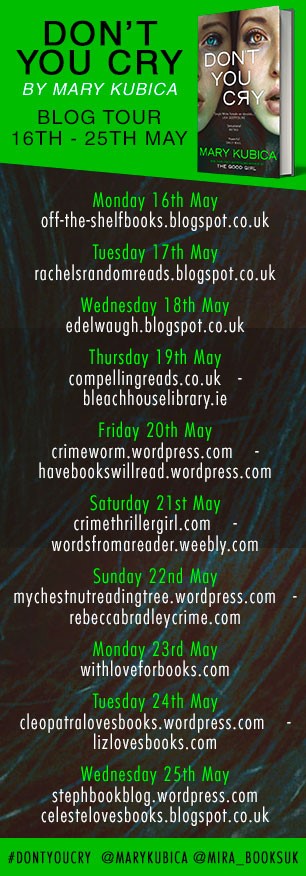
 

#DontYouCry Blog Tour: Read an exclusive extract of Mary Kubica’s DON’T YOU CRY

Blog Tour Banner

This morning I’m delighted to be hosting a stop on Mary Kubica’s DON’T YOU CRY Blog Tour and to be sharing an exclusive extract from the book with you.

Drumroll please …

The day we met, she asked me about my job and whether or not I’d be able to afford my half of the rent. That was Esther’s only qualification, that I pay my own way. “I can,” I promised her, showing my latest paycheck as proof. Five-fifty a month I could do. Five-fifty a month for a bedroom of my own in a walk-up apartment on Chicago’s north side. She took me there, down the street from the bookshop, just as soon as she finished reading to the tiny tots who pilfered from us the blood-orange poufs. I listened to her as she read aloud, taking on the voice of a bear and a cow and a duck, her voice pacifying and sweet. She was meticulous in the details, from the way she made sure the little ones were attentive and quiet, to the way she turned the pages of the oversize book so all could see. Even I found myself perched on the floor, listening to the tale. She was enchanting.

In the walk-up apartment, Esther showed to me the space that could be my room if I so chose.

She never said what happened to the person who used to live there in the room before me, the room I would soon inhabit, though in the weeks that followed I found vestiges of his or her existence in the compact closet in the large bedroom: an inde­cipherable name etched into the wall with pencil, a fragment of a photograph abandoned on the vacant floor of a hollow room so that all that remained on the glossy image was a wisp of Es­ther’s shadowy hair.

The scrap of photo I did away with after I moved in, but there was nothing I could do to fix the closet wall. I knew it was Esther’s hair in the photograph because, like the hetero­chromatic eyes, she had hair like I’d never before seen, the way she bleached it from bottom to top to get a gradual fade, dark brown on top, blond at the bottom. The tear line on the pic­ture was telling, too, the barbed white of the photo paper, the image gone—all but Esther.

I didn’t toss the photo, but rather handed it to Esther with the words, “I think this is yours,” as I unpacked my belong­ings and moved in. That was nearly a year ago. She’d snatched it from my hand and threw it away, an act that meant nothing to me at the time.

But now I can’t help but wonder if it should have meant some­thing. Though what, I’m not so sure.


Brilliant! I can’t wait to read more!

DON’T YOU CRY is out now. Here’s what the blurb says: “In downtown Chicago, a young woman named Esther Vaughan disappears from her apartment without a trace. A haunting letter addressed to My Dearest is found among her possessions, leaving her friend and roommate Quinn Collins to wonder where Esther is and whether or not she’s the person Quinn thought she knew. Meanwhile, in a small Michigan harbour town an hour outside Chicago, a mysterious woman appears in the quiet coffee shop where 18 year old Alex Gallo works as a dishwasher. He is immediately drawn to her charm and beauty, but what starts as an innocent crush quickly spirals into something far more dark and sinister. As Quinn searches for answers about Esther, and Alex is drawn further under the stranger’s spell …”

To buy the book click here to go to Waterstones, or go to Amazon by clicking here

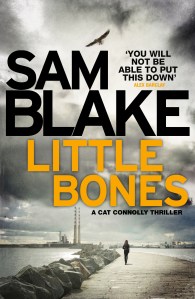
LITTLE BONES Blog Tour: Guest post by author Sam Blake – The Trouble with Titles

little bones

Today I’m handing over the reins at CTG HQ to author Sam Blake who is going to talk about the trouble with titles. Over to Sam …

Book titles and with that covers, are strange things – you spend months, often years, writing a book –  ideas forming, sentences taking shape, then reshaping, then reshaping again through the editorial process, but it’s not until you see your title on a cover, that it feels like a real thing. To get to this stage there are far more people involved than just the writer, and it can take months for everyone to be happy that what is on the outside of a book reflects what is on the inside.

For many years this book was called The Dressmaker, and this is why:

Stephen King talks about story being the collision of two unrelated ideas – the ideas behind Little Bones weren’t entirely unrelated but they collided one sunny Sunday afternoon as I was driving back from a Readers Day that author Sarah Webb and I had programmed at a hotel in Dublin Airport. It was about five o’clock in the afternoon and pre M50 so a LONG drive home (I once counted 35 sets of traffic lights) but as I put on the radio and pulled out of the carpark a documentary was starting on RTÉ about Kerry born playwright George Fitzmaurice. Fitzmaurice is best remembered for his play The Country Dressmaker that he submitted to the Abbey Theatre in 1907. It was such a success that it rescued the theatre after all the problems of John Millington Synge’s The Playboy of the Western World that same year. Fitzmaurice enlisted in the British army in 1916 and returned from the front with neurasthenia, rendering him fearful of crowds. He became more introverted and isolated as he grew older and eventually died in 1963, in a rented upstairs room in No.3 Harcourt Street, Dublin. He was aged 86 years and left no will and few personal belongings – apart from a copy of every play he had ever published and a few in draft form, which were in a suitcase under his bed.

For me, it was Fitzmaurice’s suitcase that caused the collision of ideas.

Several years previously I’d watched an RTÉ TV documentary about a twenty-three year old girl from Boyle, Belinda Agnes Regan who in 1947 was living in lodgings in Manchester. She had left Ireland knowing she was pregnant, but terrified of the disgrace of the pregnancy, had concealed it. She went into labour in the middle of the night and delivered the baby herself, incredibly, in a room she shared with a younger girl who apparently slept through her ordeal. Covering the baby with a blanket “so Shirley would not see it,” she crept to the bathroom. When she returned, the baby wasn’t breathing.  Wrapping the body in brown paper and a ‘blue frock’ she hid it in her suitcase, which she concealed under her bed, leaving it there when she returned home for Christmas. While she was in Ireland the body was discovered, and on her return she was arrested for infanticide.

These two stories, heard many years apart, came together in my head, and on the drive home I started wondering about suitcases and dresses and dress makers and what would happen if the bones of the baby had ended up in a dress – a wedding dress – the crucial thing that Belinda Regan had perhaps yearned for, for nine long months. At that point I had no idea who owned the dress, or how the bones got there or WHY…but I knew the story was called The Dressmaker.

When my agent, Simon Trewin mentioned my book to Bonnier’s Mark Smith over lunch, it was The Dressmaker, when Twenty7 Books snapped it up the next day, it was still The Dressmaker. All through the edits it was The Dressmaker.

Then ‘The Dressmaker’ movie came out.

Much discussion was had – the book and the movie would get confused, if you Googled ‘The Dressmaker’ how many hundreds of pages would it take to get to my book? My agent was almost mown down by a bus on Tottenham Court Road that had an ad for ‘The Dressmaker’ plastered down the side. Someone was telling us that this WASN’T the title of the book.

But coming up with a title for a book isn’t easy. Here are just some of the ideas I came up with (suitably in the bar at Waterford Writers Weekend when you’d think the atmosphere would be conducive to creativity), with Alex Barclay who was one of the few people who had read the book at that stage. It took us almost three hours and we still didn’t have it.

titles pic

I brainstormed it with Simon, my agent, and the team at Bonnier sweated at it too. Then a very lovely lady called Kate Parkin, Executive Director of Adult Publishing at Bonnier had a flash of inspiration. Joel Richardson, my editor at Twenty7 Books emailed me to say, “What do you think of Little Bones? We like it.

And so did I.  A lot.


© Sam Blake

Sam Blake is a pseudonym for Vanessa Fox O’Loughlin, the founder of The Inkwell Group publishing consultancy and the national writing resources website Writing.ie. She is Ireland’s leading literary scout who has assisted many award winning and bestselling authors to publication. Vanessa has been writing fiction since her husband set sail across the Atlantic for eight weeks and she had an idea for a book.

Little Bones is the first in the Cat Connolly Dublin based detective thriller trilogy. When a baby’s bones are discovered in the hem of a wedding dress, Detective Garda Cathy Connolly is face with a challenge that is personal as well as professional – a challenge that has explosive consequences.

Follow Sam Blake on Twitter @writersamblake or Vanessa @inkwellhq – be warned, they get tetchy with each other!


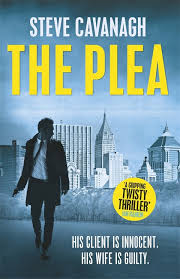
#ThePlea Blog Tour: Guest Post by Steve Cavanagh – Influences. I’ve had a few.

Unknown

Huge thanks to CTG for letting me have a guest spot on this great blog. I’ve chosen to talk a little about my influences, and how they may have affected the books that I write, or even the way that I write. Style. That’s the word. At my first ever event as an author I remember being asked by Colin Bateman what I would say my “style” of writing was like. At the time, I’d written my first book, I’d been lucky enough to get a book deal, and I was working on my second novel, The Plea. My answer must’ve been disappointing, but it was honest. I said, “To tell you the truth, I’m not sure that I have a style.”

To me, other authors that I’d read and loved for years, had style. The likes of John Connolly – who writes in beautiful, poetic prose. His Charlie Parker novels are essentially gothic detective novels, but they are shot through with humour, warmth, and a good dollop of the supernatural. Raymond Chandler had style. His language was at times strange and wonderful especially in those extended metaphors. Michael Connelly has an almost journalistic style – a beautiful, unadorned simplicity that somehow transports you straight into the heart of Los Angeles and into the passenger seat beside Bosch. I also love the stripped back genius of Lee Child – with those tripping, declarative sentences that are almost musical. Speaking of music, Elmore Leonard played a tune in dialogue that few others could even get close to – perhaps only Ian Rankin is Leonard’s equal.

So having read all of those authors, and more, what kind of style did I have? At the time, I couldn’t see it. I think that it takes a few books to emerge. At the time I began writing, I never once thought about my style of writing or even trying to create one.

It’s difficult to determine how those authors I’ve mentioned above have influenced me or the books that I write. In asking myself that question, I can only think of one answer. All of them tell brilliant stories. And those stories are told in uniquely brilliant ways.

A style, I suppose, is the sum total of its different parts. So it’s every author that I’ve read, filtered through me. And no-one else can sound like that. If you asked me today what my style is, I’d still have to give a bit of a vague answer. I only know what I like to write. I like stories that start quickly, that move with enough speed to keep the reader hooked, and while all the fireworks are going off, I like to try and make the reader think. My language is fairly simple because I like it that way. I do aim for a twist or two, because as a reader I enjoy twists and turns. Most of my style probably comes down to character. If I can get my characters to tell the story, rather than me – the writer, then I think I’m going in the right direction.

Influences are like parents, you can’t really choose them. I’ve been lucky in that the writers that have influenced and inspired me the most are some of the greats of the genre. There’s not a bad book in any of them. Apart from the pleasure I get from their work, they also drive me to try and be a better writer.

That’s really all the influence you need.


A big thank you to Steve Cavanagh for making the CTG blog today’s stop on his blog tour.

THE PLEA is out on May 19th in Trade Paperback, eBook and Audio. It’s a tremendous read and an absolute must for all thriller fans. Here’s what the blurb says: “When David Child, a major client of a corrupt New York law firm, is arrested for murder, the FBI ask con-artist-turned-lawyer Eddie Flynn to secure Child as his client and force him to testify against the firm. Eddie’s not a man to be coerced into representing a guilty client, but the FBI have incriminating files on Eddie’s wife, and if Eddie won’t play ball, she’ll pay the price. When Eddie meets Child he’s convinced the man is innocent, despite overwhelming evidence to the contrary. With the FBI putting pressure on him to secure the plea, Eddie must find a way to prove Child’s innocence while keeping his wife out of danger – not just from the FBI, but from the firm itself.”

Pre-order THE PLEA here from Waterstones or from Amazon here

To find out more about crime writer Steve Cavanagh hop over to his website at www.stevecavanagh.com and be sure to follow him on Twitter @SSCav


The #DistressSignals Blog Tour by Catherine Ryan Howard: Extract Seven

Catherine H poster visual

Today I’m hosting an extract from Catherine Ryan Howard’s thriller – DISTRESS SIGNALS.

Here’s what the blurb says: “‘There’s no evidence of a murder, but a person is missing. And what’s a missing person minus a body? Not a murder. Oh, no. Never a murder. It’s a disappearance.’ The day Adam Dunne’s girlfriend, Sarah, fails to return from a Barcelona business trip, his perfect life begins to fall apart. Days later, the arrival of her passport and a note that reads ‘I’m sorry – S’ sets off real alarm bells. He vows to do whatever it takes to find her. Adam is puzzled when he connects Sarah to a cruise ship called the Celebrate – and to a woman, Estelle, who disappeared from the same ship in eerily similar circumstances almost exactly a year before.  To get the answers, Adam must confront some difficult truths about his relationship with Sarah. He must do things of which he never thought himself capable. And he must try to outwit a predator who seems to have found the perfect hunting ground…”

By following each stop on the DISTRESS SIGNALS Blog Tour you get to read a bit more of the novel. If you’ve not read extracts 1-6 yet there’s still time – check out the fabulous blogs hosting the previous extracts on the poster above. If you’re all up to date, read on …

EXTRACT SEVEN

I was expecting one of Sarah’s trademark eye-rolls and a sarcastic remark. Maybe a reminder that I was now, technically speaking, a big-shot Hollywood screenwriter and could surely hold my own in conversations about Things Adults Do instead of standing on the periphery, smiling at the right moments but otherwise only moving the ice-cubes in my drink around with a straw. Or perhaps Sarah would point out that I didn’t need to go to this thing, that it was a work night out, that she’d been going by herself until I’d moaned about spending the night before she left for nearly a week home alone, prompting her to – eventually – say, fine, tag along.

But instead she turned to face me, wrapped her arms around my neck and said: ‘I would never abandon you.’

‘Well, good. Oscar night will be stressful enough without having to find a date for it.’

I kissed her, expecting to feel her lips stretched into a smile against mine. They weren’t. I moved my mouth to her jawline, down her neck. There was a faint taste of something powdery, some make-up thing she must have just dusted on her skin. I brought my hands to her waist and went to un-tuck the towel.

Ad,’ Sarah said, wriggling out of my arms. ‘I booked a cab for eight. We don’t have time.’

I looked at my watch. ‘I suppose I should take it as a compliment that you think that.’ I turned to leave.

‘Oh, Ad?’

I stopped in the doorway.

Sarah was in front of the mirror, twisting to check her hair. Without looking at me, she said, ‘I meant to tell you: the others aren’t exactly delighted about me being the one to get to go to Barcelona. They’ve all been milking it with their honeymoons and their maternity leave but God forbid I get to have a week out of the office. I mean, it’s not like I’m off. I’m there to work. Anyway, I’ve been trying not to go on about it, so . . .’

‘Don’t worry,’ I said. ‘I won’t bring it up.’

I smiled to myself as I crossed the hall into the living room. Honeymoons and maternity leave. Now that I’d sold the script, we could finally start making our own plans instead of being forced to watch as the realisation of everyone else’s clogged up our Facebook feeds.

But first . . .

I collected Mike’s card from the coffee table, then dropped into my preferred spot on the couch. It offered a clear line of sight to my desk, which was tucked into the far corner of the living room and so, crucially, was only a few feet from the kitchen and thus the coffee-maker.

A stack of well-thumbed A4 pages were piled on it, curled sticky notes giving it a neon-coloured fringe down its right side. I got a dull ache in the pit of my stomach just looking at it. The rewrite. I had to start it tomorrow. And I would. I’d drive straight home after dropping Sarah at the airport and get stuck in, make the most of the few days and nights that I’d have the apartment to myself.

Sarah emerged from our bedroom, wearing a dress I hadn’t seen before.

The money from the script deal hadn’t arrived yet but, since I’d learned it was on its way, I’d been melting my credit card. Sarah had supported me for long enough, paying utility bills and covering my rent shortfalls with money she could’ve been – should’ve been – spending on herself. That morning I’d sent her into town with a giftcard for a high-end department store, the kind that comes wrapped in delicate tissue and in a smooth, matt-finish gift bag.

‘This is just a token,’ I’d said. ‘Just a little something for now, for tonight. You know when the money comes through . . .’

‘Ad, what are you doing? You don’t know how long that money is going to take to arrive. You should be hanging onto what you’ve got.’

‘I put it on the credit card.’

‘But you might need that credit yet. I really wish you’d think before you spend.’

‘Look, it’s fine. We’ll be fine. I just wanted to . . .’ Sarah’s mouth was set tight in disapproval. ‘Okay, I’m sorry. I am. It’s just that I don’t want to wait to start paying you back for . . . For everything.’

She’d seemed annoyed. Disappointed too, which was worse. But then, later, she’d come home with a larger version of the same bag, and now she was twirling around to show me the dress that had been inside it: red and crossed in the front, the skirt part long and flowing out from her hips.

‘Well?’ she asked me. ‘What do you think?’

She looked beautiful in it. More beautiful than usual. But with the new hair, not quite the Sarah I was used to.

‘Nice,’ I said. I pointed to my jeans and my dark, plain T-shirt.

‘But now I feel underdressed.’

‘Change, if you want to.’

Our buzzer went. The cab was here.

‘No, it’s fine,’ I said. ‘Let’s just go.’

Aside from the clothes Sarah was wearing when I drove her to the airport the next morning, that red dress was the only item I could tell the Gardaí was missing for sure.


Want to know more? Visit www.distresssignalsbook.com for more info and follow Catherine Ryan Howard on Twitter @cathryanhoward

DISTRESS SIGNALS is out now. Follow this link to buy it from Amazon – Amazon link


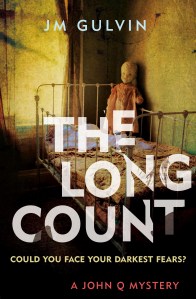
The Long Count Blog Tour: JM Gulvin talks about creating

The Long Count

Today I’m delighted to welcome JM Gulvin to the CTG Blog to talk about how he created Texas Ranger John Quarrie. His latest book – THE LONG COUNT – is out this month and is the first in a new series featuring John Quarrie.

Here’s the blurb: “In The Long Count, the first book of JM Gulvin’s masterful new crime series, we meet Ranger John Quarrie as he is called to the scene of an apparent suicide by a fellow war veteran. Although the local police want the case shut down, John Q is convinced that events aren’t quite so straightforward. When his hunch is backed up by the man’s son, Isaac – just back from Vietnam and convinced his father was murdered – they start to look into a series of other violent incidents in the area, including a recent fire at the local Trinity Asylum and the disappearance of Isaac’s twin brother, Ishmael. In a desperate race against time, John Q has to try to unravel the dark secrets at the heart of this family and get to the truth before the count is up…”

And now, over to JM Gulvin to talk about creating Texas Ranger John Quarrie … 

It was 2003 and I was researching a novel in Idaho. Taking a break, I switched on the TV and came across a documentary about a police officer from Rock Springs, Wyoming called Ed Cantrell. He was a man born out of his time, old school, tough, honest and uncompromising. Master of the quick draw, he shot and killed a fellow police officer called Michael Rosa who was going to shoot Cantrell. Rosa’s gun remained holstered and Cantrell was tried for murder. He was acquitted however, because it was proven that Rosa was going for his weapon. Cantrell just got to his faster and killed him in self-defence.

That story blew me away. It was the beginning of John Quarrie. I actually wrote a novel called THE DEFENDANT largely a fictionalization of that event, but I could not sell it. Undeterred, I knew I had found the kind of character I wanted to write, I just had to develop him.

I decided to make him a Texas Ranger and move my setting back ten years or so to a time when the world was changing and an old school police force like the Rangers were attempting to change with it. That gave me the opportunity to have this old fashioned cop, who was tough, honest and uncompromising. He was working alone in the vast landscape that is Texas in a time when prevention was still much better than cure.

I didn’t want any modern technology. No cell phones or satellite tracking. I wanted one man, one car; but none of the “lone wolf” clichés. I gave him a son, a best friend he’d served with in Korea and an extended “family” of friends all living on the same ranch in the Texas panhandle.

JM Gulvin

I already had a basis in reality through Cantrell, but in a more overt fashion I used Frank Hamer. Captain Hamer was one of the most famous Texas Rangers of the 20th century, brought out of retirement to go after Clyde Barrow and Bonnie Parker when their robberies started to involve murder. Hamer epitomized the “One riot, one Ranger” epithet that’s been applied to a group of men who, by the admission of most historians, really were “a breed apart” from the rest of us.

When WWII broke out Frank Hamer wrote to King George in London and offered a personal bodyguard of retired Rangers in case Germany managed to invade. He meant it, every word. I knew all about him before I created Quarrie so for that extra dusting of reality I made Hamer Quarrie’s godfather.


Big thanks to JM Gulvin for making the CTG blog a stop on his THE LONG COUNT Blog Tour today, and for talking to us about how he created his lead character Texas Ranger John Quarrie.

THE LONG COUNT is out this month. You can buy it here from Waterstones or from Amazon here

Find out more by following JM Gulvin on Twitter @jmgulvin

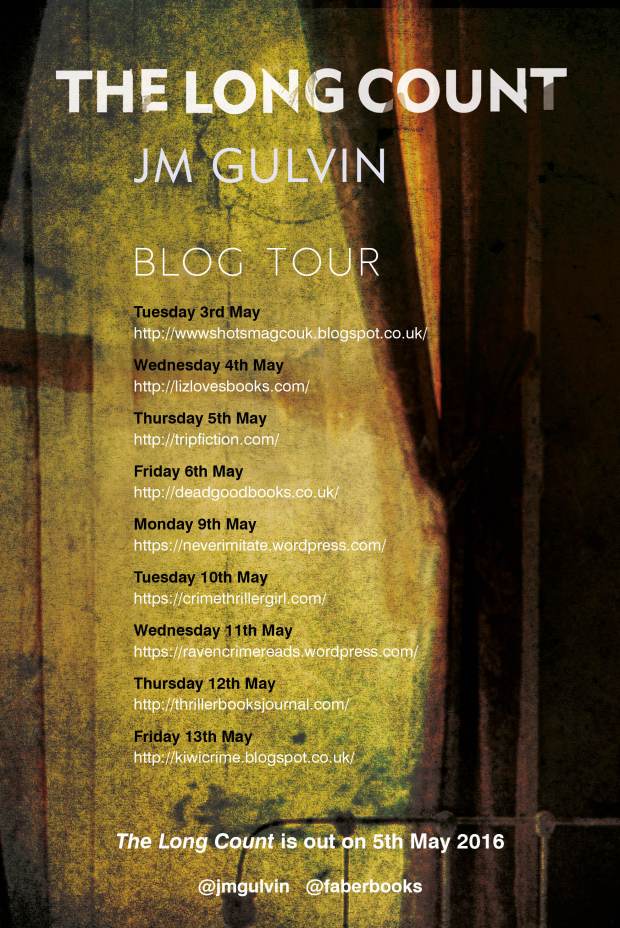
And be sure to check out all the great stops along THE LONG COUNT Blog Tour here …

LONGCOUNT_blog

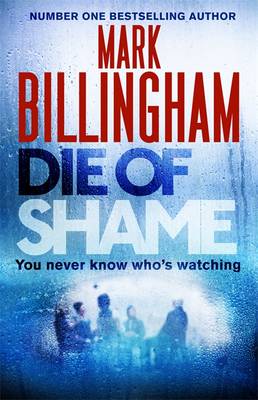
CTG Reviews: DIE OF SHAME by Mark Billingham

9781408704837

What the blurb says: Every Monday evening, six people gather in a smart North London house to talk about addiction. There they share their deepest secrets: stories of lies, regret, and above all, shame. Then one of them is killed – and it’s clear one of the circle was responsible. Detective Inspector Nicola Tanner quickly finds her investigation hampered by the strict confidentiality that binds these people and their therapist together. So what could be shameful enough to cost someone their life? And how do you find the truth when denial and deception are second nature to all of your suspects?

So, disclosure first: as regular readers of the CTG blog will know, I’m a big fan of Mark Billingham’s books and so the latest book – standalone crime novel, DIE OF SHAME – is one I’ve been looking forward to for what seems like ages. And, I have to tell you right now that it was totally worth the wait!

Told across two timelines – THEN and NOW – the story follows the police investigation, led by no-nonsense, highly planned and logical DI Nicola Tanner, into the murder of one of the therapy group in the ‘NOW’, while in the ‘THEN’ it shows the group, and its members’ lives, as they were in the weeks leading up to the murder of one of their own.

What’s fascinating about this book is the interplay between the characters. From the police – Tanner and Chall – to therapist Tony De Silva, and the members of the Monday Night Addiction group, each is flawed to a greater or lesser extent. There is something utterly compelling, and also (at different times) sad, joyous, hopeful, painful, and shocking about each of them. It’s a book that explores the lasting effects of addiction, the guilt of having to live with the consequences of actions you may have  little recall of taking, and of each person’s battle to find and keep (or get back) their place within the world. It also shows the lengths that some people will go to in order to hide their secrets and take their revenge.

For police procedural fans, the investigation narrative is as rich with detail and as tensely pacey as you’d expect from a crime writing master of the genre. DI Nicola Tanner is a detective that I wanted to spend time with – she’s determined and committed to the job, not afraid to speak her mind, and coping well with the emotional and physical demands of her job even though she’s harbouring concerns for her partner, Susan’s, health. In fact, I’m secretly hoping that we might get to see Tanner again in future books (fingers crossed).

DIE OF SHAME hooked me in from the first line of the prologue and kept me engrossed until the final sentence. It works fabulously as a standalone, and also – fans of the Tom Thorne series will be delighted to know – includes a little cameo from a couple of series favourites.

Gritty, thought provoking and utterly addictive – DIE OF SHAME is an absolute must read for all crime fiction fans.

DIE OF SHAME is published today. You can buy it here from Waterstones or from Amazon here

To find out more about Mark Billingham and his books hop over to his website at www.markbillingham.com and follow him on Twitter @MarkBillingham

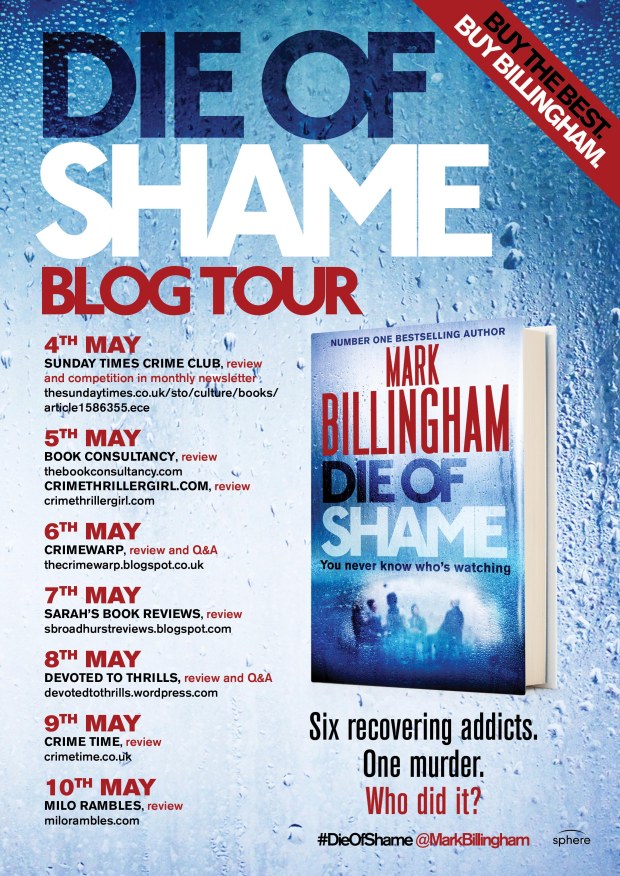
And be sure to visit all the other fabulous stops along the DIE OF SHAME Blog Tour …

DIEOFSHAME_BLOGTOUR2


#TheEvolutionOfFear Blog Tour – Guest Post: Fear of Drowning by Paul E. Hardisty

unspecified-3

Today I’m delighted to be hosting a stop on Paul E. Hardisty’s THE EVOLUTION OF FEAR blog Tour. Paul’s debut novel, the first in the Claymore Straker series, was one of my favourite reads of 2015. Now he’s back with another stonking thriller.

Here’s the blub: “Claymore Straker is a fugitive with a price on his head. Wanted by the CIA for acts of terrorism he did not commit, his best friend has just been murdered and Rania, the woman he loves, has disappeared. Betrayed by those closest to him, he must flee the sanctuary of his safe house in Cornwall and track her down. As his pursuers close in, Clay follows Rania to Istanbul and then to Cyprus, where he is drawn into a violent struggle between the Russian mafia, Greek Cypriot extremists, and Turkish developers cashing in on the tourism boom. As the island of love descends into chaos, and the horrific truth is unveiled, Clay must call on every ounce of skill and endurance to save Rania and put an end to the unimaginable destruction being wrought in the name of profit. Gripping, exhilarating and, above all, frighteningly realistic, The Evolution of Fear is a startling, eye-opening read that demands the question: How much is truth, and how much is fiction?”

With the theme of ‘fear’ strong within the story, Paul E. Hardisty is talking today about that very subject. Over to Paul …

The Evolution of Fear is the sequel to the CWA Creasy New Blood Dagger award short-listed The Abrupt Physics of Dying, featuring Claymore Straker. As the book opens, Clay is a fugitive, hiding in a lonely cottage on the rugged windswept coast of north Cornwall. Rania, the woman he loves (in his own, battle-scarred way) has disappeared, and he learns that the assassins closing in on him are after her, too. To save her, and save himself, Clay must not only vanquish those who want him dead, but he must face up to and overcome his own fears.

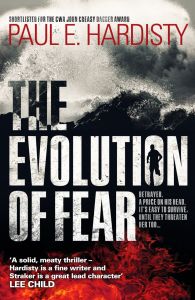
The cover of The Evolution of Fear features the clash of two primal elements: the towering waves of an ocean storm, and the searing flames of a deadly inferno. Both, once unleashed, can bring terror to the strongest hearts, and both can kill. It is perhaps this implacable, uncaring quality, the sense that these things – fire and water, waves and flames – are beyond reason, beyond emotion, which makes them so terrifying. Their judgement is arbitrary and fickle. Of all the ways to die, drowning and being burnt alive are, for me, among the very worst, the stuff of nightmares, the kind from which you wake up screaming, covered in sweat, heart jack-hammering. In the book, Clay must face both.

unspecified-4

As the title of the book implies, fear is a central theme of the book. In small ways and large, fear drives us to safety, to inaction, to the course that involves the fewest risks but also, usually, the least reward. And so we don’t go on the big trip, or take that exciting new job in a foreign country, or walk across the bar to that beautiful stranger and say hi, or stand up to that injustice. Instead we choose an easier course, we stay with what we know, or we simply do nothing. As Shakespeare said, ‘Our fears do make us traitors.’

And knowing this, those that seek to control us use fear as their weapon of choice. By playing on our fears, they manipulate us into betraying ourselves. In The Evolution of Fear, powerful people are at work enriching themselves at the expense of all. They do it, largely, with the mute compliance, and in many cases the enthusiastic support, of the population. Amazingly, and consistently, the powerful few somehow get the rest of us to act in ways which are not in our own best interest. For me, as an author, this one of the critical and most perplexing issues of our time.

As revealed in first book in the series, The Abrupt Physics of Dying, Claymore was named after the famous Scottish broadsword. Perhaps more appropriate is the eponymous M18 directional command-detonated anti-personnel mine, the Claymore, with its inscription ‘front towards enemy.’ This is what Clay must do. For this is the choice each of must make, in small ways and large, every day. Do we front up to our fears, and those that others would lodge inside us, and do what we know is right, for ourselves and others, or do we turn away, chose inaction and ease, conform to the directions others would chose for us? And if we do confront those fears, what are the costs, and what, in the end, might be gained? These are the fundamental questions explored in both books of the Claymore Straker series.

Big thanks to Paul for popping by the CTG blog today and talking about fear and his new thriller THE EVOLUTION OF FEAR.

You can find out more about Paul E. Hardisty on the Orenda Books website here and follow him on Twitter @Hardisty_Paul

THE EVOLUTION OF FEAR is published tomorrow – May 5th. You can order it from Waterstones here or Amazon here

And be sure to check out all the other fabulous stops along THE EVOLUTION OF FEAR Blog Tour …

unspecified-2

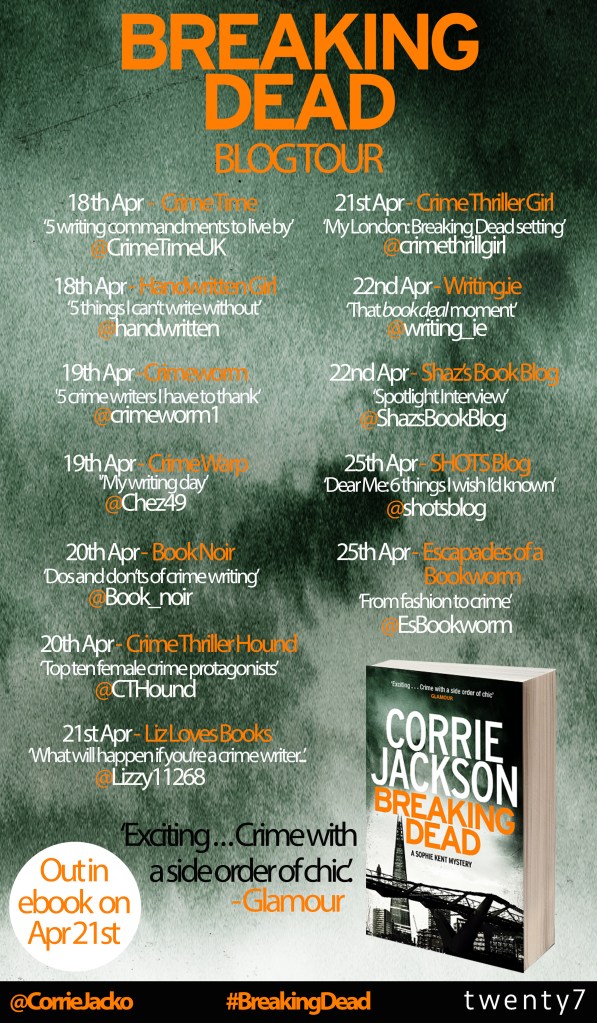
The #BreakingDead Blog Tour: Corrie Jackson talks about her London – the places that inspired the book

Breaking Dead

Today I’m delighted to be hosting a stop on the fabulous Breaking Dead Blog Tour and have Corrie Jackson take over the reins here at CTG HQ and talk about her London: the places that inspired Breaking Dead. Over to Corrie …

When it came to choosing a setting for my debut thriller, there was only one contender. Noel Coward famously remarked: ‘I don’t know what London’s coming to – the higher the buildings, the lower the morals’. From leafy squares and supercars to concrete jungles and crack-dens, London is a city bursting at the seams. Here are five of the capital’s gems that guest-star in the book.

The Covent Garden Hotel
In my novel, a grisly murder occurs on the third floor of fictional hotel, The Rose. My inspiration was this discreet establishment in the heart of the West-End. It’s a stone’s throw from where I used to work at Grazia magazine and I spent many a lunch meeting celeb-spotting at Brasserie Max (whilst hard at work, ahem). However, the sleek hotel lobby that appears in the book is based on another London institution: Claridge’s. Why the mish-mash? I have no idea; it just felt right.

Bywater Street
I wanted my protagonist, Sophie Kent, to live somewhere classy but charming. This Chelsea cul-de-sac, complete with pastel houses and shiny black railings, hits the spot. Sophie lives at number seven (my old house number in Fulham). London trivia: John Le Carre’s fictional MI6 intelligence officer, George Smiley, lived at number nine. Sophie is in good company!

Corrie Jackson
Wild Honey
The tense dinner between Sophie and her dad takes place at this Mayfair hotspot (although I renamed it L’Ondine in the book). The restaurant is within spitting distance of Conde Nast (the publisher of VOGUE, GLAMOUR and GQ) and it became our unofficial HQ when it first opened in 2007. I’m happy to say every meal I’ve eaten at Wild Honey has ended better than the one in the book.

Berkeley Square
Historians know it as the residence of two former Prime Ministers: Winston Churchill and George Canning. I know it as the setting for the annual GLAMOUR Women of the Year Awards (a celeb-packed, debauched affair). I set my fictional fashion show here but combined it with another memory. In 2011, designer Erdem held his spring/summer show in a giant white tent in the middle of Bedford Square. I reported on the backstage antics for GLAMOUR and the essence of the show appears in Breaking Dead.

Albert Bridge
Built in 1873, the bridge is nicknamed ‘The Trembling Lady’ because it vibrates when large numbers of people walk across it. I used to live in Pimlico and my running route took me along Embankment towards Albert Bridge (the same route Sophie walks in the book). My heart lifted the moment I spotted this candy-floss pink bridge dotted with twinkling fairy lights. Sophie, on the other hand, associates it with her brother’s death. Mainly because I liked the idea of her tragedy being entangled with such a beautiful landmark.

A big thank you to Corrie for making the CTG Blog a stop on her tour and talking to us about the places that inspired BREAKING DEAD. 

Intrigued to find out more about BREAKING DEAD? Here’s the blurb: “Newspaper journalist Sophie Kent is hanging by a thread following her brother’s suicide, her personal life in chaos. When the mutilated body of a Russian model turns up in an upmarket hotel on the eve of London Fashion Week, Sophie recognises her from a recent interview and knows she could have saved her. Eaten away by guilt, she throws herself headfirst into the edgy, fast-paced world of fashion with one goal in mind: to catch the killer. Only then can she piece her grief-stricken self back together. As she chips away at the industry’s glittery surface, she uncovers a toxic underworld rife with drugs, secrets, prostitution and blackmail. Battling her demons and her wealthy, dysfunctional family along the way, Sophie pushes her personal problems to one side as she goes head to head with a crazed killer; a killer who is only just getting started…”

BREAKING DEAD is out today in eBook (and will be released in paperback in September). To buy the eBook from Amazon click here

To find out more about Corrie Jackson pop over to her website here and follow her on Twitter @CorrieJackson

And be sure to check out all the other fantastic stops along the BREAKING DEAD Blog Tour …

Breaking Dead Tour Banner


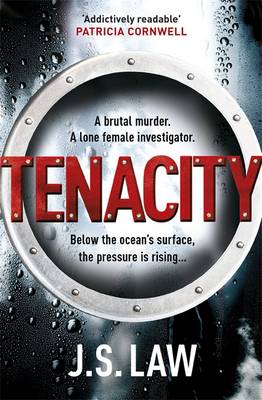
The #TENACITY NAVAL TOASTS BLOG TOUR: Ourselves! by J.S. Law plus CTG’s review

9781472227911

Today I’m thrilled to be hosting a stop on J.S. Law’s TENACITY Blog Tour. On each day of the tour, James has been introducing readers to a different Naval toast. Here’s his toast for Wednesday …

Wednesday’s Naval toast – ‘Ourselves’ (as no one else is likely to be concerned for us!)If you’ve followed my blog tour at all, you’ll know that at mess dinners in the Royal Navy, immediately after the Loyal Toast of ‘The Queen’, the youngest officer present will normally offer the traditional drinking toast of that day.
The toast for Wednesday is ‘Ourselves’ with ‘as no one else is likely to be concerned for us’ murmured after, or kept silently within. I love this toast because it reminds me that the submarine environment is one like no other, yet we often forget that. When I was on my road to publication, I once spoke to an agent who told me that he loved my writing (this was for a book before Tenacity) but that he wasn’t sure what I’d written, genre-wise. We had a few minutes left on the slot and so he asked me what I did for a living.
‘Submarines,’ I replied, feeling dejected as I realised he wasn’t going to offer representation. ‘I work on submarines.’
‘why aren’t you writing about that?’ he said, suddenly animated. ‘Write me a book about submarines and send it to me…’
As it is, I signed with a different agent, but that meeting stays with me as a reminder to never forget the obvious, never look beyond ‘Ourselves’.
I went away and wrote that novel, but it’s not about submarines, it’s just set on-board one, and I decided that if a submarine was the ultimate locked room environment then I was going to put the ultimate outsider on there, someone who wouldn’t be included in the toast ‘Ourselves’…


James’ debut novel – TENACITY – absolutely is set in the ultimate locked room environment. Here’s the blurb and my review of the book:

“A brutal murder. A lone female investigator. Two hundred metres below the ocean’s surface, the pressure is rising … Suicide must be investigated, especially when a Royal Navy sailor kills himself on a nuclear submarine only days after his wife’s brutal murder.

Now Lieutenant Danielle “Dan” Lewis, the Navy’s finest Special Branch investigator, must interrogate the tight-knit, male crew of HMS Tenacity to determine if there’s a link. Isolated, and standing alone in the face of extreme hostility, Dan soon realises that she may have to choose between the truth and her own survival. Justice must be served, but with a possible killer on board the pressure is rising and her time is running out …”

This debut novel from J.S. Law is a tense read from start to finish. Danielle “Dan” Lewis – a top investigator with more than a fair share of secrets hidden in her past – is brought in to investigate the alleged suicide of a member of HMS Tenacity’s Ship’s Company. Right from the get-go it’s clear that the odds are stacked against her – Tenacity’s men are a close-knit team and they don’t want anyone – especially a woman – poking around in their business.

Despite the hostility towards her, Dan presses on with the investigation. Master-At-Arms John Granger lends his support (although there are unresolved tensions between the pair that make for a tricky working relationship) and it seems that the investigation will manage to move forward. Then Tenacity gets the order to dive, and Dan has to continue the investigation on-board beneath the ocean’s surface. As she studies the nuances of the case and interviews the men, Dan begins to uncover the lies and secrets hidden within Tenacity’s history, and the danger that might still lurk within.

Like the novel’s title suggests, Dan is a tenacious lead character and someone that, as a reader, I found it easy to root for. She’s a survivor of injustice, using her own experiences as fire to fuel her unrelenting determination to achieve her goal – utterly focused on searching out the truth, even when it puts her own life in danger.

As an ex-submariner, author J.S. Law’s detailed knowledge of the Navy and submarines shines through to make for a highly authentic and atmospheric setting. The uniqueness of the tightly sealed environment of HMS Tenacity is made increasingly claustrophobic through the ever-increasing build-up of jeopardy.

Gritty, super-charged with tension and claustrophobically atmospheric, TENACITY is a real page-turner of a read.

You can find out more about J.S. Law by popping over to his website here and following him on Twitter @JSLawBooks

TENACITY is out in paperback tomorrow (21st April). You can buy it here from Waterstones. Or here from Amazon.

And don’t forget to check out all the other fabulous stops along the route of the TENACITY NAVAL TOASTS Blog Tour …

CgamZqOXIAAMxsL