CTG Interviews: Edward Wilson about his new book The Whitehall Mandarin

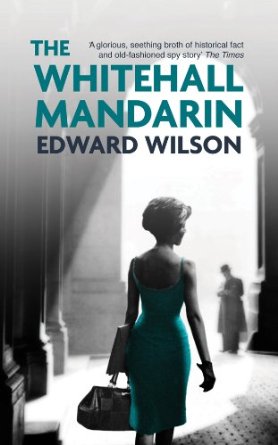
The Whitehall Mandarin cover image

The Whitehall Mandarin cover image

Today I’m pleased to welcome Edward Wilson to the CTG Blog to tell us about his new book – The Whitehall Mandarin – and about his writing process.

So, let’s dive into the interview …

 Firstly, your new book, The Whitehall Mandarin, is coming out in June. Can you tell us a bit about it?

All of my books are literary novels disguised as spy fiction. I try to explore the questions of identity, perception and truth. Can we really know who anyone really is? How can we find truth when it is papered over with lies? My starting point is the party slogan from Orwell’s 1984: ‘Who controls the past controls the future; who controls the present controls the past.’ The Whitehall Mandarin is an ‘insider novel’ that unpeels layers of deception to reveal the most closely guarded state secret of modern times: the China enigma. What is the secret behind China’s rapid rise to become a nuclear armed superpower? And when we think we have found that secret, there is yet another twist.

Lady Penelope Somers, the first woman to head up the Ministry of Defence, seems to have it all: power, beauty and wealth. The superglue that binds together the ruling class is secrecy – but Lady Somers has a dark secret that is unknown to even the inner circle of the Whitehall elite. Catesby’s job is to find that secret and bury it forever.

All of the book’s characters are complex and conflicted. Catesby, an MI6 officer who ironically bears the name of the leader of the Gunpowder Plot, never resolves his working class origins with his OBE and his status as a senior intelligence officer. Cauldwell, a wealthy American reeking of refinement and‘old money’, repudiates his background to become a Communist spy. Henry Bone, Catesby’s boss and mentor, has a closet full of skeletons including a past relationship with Sir Anthony Blunt.

Before writing the Catesby spy series you served as a Special Forces Officer in the US Army, how easy do you find using your real-world experience to inform your fiction?

War is not a good thing for writers or anyone else. I despise writers who become macho war bores and celebrate ‘the cult of the warrior’. Being a Special Forces officer in Vietnam was a lot more than ‘combat’. It was about going native, running intelligence networks and dealing with double agents – experiences which are invaluable for a writer of spy fiction. I was an SF advisor to the CIDG (Civilian Irregular Defense Group), a border screening force that patrolled from remote camps the length of South Vietnam. The CIDG soldiers were mostly Vietnamese or Montagnards, although there were also Khmers and Chinese Nungs. My own CIDG were all Vietnamese; brave fighters certainly, but also heavily infiltrated with sleeper agents. It was estimated that at least 10% of our CIDG were undercover Viet Cong. None of our operational plans were ever secure, none!

One way of dealing with this lack of security was to change plans at the last minute. I tried this on an ambush patrol with a small team of CIDG . We crept into a village after dark and began, covertly, to ask for information about the Viet Cong. An old man took me aside and led me away from the others. He asked to see my map so he could show me where to find the enemy. I refused because there was classified information grease-pencilled all over it, but I finally let him see a little corner and he pointed to a trail where we should set our ambush. It seemed a much better site than the one we had already chosen. I then rejoined the others and put the plan to the Vietnamese in charge of the CIDG, who responded with a resounding ‘khong’ – which is non, no, nein and nyet rolled into one. I couldn’t order him to move his men; I was only an ‘advisor’. So we set our ambush on the site previously chosen.

Later that night all hell broke loose, but nowhere near us – or the trail the old man had suggested. We later discovered that a Regional Forces (RF) outpost, less than a kilometre from our ambush position, had been overrun and sixteen of its defenders killed.

I’ll never know what really happened. Had the Viet Cong who attacked the outpost passed along the trail the old man had pointed out? Could we have saved those sixteen RF if we had redeployed and ambushed the attacking force enroute? Or was the old man a Viet Cong agent who had tried to lure us to a place where we would have been killed? Or was our CIDG leader an undercover VC who refused to budge because he wanted to protect his comrades? But I did learn the intelligence officer’s dilemma: you can never be completely certain who anyone is. Every human being is a mystery. I hope I bring this into my novels.
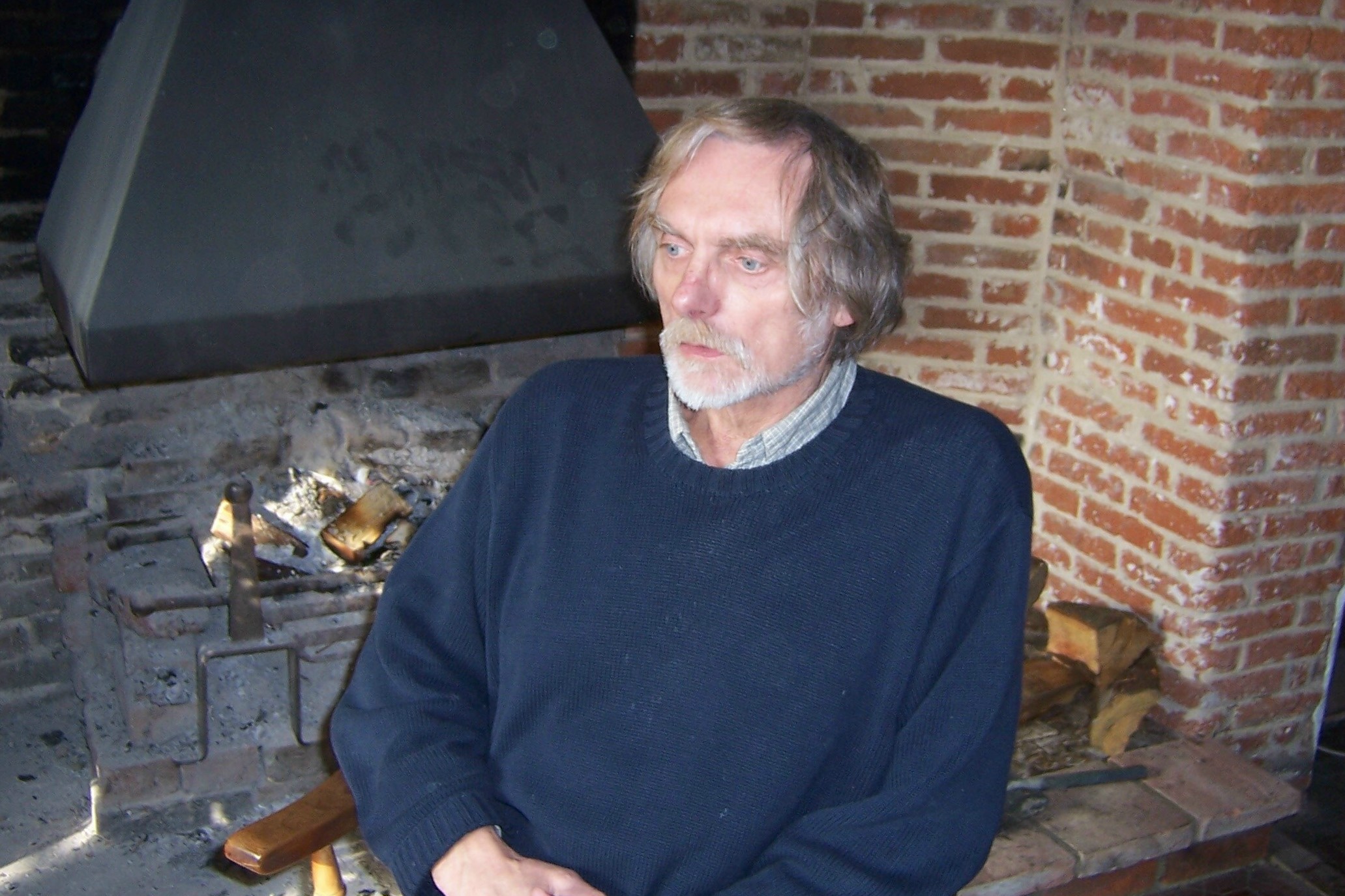
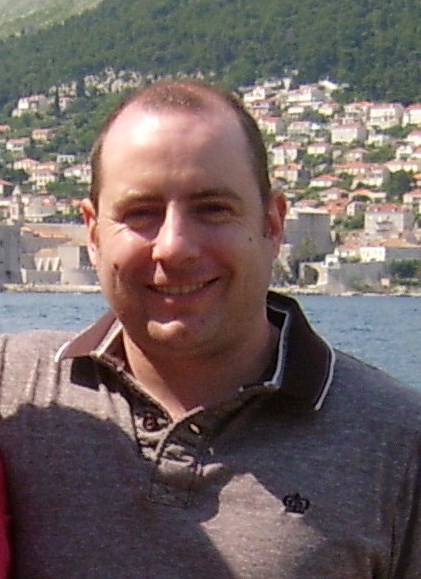
Author Edward Wilson

Author Edward Wilson

Could you tell us a little about your writing process, do you dive right in, or plan the story out first?

I begin by doing a lot of historical research to try to uncover something that no one has used before. The great thing about writing spy fiction rather than spy non-fiction is that most relevant documents have been destroyed, suppressed or never existed. When the historical trail of dots finally disappears, I keep going with a fictional version of what happened.

When I’ve got a plot outline, I go for characters. Characters, and not plot, are what make a novel take off. The same characters appear, disappear and reappear in my novels – and each time they reappear I reveal something new about them. I research actual historical characters by background reading, but I also use Youtube clips of them to try to discover their inner essence and quirks – Che Guevara’s shy boyishness; Kim Philby’s arrogance (just after he denied being ‘the Third Man’, he sticks his tongue in his cheek).

When I’m in full flow I try to write a minimum of 1,500 words a day. I know that things are going well when the characters take over and tell me what to write. They become real people – and don’t always tell me all their secrets. I just have to wait until they are ready. I don’t own them; they own me.

What advice would you give to those aspiring to publication as crime writers?

Character, character, character. We don’t remember Raymond Chandler’s plots; we remember his characters. I once had the privilege of sitting next to a crime writer named Phyllis at the Hatchards Authors of the Year party. The first thing that Phyllis (aka PD James) said to me was: ‘What is more important: character or plot?’ Phew, I gave the right answer. In fact, characters must shape the plot – otherwise, the plot will appear artificial and unbelievable.

Tension is more important than suspense. Everyone knows that Romeo and Juliet are not going to live happily ever after, but we still go to see the play. Sometimes revealing what happens in the first line of a chapter is more effective than springing it later. Begin a story: ‘She had never stabbed a man before.’ – and the reader is going to be on tenterhooks waiting to find out what actually happened.

Your main character must have a foil. Every Holmes needs a Watson. Revealing plot and narrative movement is a lot easier when two characters are talking about it – and tension between the two is also good for suspense and character development.

Find out what everyone else is doing – and then write something completely different. Make it new. Agents and publishers aren’t looking for copycats, they’re looking for originality.

Learn to pitch your story in fifty words or less.

And lastly, what does the rest of 2014 have in store for you?

The next few weeks are devoted to travelling and promoting The Whitehall Mandarin – including the Penzance LitFest on 18 and 19 July. Half the job of a professional writer is marketing her or his books and meeting people. We owe it to our readers and our publishers.

The other half of a writer’s life is actually writing. My next book is provisionally titled A Very British Ending – and I hope to have finished a first draft by December. Once again, it is an ‘insider novel’ with Catesby and Bone struggling against internal and external enemies. The action takes place between 1947 and 1976. I don’t write to understand myself, but I do write to understand the country that has adopted me and naturalised me – a country that I love. I hope that my next book will reveal some of the hidden and secret forces that have made Britain what it is today.

Thank you so much to Edward Wilson for joining us today and telling us about The Whitehall Mandarin.

The Whitehall Mandarin by Edward Wilson is published by Arcadia, and is out now in hardback. To find out more pop over to http://www.amazon.co.uk/The-Whitehall-Mandarin-Edward-Wilson/dp/1909807532
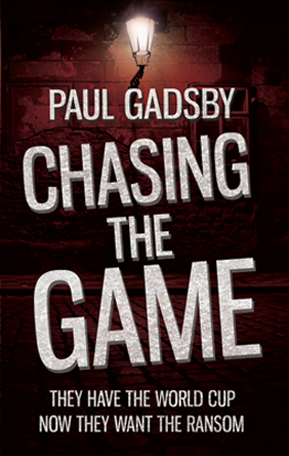
CTG Interviews: Paul Gadsby about his new book Chasing the Game

Chasing the Game cover image

Chasing the Game cover image


Today I’m delighted to welcome Paul Gadsby to the CTG blog to talk about his new book – Chasing the Game.

So, let’s get to it …

Chasing the Game is out now, and gathering rave reviews. Can you tell us a bit about it?

It’s a crime thriller depicting one of the most fascinating real-life crimes in British history – the theft of the Jules Rimet Trophy in 1966. Three months before the football World Cup tournament was due to begin, the trophy, on display in Westminster Central Hall, was stolen in an audacious daylight raid with the back doors of the building forced open. No one actually saw the trophy being taken but a ransom demand was made a few days later to the Football Association (FA), who were desperate to save face and reclaim the trophy, and a rendezvous organised where the trophy would be exchanged for cash. But the exchange never happened, one man was arrested for demanding the ransom but was never connected to the actual theft, so the identity of the thieves remains a mystery. Bizarrely, the trophy was discovered under a bush in a suburban street in Norwood a week after the theft by a dog named Pickles, who subsequently became a national hero.

I wanted Chasing the Game to be very much a fictional novel before anything else (not a documentary-style review of the crime etc), so the make-up of the gang of thieves and their particular characters and motivations were all driven by my imagination and I had a blank canvas to work on there. I used elements of the real-life tale (the ransom demand, the exchange set-up) and created extra conflict by having my FA chairman as a steely character who is determined to recover from the global humiliation the theft caused him and his organisation, and hell-bent on making the criminals pay. I had a theory early on about how I believed the trophy ended up under that bush, and basically worked back from there to create a gripping story.

In Chasing the Game, a real-life event – the theft of the Jules Rimet Trophy (the football World Cup) in London in March 1966 – is integral to the story. What was it about this event that sparked your idea for the novel?

I was drawn in by the fact that the crime has so many unanswered questions to it. The actual theft appears to have been carried out with a fair degree of good planning and professional expertise, so it seems a group of people did it rather than someone alone snatching an opportunity. But then the trophy – their only asset in getting something out of their efforts – ends up under a hedge a week later. Something must have gone dramatically wrong between that group of people during those seven days, as the pressure mounted with the case attracting international publicity.

I’ve always been fascinated by the internal structure of organised criminal set-ups and the personality clashes that rise to the surface. I’d been toying with a theme for a crime novel about leadership – about how some people have the natural skillset to be an effective operations man in a number two role but not necessarily the abilities to handle the wider scale responsibilities that come with being number one – and thought it would be good fun to drop this theme into the midst of a dramatic story such as the 1966 theft.

How did you go about researching the time period and the real life events?

I’ve always been into 1960s-set gangster stuff such as the Krays and the Great Train Robbery, so I read a lot of books surrounding those characters and looked into the pressures they faced in their lives at that time; what kind of lifestyles they were living and what they were aspiring to. I also watched a number of television documentaries about everyday life in Britain in the 1960s (thank you BBC4 et al) because I was determined to make that period a character of its own in the book. I love the music of that era but have always felt the way the 1960s is often portrayed to people like me who were born after then (Swinging Sixties, everyone flocking to a vibrant Carnaby Street to spend a fortune on the latest fashions etc) is a little skewed from reality. I wanted people consumed with the grind of their jobs, their money problems, their marital problems, their parenting problems and so on – characters burdened by the harsh challenges that life always throws into people’s laps.

That’s where the ransom demand in Chasing the Game proved really handy as a motivation driver within the narrative. I deliberately placed my ‘firm’ of criminals in west London, a few miles away from the central Soho scene they ultimately want to get to and grab a stake in – and the ransom cash is their leg-up to this world, their ticket to a brighter future. The trophy theft is also a chance for my ageing, old-school FA chairman to hit back against the thieves he sees as a stark representation of an increasingly insurgent society, and leaves him questioning his place in the world.

Could you tell us a little about your writing process, do you dive right in, or plan the story out first?

Chasing the Game is my first novel to be published but I’d written a few before that and with each one the process was slightly different. With this one I had the end of the story in place first, and worked back from there, carefully mapping out the characters and the various conflicts they would face, then drawing up a detailed chapter breakdown before getting into the actual writing. With other books I delved into the writing a lot quicker – happy with the overall concept and where things would finish, I went for it, adopting the ‘car headlights in the dark’ approach (writing away knowing what is immediately in front of you as well as the end destination, but never seeing what is a little further down the road). This approach allows the detail of each chapter to develop more organically and is an enjoyable way to write, but is probably more suited to character-driven work rather than plot-driven material. Either method (and many more besides) is fine and can be successful as far as I’m concerned, as long as the writer has a burning passion to explore the themes they want to unravel, and has created mesmerising characters who have plenty at stake within a tension-riddled story.

Author Paul Gadsby

Author Paul Gadsby

Who are your favourite crime writers – which books and authors have inspired you?

I have tended to prefer standalone books rather than mass-volume serials; I love it where the writer has the freedom to take his main character down any dark alley and the reader really doesn’t know how bad things will get. With the serials, we always know the main character is going to be fine and any injuries sustained will not be too serious because they’ll be back in another adventure next summer. That said, although I’m no great fan of those formats, there have been some tremendous writers who have gone down that path and deserve every credit – Ian Fleming for one, while Ian Rankin and Mark Billingham are delightful writers and I’ve enjoyed many of their books. Ray Banks’ mini-series following PI Cal Innes was fantastic and wrapped up with great humility, while David Peace’s Red Riding Quartet inspired me to explore mixing fact with fiction.

I love noir classics as well as slick contemporary thrillers. Elmore Leonard’s ear for dialogue is, in my opinion, unmatched. James Crumley is a big hero of mine as are the likes of Ken Bruen, James Sallis, Patricia Highsmith, Jake Arnott, Graham Greene, Jim Thompson, Adrian McKinty and James Ellroy. Eddie Bunker’s No Beast So Fierce is a glorious standalone book and one of my all-time favourites, as is The Ice Harvest by Scott Phillips.

And lastly, what does the rest of 2014 have in store for you?

I have written the first draft of another novel, a tale about a recently-retired boxer who is forced into a life of crime by his former manager, and look forward to editing and polishing that soon. But in the meantime I’m enjoying promoting Chasing the Game – reviews from crime fiction sites have been fantastic so far, while I’ve been asked to speak about the book at this summer’s Festival of Football Ideas in Bristol, a literary-music-art-themed event, which I’m really looking forward to.

A huge thank you to Paul for allowing us to grill him! 

If you’d like to find out more about Paul Gadsby and Chasing the Game pop on over to his website at http://www.paulgadsbyauthor.co.uk/

Author Interviews: CTG talks to Quentin Bates

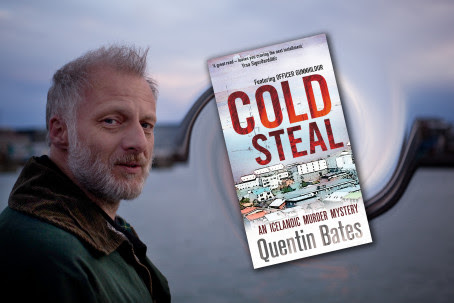
Quentin Bates - Cold Steal

Quentin Bates – Cold Steal

Today I’m delighted to welcome crime writer Quentin Bates to the CTG blog for a chat about his fabulous Nordic crime novels and new book – Cold Steal, the atmospheric setting for his books – Iceland, and to find out more about his writing process …

As well as writing the fabulous Nordic crime novels featuring police officer and single mother, Gunnhildur Gísadóttir, you’ve had successful careers as a trawlerman, a teacher and a journalist. What was it that attracted you to becoming a novelist?
I wasn’t actually a teacher for very long and abandoned it as quickly as I could… But I’ve been writing for a living for a long time now, journalism and a few non-fiction books, mostly extremely dull technical stuff about shipping. I had always seen fiction as something of a mug’s game, extremely hard to get published and maybe even harder to stay published, so it was a challenge I couldn’t resist. I didn’t seriously expect the first Gunna story to get published, and certainly didn’t expect it to turn into a series.

Your new book, Cold Steal, is out this month. Can you tell us a bit about it?
This one involves a fairly disparate group of characters, including some of Iceland’s immigrants who I find interesting – having been in that position myself along time ago as an expat living in Iceland. There’s also a burglar who has been a thorn in the police’s side for a long time as he is exceptionally careful and leaves very few traces and is very successful until he breaks into the wrong house one night and finds himself facing far more than he had bargained for. Then there are a few killings, including a businessman and a few people placed in the difficult positions that call for desperate measures.

Your Iceland-set books always have a fabulous sense of place about them, what’s your secret to creating this?
I think it’s weather. Icelanders may live in centrally-heated houses, but they still live on the edge of the habitable world and weather has always been crucially important to survival in the past when it was a nation of fishermen and farmers, and a hard winter could mean not making it through to spring. So people are extremely conscious of weather; it’s in the blood, and Icelandic weather is extraordinarily changeable as it can rain, snow and hail all in one day, interspersed with blazing sunshine. I’m infected with this weather consciousness as well so I always have weather at the back of my mind and especially when I visualise a scene. One of my first questions to myself will always be what was the weather like?

Could you tell us a little about your writing process, do you dive right in, or plan the story out first?
I’ve done both, the seat-of-the-pants method and the intricate plotting, and neither of them suit me. I’m somewhere between the two and have a fairly loose outline of what I want to touch on, like as series of waypoints, but not necessarily with a direct route between them. I don’t get on with over-plotting as I like the flexibility of using a good idea as it crops up along the way, and I don’t normally know quite how things are going to end until I get there.

What advice would you give to those aspiring to publication as crime writers?
This is purely personal advice, and everyone’s experience is different. I’d say just get on with it and stay with it. Don’t wait for a muse to strike, as if you do that, then she won’t. Try and do something every day as that keeps things ticking over in your mind. Unplug the router if that’s what suits you. And just enjoy it, laugh at your own jokes. If you don’t enjoy your own work, then probably nobody else will. Don’t go to anyone who loves you for an opinion. People who know what they’re talking about will give you advice, and it’s very much worth listening carefully to what they say, but also take notice of your own instincts and stick to your guns when the moment is right.

And lastly, what does the rest of 2014 have in store for you?
I’m not sure at the moment. There’s a kindle-only Gunnhildur novella planned for later this year although I’m not sure yet when that will appear, probably in the summer some time. There is more Gunna in the pipeline but I’m still mulling over ideas at the moment and I really do need to pay the day job more attention. November this year is also Iceland Noir, the tiny crime fiction festival in Reykjavík that I’m involved in organising with Icelandic crime writers Yrsa Sigurðardóttir, Ragnar Jónasson and Lilja Sigurðardóttir. It’s something of a labour of love, but we did the first one last year and it was just great – because when crime writers get together they do tend to be a lot of fun. They’re not precious or pompous, and they can be extraordinarily irreverent – these are people it’s just great to be around. That’s what happens when people who spend their days sitting over a laptop dreaming of murder get let out into the daylight. There’s an interesting line-up for this year, including rising stars Johan Theorin and Vidar Sundstol, and some more intriguing writers, and hopefully we’ll be able to add more between now and November.

Sounds great.

Thanks so much to Quentin Bates for dropping by. To find out more about Quentin and his Gunnhildur Gísadóttir Iceland-set crime series pop on over to his website at http://graskeggur.com/

And to learn more about the wonderful Iceland Noir crime fiction festival click here http://www.icelandnoir.com/

CTG Reviews: The Killing Season by Mason Cross

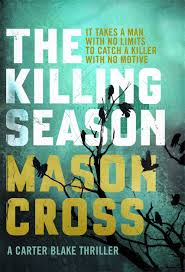
The Killing Season cover image

The Killing Season cover image

What the blurb says: “When Caleb Wardell, the infamous ‘Chicago Sniper’, escapes from death row two weeks before his execution, the FBI calls on the services of Carter Blake, a man with certain specialised talents whose skills lie in finding those who don’t want to be found. A man to whom Wardell is no stranger.

Along with Elaine Banner, an ambitious special agent juggling life as a single mother with her increasingly high-flying career, Blake must track Wardell down as he cuts a swathe across America, apparently killing at random.

But Blake and Banner soon find themselves sidelined from the case. And as they try desperately to second guess a man who kills purely for the thrill of it, they uncover a hornets’ nest of lies and corruption. Now Blake must break the rules and go head to head with the FBI if he is to stop Wardell and expose a deadly conspiracy that will rock the country.”

First off, I have to say that this is hands-down my favorite read of the year so far. It has everything I love about action thrillers – the intrigue, the danger, the chase and the multi-layered characters. And, it’s Mason Cross’ debut novel, which makes it all the more impressive.

The main character, Carter Blake, is something of an enigma – charismatic, highly skilled, and at the top of his game. But he doesn’t let power and politics get in the way of his investigation, and he makes sure justice is brought, whatever the personal cost. So pairing up with Elaine Banner makes for an interesting working relationship – she’s career-driven and has her eyes on the next promotion, working with a talented maverick like Blake gives her a set of problems she can well do without.

The antagonist – sniper Caleb Wardell – is a smart and cunning adversary, engaging Blake and Banner in a deadly game of cat and mouse. The tension is high from the get-go and just keeps on rising.

So as Banner and Blake pursue Wardell, following the evidence, trying to find a pattern and anticipate his next move, the body count continues to rise. Blake’s the only person who is able to get close, and Banner starts to realise that sometimes the only way to get the job done right is to step away from procedure and follow your instinct.

As Blake and Banner get closer to the truth, they become targets – in the sights of Wardell and someone in the Agency itself – question is, can they get to them both in time, and get out alive?

I cannot sing this novel’s praises highly enough – it’s a joy to read, utterly engaging and kept me hooked right from the first page to the last. There’s high stakes and high tension, and the chemistry between Blake and Banner sizzles off the page.

If you love action thrillers, if you love crime fiction, go and read this book. I’m sure you won’t regret it.

Highly Recommended.


[with thanks to Orion for my copy of The Killing Season]

CTG Reviews: The Poison Tree by Erin Kelly

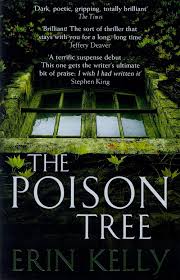
The Poison Tree cover image

The Poison Tree cover image

What the blurb says: “It is London in the sweltering summer of 1997. Karen is a strait-laced, straight-A university student. When she meets the impossibly glamorous Biba, a bohemian orphan who lives in a crumbling mansion in Highgate with her enigmatic brother Rex, she is soon drawn into their world. As the summer progresses, Karen becomes tangled up in their tragic family history and the idyll turns into a nightmare, culminating in murder.

A decade later, Karen collects Rex from prison. Together with their nine-year-old daughter Alice, they try to settle into family life. While Rex has served his time, Karen keeps dark secrets that mean she has her own life sentence to serve. What happened that summer casts a terrifying shadow over her future. Will the past catch up with her?”

I have to confess that this book has been in my To Be Read pile for months. Having opened it up, I was hooked by the claustrophobic immediacy of the prologue and read the whole thing in a single weekend, cursing myself for not having got to it sooner.

After the panicked situation in the prologue, Chapter One starts with conflict of a different kind, Rex is coming home from prison and Karen, Alice and Rex are all having to adjust. As they start to live, for the first time, as a family, Karen finds herself remembering the sequence of events that led to murder all those years before.

This is one of those books that gets into your head and keeps you trying to guess what happened. The reader knows that Karen has secrets, things she’s never told anyone, not even Rex. As the 1997 timeline unfolds, Karen turns from disciplined student to bohemian party girl. The writing is so vivid, the descriptions so atmospheric, that you can almost feel the heat on your skin, see the wine in your glass and imagine yourself joining in with the endless house parties hosted by Biba. But as the long, hot summer plays out, and Biba’s behaviour becomes increasingly erratic,  cracks, tensions and jealousy cause events in the seemingly carefree household to take a deeply sinister turn.

I especially loved the characters of Karen – the diligent student on a journey of self discovery, Rex – the sensible, reliable one who’d do anything for his sister, and Biba – beautiful, neurotic and gifted. As the story progresses, and the events of 1997 return to threaten Karen and her family in the present, the tension reaches its climax and Karen is, once again, pushed to her limits. Like all great psychological thrillers, this story keeps you guessing what will happen right to the very end, and finishes with a shocking dramatic twist.

The Poison Tree was a major ITV drama, a Richard & Judy Summer Read in 2011, and was longlisted for the 2011 CWA John Creasy (New Blood) Dagger Award.

Highly recommended.

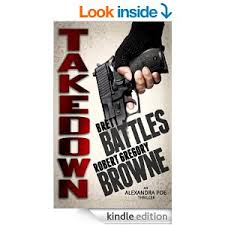
CTG Reviews: TAKEDOWN by Brett Battles and Robert Gregory Browne

TAKEDOWN cover image (Kindle)

TAKEDOWN cover image (Kindle)

What the blurb says: “After an op in Istanbul goes sour, all Alexandra Poe wants is a little down time, and a chance to finally sell off the family vacation home in Key Largo which carries too many painful memories.

Instead, she finds herself on a private Bahamian island, working with Deuce and Cooper to relieve a human rodent of some very sensitive codes, and to take down one of the world’s most notorious terrorists. Just another job for Stonewell International. Or is it?

What Alex doesn’t realize is that she’s about to get caught up in a twisted maze of shifting allegiances that forces her to face those painful memories head on–even if it’s the last thing she ever does…”

This second book in the Alexandra Poe thriller series is actually the first one I’ve read. The series is a collaboration written by two authors already well known in the genre – Brett Battles (Barry Award winning author, founder member of Killer Year, and member of International Thriller Writers and Mystery Writers of America) and Robert Gregory Browne (AMPAS Nicholl Fellowship-winning screenwriter and ITW Thriller Award-nominated novelist).

It’s an action-paced, fast paced, adrenalin-rush of a read from the opening chapter to the last. Alexandra Poe is a skilled and smart operative, hunting her mark and adapting her plans as problems threaten the mission. She’s used to being in control, but on this job something is different – her focus is off, the conflict she’s feeling over an offer on her parents’ beach house is preying on her mind.

Then people from her personal life start showing up in the most unexpected, and dangerous, locations. It seems that the job on the beautiful Bahamian island isn’t all that she and the team believed it to be. As the bodycount rises, and danger closes in, Alexandra has to figure out who she can really trust, because one wrong move and her and her team won’t be making it off the island alive.

I devoured this book in a weekend. It’s a fun and lively read, and a must for all those who enjoy a fast-paced action thriller.

Highly Recommended.


[I bought my own Kindle copy of TAKEDOWN]

CTG Interviews: Rachel Abbott author of SLEEP TIGHT

Author Rachel Abbott

Author Rachel Abbott

Today I’d like to welcome Rachel Abbott, who has dropped in to the CTG blog to answer a few of our questions. So, to business …

Your new book, SLEEP TIGHT, came out last month. Can you tell us a bit about it?

SLEEP TIGHT is a psychological thriller, which poses the question “how far would you go to hold on to the people you love?” It’s a story of obsession, deception and retribution.

The story opens when Olivia Brookes calls the police because her husband took the children out for a pizza, and he hasn’t come home. Has there been an accident? But the police don’t think so.

The problem is, this isn’t the first time that Olivia has had to contact the police. Seven years earlier her boyfriend and father of her first child called to say he was on his way home. But he never arrived.

To say any more about this story would give too much away. It was incredibly difficult to write the blurb for the cover for that very reason. Just let’s say that things are not always as they seem, and some times good people are forced to do bad things.

Could you tell us a little about your writing process, do you dive right in, or plan the story out first?

I am a huge planner. I don’t always stick to the plan, but I have to really understand my characters and what is motivating them before I start. So I have detailed character outlines for each of them usually including a picture that I find on Google images. I know what their favourite drinks are, what colour lipstick they wear (when appropriate, of course), their hobbies, the biggest thing that has ever happened to them, and what their story goal is. It is so easy to write books in which the characters can’t be differentiated, and to avoid that I want to get to know my characters really well.

In addition to having a plot timeline, I also have character timelines. I need to know what year they were born, when they met their partners, when their children were born – things that happen outside of the story, but may be referenced. I can’t tell you how many times I have read a book and thought “that’s not right – the child would have only been two at the time” or something similar.

And then because my books tend to have complex plots, I flowchart the main themes. This is the bit that sometimes goes to pot when I’m writing because the story starts to have a life of its own. But I use a piece of software called Scrivener to write my first draft. With that, I can attach keywords to individual scenes, with each keyword relating to a plot point in the story. I can then search on these keywords and reveal only the scenes that are relevant. That way, I can check each element of the story to make sure there are no loose ends or inconsistencies.

What books and authors have inspired you as a reader and writer?

I think my early inspiration came from Daphne du Maurier. I would say that Rebecca is one of my favourite books of all times – and of course, just like my books, in Rebecca you could say that good people are moved to do bad things. It was the whole sense of suspicion and threat that had me hooked, but a great love story at the same time.

Writers like Val McDermid are responsible for raising my interest in thrillers, and Harlan Coben’s early stand alone books made me think about writing from the perspective of the protagonist instead of always from the point of view of the police. I am now a fan of Sharon Bolton’s books too, which can be really dark. I am a member of a book club now, though, and trying hard to read as many non-thrillers as possible.

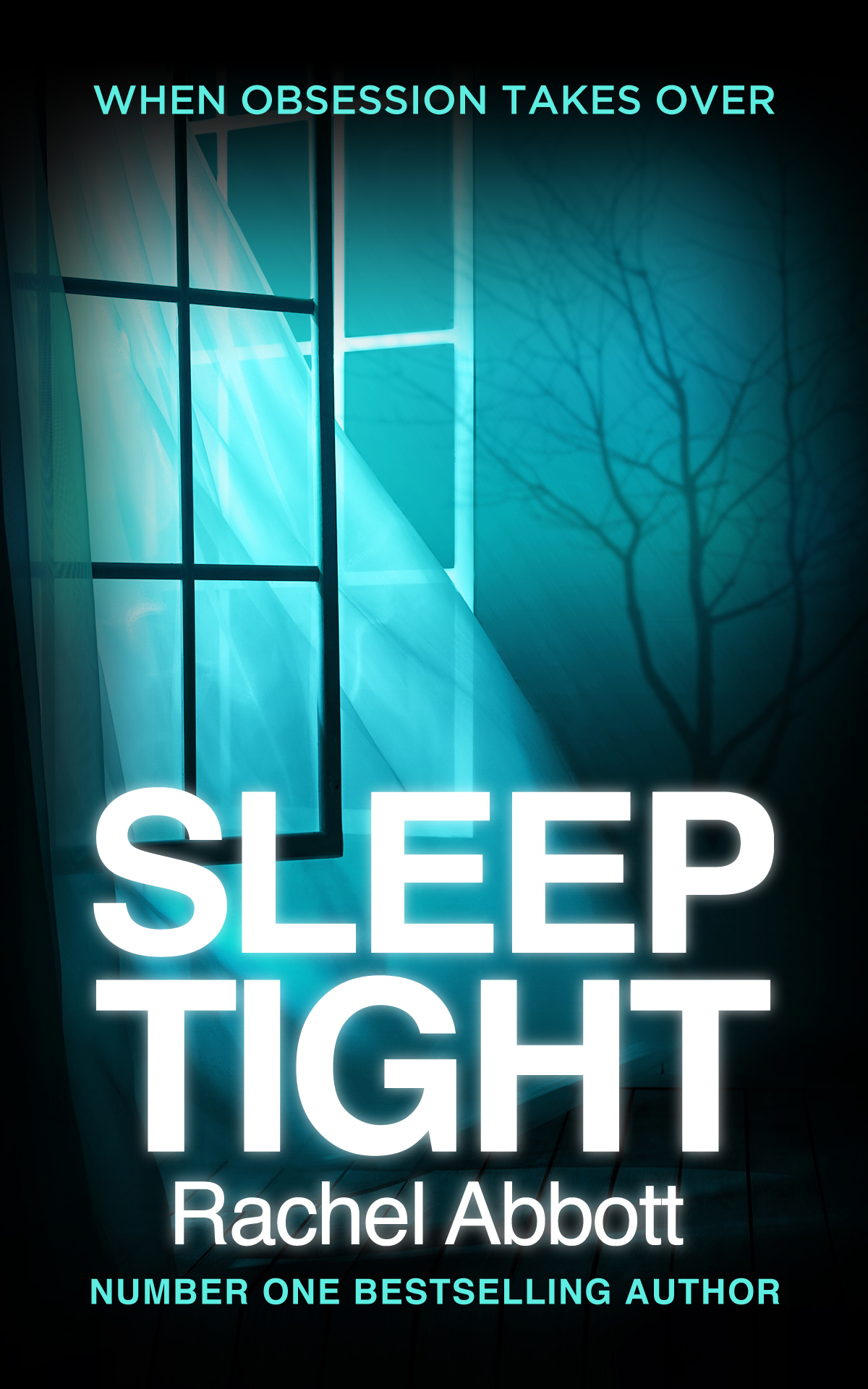
Sleep Tight cover image

Sleep Tight cover image

What advice would you give to those aspiring to publication as crime writers?

Make sure you do your research. Even if you decide to stretch the truth, be sure you have your facts right. There was one point in SLEEP TIGHT that I thought was a pretty safe bet – part of the book is set on Alderney, which is classed as the UK (it’s a Crown Dependency) and I assumed that – should it be necessary – a British policeman could arrest a suspect on Alderney. Not true! Fortunately, I happened to mention in passing to one of the two Alderney policemen, and he put me straight. So it really is important to check every detail.

Other than that, I would advise any writer to have their book professionally edited. I always believed that editing meant proof reading, and had no idea what it REALLY meant. There is the structural editing in which you might be told to cut things down, reorganise them, change points of view – and that can be expensive. But as a minimum you need a proper copy-edit – somebody to tell you about inconsistencies as well as typos. My copy edits are more red than black when they come back – but it’s all really good stuff. My copy editor picked up things such as two different people being described as deranged, even though the descriptions were a hundred pages apart. Repetition of words is a huge thing that they can help you to improve on, and I would seriously consider this.

But other than that, make sure your book is as good as it possibly can be, with a great title and then if you can’t find an agent or a publisher, don’t be frightened to self-publish. But if you do, you need to ask yourself a question: why are you publishing your book? The three most obvious answers would be:

I just want to see it in print (or virtual print). If that’s the case, stick it up there, and admire your Amazon page from time to time, and get on with the next book

I want as many people as possible to read my book, but I’m not concerned with making money.If that’s the case, consider using Amazon’s free posting and just make sure you let as many of the free sites know as possible.

I want my book to be a commercial success. If that’s what you want, then not only do you have to be sure your book is the best it can possibly be, but also you need to learn about marketing, and you are going to have to dedicate some time to getting it noticed. And you are probably going to have to pay for a really good cover design.

And lastly, what does the rest of 2014 have in store for you?

I am really looking forward to the rest of this year. I am starting on my new novel, and I am going to be attending a few events in the UK over the course of the year, including the London Book Fair, the Literary Festival and the Crime Festival at Harrogate, so I’m hoping to meet a lot of people that up to now I have only spoken to on Twitter or Facebook.

I’m also hoping to move in to a new place to live, which, if I can reach agreement with the current owners, will be a spectacular home overlooking the sea. I’m also hoping to take a trip up the Irrawaddy River in Burma – but that’s gone on the back burner a bit because of the move and the new book. But there’s certainly plenty to be excited about.

It sounds like it’s going to be a busy year!

A huge thank to you Rachel Abbott for dropping by and answering our questions.

You can find out more about SLEEP TIGHT and Rachel’s other books on her website over at http://www.rachel-abbott.com/ on Facebook at http://www.facebook.com/RachelAbbott1Writer and follow her on Twitter as @Rachel_Abbott


CTG Reviews: Down Among the Dead Men by Ed Chatterton

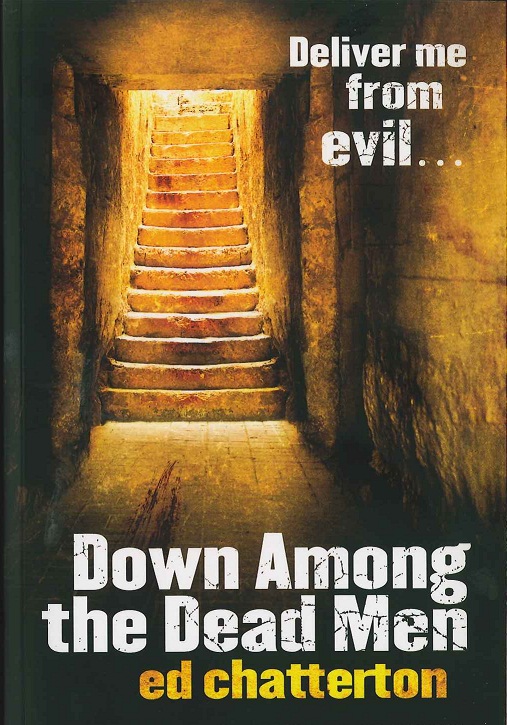
Down Among the Dead Men cover image

Down Among the Dead Men cover image

What the blurb says: “At first glance, to newly-promoted DCI Frank Keane, the horrifically bloody crime scene in suburban Liverpool looks like a straightforward murder-suicide – the husband kills the wife and then himself. Frank and the rest of the Major Incident Team have seen too many cases like it before. But what of their missing teenage son, Nicky? Is he their prime suspect or the third victim?

For script-writer Dean Quinn, the killings are a potential disaster. The film he is working on is everything to him and with new London money and a rising American actor lighting up the set, his vision is almost complete. He’ll do anything to protect it.

Frank knows that time is running out to find the boy. But all too soon the case starts unravelling into one that will test Keane to the limit – and haunt him to his dying day.”

This is the second book in Ed Chatterton’s DCI Frank Keane crime series.

As with the first book, Down Among the Dead Men continues the dark, gritty tone. As unsettlingly atmospheric as the claustrophobic-inducing old tunnel system they’re using as a location for Dean Quinn’s film, this story gives more than a few heart-pounding moments.

First part of the book is set in Liverpool and has all the elements you’d expect from a police procedural. I think this was my favourite part of the book as there’s a high element of mystery, and as the actions and behaviours of each character associated with the murdered couple are revealed, the relationships between them are shown to be far from simple. I loved the complexity, the intrigue, and trying to guess who was responsible for the sinister activities surrounding the ill-fated movie.

The second part of the book ups the pace and becomes more thriller-like as the action shifts to follow Keane’s pursuit of the killer in LA. Fast-paced and dynamic, the chase pulls you along at a relentless speed.

If you’re a fan of gritty, atmospheric crime thrillers, this could be a series well worth checking out.

Ed Chatterton stopped by the CTG blog a few weeks ago. You can read the interview here.


[With thanks to Arrow for my copy of Down Among the Dead Men] 

CTG Interviews: Luca Veste author of DEAD GONE

DEAD GONE cover image

DEAD GONE cover image

Today I’m thrilled to welcome Luca Veste, author of DEAD GONE, a fabulous debut that was published by Avon (HarperCollins) last month. 

So, to the questions …

Your debut novel DEAD GONE is out this month. Can you tell us a bit about it?

It would be my pleasure! Dead Gone is a part psychological thriller, part police procedural book, which follows the detective pairing of David Murphy and Laura Rossi as they attempt to stop a serial killer in Liverpool. This killer is using his victims to replicate infamous unethical psychological experiments, taunting the public by leaving a message with each body.

It’s also about life, grief, and death…and how we deal with all three.

What books and authors have inspired you as a reader and writer?

Stephen King, Enid Blyton and Brian Jacques (three names you don’t see put together often!) were a staple of my childhood/teenage reading. As a writer, I’m inspired by the characterisation in Mark Billingham’s books, the bravery of Helen FitzGerald, and the atmosphere created within Steve Mosby’s work. The 50/50 Killer by Steve Mosby was a major influence when I started writing Dead Gone.

Can you tell us a little about your writing process, do you dive right in, or plan out the story first?

For Dead Gone, I planned out about two thirds of the story, using chapter headings. So, I had the bones of the book with various word documents with different titles. Of course, the best laid plans of mice and scouse-italian blokes etc etc… I ended up scrapping most of those chapters and just writing one piece of the story at a time, before the ending came to me after a few abandoned attempts.

The second – as yet untitled – book I’ve just completed was written completely. I knew the end chapter going in. I also knew what happened in the middle few chapters, but that was about it. I also wrote a lot more which didn’t make it into the final version than I did for Dead Gone.

I think I’m still trying to find the way that works best for me!

DEAD GONE is a fabulous debut. What was your route to publication?

Pretty standard, I think. I identified a literary agent I wanted to work with pretty early on in the process, and after being turned down by him a few times, he eventually relented and took me on. We sent the book out to numerous publishers, with most turning it down, but Avon (an imprint of HarperCollins) have been nothing but enthusiastic about the book since the beginning. Going with them was a very easy decision.

Author Luca Veste

Author Luca Veste

And lastly, what else does 2014 have in store for you?

Starting out with a number of book signings around Merseyside. Lots of lovely independent bookshops to visit, which I’m really looking forward to.

I’ll be finishing my degree at university in June. Four years work done. Hopefully graduate!

I’ve just delivered book two to my editor, so most of the year will be taken up with making that better. I’ll also be visiting a number of festivals this year, as has become the norm for me now. Crimefest in Bristol and Theakstons Crime Festival in Harrogate are now what I plan my year around!

Hopefully sleep at some point.

Oh, and buy a new guitar. I’ve wanted a new one for years, so hopefully I’ll get chance to treat myself to one soon!

Sounds like it’ll be a busy (and fantastic) year! 

A huge thanks to Luca Veste for dropping by the CTG blog. To find out more about Luca and his books pop on over to his wonderful blog at http://lucaveste.com/

DEAD GONE is out now. Watch for our review coming soon …

Competition Alert: WIN a copy of The Tournament by Matthew Reilly

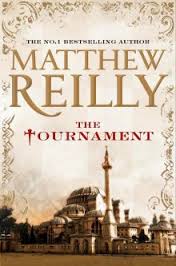
The Tournament cover image

The Tournament cover image

It’s Monday morning. What better time to launch a new giveaway!

Those lovely folks at Orion Books have given me ten copies of the fabulous historical thriller The Tournament by Matthew Reilly to give away as prizes for today’s competition.

THIS COMPETITION HAS NOW CLOSED.

How to enter

For a chance to win one of the copies of The Tournament by Matthew Reilly all you need to do is send a tweet to @crimethrillgirl Your tweet must include the answer to this question: Where is the chess tournament in The Tournament held? [hint, check out the prize description below!] Your tweet should also include the hashtag #CTGORION. [You’ll also need to follow us on Twitter, so that we can send you a direct message should you win].

If you’re not on Twitter don’t worry. You can also enter by emailing crimethrillergirl[at]gmail.com. Give your email the header CTGORION and be sure to include the answer to the question: Where is the chess tournament in The Tournament held? [hint, check out the prize description below!]

Rules
(1) One entry per reader (2) UK residents only – due to postage costs – sorry! (3) We will draw the ten winners at random from the entries containing the correct answer (4) No cash alternative (5) The competition closes for entries at 10pm GMT on Friday 7th February 2014 (6) The judge’s decision is final and no correspondence will be entered into.

The prize: The Tournament by Matthew Reilly

What the blurb says: “England, 1546: a young Princess Elizabeth is surrounded by uncertainty. She is not currently in line for the throne but remains a threat to her older sister and brother. Roger Ascham, Elizabeth’s teacher and mentor in the art of power and politics, is determined to keep her out of harm’s way. When an unprecedented invitation arrives from the Sultan of Constantinople, to an assembly of the finest players of chess from the whole civilised world, Ascham resolves to take Elizabeth with him.

But once in Constantinople for the chess tournament, the two find more danger than they left behind. There’s a killer on the loose and a Catholic cardinal has already been found mutilated. Ascham is asked by the Sultan to investigate the crime. But as he and Elizabeth delve deeper, they find dark secrets, horrible crimes and unheard-of depravity. Things that mark the young princess for life and define the queen she will become …”

You can find out more about Matthew Reilly and The Tournament pop over to the Orion website here: https://www.orionbooks.co.uk/books/detail.page?isbn=9781409134220

And click here to check out my review of The Tournament.