CTG Giveaway: Win a #FIONAGRIFFITHS Crime Series Book Bundle

To celebrate publication of THE STRANGE DEATH OF FIONA GRIFFITHS – the third book in Harry Bingham’s fabulously quirky Fiona Griffiths crime series – those lovely folks over at Orion have given us five bundles of the first three books in the series to giveaway.

For a chance to win all you need to do is tweet the link to this post (using the Twitter button below) OR retweet one of the CTG tweets about the giveaway. [You’ll also need to follow us on Twitter, so that we can send you a direct message should you win].

OR

If you’re not on Twitter don’t worry. You can also enter by emailing crimethrillergirl[at]gmail[dot]com. Give your email the header FIONA GRIFFITHS and give your name and postal address.

Rules
(1) One entry per reader (2) UK residents only – due to postage costs – sorry! (3) We will draw the winners at random (4) No cash alternative (5) The competition closes for entries at 9pm GMT on Sunday 23rd March 2014 (6) The judge’s decision is final and no correspondence will be entered into.

THIS COMPETITION HAS NOW CLOSED

Here’s what the prize includes …
Talking to the Dead cover image

Talking to the Dead cover image

Book 1: TALKING TO THE DEAD

What the blurb says: “For rookie detective constable Fiona Griffiths, her first major investigation promises to be a tough initiation into Cardiff’s dark underbelly. A young woman and her six-year-old daughter have been found brutally murdered in a squalid flat, the single clue a platinum credit card belonging to a millionaire businessman who died in a plane crash six months before.

For her fellow cops, it’s just another case of a low-rent prostitute meeting the wrong kind of client and coming to a nasty end, but Fiona is convinced that the tragic lives and cruel deaths of this mother and daughter are part of a deeper, darker mystery. Fiona, however, has secrets of her own. She is still recovering from a crushing psychological breakdown, and the feelings which haunt her are constantly threatening to undermine the mask of normality she has learned to wear.

As she begins to piece together a bizarre and terrifying conspiracy, Fiona finds that what makes her vulnerable also gives her a unique insight into the secrets of the dead, and in solving the murders of Janet and April Mancini she can begin to start solving the riddles of her own past.”
Love Story, With Murders cover image

Love Story, With Murders cover image

Book 2: LOVE STORY, WITH MURDERS

What the blurb says: “DC Fiona Griffiths is called to the scene and finds, amidst the remains of an old widow’s freezer goods, a human leg. Surprisingly well preserved. And wearing a pink high-heeled shoe. The search begins for the rest of the corpse, but this treasure hunt soon turns out to be darker and stranger than anything the police have encountered before, as the victim’s body-parts start popping up all over western Cardiff: in garden sheds, roof voids and car boots.

And then, even more bizarrely, parts of a second corpse start appearing. But this time the victim is male – and completely fresh.

The two murders must be connected – but how? Why so similar and yet so different? And if there’s a message, who is meant to read it?

Investigating the double crime draws Fiona into a web of obsession, money, deceit – and acute personal danger. Which is exactly where she likes to be: in the middle of a gruesome puzzle with a pitch-black secret at its heart.”
cover image

cover image

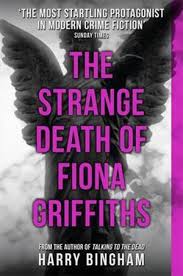
Book 3: THE STRANGE DEATH OF FIONA GRIFFITHS

What the blurb says: “When DC Fiona Griffiths says ‘yes’ to her policeman boyfriend, it’s an affirmation that she wants to finally put her psychological breakdown behind her, and become a resident of ‘Planet Normal’ like everybody else.

But she still can’t resist the challenge of an undercover policing course and, finding it remarkably easy to assume a new identity, she comes top of the class. So when an ingenious payroll fraud starts to look like the tip of a huge criminal iceberg, Fiona is selected to infiltrate the fraudsters’ operation.

Posing as a cleaner, Fiona Griffiths becomes Fiona Grey, hoping the criminals will try and recruit her – knowing that if they discover her real identity, she’s dead meat. But as Fiona penetrates deeper into their operation, coming closer to identifying the mastermind behind it, she faces another, even more frightening danger – that her always fragile grip on her sense of self has now been lost and she may never find her way back.”

To read our review of the latest book THE STRANGE DEATH OF FIONA GRIFFITHS click here

And to find out more about Harry Bingham and his books, pop on over to his website here www.harrybingham.com

You can also check out the Orion Books website here https://www.orionbooks.co.uk/books/detail.page?isbn=9781409153108
CTG Reviews: Down Among the Dead Men by Ed Chatterton

Down Among the Dead Men cover image

Down Among the Dead Men cover image

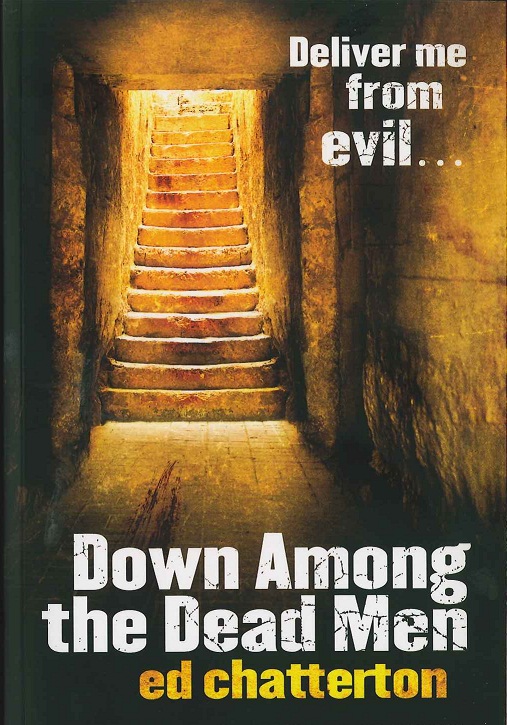
What the blurb says: “At first glance, to newly-promoted DCI Frank Keane, the horrifically bloody crime scene in suburban Liverpool looks like a straightforward murder-suicide – the husband kills the wife and then himself. Frank and the rest of the Major Incident Team have seen too many cases like it before. But what of their missing teenage son, Nicky? Is he their prime suspect or the third victim?

For script-writer Dean Quinn, the killings are a potential disaster. The film he is working on is everything to him and with new London money and a rising American actor lighting up the set, his vision is almost complete. He’ll do anything to protect it.

Frank knows that time is running out to find the boy. But all too soon the case starts unravelling into one that will test Keane to the limit – and haunt him to his dying day.”

This is the second book in Ed Chatterton’s DCI Frank Keane crime series.

As with the first book, Down Among the Dead Men continues the dark, gritty tone. As unsettlingly atmospheric as the claustrophobic-inducing old tunnel system they’re using as a location for Dean Quinn’s film, this story gives more than a few heart-pounding moments.

First part of the book is set in Liverpool and has all the elements you’d expect from a police procedural. I think this was my favourite part of the book as there’s a high element of mystery, and as the actions and behaviours of each character associated with the murdered couple are revealed, the relationships between them are shown to be far from simple. I loved the complexity, the intrigue, and trying to guess who was responsible for the sinister activities surrounding the ill-fated movie.

The second part of the book ups the pace and becomes more thriller-like as the action shifts to follow Keane’s pursuit of the killer in LA. Fast-paced and dynamic, the chase pulls you along at a relentless speed.

If you’re a fan of gritty, atmospheric crime thrillers, this could be a series well worth checking out.

Ed Chatterton stopped by the CTG blog a few weeks ago. You can read the interview here.


[With thanks to Arrow for my copy of Down Among the Dead Men] 

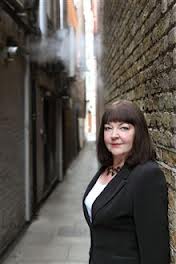
CTG Interviews: Author Jessie Keane

Author Jessie Keane

Author Jessie Keane

Today I’m really excited to be joined by bestselling British author, Jessie Keane, crime writer and creator of several crime series including the Annie Carter crime novels featuring the fabulous strong female lead character Annie Carter. 

So, to the interview …

What inspired you to create Annie Carter?

Annie Carter sort of appeared in my head when I was at a very low ebb. I wanted to write something entirely for my own pleasure – I didn’t care whether it got published or not, this was for me. So I was able to let rip and let aspects of my own personality come to the fore when I created Annie. She’s not so much me, as everything I would really like to be. Forthright, beautiful, a firm friend and a deadly enemy. She’s tough, and I like that. Not perfect, but a real trooper. She dominated Dirty Game, my first crime novel, and she’s been chucking her weight about ever since.

Did you plan the Annie Carter series from the outset?

Emphatically, no. Once I’d written her in Dirty Game, it just seemed a natural progression to continue her story in Black Widow, and then I got excited about her and the Mafia in Scarlet Women, and then Playing Dead, and Ruthless.I would love to do another Annie book, and when I get that crucial idea, I will.

Dive right in, or plan the story first?

I so admire writers who plan everything first! I have friends who do this, and I wish I did too, and I’ve tried … but it just doesn’t work for me. If I try to plan, I find I’m bored with the story before I’ve written even a handful of chapters; whereas in my own style (strictly seat-of-the-pants) I rush up to my study every morning, keen to get started on whatever comes next.

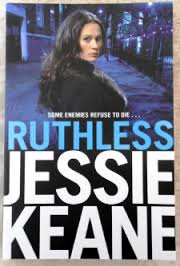
RUTHLESS cover image

RUTHLESS cover image

What advice can you give to new crime writers trying for publication?

Make sure you love writing crime. Always write what you love and what comes easiest to you, what really suits your writer’s ‘voice’. You’ll know it when you find it. And persist! That’s really boring advice, I know, but you’ll get rejection slips (unless you’re very lucky) and some downright rude refusals. Take it on the chin. Keep going.

And, finally, what does 2014 have in store for you?

Publication of LAWLESS, the second Ruby Darke book (sequel to NAMELESS) in July. Lots of interviews and festivals and fun, in between which I’ll be writing a brand new book (my 10th) with a brand new heroine, the deadline for which is November. So it’s going to be a full year, and by the end of it I’ll be starting out on my 11th book, so it’s all go!

Sounds great – and lots to look forward to reading.

Many thanks to Jessie Keane for popping by and answering our questions.

You can find out more about Jessie and her writing over on her website at http://jessiekeane.com/

And check out our review of RUTHLESS, the most recent Annie Carter novel, here

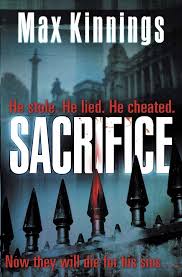
CTG Reviews: SACRIFICE by Max Kinnings

Sacrifice cover image

Sacrifice cover image

What the blurb says: “Disgraced hedge fund manager Graham Poynter hides shamefully in his Belgravia mansion. He lied, he cheated and he stole but the police and legal authorities are the least of his worries. Poynter and his family have come to the attention of a new style of hacktivist. The Adversary – or Advo – believes that non-violence only works up to a point and as Thomas Jefferson said, “Sometimes the tree of liberty must be watered with the blood of patriots and tyrants.” Jefferson might have added, “and bankers” …

Advo intends to make an example of Poynter as a warning to others in the banking industry who might think they can behave as he has done. The only person who stands between Poynter and his grisly destiny is blind hostage negotiator, Ed Malloy, who must negotiate with a faceless adversary who is hell-bent on exacting retribution on a minority which has gone unpunished for too long.”

Ed Malloy is having a bad day when he’s called to lead the negotiation at Graham Poynter’s Belgravia mansion. But things are about to get a whole lot worse, the situation is unlike any other Ed has faced. The hostage taker doesn’t fit the usual profile or follow the pattern of behaviour Ed would have expected. They make no demands, remain calm, and seem to be waiting for something. Ed is convinced there is another person manipulating events. But as tensions rise both at Graham Poynter’s mansion and inside the negotiating team, Ed struggles to find an approach that will bring the situation to a successful conclusion.

This book has a high concept, contemporary feel, with the story played out against a backdrop of underhanded banking practices, and the rise of a new style of ‘hacktivist’. If anything I’d have liked for the ‘hacktivist’ aspect of the plot to be explored in more detail, although I suspect that a future book in the Ed Malloy series may do just that.

And the story doesn’t hang around. It’s a fast paced, cinematic thriller. The tension starts high and doesn’t wane as the story unfolds. Through rotating point-of-view characters, including Graham Poynter’s daughter, Lily, his business partner, Bob Rushwood, and the hostage taker, more information is revealed to the reader than Ed is aware of. This adds an extra layer of tension and increases the suspense.

A non-stop rollercoaster ride from start to finish.

Highly recommended.


[With many thanks to Quercus for my copy of SACRIFICE]

CTG Interviews: Ed Chatterton author of DOWN AMONG THE DEAD MEN

Author Ed Chatterton

Author Ed Chatterton

Today I’m excited to welcome Ed Chatterton to the CTG blog. As well as having writing over twenty children’s novels (published under the name Martin Chatterton), Ed is the author of the recently published crime novel, Down Among the Dead Men, the second book in the DCI Frank Keane series, published by Arrow.

And so, to the questions …

Before you starting writing crime fiction you’d already written over twenty highly successful children’s books. What fresh challenge did writing fiction for an adult crime reader audience bring?

‘Highly successful’ might be overstating it: I’d been doing pretty well with some books and less so with others, just like most writers. The books I write for children are largely comedies – surreal farces, often with big themes like ‘death’ or ‘the physical universe’ or ‘nose-picking’. There were, particularly in some of the more recent children’s books, crime elements in there too. Two books – ‘The Brain Finds A Leg’ and ‘The Brain Full of Holes’ – were full blown detective fiction, albeit with a comic twist. So the transition into adult crime fiction was less challenging than it might have been for a debut author. The main change I found was that my characters can swear (and some of them do, a lot), can have sex, and can be more violent. From a technical point of view, adult crime writing requires more precision in terms of plot and, given that my books are complex, requires me to use my rapidly shrinking brain more often. In my children’s books if I got to a difficult plot point I would usually insert a T-rex or a time machine. That’s less easy with gritty adult fiction, as most crime readers tend to notice things like that.

Your recent crime novel, Down Among the Dead Men, is set in Liverpool, Los Angeles and Australia. What was it about these particular settings that inspired to you to pick them?

Liverpool featured because the story is a continuation (in terms of some of the characters) of the first book, A Dark Place To Die. In that first book Frank Keane is one of a number of characters. In Down Among the Dead Men I wanted to focus on Frank and see how far I could push him. Frank’s a Liverpool cop who gets pulled into a case that starts relatively small (an apparent  domestic murder-suicide) but quickly gets darker and widens out into something much larger in scale. I picked Los Angeles for two reasons: the first is that I’ve been there a number of times and there were locations I wanted to use. The high desert near Palm Springs and Twentynine Palms is a very evocative landscape (the working title for Down Among the Dead Men was Twentynine Palms). The second is so that I could continue to open out the stories from a single location. I’m not a huge fan of every case in a series being located in exactly the same place. I’d make an exception for George Pelecanos with his Washington-based novels, but single location books too often end up becoming sterile or repetitive. I used to live in the US so I am fond of the place and enjoy writing American characters. The Aussie connection dates back to A Dark Place To Die. Two of the characters from that book, Menno Koopman and Warren Eckhardt, make a re-appearance. Koopman, I think, will become a character who I might develop more as a stand alone. If he lives through Down Among the Dead Men that is . . .

Could you tell us a little about your writing process, do you dive right in, or plan the story out first?

Raymond Chandler said that a good story isn’t devised, it is distilled and I think that’s a pretty good description of my approach. I start with a basic idea, or set of ideas and then I let them go wherever they take me. I often have a rough ‘destination’ in mind with a skeleton narrative and a very strong sense of the kind of story I want to tell, but the fine details are worked out in writing. This usually means that I am constantly redrafting and editing – which is fortunately something I love doing – and I find this approach prevents the books being formulaic. My thinking is that if I don’t know exactly where the story is going then that makes it doubly interesting for the reader. I think you can overplan, just the same way that you can over-write. In my stories, I honestly don’t think the reader can guess what way the story is going.

Down Among the Dead Men cover image

Down Among the Dead Men cover image

Your books have been likened to those of Peter James and Ian Rankin. Which crime writers’ novels do you most like to read?

I try to avoid British crime books as I get very jealous and envious and bitter and twisted if they are any good. I’m flattered to be compared to either Peter James and Ian Rankin and, weirdly enough, I met both of them recently although, since I was several continents off being described as sober, they may not look back on the meeting quite as fondly as I do. From what I can remember, they are both lovely blokes but far too successful for my liking. In truth, American crime writers are more my taste and, since they are further away, don’t seem as threatening. I already mentioned Pelecanos who I think is just a little bit special, but I also love Elmore Leonard, Richard Price, Joe Lansdale, Carl Hiassen. One of my favourite books is the one-off, Blackburn by Bradley Denton. I do have a real soft spot for Patricia Highsmith’s stuff too. Some of the Scandi crime is good but I’m a bit sick of the adulation doled out to anyone vaguely Nordic who so much as writes a shopping list at the moment. Of the Scandinavians I like Asa Larsson best. At one point, when I knew my crime series was coming out, I seriously considered adopting a Nordic-sounding pseudonym. In my bleaker 3am moments, I regret not doing so. I reckon I’d have scooped at least three awards by now.

What advice would you give to new writers aspiring to publication?

All the usual gubbins: make sure you have something to say, make sure you keep reading, make sure you keep writing. Don’t think that publication is the ‘win’: publication is just the ticket into the gladiator ring. Maybe this too: don’t listen to too much prescriptive crap about the mechanics of story-telling, plot points, ‘arcs’, use of semi-colons, use of italics, whatever it is. If Stephen King tells stories a certain way that doesn’t mean that you need to do that. Elmore Leonard’s famous ‘ten rules’ of writing, including that ‘don’t start with the weather’ nonsense applies only if you are Elmore Leonard. Despite my healthy man-crush on Leonard, I always thought that was too restrictive. I actually began a kids book with ‘It was a dark and stormy night’ once just to prove a point. And never, ever, do anything Neil Gaiman tells you to unless it relates to hair.

And lastly, what does the rest of 2014 have in store for you?

I’m just about to complete the third in this series which takes place in Liverpool, Berlin and Western Scotland and has the rise of neo-Nazism as a backdrop. I’m continuing to write The Last Slave Ship which is a dual narrative novel about the final slave trading voyage from Liverpool and a contemporary race-hate crime which erupts into riots. This book is part of my PhD which just goes to show one of two things. Either (a) crime writers aren’t as dumb as we look or (b) they’ll let just about anyone do a PhD these days. I’m continuing to illustrate children’s books and will be drawing pictures for a book by Jonathan Emmett. I’ll be keeping my fingers crossed that my‘Mort’ kids series, which has just been bought for development as an animated series by Southern Star, makes it past the pilot stage and into production. Lastly, I’ll be working with a UK TV/film company on bringing Frank Keane to the screen in one way or another. Should keep me busy.

Sounds like it’ll be a hectic year!

A massive thanks to Ed Chatterton for dropping by the blog and allowing us to question him. Watch out for our review of Down Among the Dead Men next week …

CTG Reviews: The Never List by Koethi Zan

THE NEVER LIST cover image

THE NEVER LIST cover image

I first read The Never List when it came out in hardback last year. It was one of the standout books of 2013 for me. It’s now available in paperback, and to celebrate I’ve reposted my review …

What the blurb says: “For years, best friends Sarah and Jennifer kept what they called the ‘Never List’: a list of actions to be avoided, for safety’s sake, at all costs. But one night, they failed to follow their own rules. Sarah has spent ten years trying to forget her ordeal. But now the FBI has news that forces her to revisit her memories, and finally attempt to find justice for Jennifer. If she is to keep her captor behind bars, Sarah needs to work with the other women who shared her nightmare. But they won’t be happy to hear from her. Because down there in the dark, Sarah wasn’t just a victim.”

From the very first page, no, the very first paragraph, this story had me hooked. I don’t know if it was the terrifying premise – three women imprisoned in a cellar by a man they thought that they could trust; the unwavering loyalty to her friend Jennifer that the protagonist, Sarah, maintains despite the danger that in puts her in; or the three women’s determination, against all odds and all that had happened to them, to succeed in their quest for justice and uncover the shocking truth. Whatever it was, I just couldn’t put it down.

One of the things that, for me, made the story seem so real was the voice of Sarah. A prisoner in her own home at the start of the book, she has to face her fears (and there are so very many of them) just to be able to leave her own building. She knows that she has allowed herself to be governed by fear, and that it’s far from normal, yet she has engineered a life for herself that allows her to work, to eat the food she likes and see her physiatrist without ever leaving the safety of her apartment. She is still a prisoner, only now it’s within her own home. And she is still receiving letters from the man who abducted her.

Then she gets a call from the FBI telling her that the man responsible for her imprisonment, and her friend Jennifer’s death, is coming up for parole. The news spurs Sarah into action, setting her on a quest to not only keep her abuser in jail, but also to get justice for Jennifer by finding her body. It’s hard to go into any more detail without spoilers, all I’ll say is that Jennifer manages to reunite with Tracey and Christine, the other two survivors from the cellar, and re-enter the world inhabited by her abductor to seek out the clues, and the people, that the FBI failed to find.

For their ‘Never List’ Sarah and Jennifer had imagined every terrible thing that could happen, and made a list of actions to prevent against them. At the creepy and heart-wrenchingly scary climax of the book, Sarah learns that sometimes the truth is even worse than the terrors in her imagination.

A chilling, page-turner of a psychological thriller: a real must-read for all fans of the genre.

Highly Recommended.

[Many thanks to Harvill Secker for my copy of THE NEVER LIST]

ps. pop back on Wednesday when I’ll be interviewing Koethi Zan about writing The Never List, her writing process and all things bookish …

CTG Interviews: Peter May author of the Lewis Trilogy and new standalone Entry Island

Peter May

Peter May

I’m delighted to be joined on the CTG blog today by Peter May, author of the fabulous Lewis Trilogy,  whose new book ENTRY ISLAND is out this month.

So, first question, as well as writing the award winning Lewis Trilogy, you’ve had successful careers as a journalist and a television and screenwriter. What was it that attracted you to becoming a novelist?

I always wanted to be a novelist – since I wrote my first book at the age of four!  My parents taught me to read and write before I went to school and the first thing I did was write a story, and with my mum’s help sewed the pages together to make a book.  (You can see the result on YouTube:  http://www.youtube.com/watch?v=XTxOEfwclh0 )  Journalism was my way of trying to make a living as a writer, since jobs as novelists were not exactly thick on the ground.  Journalism led me into television, and a lucrative career as a scriptwriter, editor and then producer.  But I quit all that (including the income) in the mid-nineties to try, finally, to make my living writing books.  And, well…  I’m still here.

Your new book, Entry Island, is just out. Can you tell us a bit about it?

Entry Island is a story that takes place in two time frames – contemporary and historical.  The contemporary element is set in Quebec, Canada, and more specifically the Magdalen Islands in the Gulf of St. Lawrence.  A detective, Sime Mackenzie, from Montreal is sent with an investigation team to the tiny Entry Island – the only English-speaking island in the Magdalen archipelago – following the murder of its wealthiest resident.  But on arrival he finds that the victim’s wife, and prime suspect in his murder, is unaccountably familiar to him, even although they have never met.  The historical story is told through dreams and recollections of diary entries read to the detective by his grandmother when he was a child.  It tells the tale of a young man (whose name Sime shares) growing up in the Outer Hebrides of Scotland in the 19th century at the time of the Highland Clearances, when tens of thousands of people were driven out of their homes and forced on to boats for the New World.  When the young man and his family are brutally evicted, he finds himself on a boat bound for Quebec.  At a certain point both stories converge and the link between them, along with a resolution to the Entry Island murder, is revealed.

Your books always have a fabulous sense of place about them, what’s your secret to creating this?

Many of my early writing experiences, from the start of my teens on, were screenplays of movies I wanted to make.  I always had a very visual sense of storytelling, and when I began to realise that I didn’t need a multi-million pound budget and a film crew to tell those stories, I took that visual sense with me into the writing of my books.  Basically, I described the pictures in my head.  I went to all those places in my mind and wanted to take the reader there with me, to experience them as real.  Not just visually, but sensually as well.

Could you tell us a little about your writing process: do you dive right in, or plan the story out first?

I spend four to five months developing and researching an idea.  Then I brainstorm for a week and write a very detailed storyline that runs anything up to 20,000 words.  From there I set myself a very disciplined schedule, rising at 6am and writing 3000 words a day.  The book is finished within six to eight weeks.

What advice would you give to those aspiring to publication as crime writers?

Write about what you know.  And remember that no matter how clever your story, readers won’t get involved unless they care about the characters.  Don’t be put off by rejection.  It happens to all of us.  After all, “The Blackhouse” was rejected by every major publisher in the UK, and the Lewis Trilogy has now sold more than a million copies.

And lastly, what does the rest of 2014 have in store for you?

A crazy year lies ahead.  I am in the research and development phase of a new book, which I hope to write in the late spring.  I have books tours in the UK and France, and the USA at the end of the year.  I will be at festivals in Harrowgate, Edinburgh and Bloody Scotland, and in this Scottish Homecoming year, VisitScotland are keen to use my books as a magnet for foreign visitors to Scotland.  A visit to Canada might also be in the offing.

Sounds like 2014 is going to be hectic! A huge thank you to Peter for dropping by the CTG blog. 

[Stop by on Friday to read my review of the fabulous ENTRY ISLAND]

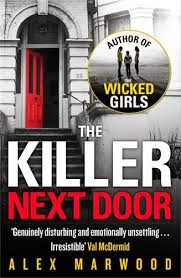
CTG Reviews: The Killer Next Door by Alex Marwood

The Killer Next Door cover image

The Killer Next Door cover image

What the blurb says: “In a gloomy, bedsit-riddled South London wreck, lorded over by a lecherous landlord, a horrifying collection quietly waits to be discovered. Yet all six residents have something to hide.

Collette is on the run from her ex-boss; Cher is an underage children’s home escapee; lonely Thomas tries to make friends with his neighbours; while a gorgeous asylum seeker and a ‘quiet man’ nobody sees try to keep themselves hidden. And there for them all is Vesta, a woman who knows everything that goes on in the house – or thought she did.

Then in the dead of night, a terrible accident pushes them into an uneasy alliance. But one of them is a killer, expertly hiding their pastime, all the while closing in on their next victim …”

This is not a novel to read alone on a dark night!

Number 23 seems to operate within its own contained ecosystem. Each tenant existing alongside each other, unaware of the magnitude of their housemate’s secrets. And leaving this reader questioning just how well can you ever know your neighbours?

It’s hard to write about this psychological thriller without giving away spoilers, so I’ll not go into the plot much as I really wouldn’t want to spoil it for you. And, anyway, the real joy of this book is the vividly painted characters. Fearful Collette, with a stolen holdall filled with cash and only in the country so she can visit her dying mother; bold young Cher, with her schemes and scams, her adopted cat Psycho, and watched over by Vesta; Vesta herself, seventy years old and, having lived in the same house her whole life, wondering now whether life has somehow passed her by; Hossein, gorgeous, widowed, and desperately waiting it out until his residency is approved and he can work and build himself a new life; Thomas, the shy, quiet, part-time Citizen’s Advice worker; and the mysterious music lover who lives on the top floor and is hardly ever seen. Each of their lives is intriguing, each of them hides a great sadness, one of them is a murderer.

The question though, is which one? Some of the descriptions about how the killer preserves their victims are not for the faint-hearted. Yet, artfully, the author manages to make the killer seem both clinical and remorseless, and a rather pitiful character. But, certainly not one to be underestimated.

With the reader exposed to the killer’s thoughts and actions, there is an ever increasing sense of doom that raises the tension notch-by-notch as the story progresses.

I found that this book had me musing on what causes good people to do bad things, and bad people to do good things? This isn’t a straightforward story of good versus evil, it explores the grey area between the two, and the aftermath of what happens to those who tread there.

Engrossing, chilling, and packed with suspense.

Highly Recommended.

[With thanks to Sphere for my copy of The Killer Next Door]

CTG Reviews: RUTHLESS by Jessie Keane

RUTHLESS cover image

RUTHLESS cover image

What the blurb says: “After fighting her way out of East London’s criminal underworld, Annie Carter’s life appears to be perfect. She has all the trappings of a wealthy and successful existence. And her longstanding rivals the Delaneys are dead, out of her life for good …

But behind the gilded surface, Annie’s life is descending into chaos. Her marriage is in tatters, her relationship with her daughter is fraught and there are whispers on the streets of London; are the Delaney twins really dead? Perhaps Annie should have demanded to see their bodies lying on a slab in the morgue …

Once again Annie is being chased by those who want her dead. But this time, the stakes are even higher and her enemies are even more determined …”

This is the first book by Jessie Keane that I’ve read, but it most certainly won’t be the last. Tightly plotted, with a full cast of wonderfully larger-than-life characters, this novel had me gripped from the very first page.

The main protagonist, Annie Carter, seems to those around her a real woman-on-top, but beneath her glamorous appearance and no-nonsense business savvy, she’s in emotional turmoil. Still, she’s determined to pull her life back on track.

Then someone tries to abduct her daughter, blow up her car, and break into her home. Worse still, their description seems to match that of one of the Delaney twins, Annie’s arch enemies, who she believed to be long dead. Sending her daughter into hiding, Annie puts her personal problems aside and partners up with her ex-husband, Max Carter, and her youngest step-son, Mafia boss, Alberto Barolli, to find out who is behind the attacks, and whether the Delaney twins really died all those years ago.

The novel takes the reader on a journey from London, to New York, and across to rural Ireland. What I especially loved about this story was the way multiple story strands were woven together: a coming-of-age story for Annie’s daughter, Layla, and an explosive battle of wills (and sexual tension) for Annie as she tries to keep an uneasy truce with her ex-husband; all set within a deadly game of cat and mouse with a determined killer driven by revenge.

Intriguing, suspenseful and thrilling. A real page turner.

Highly Recommended.


[With thanks to Pan for my review copy of RUTHLESS]

AudioBook Addict reviews: The Necessary Death of Lewis Winter by Malcolm Mackay

audio book cover

audio book cover

The Necessary Death of Lewis Winter

Author: Malcolm Mackay

Narrated by: Angus King

Run time: 8 Hrs and 12 mins

Unabridged – released on audiobook 06/06/2013

What the blurb says: “An arresting, gripping novel of dark relationships and even darker moralities: introducing a remarkable new voice in crime fiction.

A 29-year-old man lives alone in his Glasgow flat. The telephone rings; a casual conversation, but behind this a job offer. The clues are there if you know to look for them. He is an expert. A loner. Freelance. Another job is another job, but what if this organisation wants more? A meeting at a club. An offer. A brief. A target: Lewis Winter. It’s hard to kill a man well. People who do it well know this. People who do it badly find out the hard way. The hard way has consequences.”

Ok – full disclosure – when I started this audiobook, I just didn’t like it at all! The style felt like head-hopping and when other reviewers said it was ‘different’ they weren’t kidding. BUT, boy am I glad I stuck with it. This debut novel by Malcolm Mackay follows a young freelance gunman as he is drawn deeper into working for a gangland organisation. The novel is written in a way that zooms out from the actions and dialogue and takes you into the mind and thought processes of the characters – I think, dredging up memories of my MA, that it actually verges on meta-fiction in parts.

Callum is a freelance gunman and is asked by Peter Jameson, the head of an ambitious criminal gang, to kill Lewis Winter; the man’s death is necessary. We follow Callum on the job, see him prepare and watch him interact with the characters that will assist him to complete the job, and those that will hunt him afterwards.

This novel is really well written. Any misgivings that I had in the beginning were only due to the fact that this is a genuinely different type of novel to those I normally read (or listen to). Mackay openly discusses the thought processes of the characters and this draws you into them even more as the story goes on. At a little over 8 hours, the length was good, although, as is often the case, I would have happily listened for longer. Angus King is a solid narrator.

I have already bought the next audiobook in the series, ‘How a Gunman says Goodbye,’ and that alone is testament to just how good this book is.

Highly recommended.

[AudioBook Addict bought his own copy of The Necessary Death of Lewis Winter]