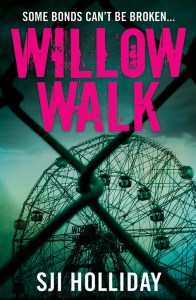
CTG Reviews: WILLOW WALK by SJI Holliday – out today in paperback!

Willow Walk cover - medium

Happy paperback publication day to the lovely SJI Holliday and WILLOW WALK. To celebrate, I’m re-running my review …

What the blurb says: “When the past catches up, do you run and hide or stand and fight? When a woman is brutally attacked by an escaped inmate from a nearby psychiatric hospital, Sergeant Davie Gray must track him down before he strikes again. But Gray is already facing a series of deaths connected to legal highs and a local fairground, as well as dealing with his girlfriend Marie’s increasingly bizarre behaviour. As Gray investigates the crimes, he comes to realize that there has to be a link between Marie and the man on the run. It’s the only thing that makes any sense. But he also knows that if he confronts her with the truth, he risks losing everything. As a terrified Marie is pulled back into a violent past she thought she’d escaped, she makes a life-changing decision. And when events come to a head at a house party on Willow Walk, can Gray piece together the puzzle in time to stop the sleepy town of Banktoun being rocked by tragedy once again?”

Having really enjoyed SJI Holliday’s debut novel – BLACK WOOD – I was delighted to get an early read of the second book in the Banktoun trilogy. Set in a small town community in Scotland where everyone knows each other’s business and secrets are deeply held, Sergeant David Gray is investigating a series of deaths linked to legal highs, while also trying to work out what is going wrong in his relationship with girlfriend, Marie.

Sergeant Gray is a fantastic character. In WILLOW WALK we find out more about his personal life, and about his relationship with Marie. When she becomes increasingly distant and her behaviour erratic, he struggles with what to do to makes things better. As he joins the search for the missing psychiatric patient, Sergeant Gray starts to see connections between the different areas he’s grabbling with – professionally and personally. As he follows the evidence, and begins to piece together the truth, he realizes that this case might be a lot closer to home than any other before.

A twisty, turning police procedural with a strong psychological twist, the tension ramps up page by page from the outset. Tackling some controversial issues, this is a gritty tale of obsession, revenge and escape.

Chillingly nuanced, pulse-poundingly suspenseful, it’s a great second book in the Banktoun Trilogy and totally unputdownable.

WILLOW WALK is out in paperback today. Click to buy it here from Waterstones or from Amazon here

You can find out more about SJI Holliday and her books here and follow her on Twitter @SJIHolliday

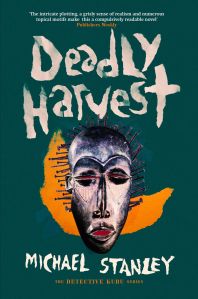
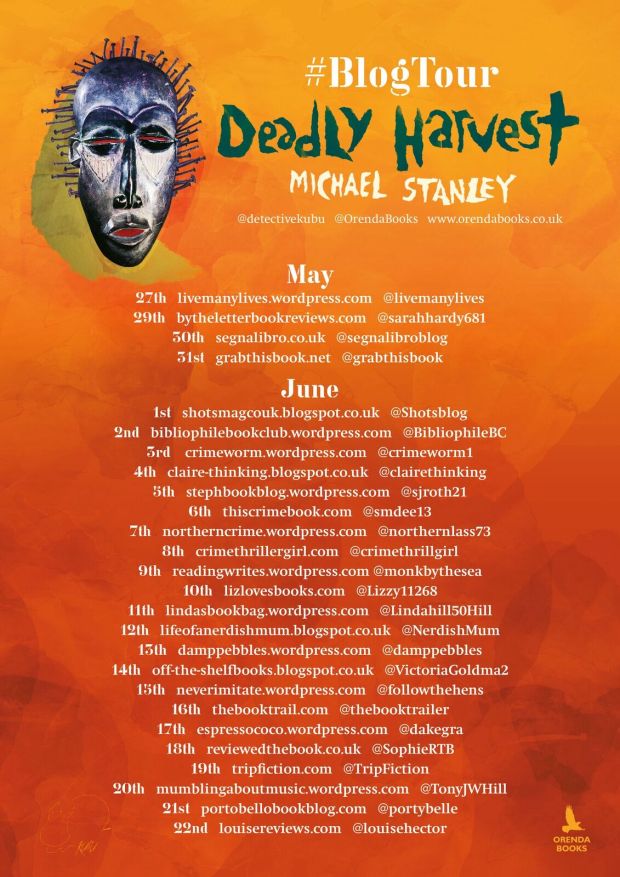
The Deadly Harvest Blog Tour: Guest Post by Michael Stanley and Detective Kubu

Today I’m delighted to be joined by Michael Stanley for the next stop on their DEADLY HARVEST Blog Tour. Deadly Harvest, the latest in their popular Detective Kubu series, is out now. On the tour today, Michael Stanley take their detective to lunch and chat to him about his latest case.

But first, here’s the blurb on Deadly Harvest: “A young girl goes missing after getting into a car with a mysterious man. Soon after, a second girl disappears, and her devastated father, Witness, sets out to seek revenge. As the trail goes cold, Samantha Khama –new recruit to the Botswana Criminal Investigation Department –suspects the girl was killed for muti, the traditional African medicine usually derived from plants, sometimes animals and, recently and most chillingly, human parts. When the investigation gets personal, Samantha enlists opera-loving wine connoisseur Assistant Superintendent David ‘Kubu’ Bengu to help her dig into the past. As they begin to discover a pattern to the disappearances, there is another victim, and Kubuand Samantha are thrust into a harrowing race to stop a serial killer who has only one thing in mind…”

And now, over to Michael Stanley …

A couple of weeks ago, Orenda Books released the fourth Detective Kubu mystery Deadly Harvest in the UK and Europe. Naturally we wanted to tell you about it, but we decided to let the person who knows most about it – our protagonist Assistant Superintendent David “Kubu” Bengu – talk about it instead.

unspecified-3

We were in Botswana recently, so we lured him away from the Criminal Investigation Department of the Botswana police by offering him lunch at one of his favorite restaurants in Gaborone, the Caravela, which serves delicious Portuguese fare.

Once we had settled down and Kubu had regretfully passed on the wine because he was on duty, we chatted. Of course we are old friends so we used his nickname “Kubu”, which means hippopotamus in the Setswana language. Kubu doesn’t mind. It is part of his persona and has been with him since his school days at the Maru a Pula school.

Michael asked him about being a detective in Botswana.

Kubu laughed. “I thought you’d want to talk about food and recipes! You know there’s a cookbook out now with my favorite African dishes? Sometimes I think I’m better known as a gourmet than a detective. But don’t ask me to be the cook! By the way shall we order? Joy says I should have a salad for lunch. It’s part of my diet. So I’ll start with the avocado salad. It’s excellent. Then I’ll have the peri-peri whole chicken. I really recommend that. We can wait till after the main course before we order the desserts.”

tasteofafrica

While we were wondering about the salad ‘diet’ and whether we’d brought enough pula to pay for all these courses, Kubu returned to the subject of police work.

“Michael, you have to understand that Botswana is a very big country. The size of France. Less than two million people though. We have about twenty main police centers, but they all have a lot of area to cover and lots of places for criminals to hide. And the countryside is very diverse. We’ve got the huge Kalahari desert with very low population – mainly Bushmen. There’s the lush northern area along the Chobe and Linyanti rivers, with all that spectacular wildlife. But, at Kazangula, Botswana has a joint border with three other countries – Zimbabwe, Zambia, and Namibia. Think of the smuggling possibilities that offers. Then there are the cities like Gaborone and Francistown, nothing like Johannesburg, but they have their share of crime.”

courtyard

Figure 1: Courtyard at the Caravela (Photo: J Everitt)

We really wanted to know about muti murders: people – especially children – being murdered so that witch doctors can use their body parts for black magic. It’s a scary practice becoming more, rather than less, prevalent in sub-Saharan Africa, and it provides the backstory of Deadly Harvest. Michael asked Kubu how these cases were handled in Botswana.

witchdoctor

Figure 2: Witchdoctor (Photo courtesy Alex Zaloumis)

He hesitated, then said: “You must understand that most witchdoctors do good. They have a variety of herbal remedies, usually supplied with a dash of good advice or a prayer. My father is a herbalist, although recently… Well, that’s another story. Now a few witch doctors might add animal parts – like the heart of a lion to give the client strength. But a very few – reputed to be the most powerful – use human body parts. Children are abducted. It’s horrible. And the culprits are very hard to find because the victims aren’t related in any way to their abductors. Worse, everyone is too scared of the witch doctors to give information. Even some policemen are nervous. Not me, of course.”

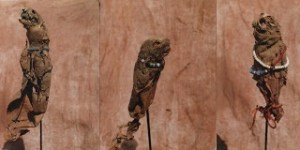
fetishes

Figure 3: Fetishes (Photo courtesy Alex Zoloumis)

We said we found it hard to understand that educated people in today’s world still believed in these types of potions. Kubu shook his head. “It’s supposed to give the evil witch doctors tremendous power, the ability to change shape, invisibility. The witch doctor I had to deal with in the Deadly Harvest case was thought to be invisible. As you can imagine, it was a very hard case to solve. Fortunately the CID has a new detective – a woman, believe it or not – who really pushed us to make progress. It took both of us to get to the bottom of it all.”

He paused. “These cases really shake things up. There is the infamous case of a young girl, Segametsi Mogomotsi, which occurred in Mochudi in 1994. She and her friend were selling oranges and became separated. Segametsi disappeared and her mutilated body was found weeks later. Segametsi’s murder caused the community to come out in violent protests because they believed the police were protecting the witch doctor’s powerful clients. One person was shot and killed by a policeman. The government eventually felt it necessary to conduct an independent enquiry, so it called in Scotland Yard from the United Kingdom.”

We nodded. We had heard about that awful case at our first meeting with the previous director of the CID, Tabathu Mulale. The Scotland Yard report was never released and the case remains unsolved.

To lighten the rather sombre mood, Stan asked: “Have you ever met Precious Ramotswe? You’re sort of in the same line of work.”

Kubu laughed. “No, not really. She’s that lady private investigator? She solves people’s problems, but I’m after murderers. She’s very resourceful, but our cases don’t overlap much. Maybe I’ll bump into her one day.”

At that point the food arrived, and that was all we could get out of Assistant Superintendent David “Kubu” Bengu.


A big thank you for Michael Stanley (and Assistant Superintendent David “Kubu” Bengu for talking about Deadly Harvest on the CTG blog today. You can find out more about Michael Stanley over on Facebook and follow them on Twitter @detectivekubu

DEADLY HARVEST is out now. You can buy it from Amazon here

And be sure to check out all the great stops along the Deadly Harvest Blog Tour …

unspecified-2

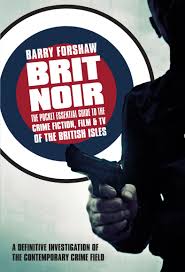
CTG Reviews: BRIT NOIR by Barry Forshaw

download

What the blurb says: “Barry Forshaw is acknowledged as a leading expert on European crime fiction, but his principal area of expertise is the crime arena of the British Isles. Continuing the earlier success of the series with Nordic Noir and Euro Noir, he now returns home to produce the definitive reader’s guide to modern British crime fiction. Every major living writer of the British Isles is considered, often through a concentration on one or two key books, and many exciting new talents are highlighted for the reader. And as the crime genre is as much about films and TV as it is about books, Brit Noir celebrates crime on the screen as well as the page.”

There isn’t anything that Barry Forshaw doesn’t know about crime fiction, so this gem of a book is like having your very own, personal crime fiction guru right at your fingertips.

This pocket guide to  crime fiction takes you on a bookish journey across the UK, and also showcases writers who set their books further afield. Taking each geographical area in turn, Barry Forshaw profiles many of the writers and characters who inhabit them, giving insight into both the writer, the characters and what it is about the authors books that especially stand out for him. By taking the journey with him you’re sure to add many more books to your ‘must read’ lists and films/TV series to your watchlist.

A treasure trove of a read – BRIT NOIR is the perfect reading companion for all those who love the crime fiction genre.


BRIT NOIR is out now. Click here to buy it from Waterstones or to buy it from Amazon click here

Barry Forshaw is one the leading experts on crime fiction, TV and film. His books include Nordic Noir, Euro Noir, Sex and Film, The Rough Guide to Crime Fiction, along with books on HG Wells and Stieg Larsson. He writes for the national press, edits Crime Time (www.crimetime.co.uk) and is a broadcaster and panellist. He teaches the history of crime fiction on the MA in Creative Writing (Crime Fiction) at City University. Follow Barry on Twitter @BarryForshaw3

#BehindDeadEyes Blog Tour: Exclusive Sneak Peep at Chapter 1 of Howard Linskey’s new book

Behind Dead Eyes

Today I’m delighted to be able to bring you an exclusive sneak peep at the first chapter of Howard Linskey’s latest crime novel – BEHIND DEAD EYES.

Here’s what the blurb says: “A corpse is found: its identity extinguished in the most shocking manner imaginable. Detective Ian Bradshaw can’t catch the killer if no one can ID the victim. Out there, somewhere, a missing young woman may hold the answer. Journalist Helen Norton is about to uncover a massive criminal conspiracy. She just needs the final piece of the puzzle. Soon, she will learn the price of the truth.

True-crime writer Tom Carney receives letters from a convicted murderer who insists he is innocent. His argument is persuasive – but psychopaths are often said to be charming …”

So, to the extract …


Letter Number Three

Perhaps you think I’m a monster. Is that it?
Maybe that’s why you‘ve not been in touch. Have you read terrible things about me Tom? Heard stories that disturbed you? None of them are true.

I’ve done bad things of course, who hasn’t? None of us are saints. Let’s not bother to pretend we are. I know the one thing you truly understand is human frailty Tom. I’ve had to account for my actions and I’ve paid a very heavy penalty for my misdeeds but I can assure you I never killed anyone.

Did you believe the poison that drips from the pens of those so- called reporters? They’re not interested in the truth, none of them. They spend their lives wading through other people’s trash looking for dirt, turning over rocks to see what crawls out. And they have the nerve to call me names.

The Ladykiller.

What chance did they give me?

Please see me. I’d visit you but clearly they won’t allow that. If we were to meet face to face, I’m certain I could convince you I am not the man they say I am. If you can look me in the eye and actually believe I am capable of such savagery, then I promise I won’t blame you for leaving me here to rot, so what exactly have you got to lose?

I think you are a truth-seeker Tom but you don’t seem to be at all interested in my truth. That’s disappointing.

You are my last and only chance Tom Carney. Please DO NOT continue to ignore me.

Yours, in hope and expectation.

Richard Bell

1995

Chapter One

Tom Carney was having a very bad day. Maybe it was the new kitchen cupboard doors and the way they refused to hang straight or the boiler going on the blink again or perhaps it was the letter from a convicted murderer.

No, it was definitely the boiler. Bloody thing.

He hadn’t owned the house long but it seemed virtually every part of the offending boiler had failed and been replaced at great cost, only for another of its components to buckle under the strain soon afterwards and cease to function. He should have got a new boiler when he bought the creaking, old pile but funds were short then and virtually non-existent today, so he’d opted for the false economy of replacing it bit by bit instead of wholesale. How he regretted that now, as he stood tapping the pipes with a wrench in an attempt to knock the ancient thing back into life; a tactic that had, amazingly, actually worked once before but, unsurprisingly, failed to bear fruit this time. Tom exhaled, swore and surveyed the stone-cold water tank ruefully. It came to something when a personal letter from a man who had beaten someone to death with a hammer was the least of his concerns.

He went back downstairs and tried to phone the plumber again but the guy didn’t pick up. If events ran their usual course, Tom would have to leave several messages before the plumber eventually got back to him. He might then grudgingly offer to ‘fit him in’ towards the end of his working week. The plumber would do this while making it sound as if he was granting Tom an immense favour. If Tom was really lucky the bloke might even turn up on the actual day but he knew this was far from guaranteed.

Tom recorded a message then picked up the envelope from the hall table. The words ‘FAO TOM CARNEY’ were scrawled on it in large block capitals with a marker pen, above an address hand written in biro. It was disconcerting to realise one of the relatively few people who knew where Tom lived these days was a murderer.

For the attention of Tom Carney? Why not some other reporter? One who was actually still reporting perhaps and not so disillusioned he’d turned his back on the whole bloody profession, to plough what was left of his money into renovating a crumbling money pit? This was the third letter he’d received from Richard Bell. Tom had read then studiously ignored the previous two, hoping one of the north-east’s most notorious killers would eventually tire of contacting him but, just like his victim, Tom had clearly underestimated the killer’s resolve.

Bell was a determined man but was he a psychopath? He read the letter again, surveying the handwriting for evidence of derangement but there was none. This wasn’t some rambling, half-crazed diatribe, scrawled in crayon and inspired by demonic voices. It was angry and there was an undeniable level of frustration at Tom’s failure to engage with him but that was all. Having singled Tom out, Bell presumably felt the hurt of rejection. The handwriting was neat enough and it flowed evenly across the page. Tom couldn’t help wondering if this really was the same hand that brought a hammer crashing down repeatedly onto a defenceless woman’s skull until she lay dead in the front seat of her own car? A jury thought so and the judge had told Bell he was a monster. Tom remembered that much about a case that dominated the front pages for days a couple of years back. Was Richard Bell insane or was he really an innocent man; the latest in a long line of miscarriages of justice in a British legal system discredited by one scandal after another.

Tom took the letter into his living room, if he could still accurately call it that with the carpet ripped up and tools scattered everywhere. He sat in the room’s solitary arm chair and read it once more. Richard Bell’s message was consistent and clear. He wasn’t mad and he wasn’t bad. He hadn’t killed his lover. Someone else had done that and he was still out there.

BEHIND DEAD EYES is out now. You can buy it here from  Amazon here

Find out more about Howard Linskey at www.howardlinskey.com and follow him on Twitter @HowardLinksey

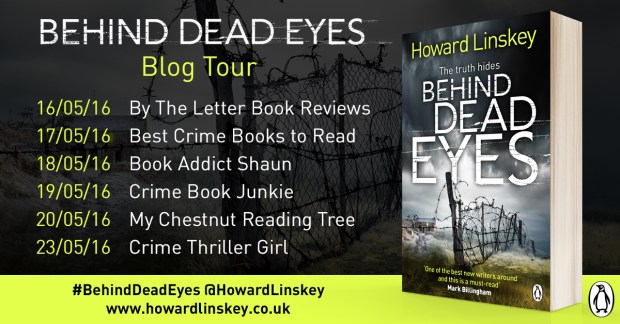
And be sure to check out all the other great stops along the tour …

BDE Blog Tour banner

#WhoKilledSherlockHolmes Blog Tour: Paul Cornell talks WHO KILLED SHERLOCK HOLMES? and delights of genre-swapping

blog tour banner-2


This afternoon I’m handing over the reins at CTG HQ to screen-writer and novelist Paul Cornell who’s popped by to tell us all about his latest book WHO KILLED SHERLOCK HOLMES? 

Over to Paul …

Crime writing is quite like writing SF and fantasy, in that both audiences are used to looking for specific things, moment by moment, during their reading experience. Crime audiences seek clues and red herrings, often hoping to play along in a ‘pure whodunit’, but at least hoping the text will convince them of its plausibility. SFF audiences look for the cues of world building, the slow release of information that will tell them what the rules are. They seek a suspension of disbelief. I generalise, of course.

The lovely thing about combining those genres, as I do in my Shadow Police books, is that I can swap one set of expectations for the other. A point of how my London is set-up may also turn out to be a clue. My characters, five modern Metropolitan Police officers who have been cursed with ‘the Sight’, the ability to see the magic and the monsters, use their Ops Board to dissect the nature of the world they’ve found themselves in, as much as they use it to break down a crime. I’m proud that they use only their training and techniques, and have no occult mentor, and not much knowledge of how magic works (though, three books in, Detective Constable Kev Sefton is just about to attempt a small spell).

I’ve really enjoyed, as I got into writing these books, meeting crime fans, at gatherings like Crimefest and the big convention in Harrogate. Lovely people, surprisingly few serial killers. And now, because of what the new books is about (and also because I just wrote an episode of Elementary) I’m encountering a whole new and equally terrific fandom…

The new novel, Who Killed Sherlock Holmes? is a pure whodunit about the death of a ghost. That is, in my London, ghosts are the memories of all Londoners, living and dead, and include not only the deceased, but also fictional and mythological characters. My heroes find the ghost of Sherlock Holmes, face down in the Museum at 221b Baker Street, flickering between every version of himself ever imagined, intangible, but with a dagger in his back. What does it mean to kill a ghost? Is this anything to do with the crimes from the Conan Doyle stories being re-enacted in order in their original locations? Is it a result of the three different productions of Holmes all being filmed in the city at once?

It’s also designed as a jumping-on point for the series, with the back story of what’s going on filled in for new readers very easily. Whether or not you’ve come for the Holmes, the ghost or the mystery, we hope you’ll join in and play along.

Big thanks to Paul for coming by and telling us all about his latest book and the similarities between crime fiction, SF and fantasy.

Who Killed Sherlock Holmes? is published by TOR UK and is out this week. You can buy in here from Waterstones or from Amazon here

Paul Cornell has been Hugo-nominated for his work in TV, comics and prose, and is a BSFA award-winner for short fiction. He has also written some of Doctor Who’s best-loved episodes for the BBC, and has more recently written for the Sherlock-inspired TV show Elementary, starring Jonny Lee Miller and Lucy Liu. He lives in Gloucestershire.

Find out more about Paul at http://www.paulcornell.com and @paul_cornell.


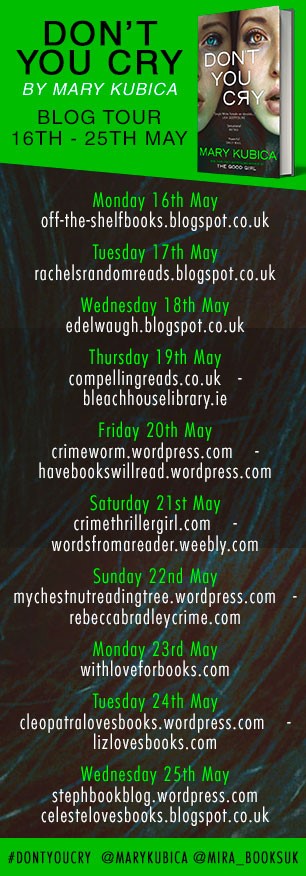
#DontYouCry Blog Tour: Read an exclusive extract of Mary Kubica’s DON’T YOU CRY

Blog Tour Banner

This morning I’m delighted to be hosting a stop on Mary Kubica’s DON’T YOU CRY Blog Tour and to be sharing an exclusive extract from the book with you.

Drumroll please …

The day we met, she asked me about my job and whether or not I’d be able to afford my half of the rent. That was Esther’s only qualification, that I pay my own way. “I can,” I promised her, showing my latest paycheck as proof. Five-fifty a month I could do. Five-fifty a month for a bedroom of my own in a walk-up apartment on Chicago’s north side. She took me there, down the street from the bookshop, just as soon as she finished reading to the tiny tots who pilfered from us the blood-orange poufs. I listened to her as she read aloud, taking on the voice of a bear and a cow and a duck, her voice pacifying and sweet. She was meticulous in the details, from the way she made sure the little ones were attentive and quiet, to the way she turned the pages of the oversize book so all could see. Even I found myself perched on the floor, listening to the tale. She was enchanting.

In the walk-up apartment, Esther showed to me the space that could be my room if I so chose.

She never said what happened to the person who used to live there in the room before me, the room I would soon inhabit, though in the weeks that followed I found vestiges of his or her existence in the compact closet in the large bedroom: an inde­cipherable name etched into the wall with pencil, a fragment of a photograph abandoned on the vacant floor of a hollow room so that all that remained on the glossy image was a wisp of Es­ther’s shadowy hair.

The scrap of photo I did away with after I moved in, but there was nothing I could do to fix the closet wall. I knew it was Esther’s hair in the photograph because, like the hetero­chromatic eyes, she had hair like I’d never before seen, the way she bleached it from bottom to top to get a gradual fade, dark brown on top, blond at the bottom. The tear line on the pic­ture was telling, too, the barbed white of the photo paper, the image gone—all but Esther.

I didn’t toss the photo, but rather handed it to Esther with the words, “I think this is yours,” as I unpacked my belong­ings and moved in. That was nearly a year ago. She’d snatched it from my hand and threw it away, an act that meant nothing to me at the time.

But now I can’t help but wonder if it should have meant some­thing. Though what, I’m not so sure.


Brilliant! I can’t wait to read more!

DON’T YOU CRY is out now. Here’s what the blurb says: “In downtown Chicago, a young woman named Esther Vaughan disappears from her apartment without a trace. A haunting letter addressed to My Dearest is found among her possessions, leaving her friend and roommate Quinn Collins to wonder where Esther is and whether or not she’s the person Quinn thought she knew. Meanwhile, in a small Michigan harbour town an hour outside Chicago, a mysterious woman appears in the quiet coffee shop where 18 year old Alex Gallo works as a dishwasher. He is immediately drawn to her charm and beauty, but what starts as an innocent crush quickly spirals into something far more dark and sinister. As Quinn searches for answers about Esther, and Alex is drawn further under the stranger’s spell …”

To buy the book click here to go to Waterstones, or go to Amazon by clicking here

CTG Reviews: THE PLEA by Steve Cavanagh

Unknown

Here’s what the blurb says: “When David Child, a major client of a corrupt New York law firm, is arrested for murder, the FBI ask con-artist-turned-lawyer Eddie Flynn to secure Child as his client and force him to testify against the firm. Eddie’s not a man to be coerced into representing a guilty client, but the FBI have incriminating files on Eddie’s wife, and if Eddie won’t play ball, she’ll pay the price. When Eddie meets Child he’s convinced the man is innocent, despite overwhelming evidence to the contrary. With the FBI putting pressure on him to secure the plea, Eddie must find a way to prove Child’s innocence while keeping his wife out of danger – not just from the FBI, but from the firm itself.”

Steve Cavanagh’s debut novel – THE DEFENCE – was one of my top reads of 2015 so I’ve been eagerly awaiting the second book in the Eddie Flynn series – THE PLEA – and was delighted to get my hands on an early copy.

Picking up a little while after the end of THE DEFENCE, THE PLEA sees con-man-turned-criminal-defence-lawyer Eddie Flynn facing another terrifying situation: persuade social media genius David Child to become his client and get him to plead guilty to the murder of his girlfriend, or the FBI will make sure Eddie’s wife goes to prison for involvement in an illegal scheme operated by her law firm that she had no direct knowledge of. But Eddie suspects that David Child is innocent, and he won’t send an innocent man to jail. He doesn’t want his wife in jail either, especially given the ordeal their young daughter, Amy, had during the THE DEFENCE, and the fact that he’s only just beginning to get his family back together. Eddie sets out to prove David Child’s innocence, and to protect his own family. Problem is, there is more than one bunch of bad guys after David Child, and some are closer to home than even Eddie might think.

To me, Eddie Flynn is a bit like the Jack Bauer (of 24 fame) of the the legal world. He’s smart, fast and always under pressure. In fact that’s another thing I admire about Steve Cavanagh’s writing – he gets an urgent, time pressured feel to his novels right from the get-go, and still manages to turn up the tension chapter-by-chapter. The ticking clock is heard on every page.

THE PLEA is a great second outing for Eddie Flynn. We learn a bit more about him, and we get to meet some of his shadier friends (both from the criminal and legal worlds) again – including one of my favourites, The Lizard (who only talks about himself in the third person). There’s a strong investigative side to this novel too – with Eddie needing to reassess the prosecution’s evidence in order to try and get the case thrown out – which gives a great balance with the action sequences. Set against the dramatic backdrop of New York City, with a high-concept storyline and twisty-turny plot, this is a fantastic follow-up to THE DEFENCE.

Electric courtroom scenes, stunning set-piece action sequences and the brilliantly witty and unique character of Eddie Flynn, makes THE PLEA a tremendous read and an absolute must for all thriller fans.

THE PLEA is out today in Trade Paperback, eBook and Audio. Buy it here from Waterstones or from Amazon here

To find out more about crime writer Steve Cavanagh hop over to his website at www.stevecavanagh.com and be sure to follow him on Twitter @SSCav

LITTLE BONES Blog Tour: Guest post by author Sam Blake – The Trouble with Titles

little bones

Today I’m handing over the reins at CTG HQ to author Sam Blake who is going to talk about the trouble with titles. Over to Sam …

Book titles and with that covers, are strange things – you spend months, often years, writing a book –  ideas forming, sentences taking shape, then reshaping, then reshaping again through the editorial process, but it’s not until you see your title on a cover, that it feels like a real thing. To get to this stage there are far more people involved than just the writer, and it can take months for everyone to be happy that what is on the outside of a book reflects what is on the inside.

For many years this book was called The Dressmaker, and this is why:

Stephen King talks about story being the collision of two unrelated ideas – the ideas behind Little Bones weren’t entirely unrelated but they collided one sunny Sunday afternoon as I was driving back from a Readers Day that author Sarah Webb and I had programmed at a hotel in Dublin Airport. It was about five o’clock in the afternoon and pre M50 so a LONG drive home (I once counted 35 sets of traffic lights) but as I put on the radio and pulled out of the carpark a documentary was starting on RTÉ about Kerry born playwright George Fitzmaurice. Fitzmaurice is best remembered for his play The Country Dressmaker that he submitted to the Abbey Theatre in 1907. It was such a success that it rescued the theatre after all the problems of John Millington Synge’s The Playboy of the Western World that same year. Fitzmaurice enlisted in the British army in 1916 and returned from the front with neurasthenia, rendering him fearful of crowds. He became more introverted and isolated as he grew older and eventually died in 1963, in a rented upstairs room in No.3 Harcourt Street, Dublin. He was aged 86 years and left no will and few personal belongings – apart from a copy of every play he had ever published and a few in draft form, which were in a suitcase under his bed.

For me, it was Fitzmaurice’s suitcase that caused the collision of ideas.

Several years previously I’d watched an RTÉ TV documentary about a twenty-three year old girl from Boyle, Belinda Agnes Regan who in 1947 was living in lodgings in Manchester. She had left Ireland knowing she was pregnant, but terrified of the disgrace of the pregnancy, had concealed it. She went into labour in the middle of the night and delivered the baby herself, incredibly, in a room she shared with a younger girl who apparently slept through her ordeal. Covering the baby with a blanket “so Shirley would not see it,” she crept to the bathroom. When she returned, the baby wasn’t breathing.  Wrapping the body in brown paper and a ‘blue frock’ she hid it in her suitcase, which she concealed under her bed, leaving it there when she returned home for Christmas. While she was in Ireland the body was discovered, and on her return she was arrested for infanticide.

These two stories, heard many years apart, came together in my head, and on the drive home I started wondering about suitcases and dresses and dress makers and what would happen if the bones of the baby had ended up in a dress – a wedding dress – the crucial thing that Belinda Regan had perhaps yearned for, for nine long months. At that point I had no idea who owned the dress, or how the bones got there or WHY…but I knew the story was called The Dressmaker.

When my agent, Simon Trewin mentioned my book to Bonnier’s Mark Smith over lunch, it was The Dressmaker, when Twenty7 Books snapped it up the next day, it was still The Dressmaker. All through the edits it was The Dressmaker.

Then ‘The Dressmaker’ movie came out.

Much discussion was had – the book and the movie would get confused, if you Googled ‘The Dressmaker’ how many hundreds of pages would it take to get to my book? My agent was almost mown down by a bus on Tottenham Court Road that had an ad for ‘The Dressmaker’ plastered down the side. Someone was telling us that this WASN’T the title of the book.

But coming up with a title for a book isn’t easy. Here are just some of the ideas I came up with (suitably in the bar at Waterford Writers Weekend when you’d think the atmosphere would be conducive to creativity), with Alex Barclay who was one of the few people who had read the book at that stage. It took us almost three hours and we still didn’t have it.

titles pic

I brainstormed it with Simon, my agent, and the team at Bonnier sweated at it too. Then a very lovely lady called Kate Parkin, Executive Director of Adult Publishing at Bonnier had a flash of inspiration. Joel Richardson, my editor at Twenty7 Books emailed me to say, “What do you think of Little Bones? We like it.

And so did I.  A lot.


© Sam Blake

Sam Blake is a pseudonym for Vanessa Fox O’Loughlin, the founder of The Inkwell Group publishing consultancy and the national writing resources website Writing.ie. She is Ireland’s leading literary scout who has assisted many award winning and bestselling authors to publication. Vanessa has been writing fiction since her husband set sail across the Atlantic for eight weeks and she had an idea for a book.

Little Bones is the first in the Cat Connolly Dublin based detective thriller trilogy. When a baby’s bones are discovered in the hem of a wedding dress, Detective Garda Cathy Connolly is face with a challenge that is personal as well as professional – a challenge that has explosive consequences.

Follow Sam Blake on Twitter @writersamblake or Vanessa @inkwellhq – be warned, they get tetchy with each other!


CTG Interviews: crime writer William Shaw about #TheBirdwatcher

Unknown

Today I’m delighted to welcome crime writer William Shaw to the CTG blog. William’s latest book, THE BIRDWATCHER, is out on the 19th May and he’s agreed to let me quiz him all about it …

Your latest crime novel – THE BIRDWATCHER – is out this week. Can you tell us a bit about it?

Having done three in my Breen & Tozer series I thought I’d take a breather. I had this beginning of a book that I wrote ten years ago and a successful author friend kept saying I should go back to it, because he liked it. It was about a child growing up in Northern Ireland, where some of my family are from. I resisted for a while, but then one day I thought, what if that boy grows up into a policeman? And I was off. I’ve never had something where the story just appeared to me in such a satisfying way. When I got to the denouement it was like being a reader, not actually wanting to finish. I was really on the point of tears at the end. Pathetically.

In THE BIRDWATCHER your protagonist, Police Sergeant William South, is a murderer as well as a policeman. What drew you to writing a character who is both killer and justice seeker?

That was the big attraction for this book. How do you write a sympathetic character who has done something very bad? We like complex heroes, don’t we? And everything in recent history tells us that good people are capable of doing bad things in the right circumstances. In fact what William South did turns out not to be that bad at all… but I don’t want to give away why!

How has the way you set out to write THE BIRDWATCHER – a standalone novel – differed from how you approach writing one of your Breen & Tozer series books?

Interesting question. Writing a series taught me that you can – in fact you HAVE TO – create characters without giving that much away about them, because you want them to develop over the arc of the later books. And actually, I really like working out how little I can tell the reader because I think the readers are a part of the creative process. You give them enough stuff for them to be inspired to make up the rest in their imagination. But maybe in a standalone you can’t go QUITE that far. You have to give people a sense of completeness. But it’s only a matter of degree. And in a standalone I think the shape of the book is more important. Everything has to be in it for a reason. A series has to have incompleteness to throw you into the next book.

THE BIRDWATCHER is set on the Kent coast. What was it about this area that attracted you as a writer?

I’m a sucker for Nordic Noir; there’s something about feeling cosy in a hostile natural environment, isn’t there? Much of South Kent has that. It’s not just the landscape that’s hostile. The Kent coast has taken a lot of knocks in the last twenty or thirty years and it’s not an easy place in many ways. I think that makes it interesting. I had a good friend who had their ashes scattered off that beach. With that, the nuclear power station, the derelict boats and the light houses and the cottages, it seems like a really meaningful landscape; it’s a place with a real sense of darkness but also a sense of a escape. And my main character is definitely an escapee.

Can you tell us a bit about your writing process – do you plot the story out first, or dive right in and see where it takes you (or a bit of both)?

I have learned that a one to two page precis is useful so I know where I’m heading, but the best bits of everything I’ve written were always the scenes I didn’t know I was going to write at the beginning. I love the feeling when you write some scene and you’re not sure why it’s there at all, and then 100 pages later you realise that there’s a great reason for it.

Do you have any writing quirks or rituals that you perform when starting a new book?

No rituals, just emotions. I’m really against writing being a superstitious process. I think the job is just to write every day, come hell or high water. After the excitement of opening a fresh document on the computer, it’s terror, mostly. A book seems such a large thing. And the fear continues until about three-quarters of the way through. At the start, I do end up buying a lot of books around the subject and – in the case of the Birdwatcher – finding excuses to visit the place. Books about birdwatching, I’ve discovered, are really delightful. It’s a great excuse to consume a lot of non fiction that you wouldn’t normally read.

What advice would you give to writers who are aspiring to publication in crime fiction?

Approach with humility. There are a lot of really great people in the crime writing community who will offer you amazing help and advice as long as you don’t blunder in there thinking you’re God’s gift. You may be God’s gift, of course. Just keep it to yourself. And accept it’s a crowded genre and the only way you’re going to succeed in it is by writing the kind of book you want to read, not the one you think the market wants, because there are plenty of people doing that already. Oh, and develop an iron liver for events like Crimefest and Harrogate Crime Festival.

And, lastly, what does the rest of 2016 have in store for you?

I’m just finishing the fourth Breen and Tozer book, which opens with the death of the Rolling Stone Brian Jones. I’ll be starting a new book over the summer but I don’t know yet what it’s going to be… Which is fairly scary. But my head is deeply into the current book I’m in so it’s hard to know what it’s going to be about.

Big thanks to William for dropping by the CTG blog and letting me quiz him.

THE BIRDWATCHER is out on the 19th May. Here’s the blurb: “Police Sergeant William South has a reason for not wanting to be on the murder investigation. He is a murderer himself. But the victim was his only friend; like him, a passionate birdwatcher. South is warily partnered with the strong-willed Detective Sergeant Alexandra Cupidi, newly recruited to the Kent coast from London. Together they find the body, violently beaten, forced inside a wooden chest. Only rage could kill a man like this. South knows it. But soon – too soon – they find a suspect: Donnie Fraser, a drifter from Northern Ireland. His presence in Kent disturbs William – because he knew him as a boy. If the past is catching up with him, South wants to meet it head on. For even as he desperately investigates the connections, he knows there is no crime, however duplicitous or cruel, that can compare to the great lie of his childhood. Moving from the storm-lashed, bird-wheeling skies of the Kent Coast to the wordless war of the Troubles, The Birdwatcher is a crime novel of suspense, intelligence and powerful humanity about fathers and sons, grief and guilt, and facing the darkness within.”

You can buy THE BIRDWATCHER from Waterstones here or Amazon here

Find out more about William Shaw on his website http://williamshaw.com and follow him on Twitter @william1shaw

The #DistressSignals Blog Tour by Catherine Ryan Howard: Extract Seven

Catherine H poster visual

Today I’m hosting an extract from Catherine Ryan Howard’s thriller – DISTRESS SIGNALS.

Here’s what the blurb says: “‘There’s no evidence of a murder, but a person is missing. And what’s a missing person minus a body? Not a murder. Oh, no. Never a murder. It’s a disappearance.’ The day Adam Dunne’s girlfriend, Sarah, fails to return from a Barcelona business trip, his perfect life begins to fall apart. Days later, the arrival of her passport and a note that reads ‘I’m sorry – S’ sets off real alarm bells. He vows to do whatever it takes to find her. Adam is puzzled when he connects Sarah to a cruise ship called the Celebrate – and to a woman, Estelle, who disappeared from the same ship in eerily similar circumstances almost exactly a year before.  To get the answers, Adam must confront some difficult truths about his relationship with Sarah. He must do things of which he never thought himself capable. And he must try to outwit a predator who seems to have found the perfect hunting ground…”

By following each stop on the DISTRESS SIGNALS Blog Tour you get to read a bit more of the novel. If you’ve not read extracts 1-6 yet there’s still time – check out the fabulous blogs hosting the previous extracts on the poster above. If you’re all up to date, read on …

EXTRACT SEVEN

I was expecting one of Sarah’s trademark eye-rolls and a sarcastic remark. Maybe a reminder that I was now, technically speaking, a big-shot Hollywood screenwriter and could surely hold my own in conversations about Things Adults Do instead of standing on the periphery, smiling at the right moments but otherwise only moving the ice-cubes in my drink around with a straw. Or perhaps Sarah would point out that I didn’t need to go to this thing, that it was a work night out, that she’d been going by herself until I’d moaned about spending the night before she left for nearly a week home alone, prompting her to – eventually – say, fine, tag along.

But instead she turned to face me, wrapped her arms around my neck and said: ‘I would never abandon you.’

‘Well, good. Oscar night will be stressful enough without having to find a date for it.’

I kissed her, expecting to feel her lips stretched into a smile against mine. They weren’t. I moved my mouth to her jawline, down her neck. There was a faint taste of something powdery, some make-up thing she must have just dusted on her skin. I brought my hands to her waist and went to un-tuck the towel.

Ad,’ Sarah said, wriggling out of my arms. ‘I booked a cab for eight. We don’t have time.’

I looked at my watch. ‘I suppose I should take it as a compliment that you think that.’ I turned to leave.

‘Oh, Ad?’

I stopped in the doorway.

Sarah was in front of the mirror, twisting to check her hair. Without looking at me, she said, ‘I meant to tell you: the others aren’t exactly delighted about me being the one to get to go to Barcelona. They’ve all been milking it with their honeymoons and their maternity leave but God forbid I get to have a week out of the office. I mean, it’s not like I’m off. I’m there to work. Anyway, I’ve been trying not to go on about it, so . . .’

‘Don’t worry,’ I said. ‘I won’t bring it up.’

I smiled to myself as I crossed the hall into the living room. Honeymoons and maternity leave. Now that I’d sold the script, we could finally start making our own plans instead of being forced to watch as the realisation of everyone else’s clogged up our Facebook feeds.

But first . . .

I collected Mike’s card from the coffee table, then dropped into my preferred spot on the couch. It offered a clear line of sight to my desk, which was tucked into the far corner of the living room and so, crucially, was only a few feet from the kitchen and thus the coffee-maker.

A stack of well-thumbed A4 pages were piled on it, curled sticky notes giving it a neon-coloured fringe down its right side. I got a dull ache in the pit of my stomach just looking at it. The rewrite. I had to start it tomorrow. And I would. I’d drive straight home after dropping Sarah at the airport and get stuck in, make the most of the few days and nights that I’d have the apartment to myself.

Sarah emerged from our bedroom, wearing a dress I hadn’t seen before.

The money from the script deal hadn’t arrived yet but, since I’d learned it was on its way, I’d been melting my credit card. Sarah had supported me for long enough, paying utility bills and covering my rent shortfalls with money she could’ve been – should’ve been – spending on herself. That morning I’d sent her into town with a giftcard for a high-end department store, the kind that comes wrapped in delicate tissue and in a smooth, matt-finish gift bag.

‘This is just a token,’ I’d said. ‘Just a little something for now, for tonight. You know when the money comes through . . .’

‘Ad, what are you doing? You don’t know how long that money is going to take to arrive. You should be hanging onto what you’ve got.’

‘I put it on the credit card.’

‘But you might need that credit yet. I really wish you’d think before you spend.’

‘Look, it’s fine. We’ll be fine. I just wanted to . . .’ Sarah’s mouth was set tight in disapproval. ‘Okay, I’m sorry. I am. It’s just that I don’t want to wait to start paying you back for . . . For everything.’

She’d seemed annoyed. Disappointed too, which was worse. But then, later, she’d come home with a larger version of the same bag, and now she was twirling around to show me the dress that had been inside it: red and crossed in the front, the skirt part long and flowing out from her hips.

‘Well?’ she asked me. ‘What do you think?’

She looked beautiful in it. More beautiful than usual. But with the new hair, not quite the Sarah I was used to.

‘Nice,’ I said. I pointed to my jeans and my dark, plain T-shirt.

‘But now I feel underdressed.’

‘Change, if you want to.’

Our buzzer went. The cab was here.

‘No, it’s fine,’ I said. ‘Let’s just go.’

Aside from the clothes Sarah was wearing when I drove her to the airport the next morning, that red dress was the only item I could tell the Gardaí was missing for sure.


Want to know more? Visit www.distresssignalsbook.com for more info and follow Catherine Ryan Howard on Twitter @cathryanhoward

DISTRESS SIGNALS is out now. Follow this link to buy it from Amazon – Amazon link